When it comes to online conversations, short forms make texting faster and easier. WBY meaning is simple, but its use can change slightly depending on the conversation. If someone sends “WBY?” in a text, social media comment, or chat, they usually want to know what you think, feel, or are doing.
What Does WBY Mean in Chat?
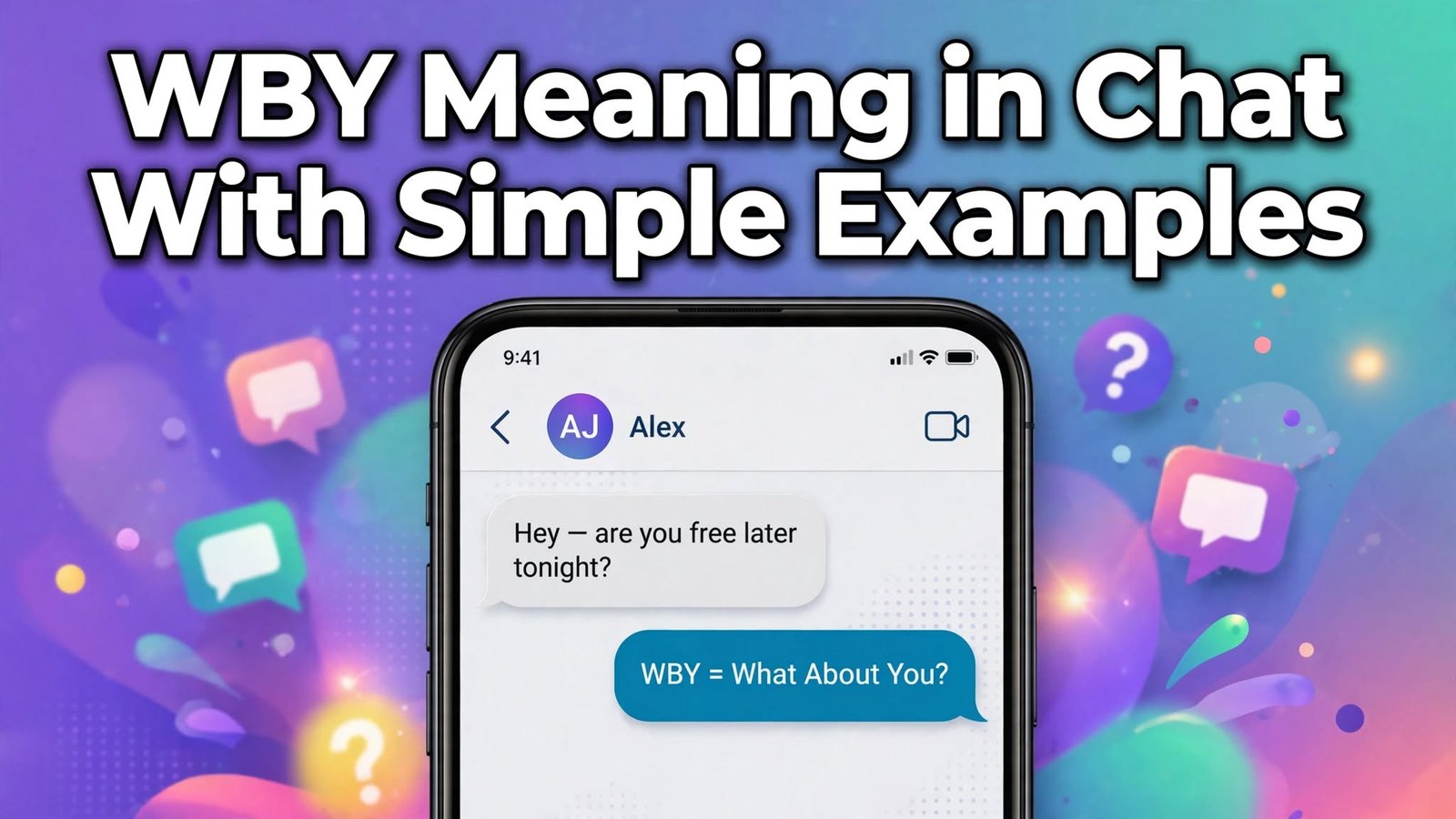
WBY usually means “What about you?” in texting and online chat. People use it after sharing something about themselves and want the other person to respond.
For example, imagine this conversation:
Alex: I’m watching a movie right now. WBY?
Sam: I’m doing my homework.
Here, WBY asks Sam to share what they are doing.
The phrase works as a quick follow-up question. Instead of typing the full sentence, a person can simply write three letters. This saves time while keeping the conversation natural.
You may see WBY in:
- Text messages
- Instagram chats
- Facebook Messenger
- Snapchat conversations
- WhatsApp messages
- Online gaming chats
- Group chats
- Dating apps
- Casual social media conversations
WBY is mainly informal. It usually does not belong in professional emails, formal letters, business reports, or official messages.
WBY Meaning and How It Is Used
The basic WBY meaning stays the same in most casual conversations: “What about you?” However, the exact idea depends on what the person said before using the abbreviation.
For example, someone might say:
“I’m feeling great today. WBY?”
In this case, they ask how you are feeling.
Another person might write:
“I’m from Canada. WBY?”
Here, they ask where you are from.
Someone could also say:
“I love pizza. WBY?”
This asks about your preference.
So, WBY does not always ask about the same subject. The earlier part of the conversation gives the question its context.
WBY Meaning in Text Messages
In text messages, WBY meaning is generally understood as “What about you?” It often follows statements about feelings, activities, preferences, locations, or personal experiences.
Here are some simple examples:
Example 1
Mia: I’m tired today. WBY?
Liam: Same. I barely slept last night.
Example 2
Mia: I’m going to the gym after work. WBY?
Liam: I’m heading home.
Example 3
Mia: My favorite color is blue. WBY?
Liam: Mine is green.
Example 4
Mia: I live in Lahore. WBY?
Liam: I live in Karachi.
Example 5
Mia: I’m learning Spanish. WBY?
Liam: I’m learning French.
In each example, the abbreviation asks the other person to share comparable information.
The question does not need a long answer. A short response can work perfectly:
“Same here.”
“I’m good.”
“Not sure yet.”
“I love it too.”
WBY Meaning on Social Media
On social media, WBY can appear in direct messages, comments, stories, and casual posts. Users often prefer short abbreviations because social conversations move quickly.
Someone might post:
“I’m spending the weekend at home. WBY?”
A follower could respond:
“Going out with friends!”
The abbreviation can also appear in a direct message:
Person A: “Just got back from work. WBY?”
Person B: “Still at the office.”
The meaning remains the same, even though the platform changes.
However, social media language can be highly personal. Some users write WBY in uppercase, while others write wby in lowercase. Both forms normally mean the same thing.
You might also see punctuation:
“WBY?”
“wby?”
“Wby?”
These variations do not normally change the meaning.
WBY vs. WYD
WBY and WYD look similar, but they ask different questions. WYD usually means “What are you doing?” while WBY usually means “What about you?”
Compare these examples:
“WYD?”
This asks about your current activity.
“I’m watching TV. WBY?”
This asks you to share what you are doing, feeling, or experiencing, based on the previous statement.
The two abbreviations can also appear together:
“WYD? I’m bored. WBY?”
This example contains two separate questions. The first asks what the other person is doing. The second turns the conversation back to them.
Understanding this difference can prevent confusion when reading fast-paced chats.
WBY vs. HBU
WBY is also closely related to HBU, which means “How about you?”
In many conversations, the two expressions can replace each other.
For example:
“I’m doing well. WBY?”
and:
“I’m doing well. HBU?”
Both ask the other person about themselves.
The main difference is the wording behind the abbreviation:
- WBY = What about you?
- HBU = How about you?
Neither one needs to be limited to a specific topic. Context tells you what information the person wants.
For example:
“I prefer tea. HBU?”
asks about the other person’s preference.
Similarly:
“I’m staying home tonight. WBY?”
asks about the other person’s plans.
WBY Meaning in Different Conversations
The meaning stays stable, but its practical use can change depending on the subject of the conversation.
Talking About Feelings
“I’m feeling much better today. WBY?”
The speaker wants to know how you feel.
Talking About Plans
“I’m going shopping this afternoon. WBY?”
The speaker wants to know what you plan to do.
Talking About Preferences
“I like action movies. WBY?”
The speaker wants to know your preference.
Talking About Locations
“I’m in New York right now. WBY?”
The speaker wants to know where you are.
Talking About Experiences
“I visited that restaurant last week. WBY?”
The speaker may want to know whether you have visited it too.
This flexibility explains why the abbreviation appears in many types of casual conversations.
How to Reply to WBY
The best response depends on the topic that comes immediately before the question. You do not need a special format. Simply answer the implied “What about you?” question.
For example:
Friend: “I’m going to the beach tomorrow. WBY?”
You: “I’m staying home.”
Or:
Friend: “I love chocolate ice cream. WBY?”
You: “I prefer vanilla.”
You can also use WBY to return the question:
“I’m doing great. WBY?”
This can help keep a conversation moving.
When someone uses the abbreviation, a natural response usually contains information related to their previous statement.
Short Replies
Short answers work well in fast chats:
- “I’m good.”
- “Same here.”
- “Not sure.”
- “Me too!”
- “I’m at home.”
- “Going to work.”
- “I prefer coffee.”
- “I’m feeling better.”
Longer Replies
You can also give a more detailed answer:
“I’m doing pretty well. I finished my work early, so I’m planning to relax tonight.”
The abbreviation does not require a short response. It simply makes the question shorter.
Common Mistakes When Using WBY
Although WBY is simple, beginners can sometimes misunderstand its purpose. The most common mistake involves treating it as a fixed question about activities.
WBY does not always mean “What are you doing?” That is closer to the meaning of WYD.
Another mistake is using WBY in formal writing. Casual abbreviations can sound too relaxed in professional communication.
A third mistake is ignoring context. If someone says:
“I love summer. WBY?”
they probably want to know whether you like summer too. They are not necessarily asking what you are doing.
The easiest way to understand the question is to look at the statement immediately before it.
Why Do People Use Short Forms Like WBY?
Texting abbreviations developed from the need for fast, convenient digital communication. Phones, messaging apps, and social platforms encourage people to communicate with fewer characters and less typing.
Short forms also create a casual tone. Writing “WBY?” can feel relaxed and friendly.
Other common examples include:
- LOL — Laughing out loud
- BRB — Be right back
- IDK — I don’t know
- BTW — By the way
- TBH — To be honest
- IMO — In my opinion
- OMG — Oh my God
- WYD — What are you doing?
- HBU — How about you?
These expressions can make digital conversations quicker, but they also depend on shared understanding.
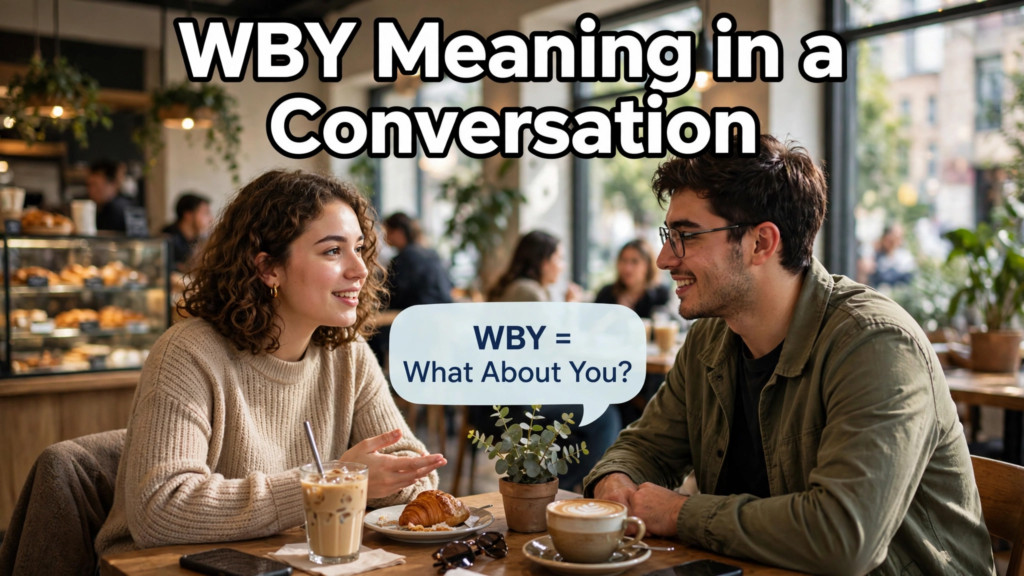
WBY Meaning in a Conversation: Full Examples
Seeing complete conversations can make the expression easier to understand.
Example 1: Daily Plans
Sara: I’m going to the mall after lunch. WBY?
Emma: I’m staying home today.
Here, the question asks about Emma’s plans.
Example 2: Food Preference
Sara: I love spicy food. WBY?
Emma: I like it too, but I cannot eat very spicy dishes.
Here, the question asks about Emma’s preference.
Example 3: Feelings
Sara: I’m a little nervous about tomorrow. WBY?
Emma: I’m nervous too.
Here, the question asks how Emma feels about the same situation.
Example 4: Hobbies
Sara: I usually read before bed. WBY?
Emma: I normally watch a short show.
Here, the question asks about Emma’s usual activity.
Example 5: Travel
Sara: I’m visiting Dubai next month. WBY?
Emma: I’m planning a trip to Istanbul.
Here, the question asks about Emma’s travel plans.
These examples show how context gives the short form its specific purpose.
Is WBY the Same as “What About You?”
Yes. In ordinary casual texting, WBY is a shortened form of “What about you?” The phrase can ask about the other person’s feelings, plans, opinions, preferences, experiences, or situation.
Still, not every occurrence has to be interpreted mechanically. Online language changes over time, and some abbreviations can have multiple meanings in specialized communities. Context remains the safest way to understand an unfamiliar message.
If someone sends only:
“WBY?”
the most common interpretation is “What about you?”
If the conversation has a clear subject, simply continue that subject when replying.
Frequently Asked Questions About WBY
What is the WBY meaning in texting?
The most common WBY meaning in texting is “What about you?” People use it to ask another person to share similar information after they have made a statement.
Does WBY mean “What are you doing?”
No. “What are you doing?” is usually shortened to WYD. WBY means “What about you?” although the answer may involve an activity if the conversation is about plans or actions.
Is WBY rude?
No. WBY is normally a casual and neutral abbreviation. Its tone depends more on the surrounding conversation than on the abbreviation itself.
Can I use WBY in a professional email?
It is better to avoid WBY in professional emails. Write “What about you?” or use a more specific question instead. Full wording is usually clearer in formal communication.
What is the difference between WBY and HBU?
WBY means “What about you?” while HBU means “How about you?” They often serve the same purpose in casual conversations and can sometimes be used interchangeably.
How should I reply when someone says WBY?
Look at the topic before WBY and answer about yourself. If someone says they are tired and asks WBY, you can describe how you feel. If they discuss plans, share your plans.
Final Thoughts
The WBY meaning is simple: “What about you?” It is a common casual abbreviation that helps people keep digital conversations short, quick, and friendly. You may see it in text messages, social media chats, gaming conversations, and other informal online spaces. You can use WBY naturally with friends and other casual contacts. For professional or formal communication, however, writing the full phrase is usually a better choice. Once you understand the context, this short form is easy to recognize and use.