Understanding hbu meaning can help you communicate more naturally online and avoid confusion during conversations. This guide explains what HBU means, where it came from, how people use it, common examples, mistakes to avoid, and similar texting abbreviations. By the end, you will know exactly how and when to use HBU in chats, texts, and social media conversations.
What Does HBU Mean?
The abbreviation HBU stands for “How About You?”
People use it when they want to return a question to the other person. Instead of typing the entire phrase, they write HBU because it is faster and easier.
For example:
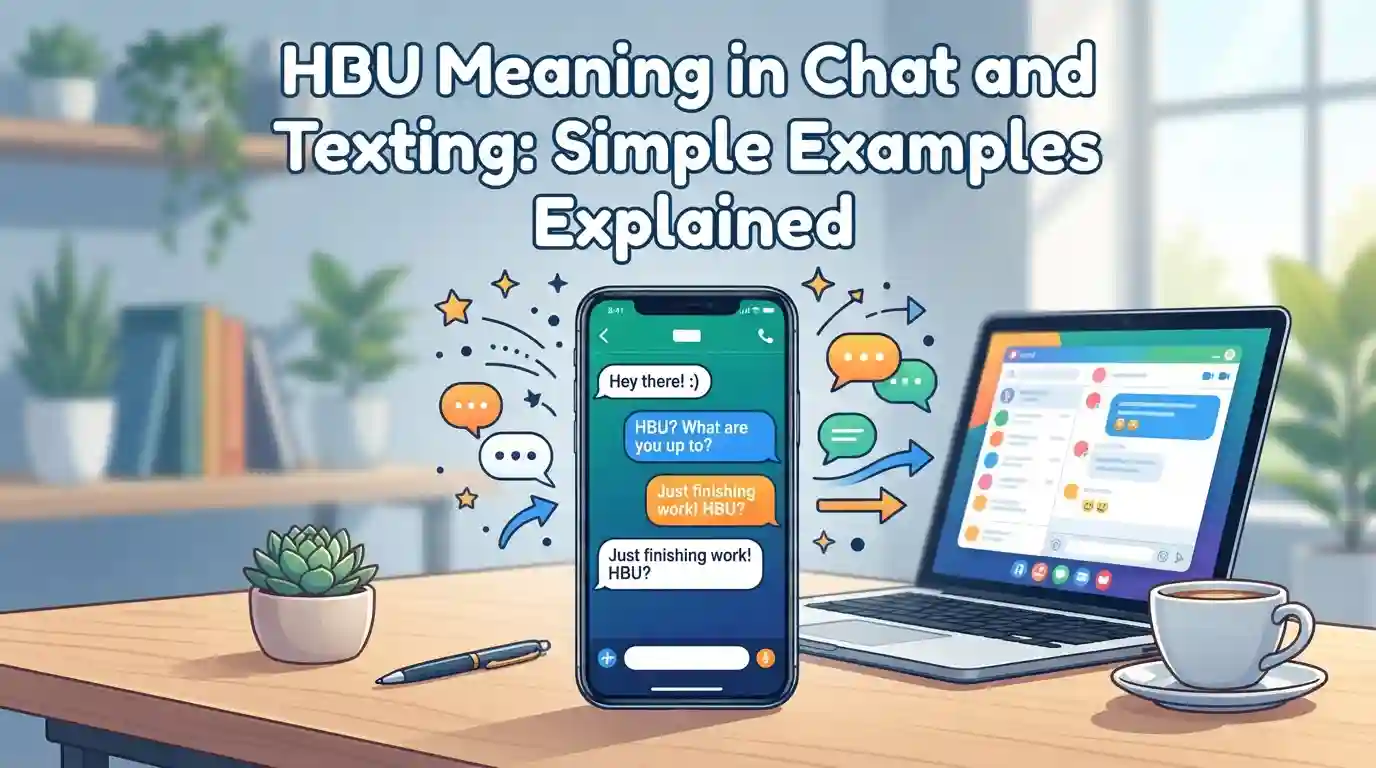
- Person A: “I’m having a great day. HBU?”
- Person B: “I’m doing well too.”
In this conversation, HBU simply asks the other person the same question that was asked earlier. It keeps the conversation flowing naturally and encourages participation.
HBU Meaning in Text Messages
The most common hbu meaning in texting is “How About You?” It acts as a follow-up question after someone shares information about themselves.
Text messages often contain abbreviations because people want quick communication. HBU helps reduce typing while maintaining engagement in the conversation.
Examples:
- “I finished my homework. HBU?”
- “I’m watching a movie. HBU?”
- “I love pizza. HBU?”
- “My weekend was amazing. HBU?”
In each example, the sender invites the recipient to share their own experience or opinion.
Why People Use HBU in Texting
Texting culture values speed and convenience. Abbreviations like HBU make communication faster without changing the meaning of the message.
Common reasons people use HBU include:
- Saving time while typing
- Keeping conversations casual
- Encouraging responses
- Making chats feel more interactive
- Following texting trends
Because of these benefits, HBU remains popular among teenagers and adults alike.
HBU Meaning on Social Media
Social media platforms often encourage short and quick interactions. Users frequently include HBU in comments, captions, direct messages, and replies.
A social media user might write:
“I love traveling to new places. HBU?”
This invites followers to share their own opinions and experiences.
You may see HBU on:
- TikTok
- Snapchat
- X (formerly Twitter)
- Discord
The hbu meaning stays the same across platforms. It always asks the other person for their thoughts, feelings, or experiences.
HBU in Online Communities
Online communities use HBU to create engagement. Asking others for their opinions encourages discussion and increases interaction.
Examples:
- “My favorite game is Minecraft. HBU?”
- “I prefer summer over winter. HBU?”
- “I enjoy reading mystery novels. HBU?”
These simple questions help start conversations among strangers and friends.
How to Use HBU Correctly
Understanding hbu meaning is only the first step. Knowing how to use it properly helps conversations sound natural.
HBU typically appears at the end of a statement or answer.
Examples:
After Answering a Question
Person A:
“How are you today?”
Person B:
“I’m doing great. HBU?”
After Sharing an Opinion
Person A:
“I think action movies are exciting. HBU?”
Person B:
“I prefer comedy movies.”
After Discussing Plans
Person A:
“I’m going to the beach this weekend. HBU?”
Person B:
“I’m visiting family.”
These examples show how HBU naturally shifts attention to the other person.
Using HBU in Group Chats
Group conversations often move quickly. HBU allows users to invite others into the discussion.
Example:
“I’ve already finished the project. HBU guys?”
This encourages multiple people to respond with updates.
Examples of HBU in Everyday Conversations
Real-world examples make the abbreviation easier to understand.
Example 1: Talking About School
Sarah:
“I’m studying math tonight. HBU?”
Emma:
“I’m working on a science project.”
Example 2: Discussing Food
Alex:
“My favorite food is sushi. HBU?”
David:
“I love burgers.”
Example 3: Weekend Plans
Mia:
“I’m staying home this weekend. HBU?”
Lily:
“I’m going hiking.”
Example 4: Sports Discussion
James:
“I support Manchester United. HBU?”
Chris:
“I’m a Liverpool fan.”
Example 5: Entertainment
Noah:
“I’m watching a new TV series. HBU?”
Ethan:
“I’m playing video games.”
These examples show how naturally HBU fits into daily communication.
When Should You Use HBU?
HBU works best in informal conversations. Friends, family members, classmates, and online acquaintances commonly use it.
Appropriate situations include:

- Text messages
- Social media chats
- Online gaming conversations
- Group chats
- Casual messaging apps
HBU helps keep conversations balanced by showing interest in the other person’s thoughts.
Situations Where HBU May Not Be Appropriate
Professional communication usually requires complete sentences.
Instead of:
“Doing well. HBU?”
A business email might say:
“I am doing well. How about you?”
Formal communication benefits from clear and complete language.
Common Mistakes When Using HBU
Many people understand HBU, but some use it incorrectly.
Using It in Formal Emails
Business emails generally avoid internet slang.
Incorrect:
“Thanks for your message. HBU?”
Better:
“Thank you for your message. How are you?”
Using It Without Context
HBU usually follows a statement or answer.
Less natural:
“HBU?”
More natural:
“I’m excited about the concert. HBU?”
Providing context makes the conversation easier to understand.
Assuming Everyone Knows the Meaning
Some people may not recognize texting abbreviations.
If someone seems confused, writing the full phrase can help.
HBU vs Similar Texting Abbreviations
Texting language contains many abbreviations that may look similar.
HBU vs WBU
HBU means:
How About You?
What About You?
Both phrases are very similar and often interchangeable.
Example:
- “I’m tired. HBU?”
- “I’m tired. WBU?”
Both ask for the other person’s experience.
HBU vs WYD
WYD means:
What Are You Doing?
Example:
- “WYD tonight?”
This asks about current activities rather than returning a question.
HBU vs IDK
IDK means:
I Don’t Know
Example:
- “IDK what movie to watch.”
Unlike HBU, IDK expresses uncertainty.
HBU vs LOL
LOL means:
Laugh Out Loud
Example:
- “That joke was funny LOL.”
LOL expresses amusement, while HBU asks a question.
Why HBU Remains Popular
Internet slang changes quickly, but some abbreviations remain useful for years.
Several factors contribute to HBU’s popularity:
It Saves Time
Typing three letters is faster than typing four words.
It Feels Natural
Conversations often involve sharing and asking questions. HBU supports that pattern.
It Encourages Engagement
People generally enjoy discussing themselves. HBU invites participation.
It Works Everywhere
The abbreviation functions well across messaging apps, social media platforms, and online communities.
These advantages help HBU remain relevant despite changing digital trends.
Variations and Alternative Ways to Say HBU
Although HBU is popular, people also use other phrases with similar meanings.
Common alternatives include:
- What about you?
- And you?
- How about yourself?
- What do you think?
- What’s your opinion?
- How are things on your end?
Each phrase encourages the other person to contribute to the conversation.
Choosing the Right Alternative
The best choice depends on the situation.
Casual text:
- HBU?
Friendly conversation:
- What about you?
Professional communication:
- How about yourself?
Selecting the right wording helps match the tone of the discussion.
Frequently Asked Questions
What is the full form of HBU?
The full form of HBU is “How About You?” It is commonly used in text messages and online conversations.
Is HBU rude to use?
No. HBU is generally polite and friendly because it shows interest in the other person’s thoughts or experiences.
Can HBU be used in professional emails?
It is better to avoid abbreviations in formal communication. Writing “How about you?” sounds more professional.
Is HBU the same as WBU?
They are very similar. HBU means “How About You?” while WBU means “What About You?” Most people use them interchangeably.
Why do people use HBU instead of writing the full phrase?
People use HBU to save time, reduce typing, and keep conversations short and casual.
Is HBU still popular today?
Yes. The term remains widely used across texting apps, social media platforms, online communities, and gaming chats.
Conclusion
Understanding hbu meaning makes online conversations easier to follow and participate in. HBU stands for “How About You?” and serves as a simple way to return a question, invite a response, and keep discussions moving. Whether you see it in text messages, social media comments, gaming chats, or messaging apps, the purpose remains the same.
The abbreviation has stayed popular because it is short, easy to type, and useful in everyday communication. It helps create balanced conversations by encouraging others to share their opinions, feelings, and experiences. While HBU works well in casual settings, using the full phrase is usually better in professional communication.