This phrase helps a person introduce a second thought, reconsider an opinion, or present another perspective. Understanding the BTA meaning in text can help you follow conversations more easily and communicate naturally online. In this guide, you will learn the definition of BTA, how it is used, examples in different situations, common mistakes, similar abbreviations, and practical tips for using it correctly.
What Does BTA Mean in Text?
The acronym BTA commonly means “But Then Again.” People use it when they want to add another opinion or reconsider something they just said.
The phrase creates a contrast between two thoughts. It shows that the speaker is looking at a situation from a different angle. This makes conversations sound more balanced and thoughtful rather than one-sided.
For example:
- I don’t think the movie is worth watching. BTA, everyone has different tastes.
- The weather looks terrible today. BTA, it might clear up later.
In both examples, BTA introduces a second perspective.
Understanding the BTA Meaning in Text Conversations
The BTA meaning in text becomes clearer when you see how people use it in real discussions. Instead of expressing only one opinion, BTA allows someone to acknowledge another possibility.
People often use it when:
- Reconsidering an opinion
- Expressing uncertainty
- Looking at both sides of an issue
- Softening a strong statement
- Being fair during a discussion
This makes BTA a useful abbreviation in everyday online communication.
Why Do People Use BTA?
Text messaging encourages speed and convenience. Short forms save time and reduce typing effort. BTA helps people communicate complex thoughts using only three letters.
Some common reasons include:
To Show Another Viewpoint
People often realize there is more than one side to a situation. BTA introduces that alternative perspective.
Example:
“I think remote work is better. BTA, some people prefer working in an office.”
To Sound Less Judgmental
Strong opinions can sometimes sound harsh. BTA helps soften statements.
Example:
“That restaurant is expensive. BTA, the food quality is excellent.”
To Express Uncertainty
Sometimes a person is not completely sure about their opinion.
Example:
“I don’t think they will win. BTA, surprises happen all the time.”
To Encourage Discussion
BTA opens the door for further conversation and debate.
Example:
“The new update looks unnecessary. BTA, maybe it offers hidden benefits.”
Origins of the Phrase “But Then Again”
The phrase “But Then Again” existed long before texting became popular. People have used it in spoken English for many years when reconsidering a point or introducing another perspective.
As texting culture developed, users shortened many common expressions into acronyms. Just as phrases like “BRB” and “IMO” became popular abbreviations, “But Then Again” eventually became BTA.
Although BTA is less common than some texting acronyms, it still appears regularly in chats, forums, and social media discussions.
Common Examples of BTA in Text Messages
Learning through examples is often the easiest way to understand a texting abbreviation.
Example 1: School Conversation
Person A: I don’t think the exam will be difficult.
Person B: BTA, the teacher said it would cover every chapter.
Example 2: Travel Discussion
Person A: We should visit the beach this weekend.
Person B: BTA, the weather forecast predicts rain.
Example 3: Shopping Conversation
Person A: This laptop seems expensive.
Person B: BTA, it has excellent performance and battery life.
Example 4: Movie Discussion
Person A: The movie reviews are disappointing.
Person B: BTA, audience reviews are much better.
Example 5: Sports Discussion
Person A: Our team played badly this season.
Person B: BTA, injuries affected several key players.
These examples show how BTA introduces another consideration without completely rejecting the first opinion.
BTA Meaning in Text on Social Media
The BTA meaning in text remains the same across most social media platforms. Whether you use Instagram, Facebook, TikTok, Reddit, Snapchat, or X, BTA usually means “But Then Again.”
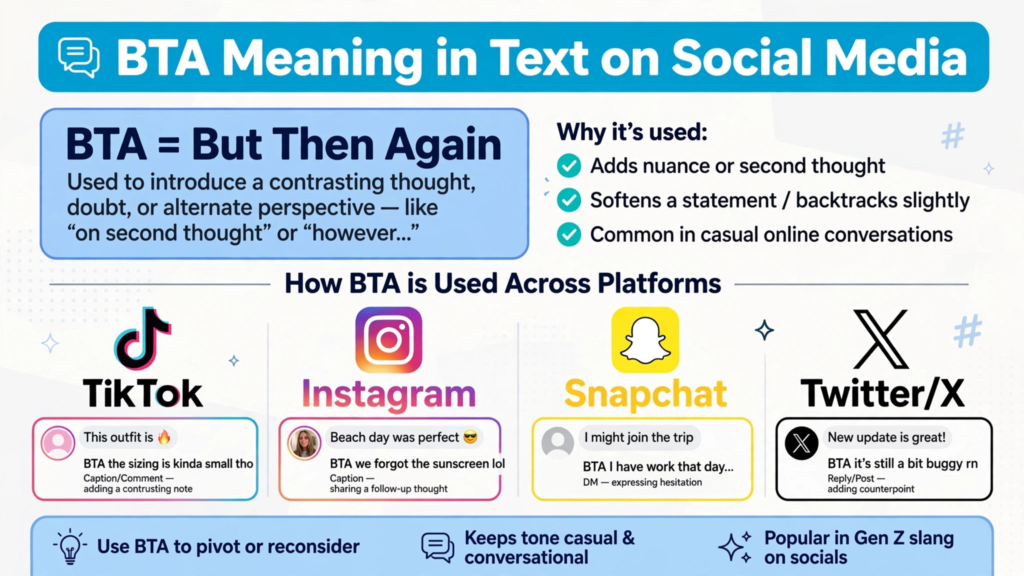
Users often include it when discussing:
- Current events
- Entertainment topics
- Sports opinions
- Technology reviews
- Personal experiences
- Product recommendations
Example:
“The latest smartphone doesn’t seem much different from the previous model. BTA, the camera improvements are impressive.”
Social media discussions often involve multiple viewpoints, making BTA a useful expression.
Situations Where BTA Is Commonly Used
Certain situations encourage the use of BTA more than others.
Debates
People use BTA when discussing both sides of an issue.
Example:
“I think online learning is convenient. BTA, classroom interaction has advantages too.”
Reviews
Reviewers often mention positives and negatives.
Example:
“The hotel rooms were small. BTA, the location was excellent.”
Personal Decisions
People frequently reconsider choices while texting friends.
Example:
“I should save money this month. BTA, that concert sounds amazing.”
Predictions
BTA helps express uncertainty about future events.
Example:
“I think the team will lose. BTA, they have won unexpected games before.”
How BTA Changes the Tone of a Message
Communication involves more than words. Tone plays a major role in how messages are interpreted.
BTA can make a message sound:
- More thoughtful
- More balanced
- Less aggressive
- More open-minded
- Less certain
Compare these examples:
Without BTA:
“The restaurant is overpriced.”
With BTA:
“The restaurant is overpriced. BTA, the service is excellent.”
The second statement sounds more reasonable because it acknowledges another perspective.
BTA vs Other Common Texting Acronyms
Understanding differences between abbreviations helps prevent confusion.
| Acronym | Meaning | Purpose |
| BTA | But Then Again | Introduces another viewpoint |
| IMO | In My Opinion | Shares a personal opinion |
| TBH | To Be Honest | Adds honesty or sincerity |
| BRB | Be Right Back | Indicates temporary absence |
| IDK | I Don’t Know | Expresses uncertainty |
| FYI | For Your Information | Shares information |
BTA stands out because it specifically signals a change in perspective.
Examples of BTA in Everyday Life
People use BTA in many common situations.
Discussing Careers
“I think remote jobs offer flexibility. BTA, office jobs provide more social interaction.”
Talking About Technology
“This app uses a lot of storage. BTA, its features are very useful.”
Discussing Relationships
“He seems quiet. BTA, he might just be shy.”
Discussing Food
“The meal was expensive. BTA, the portions were huge.”
Discussing Travel
“The flight is long. BTA, the destination is worth visiting.”
These examples demonstrate how naturally BTA fits into everyday conversations.
Common Mistakes When Using BTA
Many people misunderstand or misuse texting abbreviations. Here are several mistakes to avoid.
Using BTA Without Context
BTA works best when it follows an opinion or statement.
Incorrect:
“BTA.”
Correct:
“The project seems difficult. BTA, we have a skilled team.”
Using It Too Often
Repeatedly adding BTA can make messages feel repetitive.
Example:
“I like the movie. BTA, it was long. BTA, the ending was good.
Too many perspective shifts can confuse readers.
Assuming Everyone Knows the Acronym
Not everyone understands internet slang.
In professional communication, writing “But Then Again” may be clearer.
Confusing It with Other Meanings
Although “But Then Again” is the most common meaning in texting, some communities may use BTA differently. Always consider context.
Tips for Using BTA Correctly
Following a few simple guidelines can help you use BTA naturally.
Use It to Introduce a Second Thought
Think of BTA as a signal that another perspective is coming.
Keep the Message Clear
Readers should easily understand both viewpoints.
Use It in Casual Conversations
BTA fits best in texting, social media, and informal discussions.
Consider Your Audience
Some people may not recognize texting acronyms.
Avoid Overusing It
A balanced approach makes communication clearer.
Frequently Asked Questions
What does BTA mean in text messages?
BTA usually stands for “But Then Again.” It introduces a second thought, alternative opinion, or reconsideration of a previous statement.
Is BTA commonly used online?
Yes. Although it is not as common as abbreviations like LOL or BRB, many people still use BTA in chats, forums, and social media discussions.
What is the BTA meaning in text on Snapchat?
On Snapchat, the BTA meaning in text is generally “But Then Again.” Users employ it when adding another perspective to a conversation.
Can BTA have other meanings?
Yes. In specialized industries or organizations, BTA may represent different phrases. However, in texting and online chatting, it most commonly means “But Then Again.”
When should I use BTA?
Use BTA when you want to introduce another viewpoint, reconsider an opinion, or acknowledge a different possibility during a conversation.
Is BTA professional?
BTA works well in casual communication. For formal business writing, spelling out “But Then Again” is usually the better choice.
Conclusion
Understanding the BTA meaning in text helps you interpret online conversations more accurately and communicate more naturally. In most texting situations, BTA stands for “But Then Again,” a phrase used to introduce another perspective, reconsider a point, or acknowledge an alternative view. It adds balance to discussions and helps people express nuanced opinions without sounding overly certain or judgmental.
Whether you encounter BTA in text messages, social media comments, discussion forums, or casual workplace chats, its purpose remains the same: to present a second thought. By learning how and when to use BTA, you can participate more effectively in digital conversations and better understand the intent behind other people’s messages. As online language continues to evolve, knowing common abbreviations like BTA remains a valuable communication skill for modern internet users.