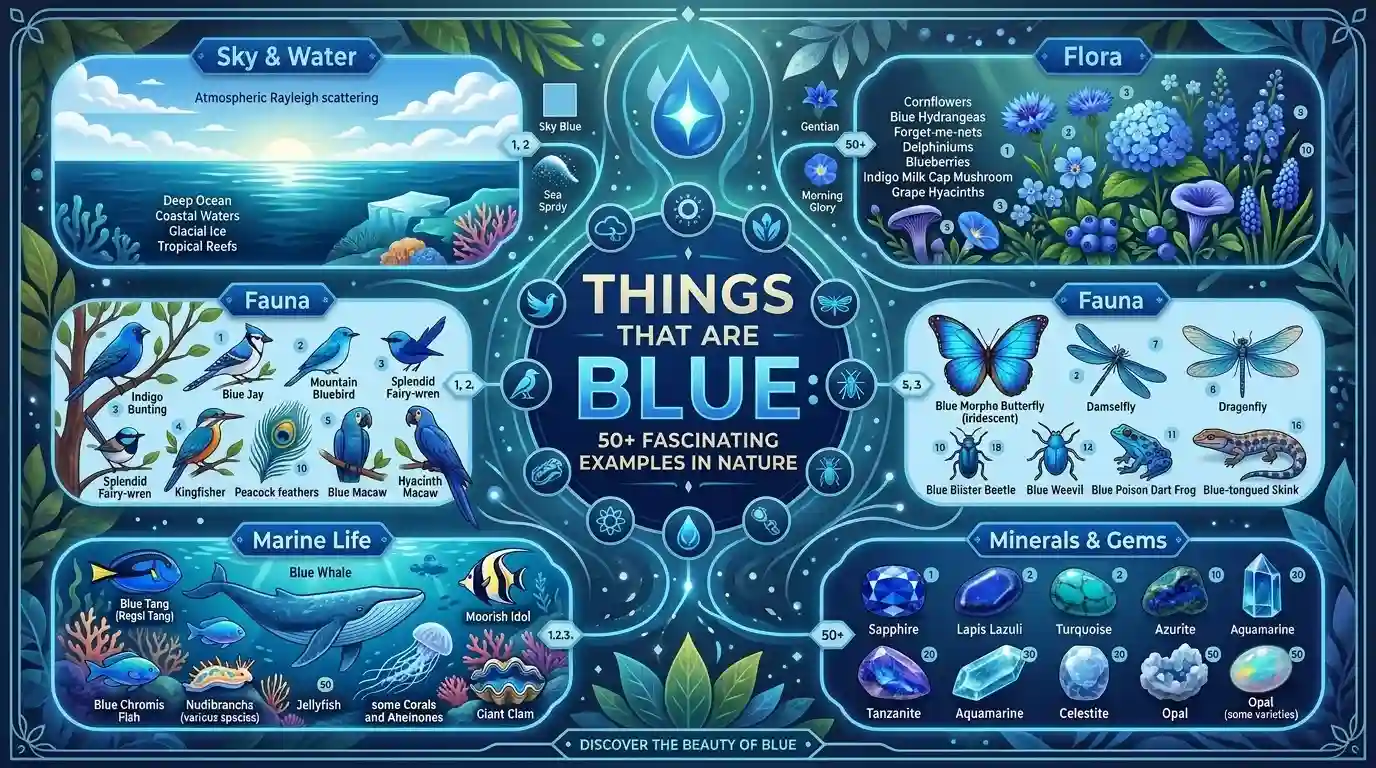
Blue is one of the most beloved colors on Earth. When people search for things that are blue, they often discover an incredible variety of examples across nature, science, food, technology, and daily life. From vast oceans and brilliant gemstones to colorful birds and modern branding, this color appears in countless fascinating forms.
Psychologically, blue symbolizes trust, calmness, intelligence, stability, and depth. Many cultures associate it with the sky, water, wisdom, and peace. In this guide, you’ll explore more than 70 things about this color, covering natural wonders, animals, foods, scientific innovations, and everyday objects that showcase this remarkable color.
Why Blue Is So Special
Blue is unusual because it is surprisingly rare in nature compared to colors like green, brown, and yellow. While we see this cool-toned color everywhere in the sky and oceans, many naturally occurring objects are not actually colored by traditional pigments.
Instead, much of the appearance we observe comes from structural coloration. Tiny microscopic structures interact with light, reflecting shorter wavelengths while scattering others.
Did You Know? The sky appears this way because Earth’s atmosphere scatters shorter wavelengths of sunlight more efficiently than longer ones, a phenomenon called Rayleigh scattering.
Another fascinating fact is that true blue pigments are uncommon in plants and animals. Many organisms create these stunning ocean-like tones through unique physical structures rather than chemical pigments.
Things That Are Blue in Nature
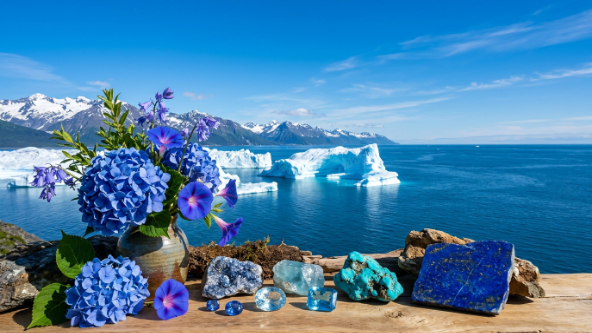
- The Sky – Appears blue due to atmospheric light scattering.The Ocean – Water absorbs red wavelengths and reflects more light from the shorter end of the spectrum, giving seas their iconic deep color.
- Blue Icebergs – Dense compressed ice absorbs more red light, creating a stunning icy appearance.
- Glacial Ice – Ancient glacier formations often develop a striking turquoise and sapphire-like hue.
- Blue Sapphire – A precious gemstone colored by trace amounts of iron and titanium.
- Aquamarine – A cool-toned variety of beryl valued for its ocean-inspired shades in jewelry.
- Blue Topaz – A popular gemstone known for its bright and vibrant tones.
- Turquoise – A naturally blue-green mineral used for thousands of years in art and jewelry.
- Lapis Lazuli – A deep-colored metamorphic rock prized since ancient Egypt.
- Hydrangeas – Their beautiful cool-toned blooms depend on soil acidity and aluminum content.
- Bluebells – Famous flowering plants with delicate violet-blue blossoms.
- Morning Glory Flowers – Many varieties produce vivid sky-colored petals.
Blue Animals Around the World
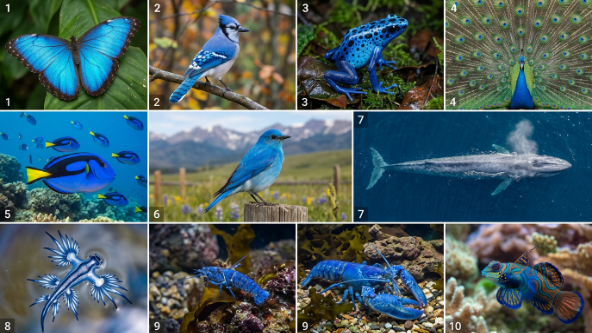
- Morpho Butterfly – Structural scales create brilliant metallic wings.
- Blue Jay – Appears this vibrant shade due to feather structure rather than traditional pigments.
- Poison Dart Frog – Native to South America and known for its bright, eye-catching coloration.
- Indian Peacock – Displays dazzling sapphire-colored neck feathers.
- Tang Fish – A popular reef fish recognized for its tropical ocean colors and unique patterns.
- Mountain Bluebird – One of North America’s brightest sky-colored birds.
- Whale – The largest animal on Earth has a stunning bluish-gray appearance.
- Dragon Sea Slug – A striking marine creature with an electric body and remarkable coloration.
- Blue Lobster – An extremely rare creature caused by a unique genetic variation.
- Mandarinfish – Features stunning ocean-inspired patterns across its body.
Did You Know? Blue lobsters are estimated to occur roughly once in several million lobsters, making them exceptionally rare.
Things That Are Blue in Everyday Life
Blue is often associated with cleanliness, trustworthiness, and reliability. That is why many common products and objects feature prominently.

- jeans
- Ballpoint pen ink
- notebooks
- Water bottles
- Swimming pools
- Bath towels
- Toothbrushes
- Laundry detergent packaging
- backpacks
- umbrellas
- Office folders
- coffee mugs
- Surgical gloves
- Cleaning products
- School uniforms
- Traffic information signs
- sneakers
- curtains
- bedsheets
- recycling bins
Many manufacturers use blue because consumers frequently associate it with cleanliness, professionalism, and dependability.
Blue Food Examples
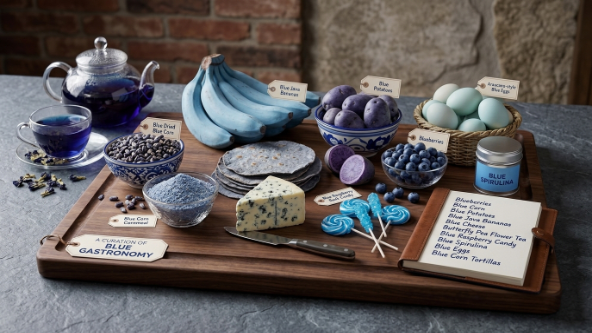
- Blueberries – One of the most famous naturally blue fruits.
- Corn – Traditional crop used in tortillas and chips.
- Potatoes – Contain pigments called anthocyanins.
- Java Bananas – Known for their bluish peel before ripening.
- Cheese – Contains blue mold cultures that create characteristic veins.
- Butterfly Pea Flowers – Used to make naturally blue tea.
- Raspberry Candy – Artificially flavored but iconic in appearance.
- Spirulina – Natural blue algae extract used in smoothies.
- Eggs – Produced by certain chicken breeds such as Araucanas.
- Corn Tortillas – Popular in several traditional cuisines.
Fun Fact
Butterfly pea tea changes from blue to purple when lemon juice is added, thanks to a pH-sensitive reaction involving anthocyanin compounds.
Science and Technology
LED Technology
The invention of efficient light-emitting diodes (LEDs) revolutionized lighting technology. Blue LEDs made modern white LED lighting possible and significantly improved energy efficiency.
Short-Wavelength Lasers
The Blue lasers are used in advanced optical systems, data storage devices, and scientific research because shorter wavelengths allow greater precision.
Medical Imaging
Blue light technologies help doctors detect certain skin conditions and improve visualization during specialized medical procedures.
Light Sterilization
Specific wavelengths can help reduce bacterial growth in healthcare and food-processing environments.
Industrial Safety Systems
Blue warning lights are commonly used in factories, warehouses, and industrial vehicles because they remain highly visible in many working conditions.
Why Industries and Branding Prefer Blue
Blue consistently ranks among the world’s most trusted colors. It communicates confidence and reliability without appearing aggressive.
Common traits associated
- Trust
- Reliability
- Security
- Innovation
- Stability
- Intelligence
- Calmness
Industries that frequently use color-based branding include:
- Banking and finance
- Technology companies
- Healthcare organizations
- Airlines
- Insurance providers
- Government agencies
- Educational institutions
Many major global companies choose blue because it encourages feelings of confidence and credibility among customers.
Interesting Facts About This Fascinating Color
- Blue is often cited as the world’s favorite color.
- Ancient civilizations highly valued this rare color pigment because it was difficult to obtain.
- Lapis lazuli was once considered more valuable than gold in some regions.
- The deepest ocean waters appear dark and mysterious due to light absorption.
- Stars are among the hottest stars in the universe.
- True pigments of this shade are rare in flowers.
- Morpho butterflies create their stunning appearance through structural coloration rather than traditional pigments.
- The whale is the largest animal known to have lived.
- Some glaciers develop an intense icy hue because of compressed ice.
- Gemstones in these cool-toned shades are among the most sought-after jewelry stones worldwide.
Educational Importance of Learning About This Color
Exploring things that are blue helps learners connect concepts from science, geography, biology, art, and everyday observation. Children develop stronger vocabulary, color recognition skills, and an appreciation for how colors occur naturally.
Studying examples of this color also introduces fascinating topics such as light physics, animal adaptations, mineral formation, and environmental science. It encourages curiosity about the world and promotes cross-disciplinary learning.
FAQs About Stunning Color
Why is the sky blue?
The atmosphere scatters short wavelengths of sunlight more effectively than other colors, making the sky appear blue.
Why is ocean water blue?
Water absorbs red wavelengths more readily and reflects or scatters light, creating a appearance.
Why Are Animals With This Color So Rare?
Many animals lack true pigments and instead rely on microscopic structures that reflect blue light.
Why do some flowers turn this color?
Soil chemistry, pH levels, and specific pigments can influence flower coloration.
Why are blueberries blue?
Their color comes from natural plant compounds called anthocyanins combined with a waxy surface coating.
Why do companies use this color logos?
Blue is strongly associated with trust, stability, professionalism, and reliability.
Final Thoughts
From the vast sky above us to tiny butterfly wings, things that are blue reveal some of nature’s most fascinating scientific secrets. Blue connects the worlds of biology, geology, physics, technology, and everyday life in remarkable ways. Whether appearing through pigments, minerals, or complex light interactions, this color continues to inspire wonder across cultures and generations.