Learning carpenter tools names is important for beginners, DIY enthusiasts, homeowners, and professional woodworkers alike. Knowing the right tool for each task helps improve accuracy, saves time, and reduces mistakes. It also makes woodworking projects safer and more enjoyable.
Whether you are measuring a board, cutting wood, driving nails, or smoothing rough surfaces, having the proper tools can make a huge difference in the final result. Modern carpenters use both traditional hand tools and advanced power tools to complete projects efficiently.
In this guide, you will discover a detailed list of 50 tools names, their uses, and practical examples. You will also learn about essential tools for beginners, safety tips, interesting facts, and answers to common carpentry questions.
What Are Carpenter Tools?
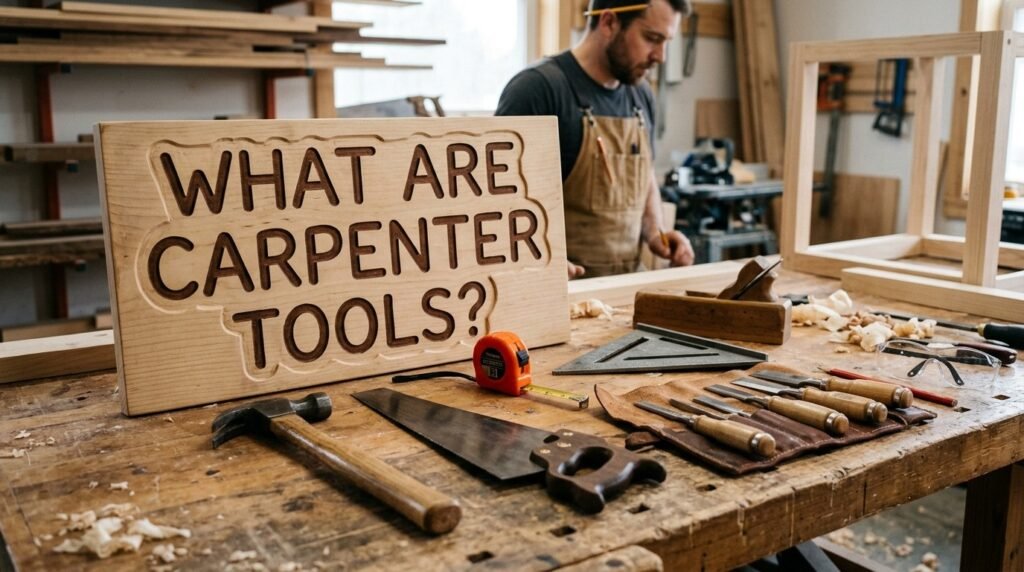
Carpenter tools are specialized instruments used to measure, cut, shape, join, smooth, and assemble wood. These tools help carpenters create everything from simple shelves to complex furniture and building frameworks.
There are two main types of carpentry tools:
Hand Tools
Hand tools are operated manually without electricity. Examples include hammers, saws, chisels, and measuring tapes.
Advantages:
- Affordable
- Portable
- Easy to control
- Great for detailed work
Power Tools
Power tools use electricity or batteries to perform tasks faster and with less physical effort.
Advantages:
- Faster cutting and drilling
- Increased productivity
- Better for large projects
- Consistent performance
Every carpenter should have a basic tool kit containing measuring tools, cutting tools, fastening tools, and safety equipment. These essential carpentry tools provide the foundation for most woodworking projects.
50 Carpenter Tools Names and Their Uses
Carpenters use a wide range of tools to measure, cut, shape, and assemble wood with accuracy and efficiency. Understanding these 50 carpenter tools names and their uses helps beginners choose the right tool for every woodworking project. From simple hand tools to advanced power tools, each carpenter tool plays an important role in creating strong, precise, and professional-quality work.
Measuring and Marking Tools
Measuring and marking tools help us take accurate measurements and mark the required points. We use these tools to measure length, width, and angles correctly. These tools make our work easier, faster, and more precise.
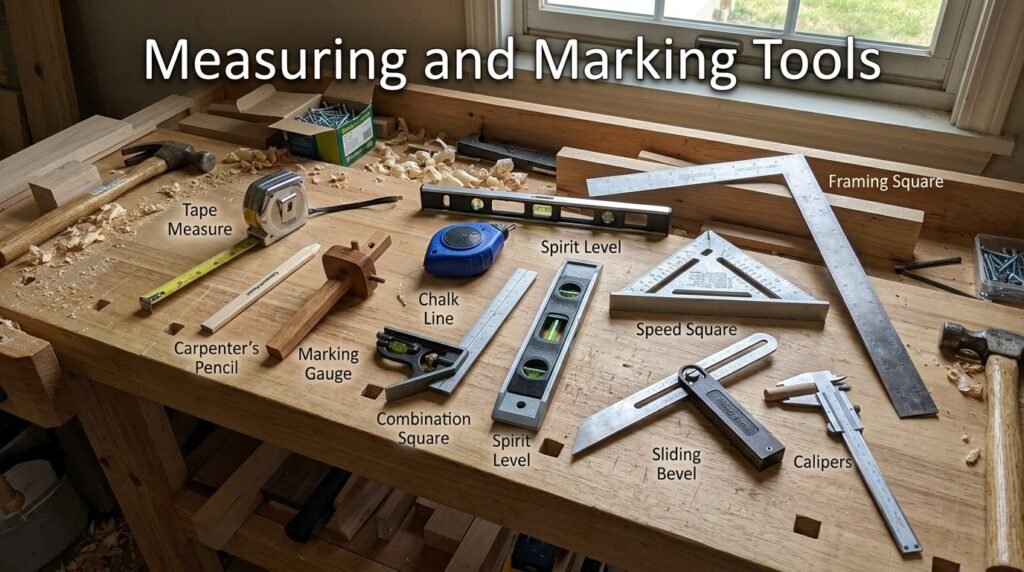
1. Tape Measure
Purpose: Measures length, width, and height accurately.
Example of Use: Measuring a wooden board before cutting.
2. Carpenter’s Pencil
Purpose: Marks measurements and cutting lines.
Example of Use: Drawing a straight cut line on plywood.
3. Marking Gauge
Purpose: Creates consistent marking lines parallel to an edge.
Example of Use: Marking a mortise joint.
4. Chalk Line
Purpose: Creates long, straight reference lines.
Example of Use: Marking a wall for framing.
5. Combination Square
Purpose: Measures and checks 90° and 45° angles.
Example of Use: Verifying square corners on a cabinet.
6. Spirit Level
Purpose: Checks whether a surface is level or plumb.
Example of Use: Installing shelves evenly.
7. Speed Square
Purpose: Marks angles and straight cuts quickly.
Example of Use: Laying out roof rafters.
8. Framing Square
Purpose: Measures large right angles.
Example of Use: Building wall frames.
9. Sliding Bevel
Purpose: Transfers and measures angles.
Example of Use: Copying roof angles.
10. Calipers
Purpose: Measures thickness and diameter accurately.
Example of Use: Measuring dowel size.
Read more 100 Action Words in English: Powerful Verbs for Everyday Communication
Cutting Tools
Cutting tools help us cut different materials accurately and safely. We use tools like saws, knives, and scissors to make clean cuts. Proper cutting tools make our work easier, faster, and more precise.
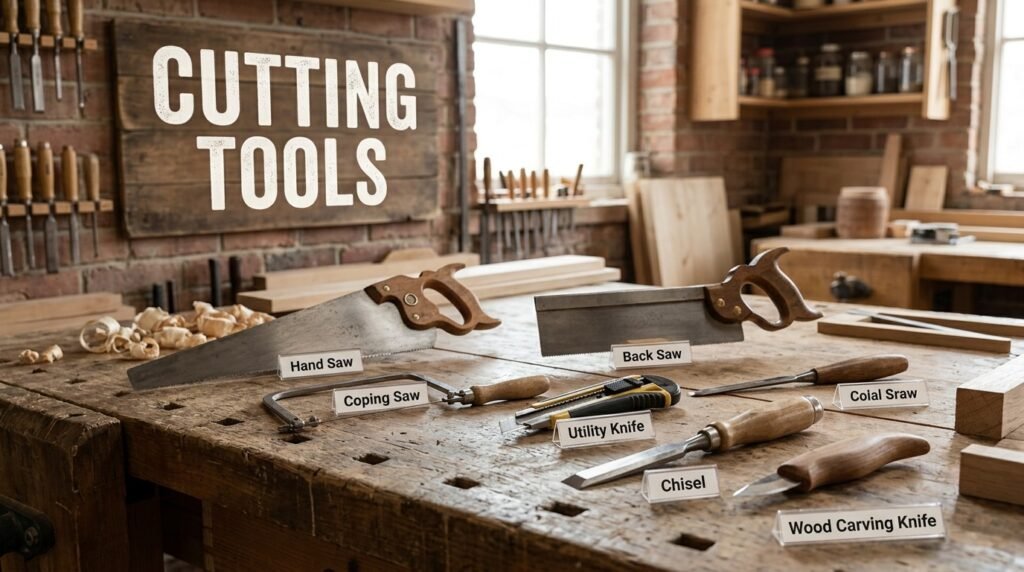
11. Hand Saw
Purpose: General wood cutting.
Example of Use: Cutting lumber to length.
12. Crosscut Saw
Purpose: Cuts across wood grain.
Example of Use: Trimming boards.
13. Rip Saw
Purpose: Cuts along wood grain.
Example of Use: Splitting a board lengthwise.
14. Coping Saw
Purpose: Makes curved cuts.
Example of Use: Cutting decorative trim patterns.
15. Back Saw
Purpose: Produces precise straight cuts.
Example of Use: Cutting dovetail joints.
16. Utility Knife
Purpose: Scores and trims materials.
Example of Use: Cutting laminate sheets.
17. Chisel
Purpose: Removes wood and shapes joints.
Example of Use: Creating mortise joints.
18. Wood Carving Knife
Purpose: Detailed carving work.
Example of Use: Carving decorative patterns.
19. Flush Cut Saw
Purpose: Cuts material flush to a surface.
Example of Use: Trimming exposed dowels.
20. Bow Saw
Purpose: Cuts thick wood and branches.
Example of Use: Rough outdoor woodworking.
Hammering and Fastening Tools
Hammering and fastening tools help us join and secure different materials. We use hammers, screwdrivers, and wrenches to fasten parts properly. These tools make our work strong, secure, and reliable.
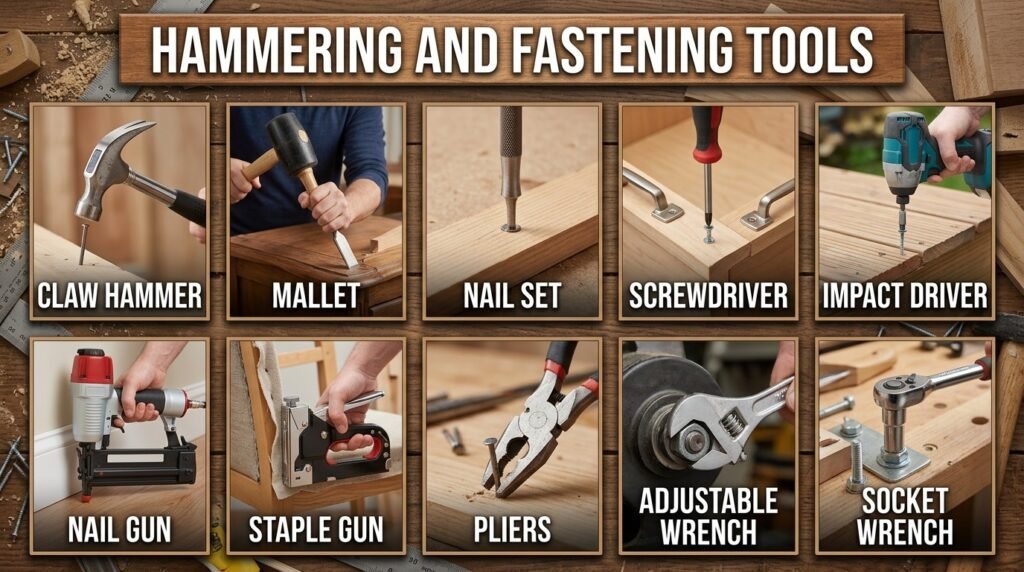
21. Claw Hammer
Purpose: Drives and removes nails.
Example of Use: Building wooden frames.
22. Mallet
Purpose: Strikes chisels without damaging them.
Example of Use: Chisel work on furniture.
23. Nail Set
Purpose: Countersinks nail heads.
Example of Use: Preparing wood for filling.
24. Screwdriver
Purpose: Tightens and removes screws.
Example of Use: Installing cabinet hardware.
25. Impact Driver
Purpose: Drives screws with high torque.
Example of Use: Fastening deck boards.
26. Nail Gun
Purpose: Drives nails quickly.
Example of Use: Installing trim and molding.
27. Staple Gun
Purpose: Fastens materials using staples.
Example of Use: Attaching upholstery fabric.
28. Pliers
Purpose: Grip, bend, and remove fasteners.
Example of Use: Pulling stubborn nails.
29. Adjustable Wrench
Purpose: Tightens nuts and bolts.
Example of Use: Assembling woodworking equipment.
30. Socket Wrench
Purpose: Tightens bolts efficiently.
Example of Use: Installing workbench hardware.
Shaping and Smoothing Tools
Shaping and smoothing tools help us give materials the desired shape and finish. We use files, rasps, and sandpaper to smooth rough surfaces and remove unwanted material. These tools make our work neat, smooth, and accurate.
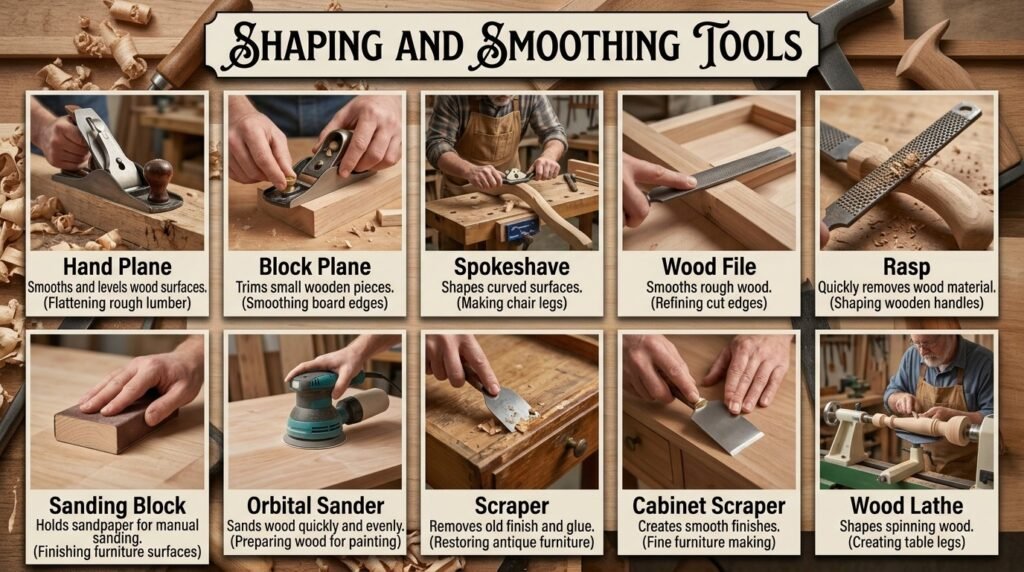
31. Hand Plane
Purpose: Smooths and levels wood surfaces.
Example of Use: Flattening rough lumber.
32. Block Plane
Purpose: Trims small wooden pieces.
Example of Use: Smoothing board edges.
33. Spokeshave
Purpose: Shapes curved surfaces.
Example of Use: Making chair legs.
34. Wood File
Purpose: Smooths rough wood.
Example of Use: Refining cut edges.
35. Rasp
Purpose: Quickly removes wood material.
Example of Use: Shaping wooden handles.
36. Sanding Block
Purpose: Holds sandpaper for manual sanding.
Example of Use: Finishing furniture surfaces.
37. Orbital Sander
Purpose: Sands wood quickly and evenly.
Example of Use: Preparing wood for painting.
38. Scraper
Purpose: Removes old finish and glue.
Example of Use: Restoring antique furniture.
39. Cabinet Scraper
Purpose: Creates smooth finishes.
Example of Use: Fine furniture making.
40. Wood Lathe
Purpose: Shapes spinning wood.
Example of Use: Creating table legs.
Power Tools Used by Carpenters
Power tools help carpenters complete their work quickly and efficiently. They use electric saws, drills, sanders, and routers to cut, shape, and finish wood. These tools save time and help achieve accurate and professional results.
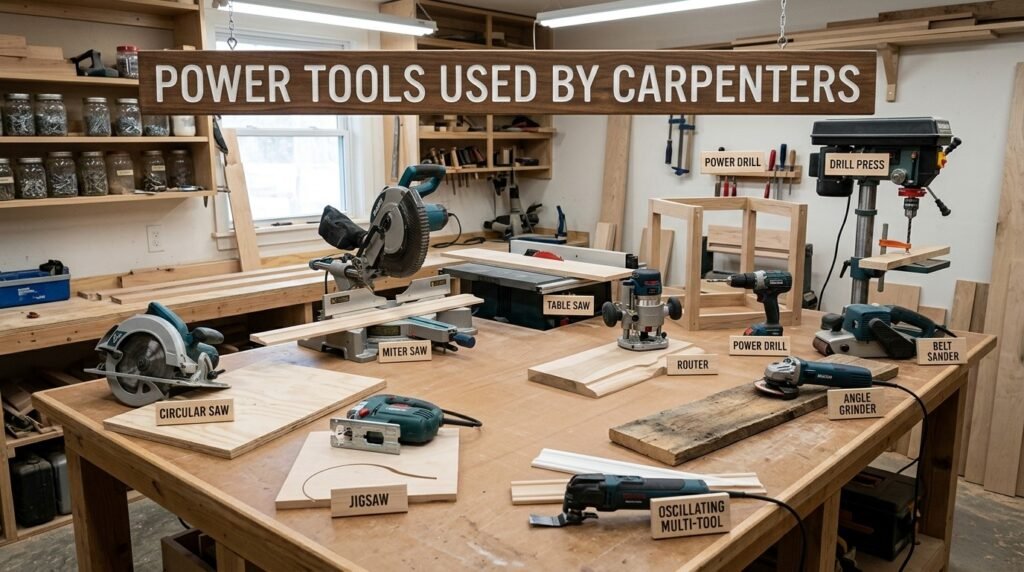
41. Circular Saw
Purpose: Makes straight cuts quickly.
Example of Use: Cutting plywood sheets.
42. Jigsaw
Purpose: Makes curved and detailed cuts.
Example of Use: Cutting sink openings.
43. Miter Saw
Purpose: Creates accurate angle cuts.
Example of Use: Cutting trim pieces.
44. Table Saw
Purpose: Performs precise straight cuts.
Example of Use: Ripping large boards.
45. Router
Purpose: Cuts decorative edges and grooves.
Example of Use: Creating cabinet profiles.
46. Power Drill
Purpose: Drills holes and drives screws.
Example of Use: Furniture assembly.
47. Drill Press
Purpose: Produces precise vertical holes.
Example of Use: Repetitive drilling tasks.
48. Belt Sander
Purpose: Removes material rapidly.
Example of Use: Leveling rough boards.
49. Angle Grinder
Purpose: Cuts and grinds materials.
Example of Use: Sharpening tools.
50. Oscillating Multi-Tool
Purpose: Performs cutting, sanding, and scraping.
Example of Use: Trim work and renovations.
Clamping and Holding Tools
Clamping and holding tools help carpenters keep materials firmly in place while working. They use clamps, vices, and holding devices to prevent materials from moving. These tools make the work safer, easier, and more accurate.
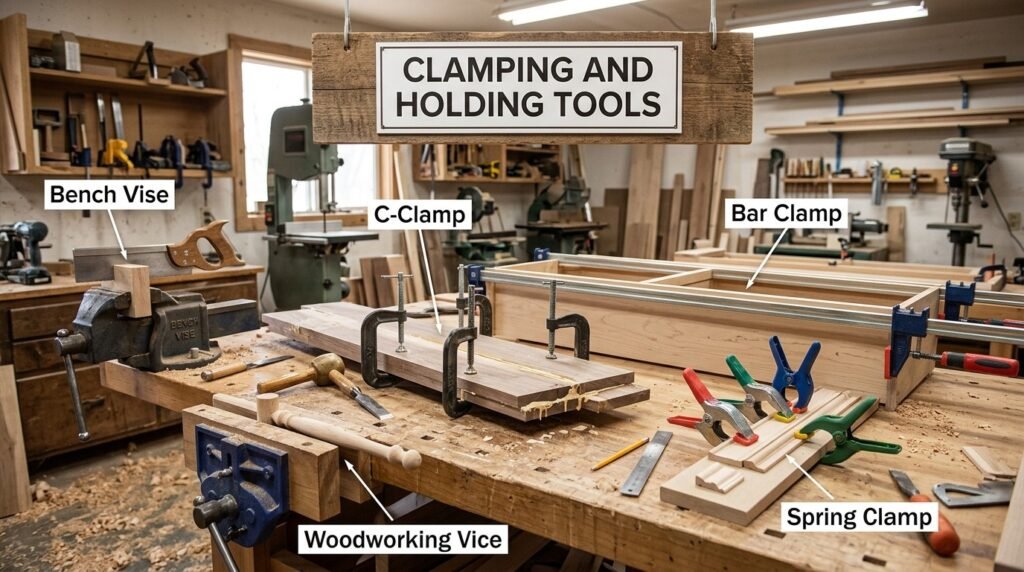
C-Clamp
Purpose: Holds materials securely.
Example of Use: Gluing wooden boards together.
Bar Clamp
Purpose: Applies pressure across long pieces.
Example of Use: Furniture assembly.
Spring Clamp
Purpose: Provides quick temporary holding.
Example of Use: Holding trim during installation.
Bench Vise
Purpose: Secures workpieces on a workbench.
Example of Use: Sawing small wood pieces.
Woodworking Vice
Purpose: Holds wood firmly while shaping.
Example of Use: Chiseling joints.
Safety Tips When Using Carpenter Tools
Safety is important when using carpenter tools to prevent accidents and injuries. Always use the right tool carefully and wear protective equipment such as safety glasses and gloves. Keep the tools clean, properly maintained, and store them safely after use.
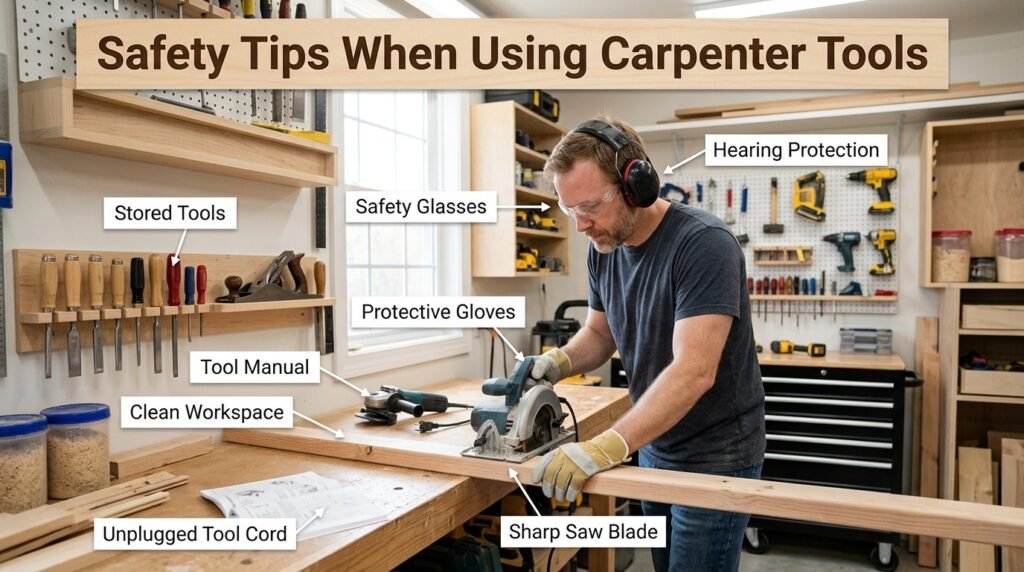
Wear Safety Glasses
Protect your eyes from dust, wood chips, and flying debris.
Use Protective Gloves
Gloves help prevent cuts, splinters, and abrasions.
Keep Tools Sharp
Sharp tools are safer because they require less force and provide better control.
Follow Manufacturer Instructions
Always read manuals before operating power tools.
Store Tools Properly
Keep tools in a toolbox or designated storage area.
Maintain a Clean Workspace
Remove clutter, cords, and wood scraps to prevent accidents.
Disconnect Power Tools
Unplug tools before changing blades or making adjustments.
Use Hearing Protection
Power tools can produce loud noise that may damage hearing over time.
Interesting Facts About Carpenter Tools
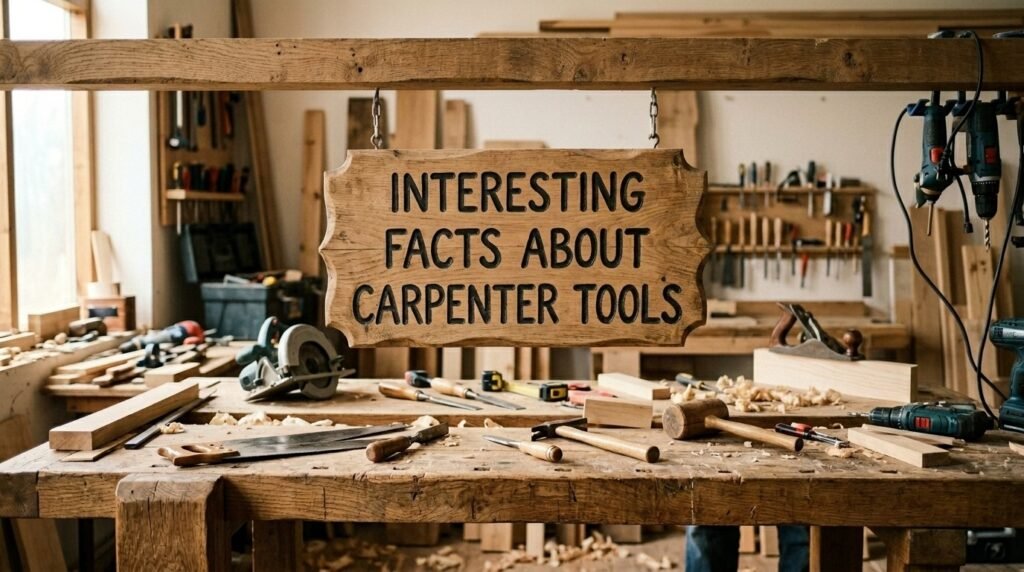
Carpenter tools have been used for thousands of years to build and shape wooden objects. Modern tools make carpentry faster and more accurate than traditional hand tools. Many carpenter tools are specially designed to make cutting, joining, shaping, and finishing wood easier.
- The hammer is one of the oldest human tools and dates back thousands of years.
- Ancient Egyptians used woodworking tools to build furniture and boats.
- Early saws were made from bronze before steel became common.
- Tape measures became widely available during the Industrial Revolution.
- Power drills greatly increased construction speed in the 20th century.
- A carpenter may use dozens of different tools on a single project.
- Accurate measurement is considered one of the most important woodworking skills.
- The claw hammer remains one of the most commonly used carpenter hand tools worldwide.
- Modern cordless power tools use rechargeable lithium-ion batteries.
- Professional woodworking equipment can improve precision by fractions of a millimeter.
FAQs
1. What are the most common carpenter tools?
Common carpenter tools include tape measures, hammers, screwdrivers, saws, chisels, drills, levels, squares, and clamps.
2. Which carpenter tools are best for beginners?
Beginners should start with a tape measure, hammer, screwdriver set, hand saw, chisel set, drill, and safety equipment.
3. What is the difference between hand tools and power tools?
Hand tools are operated manually, while power tools use electricity or batteries to perform tasks faster.
4. Why is a tape measure important in carpentry?
A tape measure ensures accurate dimensions, helping prevent costly mistakes and material waste.
5. What tools are used for cutting wood?
Hand saws, circular saws, jigsaws, table saws, coping saws, and chisels are commonly used for cutting wood.
6. How do carpenters keep tools safe and maintained?
They clean tools regularly, sharpen blades, lubricate moving parts, and store equipment properly.
7. What is the most important carpenter tool?
Many carpenters consider the tape measure the most important tool because every project begins with accurate measurements.
8. Why is learning carpenter tools names important?
Understanding carpenter tools names helps you choose the correct tool for each task, work more efficiently, and improve woodworking results.
Conclusion
Learning carpenter tools names is one of the first and most important steps in becoming skilled at woodworking and carpentry. Whether you are a beginner building simple home projects or an experienced professional working on complex structures, understanding each tool’s purpose helps you work more efficiently and achieve better results.
The wide variety of woodworking tools available today allows carpenters to measure, cut, shape, fasten, and finish wood with impressive accuracy. Traditional carpenter hand tools such as hammers, chisels, and hand saws continue to play a vital role, while modern power tools for carpenters help complete projects faster and with greater precision. As you continue learning the names of carpentry tools, focus on understanding how each tool works and practicing using them correctly. With patience, experience, and the right woodworking equipment, you can complete stronger, cleaner, and more professional-looking projects. The more familiar you become with carpenter tools and their uses, the more enjoyable and rewarding woodworking will be.