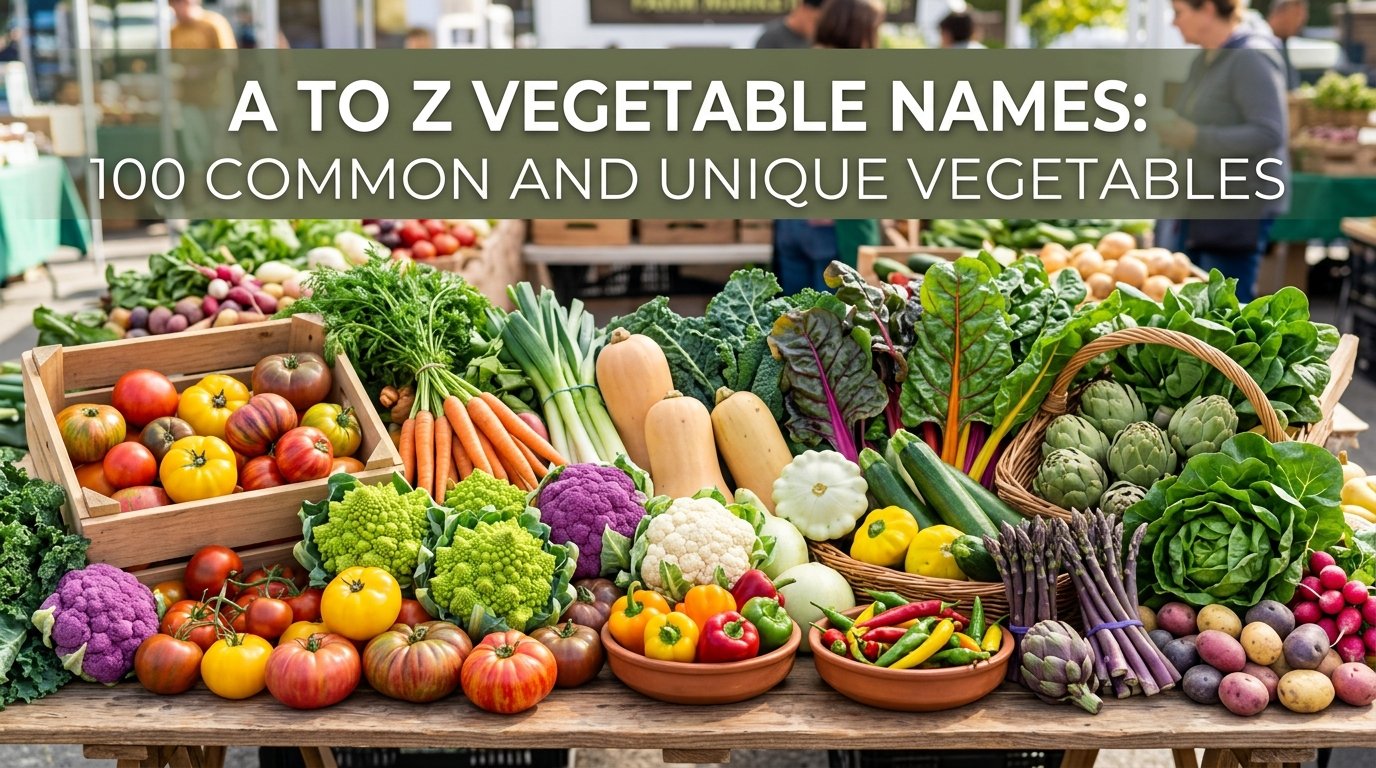
Vegetables play an essential role in a healthy diet, and farmers grow them in nearly every region of the world. They provide important vitamins, minerals, antioxidants, and fiber that support overall health and well-being. Learning 100 vegetables name A to Z is useful for students, gardeners, cooks, farmers, and anyone interested in nutrition.
This comprehensive guide features 100 vegetable names arranged alphabetically. Each vegetable includes a brief description and key health benefits. From familiar favorites like carrots and spinach to lesser-known vegetables like yacon and zanthoxylum shoots, this list serves as an educational reference and practical resource.
A Vegetables
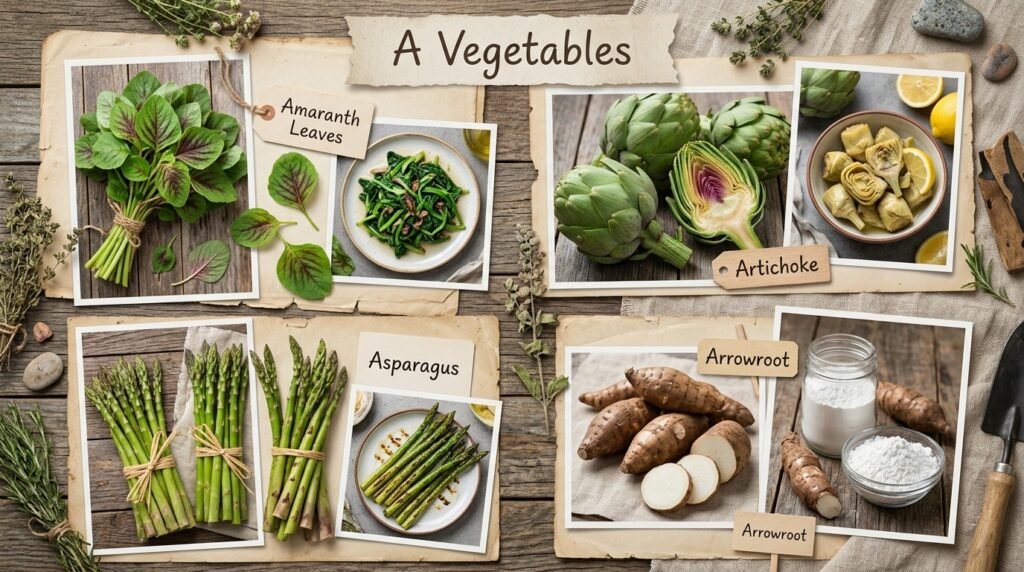
Vegetables that start with the letter A include a variety of nutritious and flavorful options found in cuisines around the world. From Asparagus and Artichoke to Amaranth Leaves and Arrowroot, these vegetables offer unique tastes, textures, and health benefits.
1. Amaranth Leaves
People widely use amaranth leaves as leafy greens in Asian, African, and Caribbean cuisines. They have a mild earthy flavor, and cooks can prepare them similarly to spinach. Because they are rich in nutrients, many communities value them as a traditional vegetable.
Benefits: High in iron, calcium, vitamin C, and dietary fiber.
2. Artichoke
Artichokes are flowering vegetables known for their edible buds. People enjoy them for their unique nutty flavor and commonly steam or grill them. Their tender hearts are especially popular in many recipes.
Benefits: Supports digestion, liver health, and provides antioxidants.
3. Asparagus
Asparagus is a spring vegetable with tender green stalks. People enjoy it roasted, grilled, steamed, or added to salads and soups. Its delicate flavor makes it a favorite in healthy diets.
Benefits: Rich in folate, vitamin K, and antioxidants.
4. Arrowroot
People value arrowroot as a tropical root vegetable for its starchy rhizomes. They commonly process it into flour and use it in cooking and baking. Its easy digestibility and versatility make it a popular ingredient in many foods.
Benefits: Supports digestion and provides quick energy.
B Vegetables
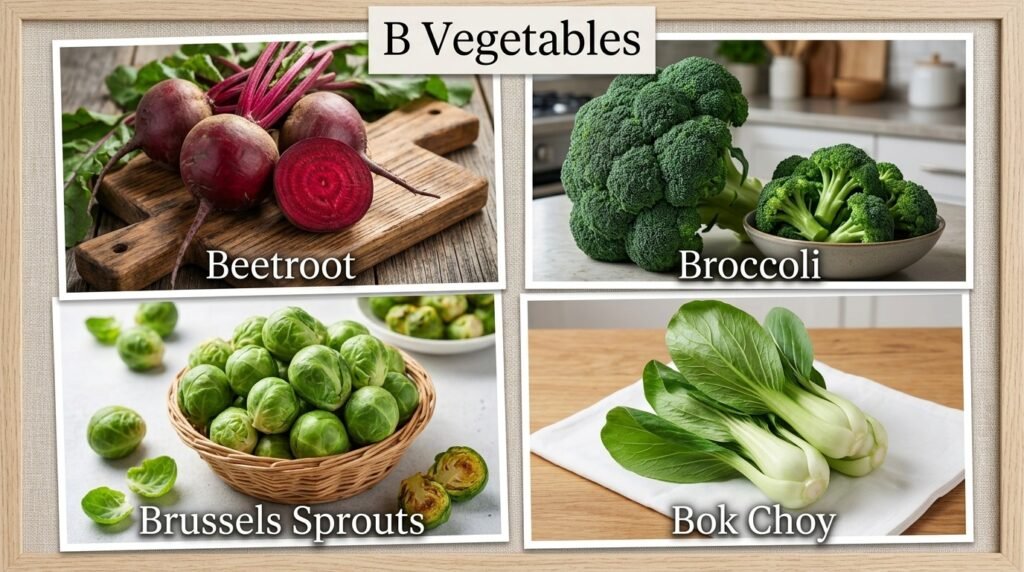
Vegetables that start with the letter B provide plenty of nutrients, and people commonly use them in a variety of healthy recipes. Popular examples include Beetroot, Broccoli, Brussels Sprouts, and Bok Choy, each offering its own unique flavor and texture.
5. Beetroot
People grow beetroot for its colorful, deep red flesh. They use it in salads, juices, soups, and roasted dishes. Its natural sweetness makes it a popular vegetable around the world.
Benefits: Supports heart health and improves blood circulation.
6. Broccoli
Broccoli is a cruciferous vegetable with dense green flower heads. People commonly steam, roast, or eat it raw. It is among the most nutrient-dense vegetables available.
Benefits: Rich in vitamins C and K and supports immunity.
7. Brussels Sprouts
Brussels sprouts resemble miniature cabbages and grow on thick stalks. Roasting makes them sweeter, and people often serve them as side dishes. They are highly nutritious and filling.
Benefits: High in fiber and antioxidants.
8. Bok Choy
Bok choy is a Chinese leafy vegetable with crisp white stems and green leaves. Cooks frequently use it in stir-fries and soups. Its mild taste pairs well with many dishes.
Benefits: Supports bone health and provides vitamin A.
C Vegetables
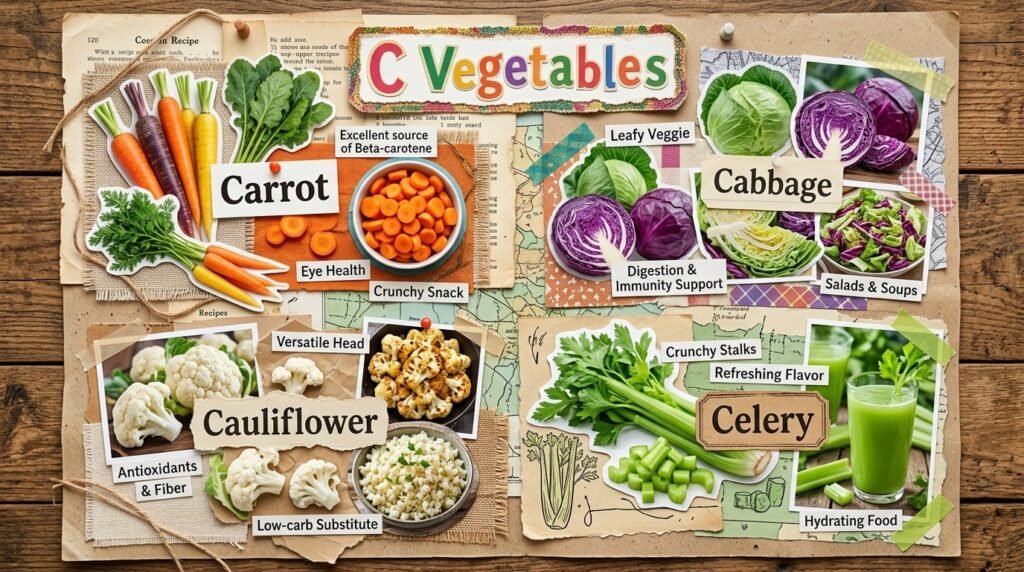
People around the world enjoy many vegetables that start with the letter C. They commonly eat vegetables such as Carrot, Cabbage, Cauliflower, and Celery because of their versatility and nutritional value. These vegetables provide important vitamins, minerals, fiber, and antioxidants that support a healthy and balanced diet.
9. Carrot
Carrots are among the world’s most popular root vegetables. Their sweet flavor and crunchy texture make them versatile for cooking and snacking. They come in several colors, including orange, purple, and yellow.
Benefits: Excellent source of beta-carotene for eye health.
10. Cabbage
Cabbage is a leafy vegetable available in green, red, and purple varieties. People commonly use it in salads, soups, and fermented foods. It stores well and is highly nutritious.
Benefits: Supports digestion and immunity.
11. Cauliflower
Cauliflower is a versatile vegetable with compact white flower heads. You can roast, mash, or steam it, or use it as a rice substitute. It is popular in low-carb diets.
Benefits: Rich in antioxidants and fiber.
12. Celery
Celery has crunchy stalks and a refreshing flavor. People often eat it raw, add it to soups, or use it in salads. Its high water content makes it a hydrating food.
Benefits: Supports hydration and digestive health.
D Vegetables
Vegetables that start with the letter D offer a variety of flavors, textures, and nutritional benefits. People around the world use popular vegetables such as Daikon Radish, Drumstick Pods, Dandelion Greens, and Dolichos Beans in a variety of cuisines. These vegetables are rich in essential nutrients, fiber, and antioxidants that can support digestion, immunity, and overall health.
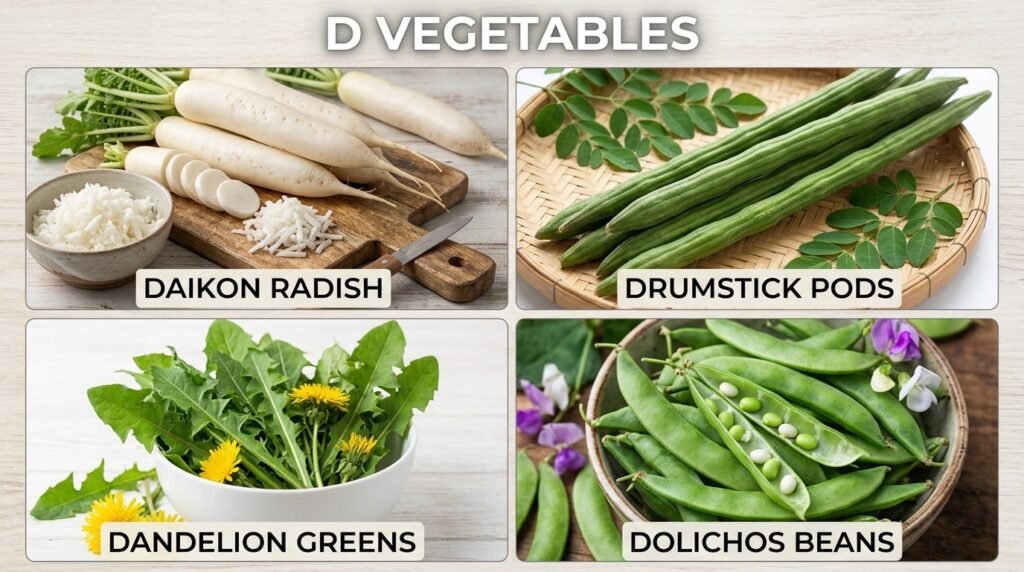
13. Daikon Radish
People widely use daikon, a large white radish, in Asian cuisine. Its mild flavor sets it apart from common radishes, and cooks often pickle, grate, or add it to soups.
Benefits: Supports digestion and immune function.
14. Drumstick Pods
Drumstick pods come from the moringa tree and are common in South Asian cooking. They are added to curries and soups. Their nutritional value has made them increasingly popular.
Benefits: Rich in vitamins, minerals, and antioxidants.
15. Dandelion Greens
People eat dandelion greens for their slightly bitter flavor and use them in salads or cooked dishes. Communities have consumed these nutritious leaves as a vegetable for centuries.
Benefits: Supports liver health and digestion.
16. Dolichos Beans
Dolichos beans are climbing legumes cultivated in tropical regions. They are commonly cooked in stews and curries. Their seeds and pods are both edible.
Benefits: Good source of protein and fiber.
E Vegetables
People may encounter fewer vegetables that start with the letter E, but these vegetables still provide excellent nutrition and culinary value. Examples such as Endive, Elephant Garlic, Eddoe, and Egyptian Onion add unique flavors and textures to a variety of dishes. These vegetables provide important vitamins, minerals, fiber, and antioxidants that contribute to a healthy and balanced diet.
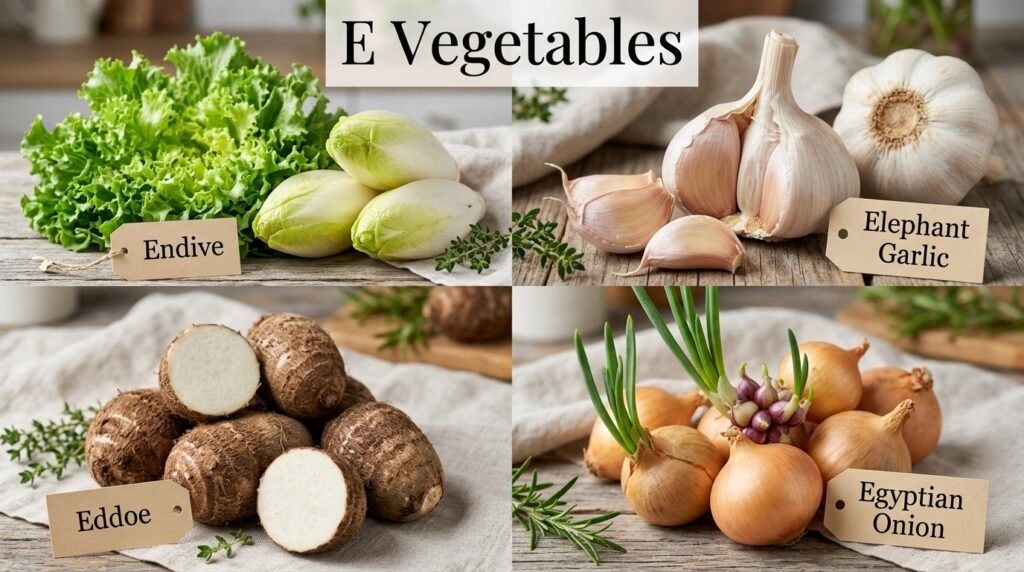
17. Endive
Endive is a leafy vegetable with crisp texture and slightly bitter flavor. It is often used in salads and gourmet dishes. Its unique taste adds variety to meals.
Benefits: Supports digestion and contains vitamin K.
18. Elephant Garlic
Although called garlic, elephant garlic is closely related to leeks. It produces very large cloves with a mild flavor. It is used similarly to regular garlic.
Benefits: Supports heart health and immunity.
19. Eddoe
Eddoe is a tropical root vegetable related to taro. It is commonly boiled, baked, or fried. Its starchy texture makes it a filling food.
Benefits: Provides fiber and energy.
20. Egyptian Onion
Egyptian onions are perennial onions that produce bulb clusters. They are hardy and easy to grow. Their flavor is stronger than many common onions.
Benefits: Rich in antioxidants and sulfur compounds.
F Vegetables
Vegetables that start with the letter F include several nutritious and flavorful options enjoyed in different cuisines around the world. These vegetables provide important vitamins and minerals that contribute to a healthy diet.
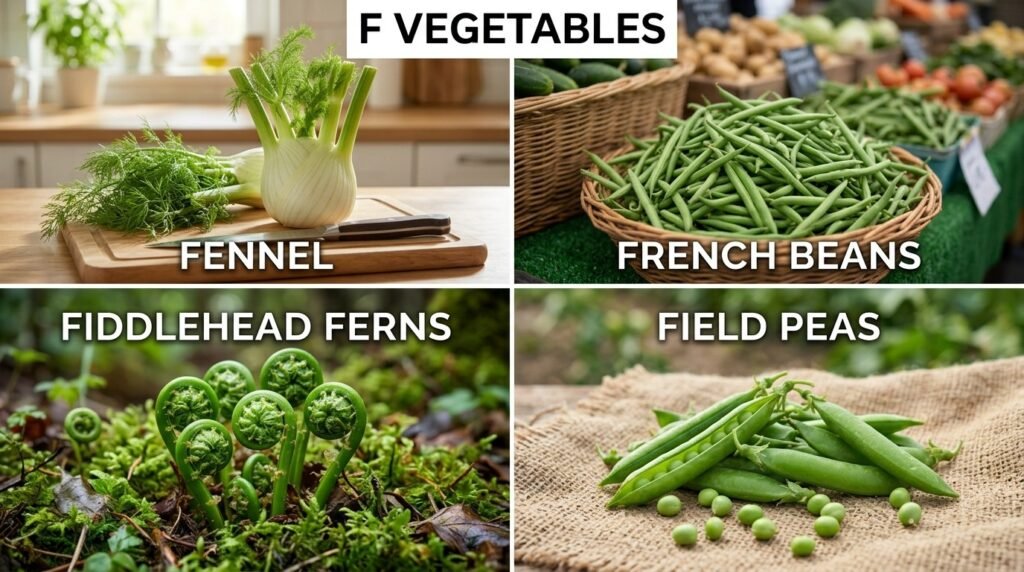
21. Fennel
Fennel is a fragrant vegetable with feathery leaves and a bulbous base. It has a mild licorice-like flavor. It can be eaten raw or cooked.
Benefits: Supports digestion and provides vitamin C.
22. French Beans
People around the world enjoy French beans for their slender shape and fresh flavor. They commonly steam, stir-fry, or add them to casseroles. Their crisp texture makes them a popular choice in many dishes.
Benefits: Good source of fiber and vitamins.
23. Fiddlehead Ferns
People harvest fiddleheads as young fern shoots before they unfurl. Many consider them a seasonal delicacy. Cooks usually prepare them before serving and consumption.
Benefits: Rich in antioxidants and omega-3 fatty acids.
24. Field Peas
People grow field peas as edible legumes in many regions. They can eat both the pods and seeds, which provide valuable nutrients to meals.
Benefits: High in protein and fiber.
G Vegetables
Vegetables that start with the letter G include many healthy and versatile choices used in everyday cooking. Popular examples such as Garlic, Green Beans, Green Onion, and various Gourds add flavor, texture, and nutrition to meals. These vegetables are rich in vitamins, minerals, antioxidants, and fiber, making them a valuable part of a balanced diet.
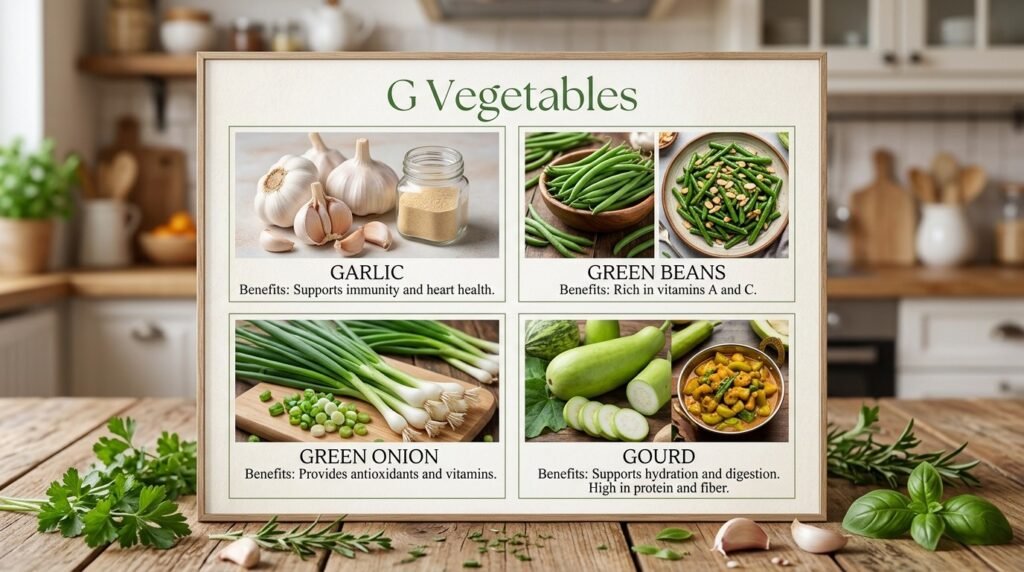
25. Garlic
People widely use garlic as both a vegetable and a seasoning. It adds a strong flavor to countless dishes, and traditional practices have also valued it for its medicinal uses.
Benefits: Supports immunity and heart health.
26. Green Beans
People harvest green beans while the pods remain tender and immature. Their versatility makes them easy to prepare, and cooks commonly serve them as side dishes.
Benefits: Rich in vitamins A and C.
27. Green Onion
Green onions have long green leaves and small white bulbs. They are used fresh in salads and cooked dishes. Their flavor is milder than mature onions.
Benefits: Provides antioxidants and vitamins.
28. Gourd
Gourds include several edible varieties cultivated worldwide. They are commonly used in soups and curries. Many are low in calories and highly nutritious.
Benefits: Supports hydration and digestion.
H Vegetables
Vegetables that start with the letter H include a variety of unique and nutritious options found in different cuisines around the world. Examples such as Horseradish, Hubbard Squash, Hyacinth Bean, and Heart of Palm offer distinct flavors and textures for a wide range of dishes. These vegetables provide essential vitamins, minerals, fiber, and antioxidants that support overall health and well-being.
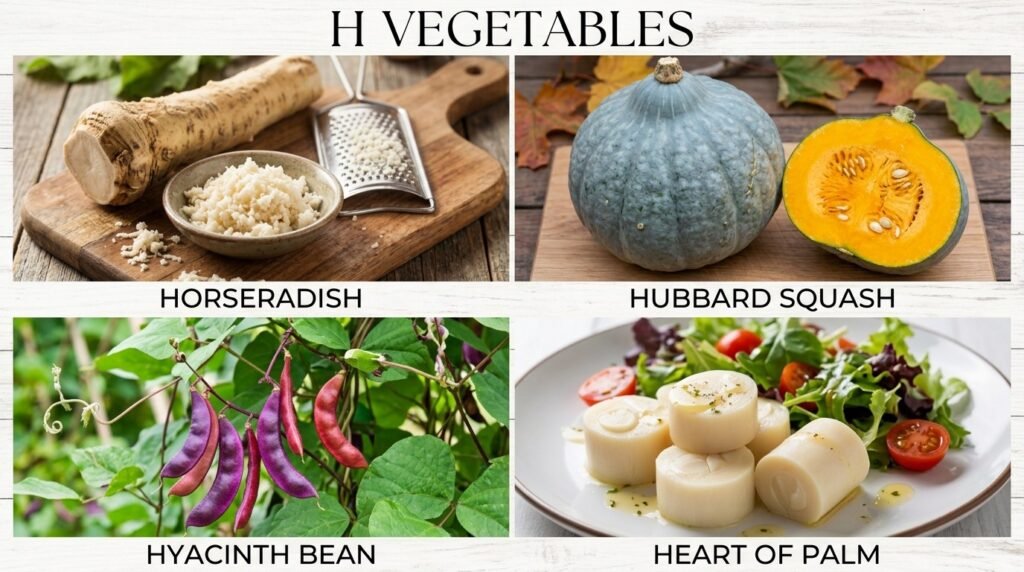
29. Horseradish
People recognize horseradish for its pungent flavor and spicy taste. They commonly grate it into sauces and condiments to add a strong kick. Because of its intensity, a small amount can flavor an entire dish.
Benefits: Contains antioxidants and supports respiratory health.
30. Hubbard Squash
Hubbard squash is a winter squash with sweet orange flesh. It is often roasted or pureed. It stores well for long periods.
Benefits: Rich in vitamin A and fiber.
31. Hyacinth Bean
Hyacinth bean is cultivated for its edible pods and seeds. It is popular in tropical regions. Proper cooking is important before consumption.
Benefits: Provides protein and essential nutrients.
32. Heart of Palm
Heart of palm is harvested from certain palm trees. It has a tender texture and mild flavor. It is frequently used in salads.
Benefits: Low in calories and rich in minerals.
I Vegetables
Vegetables that start with the letter I include several interesting and nutritious varieties that can add diversity to your meals. Popular examples include Iceberg Lettuce, Indian Spinach, Ivy Gourd, and Italian Broccoli, each offering unique flavors and culinary uses. These vegetables are rich in essential nutrients, fiber, and antioxidants that help support a healthy lifestyle and balanced diet.
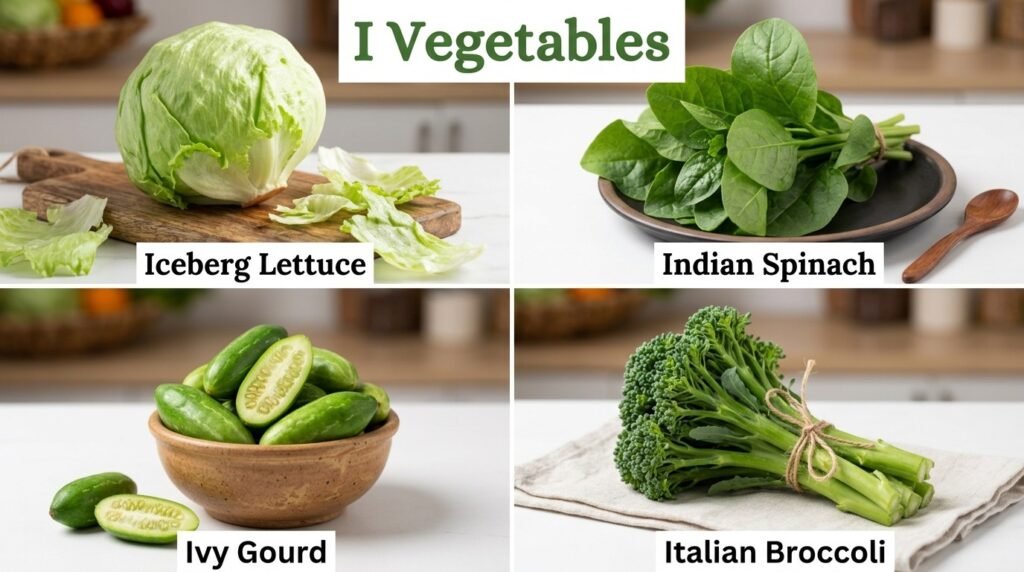
33. Iceberg Lettuce
People enjoy iceberg lettuce for its crisp texture and refreshing taste. They commonly use it in sandwiches and salads, while its crunchy leaves add a satisfying texture to many dishes.
Benefits: Supports hydration and provides fiber.
34. Indian Spinach
Indian spinach, also called Malabar spinach, is a climbing leafy vegetable. It thrives in warm climates. Its leaves remain tender even in hot weather.
Benefits: Rich in vitamins A and C.
35. Ivy Gourd
People use ivy gourd extensively in South Asian cuisine. They stir-fry, stuff, or cook it in curries to create a variety of dishes. Its mild taste makes it a versatile ingredient in everyday meals.
Benefits: Supports blood sugar management.
36. Italian Broccoli
Italian broccoli varieties include several nutritious cultivars. They are widely used in Mediterranean cooking. Their flavor is slightly sweeter than standard types.
Benefits: Supports immunity and digestion.
J Vegetables
Vegetables that start with the letter J may be fewer in number, but they offer excellent nutritional value and unique flavors. People around the world enjoy vegetables such as Jerusalem Artichoke, Jicama, Japanese Mustard Greens, and Japanese Pumpkin in a wide variety of cuisines. These vegetables provide important vitamins, minerals, fiber, and antioxidants that support digestion, immunity, and overall health.
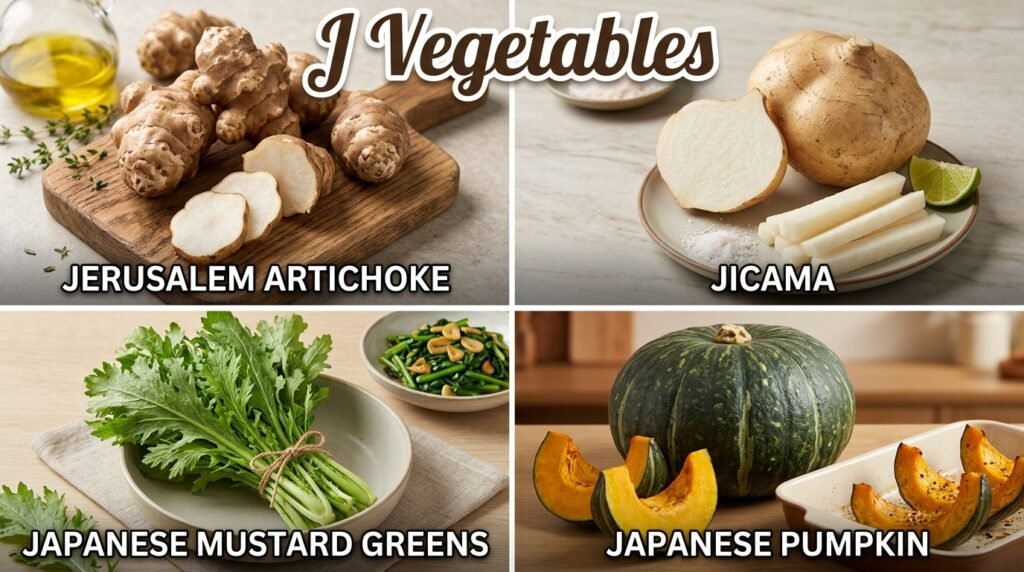
37. Jerusalem Artichoke
Jerusalem artichoke is a knobby tuber unrelated to true artichokes. It has a nutty flavor and can be roasted or mashed. It is rich in prebiotic fiber.
Benefits: Supports gut health.
38. Jicama
Jicama is a crunchy root vegetable with a slightly sweet taste. It is often eaten raw. Its texture resembles a crisp apple.
Benefits: High in fiber and vitamin C.
39. Japanese Mustard Greens
These leafy greens have a peppery flavor. They are commonly used in salads and stir-fries. Their bold taste enhances many dishes.
Benefits: Rich in antioxidants and vitamins.
40. Japanese Pumpkin
Japanese pumpkin, often called kabocha squash, has sweet, dense flesh. It is popular in soups and roasted recipes. Its flavor is naturally rich.
Benefits: Excellent source of vitamin A.
K Vegetables
Vegetables that start with the letter K include many nutrient-rich options that are popular in healthy diets worldwide. Examples such as Kale, Kohlrabi, Komatsuna, and Kangkong offer unique flavors, textures, and culinary versatility. These vegetables provide vitamins, minerals, fiber, and antioxidants that support overall health and well-being.
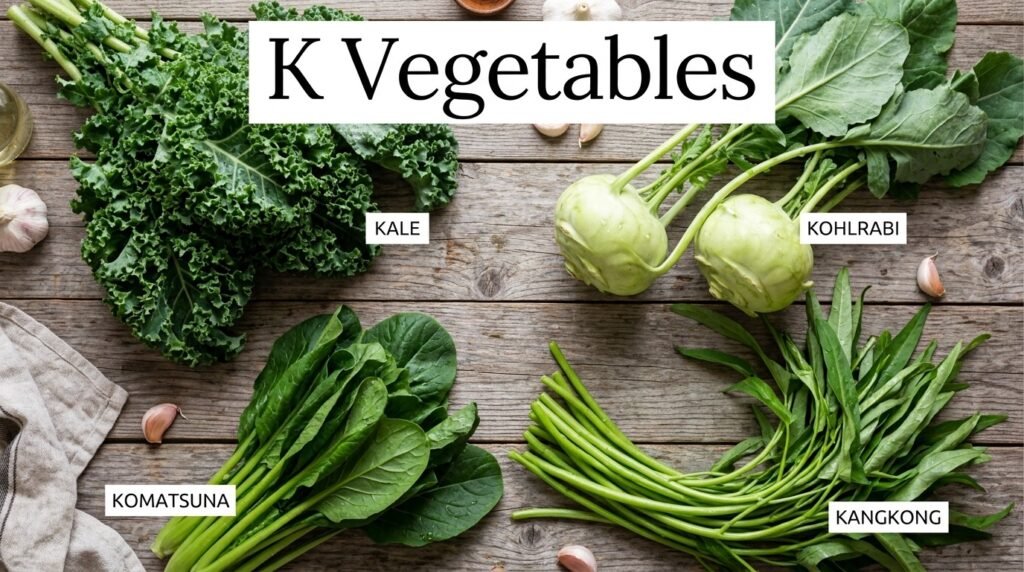
41. Kale
Kale is one of the most nutrient-dense leafy greens. It is used in salads, smoothies, and cooked dishes. Its popularity continues to grow globally.
Benefits: Rich in vitamins A, C, and K.
42. Kohlrabi
Kohlrabi has a swollen stem with a crisp texture. It can be eaten raw or cooked. Its flavor resembles a mix of cabbage and broccoli.
Benefits: Supports digestion and immunity.
43. Komatsuna
Komatsuna is a Japanese leafy vegetable. It has tender leaves and a mild flavor. It is commonly stir-fried or added to soups.
Benefits: Rich in calcium and vitamins.
44. Kangkong
Kangkong, also called water spinach, grows in aquatic environments. It is popular throughout Asia. It cooks quickly and tastes mild.
Benefits: Provides iron and antioxidants.
L Vegetables
Vegetables that start with the letter L include a variety of nutritious and flavorful choices used in cuisines around the world. People value popular vegetables such as Lettuce, Leek, Luffa, and Lotus Root for their unique textures and health benefits. These vegetables provide essential vitamins, minerals, fiber, and antioxidants that help support a healthy and balanced lifestyle.
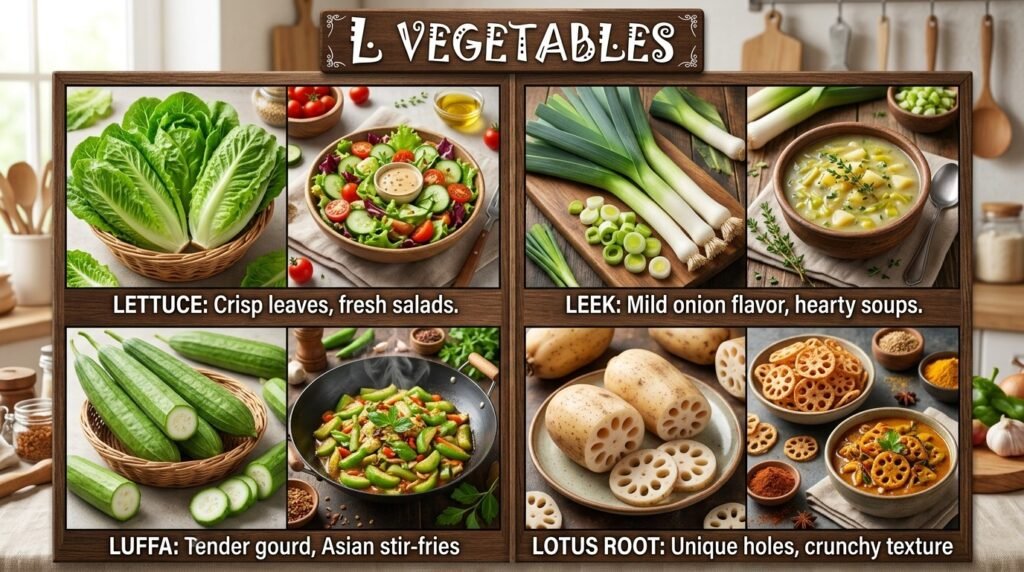
45. Lettuce
Lettuce is one of the most commonly consumed salad vegetables. Wide varieties exist, ranging from crisp to tender. It is enjoyed fresh around the world.
Benefits: Supports hydration and digestion.
46. Leek
Leeks belong to the onion family and offer a mild, sweet flavor. Cooks often use them in soups and stews, especially for their tender white stems.
Benefits: Supports heart health.
47. Luffa
People harvest luffa while it is young and tender and commonly cook it in Asian cuisines. When the fruit matures, people use it as a natural sponge.
Benefits: Low in calories and rich in fiber.
48. Lotus Root
Lotus root is the edible rhizome of the lotus plant. Its distinctive holes create attractive slices. It remains crisp even after cooking.
Benefits: Supports digestion and circulation.
M Vegetables
Many cuisines around the world feature nutritious vegetables that start with the letter M. Examples such as mushrooms, Mustard Greens, moringas, and Malabar Spinach offer unique flavors and valuable health benefits. These vegetables are rich in vitamins, minerals, antioxidants, and fiber, making them an excellent addition to a balanced diet.
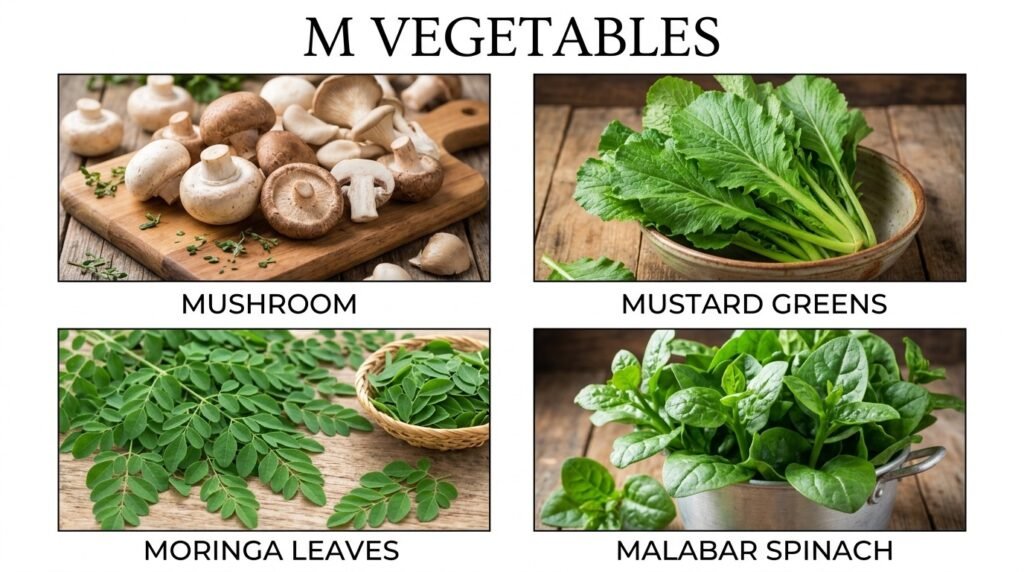
49. Mushroom
Mushrooms are edible fungi widely used in cooking. They add savory flavor and texture to dishes. Many species are cultivated commercially.
Benefits: Rich in antioxidants and B vitamins.
50. Mustard Greens
Mustard greens are leafy vegetables with a peppery taste. They are often cooked to reduce bitterness. They are highly nutritious.
Benefits: Supports bone and immune health.
51. Moringa Leaves
Moringa leaves come from the drumstick tree. People consider them nutrient-rich superfoods and add them to soups and powders.
Benefits: High in vitamins, minerals, and protein.
52. Malabar Spinach
Malabar spinach thrives in tropical climates. Its succulent leaves remain productive during summer. It is commonly used in stir-fries.
Benefits: Supports eye and skin health.
N Vegetables
Vegetables that start with the letter N include several healthy and flavorful varieties enjoyed around the world. Examples such as Napa Cabbage, New Zealand Spinach, Nopal, and Navy Bean Pods add diversity and nutrition to many dishes. These vegetables are rich in vitamins, minerals, fiber, and antioxidants that help support digestion, immunity, and overall well-being.
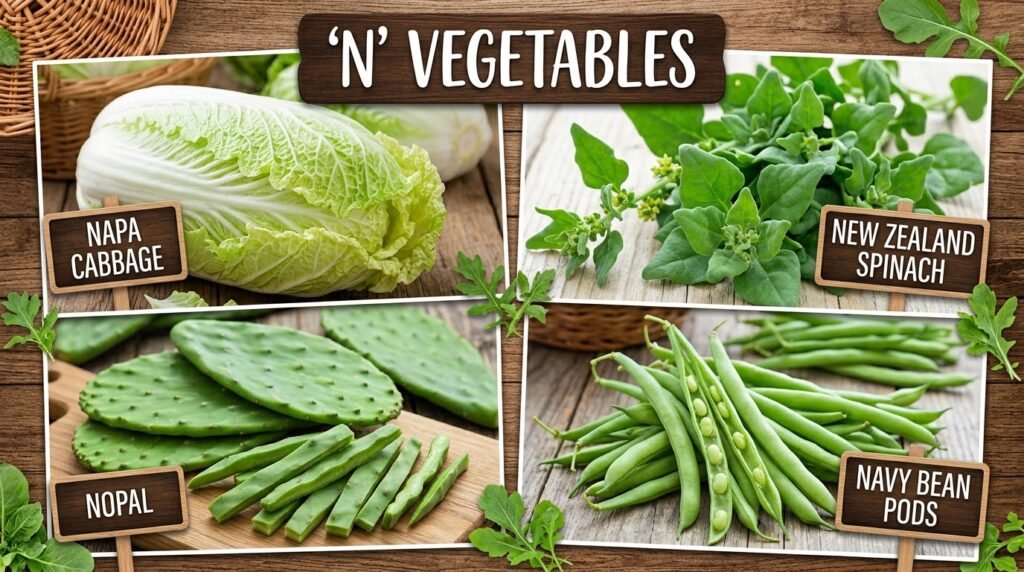
53. Napa Cabbage
Napa cabbage is a Chinese cabbage with tender leaves. It is commonly used in soups and kimchi. Its flavor is mild and slightly sweet.
Benefits: Rich in vitamins and fiber.
54. New Zealand Spinach
This leafy vegetable thrives in warm weather. It is often used as a spinach substitute. Its leaves remain productive through summer.
Benefits: Provides vitamin C and minerals.
55. Nopal
Nopal refers to edible cactus pads. It is widely consumed in Mexican cuisine. Its texture becomes tender when cooked.
Benefits: Supports digestion and blood sugar balance.
56. Navy Bean Pods
People eat young navy bean pods as vegetables and harvest them before the seeds fully mature. They provide nutrition and work well in a variety of dishes.
Benefits: High in fiber and protein.
O Vegetables
Vegetables that start with the letter O include a selection of nutritious and versatile foods used in many cuisines. Popular examples such as Okra, Onion, Oyster Plant, and Orach offer unique flavors, textures, and culinary uses. These vegetables are rich in essential vitamins, minerals, fiber, and antioxidants that support a healthy, balanced diet.
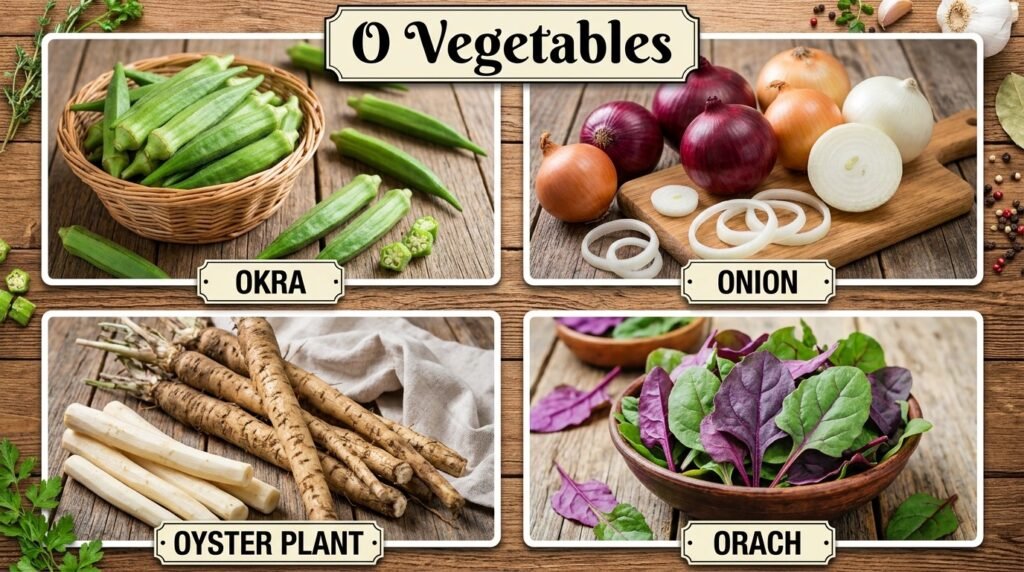
57. Okra
Okra produces edible green pods commonly used in soups and stews. It has a unique texture. It thrives in warm climates.
Benefits: Supports digestive health.
58. Onion
Farmers cultivate onions widely around the world. Cooks use them to add flavor to countless recipes, and people grow many varieties to suit different culinary needs.
Benefits: Rich in antioxidants and sulfur compounds.
59. Oyster Plant
Oyster plant is a lesser-known root vegetable. It has a flavor often compared to oysters. It is used in soups and roasted dishes.
Benefits: Provides minerals and fiber.
60. Orach
Orach is a leafy vegetable sometimes called mountain spinach. It grows well in cooler climates. Its colorful leaves are attractive and nutritious.
Benefits: Rich in vitamins and antioxidants.
P Vegetables
Vegetables that start with the letter P include some of the most popular and widely consumed vegetables around the world. People value vegetables such as Potato, Pumpkin, Peas, and Parsnip for their versatility, flavor, and nutritional benefits. These vegetables provide essential vitamins, minerals, fiber, and energy, making them an important part of a healthy diet.
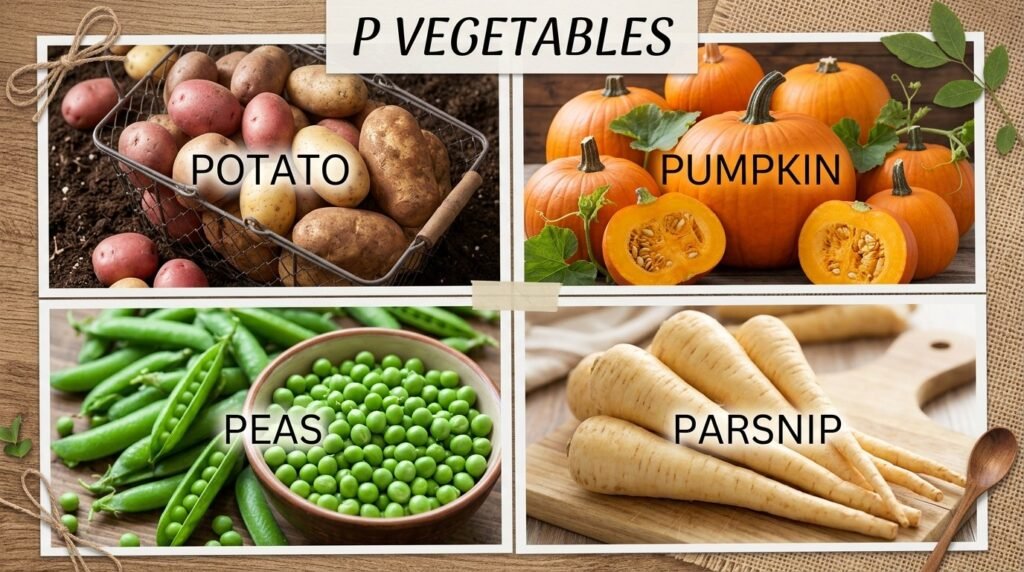
61. Potato
Potatoes are one of the world’s most important staple crops. They are highly versatile in cooking. They can be baked, boiled, or fried.
Benefits: Provides energy, potassium, and fiber.
62. Pumpkin
Pumpkin is a popular squash with sweet orange flesh. It is used in soups, pies, and roasted dishes. It is highly nutritious.
Benefits: Excellent source of vitamin A.
63. Peas
People commonly eat peas as sweet green seeds, either fresh or cooked. Farmers cultivate them widely around the world, and their naturally pleasant flavor makes them a popular food.
Benefits: High in protein and fiber.
64. Parsnip
Parsnips resemble pale carrots and become sweeter after frost. They are often roasted or mashed. Their earthy flavor is distinctive.
Benefits: Supports digestion and immunity.
Q Vegetables
Vegetables that start with the letter Q are relatively rare, making them some of the most unique entries in the 100 vegetables name A to Z list. Examples such as Queen Anne’s Lace Root, Queensland Arrowroot, and other lesser-known varieties showcase the diversity of edible plants found around the world. Although not as common as other vegetables, they still provide valuable nutrients, fiber, and interesting culinary uses.
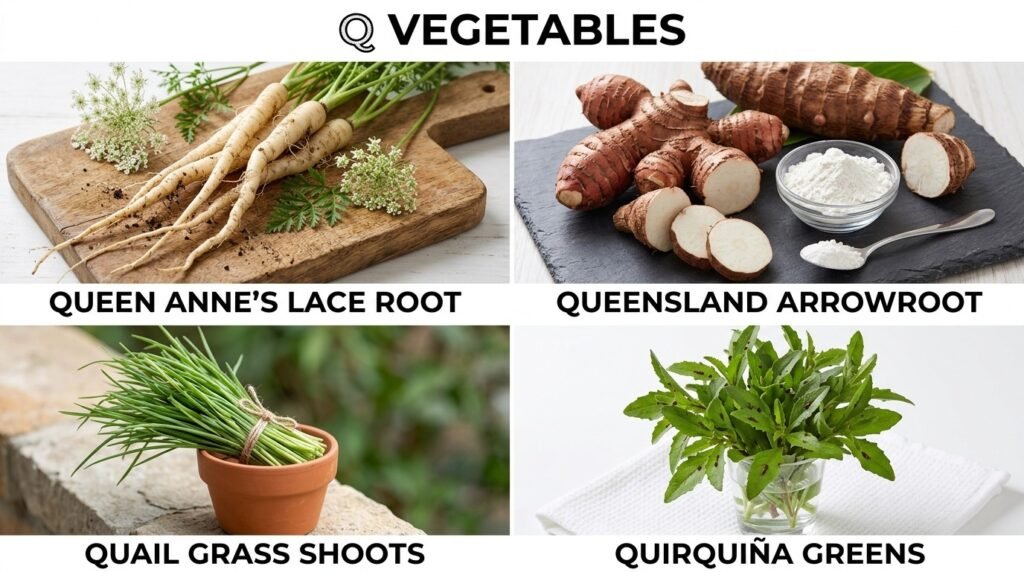
65. Queen Anne’s Lace Root
This wild root is related to the cultivated carrot. Historically, it has been consumed in some regions. It resembles early carrot varieties.
Benefits: Provides dietary fiber and nutrients.
66. Queensland Arrowroot
Queensland arrowroot is a tropical edible rhizome. It is cultivated in warm climates. Its starch is used in cooking.
Benefits: Easy to digest and energy-rich.
67. Quail Grass Shoots
Quail grass shoots are edible young greens. They are used in specialty culinary applications. Their flavor is mild and fresh.
Benefits: Contains vitamins and antioxidants.
68. Quirquiña Greens
People commonly eat peas as sweet green seeds, either fresh or cooked. Farmers grow them widely around the world, and their naturally sweet flavor makes them a popular food.
Benefits: Rich in antioxidants.
R Vegetables
Vegetables that start with the letter R include several nutritious and versatile choices enjoyed in kitchens around the world. Popular examples such as Radish, Rutabaga, Romaine Lettuce, and Rhubarb offer unique flavors, textures, and culinary uses. These vegetables are rich in vitamins, minerals, fiber, and antioxidants, making them a healthy addition to a balanced diet.
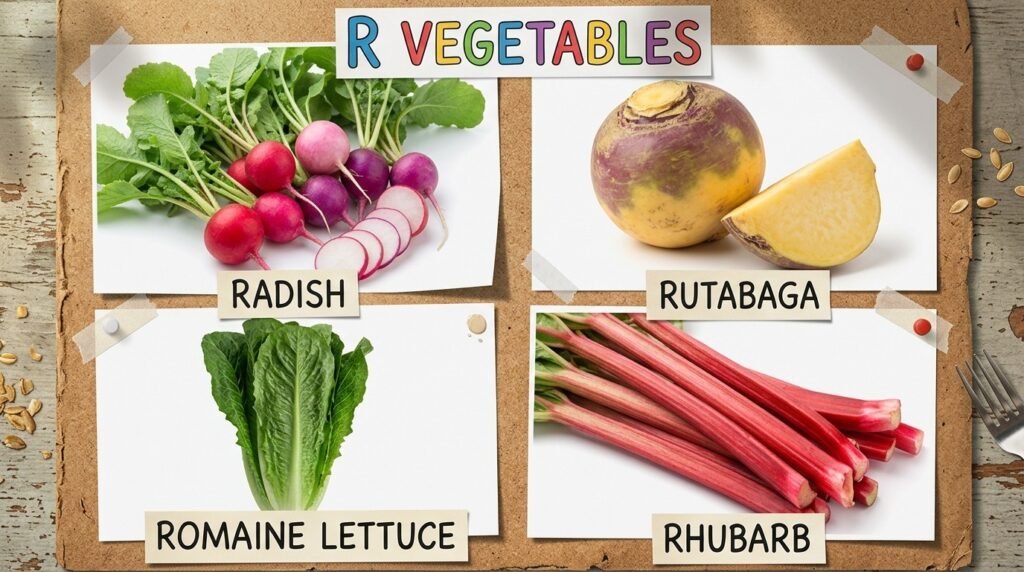
69. Radish
Radishes are crunchy root vegetables with a peppery flavor. They grow quickly and are often eaten raw. Many colors and sizes exist.
Benefits: Supports digestion and hydration.
70. Rutabaga
Rutabaga is a root vegetable related to turnips. It has sweet yellow flesh. It is often mashed or roasted.
Benefits: Rich in fiber and vitamin C.
71. Romaine Lettuce
Romaine lettuce has crisp, elongated leaves. It is commonly used in Caesar salads. It provides valuable nutrients.
Benefits: Supports eye health.
72. Rhubarb
People grow rhubarb for its edible stalks. They commonly use the stalks in desserts and preserves. People should not eat the leaves.
Benefits: Contains antioxidants and fiber.
S Vegetables
People commonly use many nutritious vegetables that start with the letter S in everyday meals. They enjoy examples such as Spinach, Sweet Potato, Shallot, and Swiss Chard for their rich flavors and impressive nutritional profiles. These vegetables provide essential vitamins, minerals, fiber, and antioxidants that support overall health and wellness.
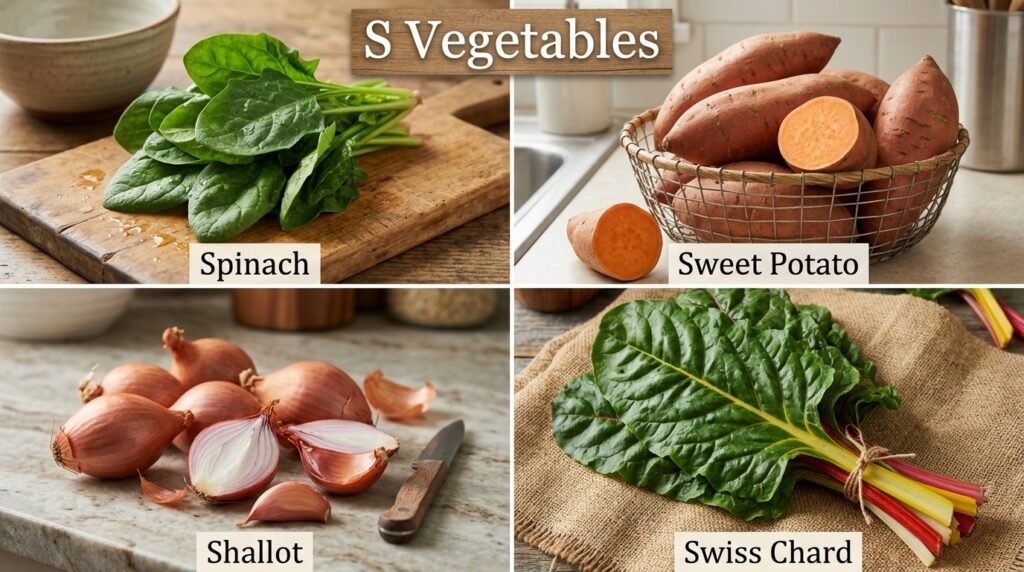
73. Spinach
Spinach is one of the healthiest leafy vegetables. It is versatile and easy to prepare. It can be eaten raw or cooked.
Benefits: Rich in iron, folate, and antioxidants.
74. Sweet Potato
Sweet potatoes have naturally sweet flesh and vibrant color. They are popular in many cuisines. Their nutritional profile is impressive.
Benefits: Excellent source of beta-carotene.
75. Shallot
Shallots are small members of the onion family. They have a delicate flavor preferred in gourmet cooking. They are widely used in sauces.
Benefits: Rich in antioxidants.
76. Swiss Chard
Swiss chard features colorful stems and large leafy greens. It is highly nutritious and easy to grow. It works well in many recipes.
Benefits: Supports bone and heart health.
T Vegetables
Vegetables that start with the letter T include a variety of nutritious and widely used foods found in cuisines around the world. Popular examples such as Tomato, Turnip, Taro, and Tatsoi offer unique flavors, textures, and culinary versatility. These vegetables are rich in vitamins, minerals, fiber, and antioxidants, making them a valuable part of a healthy and balanced diet.
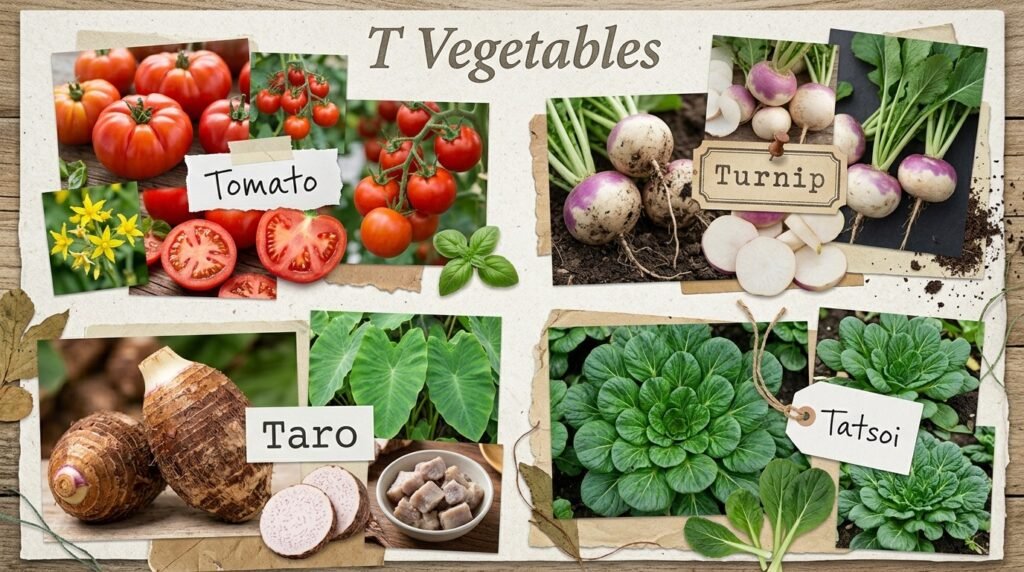
77. Tomato
Tomatoes are botanically fruits but commonly treated as vegetables in cooking. They are used in countless dishes worldwide. Their flavor ranges from sweet to tangy.
Benefits: Rich in lycopene and vitamin C.
78. Turnip
People grow turnips for their edible roots and greens. Farmers have cultivated them for centuries, and cooks commonly roast or mash them for a variety of dishes.
Benefits: Supports digestion and immunity.
79. Taro
Taro is a tropical root crop with starchy flesh. It must be cooked before consumption. It is an important food source in many regions.
Benefits: Provides fiber and energy.
80. Tatsoi
Tatsoi is a leafy Asian vegetable related to bok choy. Its leaves form attractive rosettes. It has a mild mustard flavor.
Benefits: Rich in vitamins A and C.
U Vegetables
Vegetables that start with the letter U are less common but still offer excellent nutritional value and unique culinary uses. Examples such as Ube, Ulluco, Upland Cress, and Urad Bean Pods add variety to meals while providing important nutrients. These vegetables are rich in vitamins, minerals, fiber, and antioxidants that support overall health and a balanced diet.
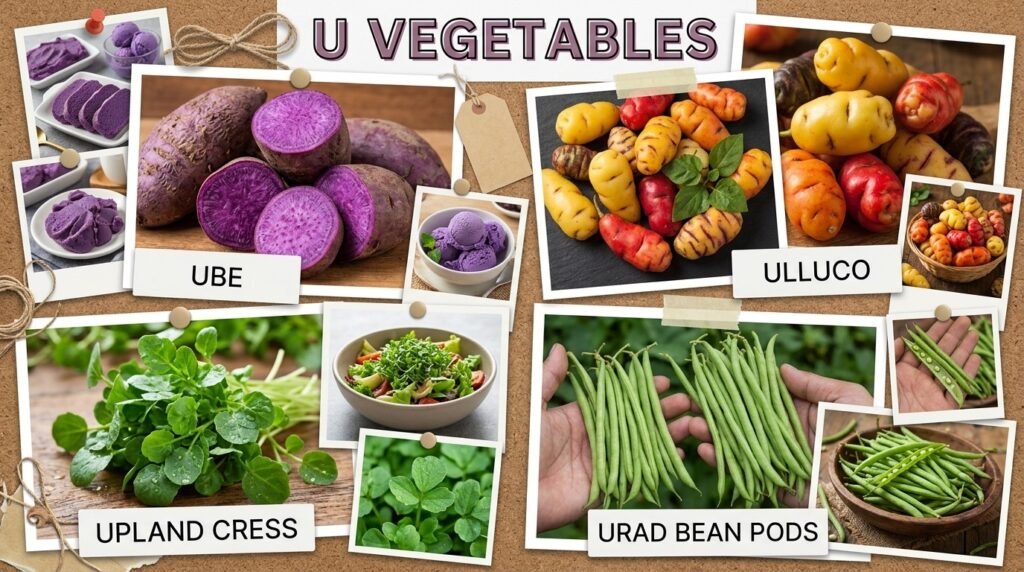
81. Ube
Ube is a purple yam popular in Southeast Asia. It is used in both savory and sweet dishes. Its vibrant color is distinctive.
Benefits: Rich in antioxidants.
82. Ulluco
Ulluco is a colorful Andean tuber crop. It has been cultivated for centuries. It is valued for its nutritional qualities.
Benefits: Provides vitamin C and carbohydrates.
83. Upland Cress
Upland cress is a leafy green with a peppery flavor. It is often used in salads. It grows well in cool weather.
Benefits: Supports immune health.
84. Urad Bean Pods
People eat young urad bean pods as vegetables and harvest them before they mature. Cooks commonly use them in traditional dishes.
Benefits: Good source of protein.
V Vegetables
Vegetables that start with the letter V include a range of unique and nutritious options enjoyed in different parts of the world. Examples such as Vegetable Marrow, Vidalia Onion, Velvet Bean Pods, and Vietnamese Coriander offer distinctive flavors and valuable health benefits. These vegetables provide essential vitamins, minerals, fiber, and antioxidants that help support a healthy and balanced lifestyle.
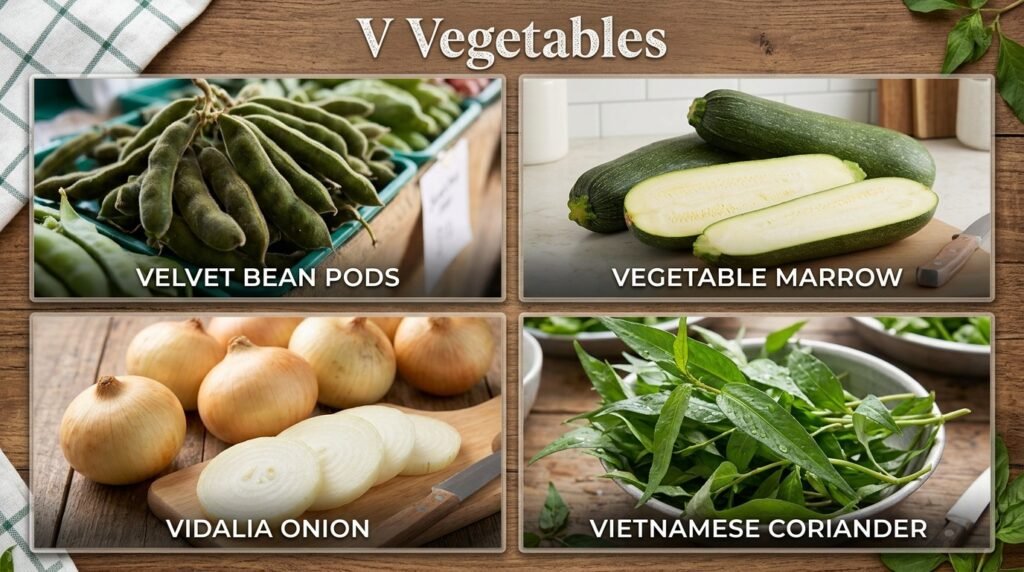
85. Velvet Bean Pods
Velvet bean pods are used in certain traditional cuisines. Proper preparation is important. They provide valuable nutrients.
Benefits: Rich in protein and minerals.
86. Vegetable Marrow
Vegetable marrow is a mature variety of summer squash. It is commonly stuffed or baked. Its flesh is mild and tender.
Benefits: Supports hydration and digestion.
87. Vidalia Onion
Vidalia onions are known for their sweetness. They are popular in salads and cooked dishes. Their flavor is milder than standard onions.
Benefits: Contains antioxidants.
88. Vietnamese Coriander
Vietnamese coriander is a leafy herb used as a vegetable in some cuisines. It adds distinctive flavor to meals. It thrives in warm climates.
Benefits: Supports digestion.
W Vegetables
Vegetables that start with the letter W include several nutritious and versatile choices that are used in a variety of cuisines. Popular examples such as Watercress, White Radish, Wax Beans, and Winter Squash are known for their unique flavors and health benefits. These vegetables are rich in vitamins, minerals, fiber, and antioxidants that support overall wellness and healthy eating habits.
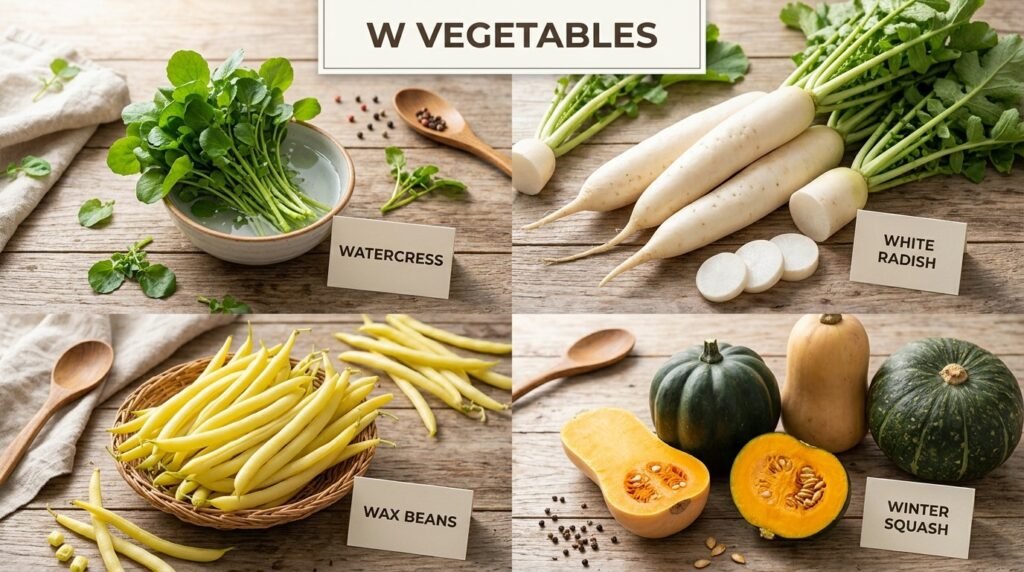
89. Watercress
Watercress is an aquatic leafy vegetable with a peppery flavor. It is often used in salads and soups. It is highly nutrient-dense.
Benefits: Rich in vitamins A, C, and K.
90. White Radish
White radish varieties are widely cultivated across Asia. They have a crisp texture and mild flavor. They are versatile in cooking.
Benefits: Supports digestion and hydration.
91. Wax Beans
Wax beans are yellow varieties of green beans. They have a mild flavor and tender texture. They are easy to prepare.
Benefits: Rich in fiber and vitamins.
92. Winter Squash
Winter squash includes several nutritious varieties. They store well and provide food through colder months. Their flesh is sweet and filling.
Benefits: Supports eye health.
X Vegetables
Vegetables that start with the letter X are quite rare and are often found in specific regions or traditional cuisines. Examples such as Xoconostle and Xanthosoma showcase the diversity of edible plants that exist beyond commonly known vegetables. These unique vegetables provide valuable nutrients, fiber, and antioxidants while adding variety to a healthy diet.
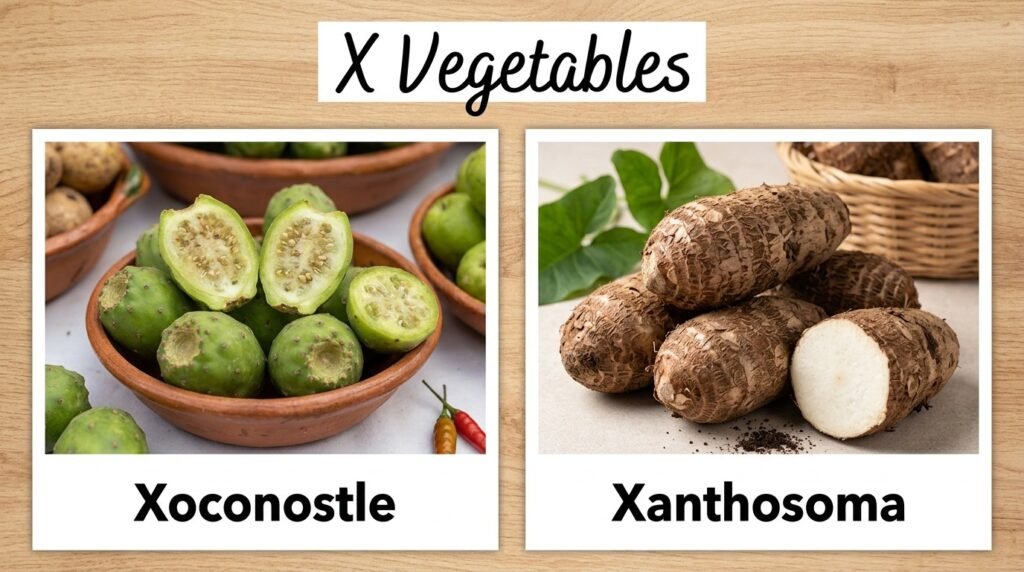
93. Xoconostle
Xoconostle is a sour cactus fruit used as a vegetable in Mexican cuisine. It adds a tangy flavor to dishes. It is highly valued locally.
Benefits: Rich in fiber and antioxidants.
94. Xanthosoma
Xanthosoma is a tropical root vegetable related to taro. It is cultivated in many tropical countries. Its corms are starchy and filling.
Benefits: Provides energy and fiber.
Y Vegetables
Vegetables that start with the letter Y include a small but diverse group of nutritious plants enjoyed around the world. Popular examples such as Yam, Yardlong Bean, and Yacon are valued for their unique flavors, textures, and culinary versatility. These vegetables provide important vitamins, minerals, fiber, and antioxidants that support overall health and balanced nutrition.
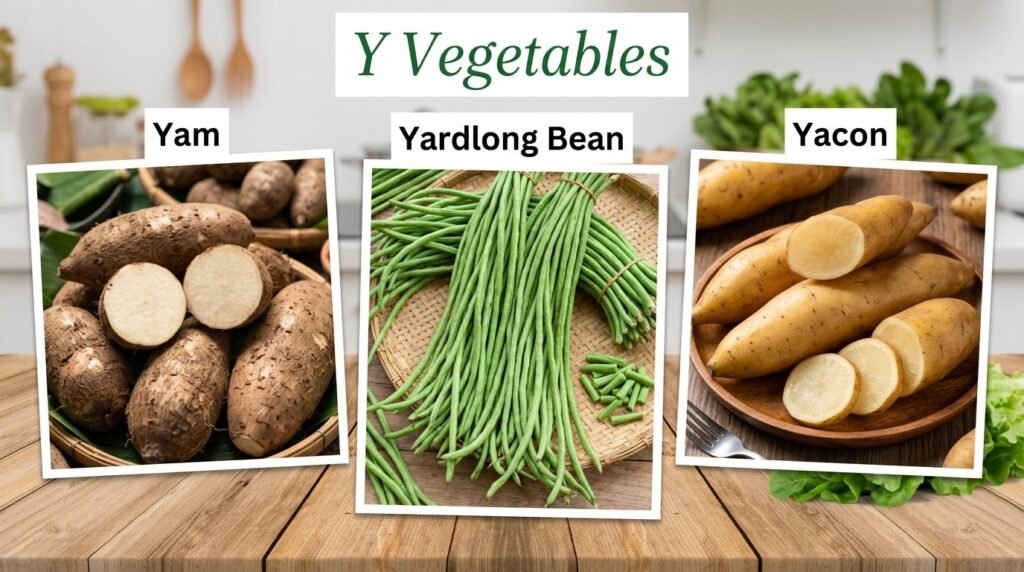
95. Yam
Yams are important staple root crops in many tropical regions. They differ from sweet potatoes. Their starchy texture makes them highly versatile.
Benefits: Rich in carbohydrates and potassium.
96. Yardlong Bean
Yardlong beans produce exceptionally long edible pods. They are commonly stir-fried. They remain tender when harvested young.
Benefits: High in fiber and vitamins.
97. Yacon
Yacon is a sweet-tasting root vegetable from South America. It contains beneficial prebiotic compounds. It is often eaten fresh.
Benefits: Supports gut health.
Z Vegetables
Vegetables that start with the letter Z are among the rarest entries in the 100 vegetables name A to Z list, making them especially interesting to explore. Examples such as Zucchini, Zebra Eggplant, and Zanthoxylum Shoots offer unique flavors, textures, and culinary uses in various cuisines. These vegetables are rich in vitamins, minerals, fiber, and antioxidants, making them a nutritious addition to a healthy and balanced diet.
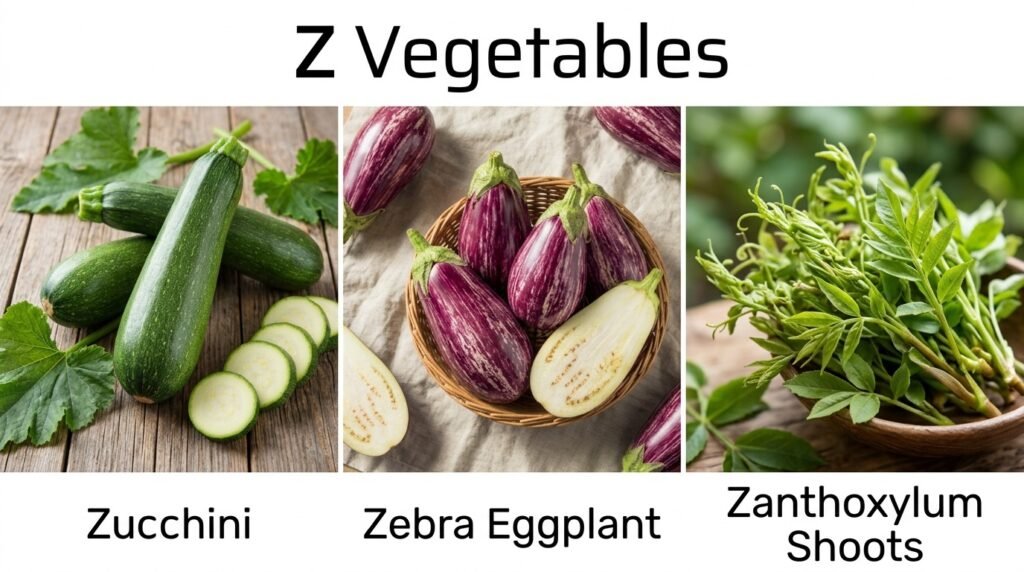
98. Zucchini
Zucchini is a summer squash harvested while immature. It is versatile and easy to cook. It can be grilled, baked, or spiralized.
Benefits: Low in calories and rich in nutrients.
99. Zebra Eggplant
Zebra eggplant is a striped variety of eggplant. It has tender flesh and an attractive appearance. It is suitable for roasting and grilling.
Benefits: Provides antioxidants and fiber.
100. Zanthoxylum Shoots
Zanthoxylum shoots are edible young shoots used in some Asian cuisines. They have a unique aromatic flavor. They are considered a specialty vegetable.
Benefits: Contains antioxidants and plant compounds.
FAQs About
1. What are A to Z vegetable names?
A to Z vegetable names are a complete alphabetical list of vegetables arranged from the letter A to Z. They include both common vegetables like carrots and potatoes and unique vegetables like yacon and zucchini.
2. Why should I learn 100 vegetables name A to Z?
Learning vegetable names alphabetically helps improve vocabulary, nutrition knowledge, and general awareness about different vegetables grown around the world.
3. How many vegetables are included in an A to Z vegetable list?
A comprehensive A to Z vegetable list can include 100 or more vegetables, featuring both widely known and lesser-known varieties from different countries.
4. Which vegetables start with the letter A?
Some vegetables that start with A include Asparagus, Artichoke, Amaranth Leaves, and Arrowroot.
5. Which vegetables start with the letter Z?
Common vegetables starting with Z include Zucchini, Zebra Eggplant, and Zanthoxylum Shoots.
6. Are all 100 vegetables name A to Z list commonly available?
No. While many vegetables are commonly found in grocery stores, some are regional or specialty vegetables that may only be available in certain countries.
Final Thoughts
Vegetables play a vital role in our daily lives, providing the nutrients our bodies need to stay healthy and strong. They are an important part of agriculture, nutrition, and food cultures around the world. From leafy greens and root vegetables to colorful squashes and unique tropical plants, vegetables offer an incredible variety of flavors, textures, and health benefits. Learning about 100 vegetables name A to Z is a great way to discover the diversity of plants that contribute to our meals every day.
Many vegetables, such as carrots, potatoes, onions, spinach, and tomatoes, are familiar staples found in homes across the globe. Others, like yacon, xoconostle, ulluco, and zanthoxylum shoots, may be less common but are equally fascinating and nutritious. Each vegetable has its own unique characteristics, growing conditions, and culinary uses, making the world of vegetables both educational and exciting to explore. By understanding different vegetable names and their benefits, readers can develop a deeper appreciation for the foods they eat and the farmers who grow them.