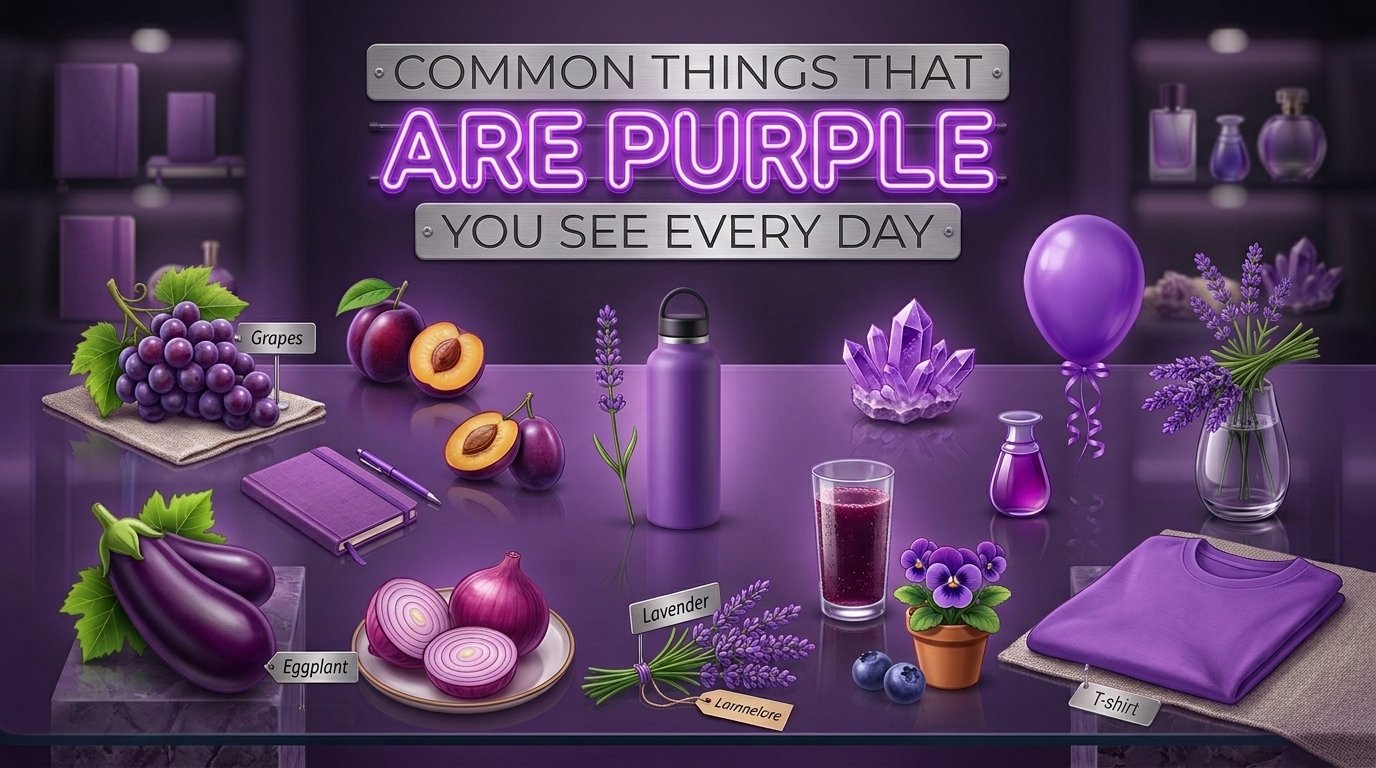
Have you ever stopped to notice how many things that are purple surround us in daily life? From flowers blooming in gardens to fruits in the grocery store and products on store shelves, appears in more places than most people realize.
This color is often associated with creativity, wisdom, luxury, imagination, and mystery. Throughout history, it has been linked to royalty because the dyes for this color were once rare and expensive. Today, this fascinating color appears in nature, science, food, technology, and countless everyday objects.
In this guide, we’ll explore a wide variety of things that are purple, discover the science behind the color, and learn why it continues to capture human attention across cultures and industries.
Why Purple Is So Special and Unique
is one of the most unusual colors in nature. Unlike green, blue, or brown, naturally occurring purple objects are relatively uncommon. This rarity has contributed to the color’s long-standing reputation as something special and valuable.
In plants and foods, it often comes from pigments called anthocyanins. These natural compounds help protect plants from environmental stress while producing shades ranging from violet to deep.
In animals, this coloration may result from pigments, microscopic structures that reflect light, or a combination of both. Some creatures only appear under certain lighting conditions due to structural coloration.
Did You Know? Human eyes perceive this color as a blend of red and blue wavelengths, making it one of the most visually striking colors in the spectrum.
Things That Are Purple in Nature
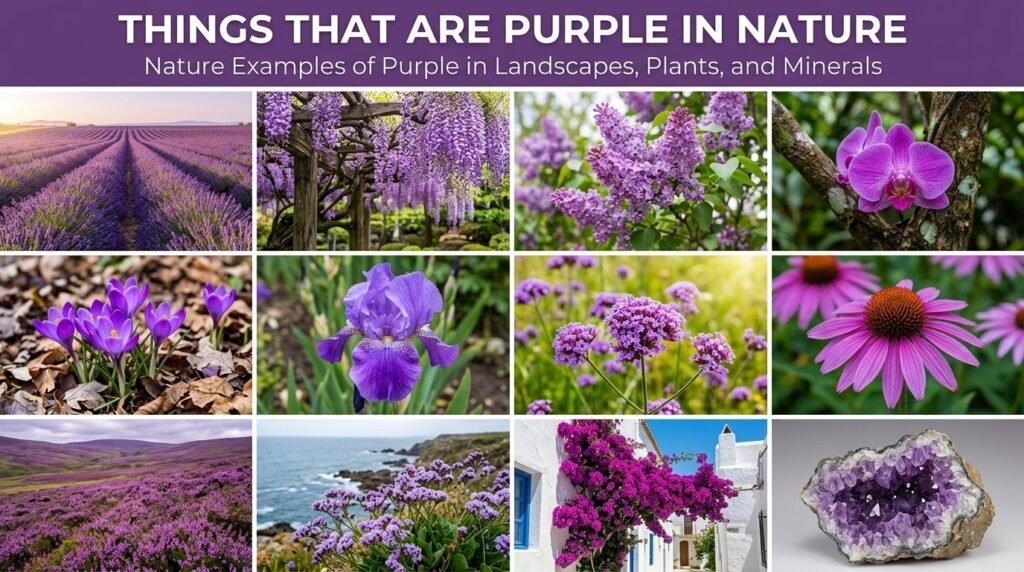
Nature offers many beautiful examples of purple.
1. Lavender Flowers
Lavender produces blossoms rich in anthocyanin pigments and is famous for its fragrance and calming properties.
2. Lilac Flowers
Lilacs bloom in shades ranging from pale lavender to deep , making them popular ornamental plants.
3. Orchids
Many orchid species naturally display petals that attract pollinators.
4. Wisteria Blossoms
These cascading flower clusters create spectacular purple displays in spring.
5. Crocus Flowers
Spring crocuses often emerge with vibrant petals after winter.
6. Amethyst
This color variety of quartz gets its color from trace amounts of iron and natural radiation exposure.
7. Sea Lavender
Despite its name, this flowering plant grows in coastal habitats and produces purple blooms.
8. Verbena Flowers
Verbena is commonly found in gardens due to its bright purple flower clusters.
9. Coneflower
Also known as echinacea, this wildflower attracts bees and butterflies.
10. Heather
Many heathland landscapes feature heather blooms covering vast areas.
11. Purple Iris
The iris is admired worldwide for its striking petals.
12. Bougainvillea
Certain varieties produce brilliant bracts that resemble flowers.
Purple birds
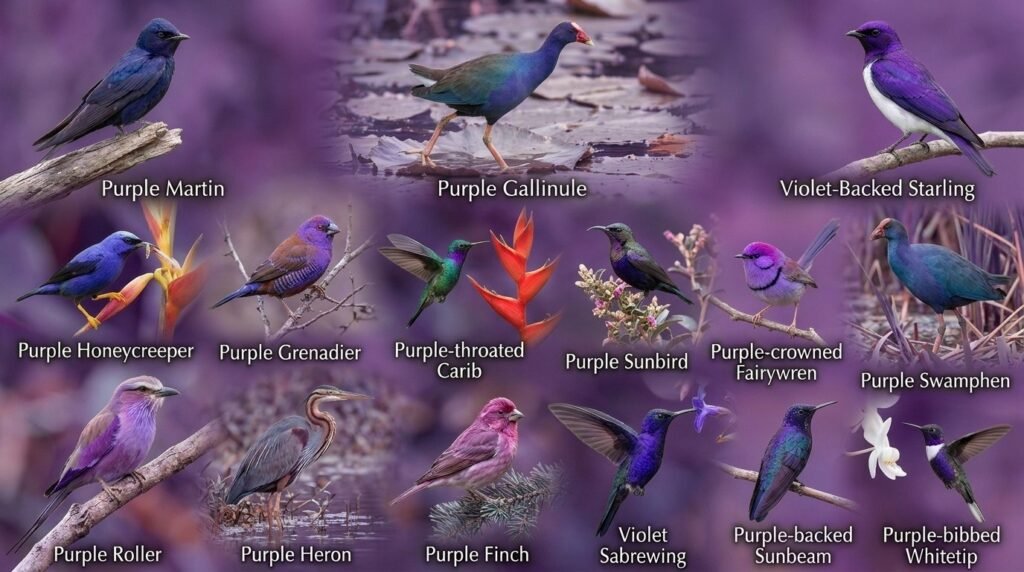
- Martin
- Gallinule
- Violet-Backed Starling
- Honeycreeper
- Grenadier
- Throated Carib
- Sunbird
- Crowned Fairywren
- Swamphen
- Roller
- Heron
- Finch
- Violet Sabrewing
- Backed Sunbeam
- Bibbed Whitetip
Purple Animals Found Around the World
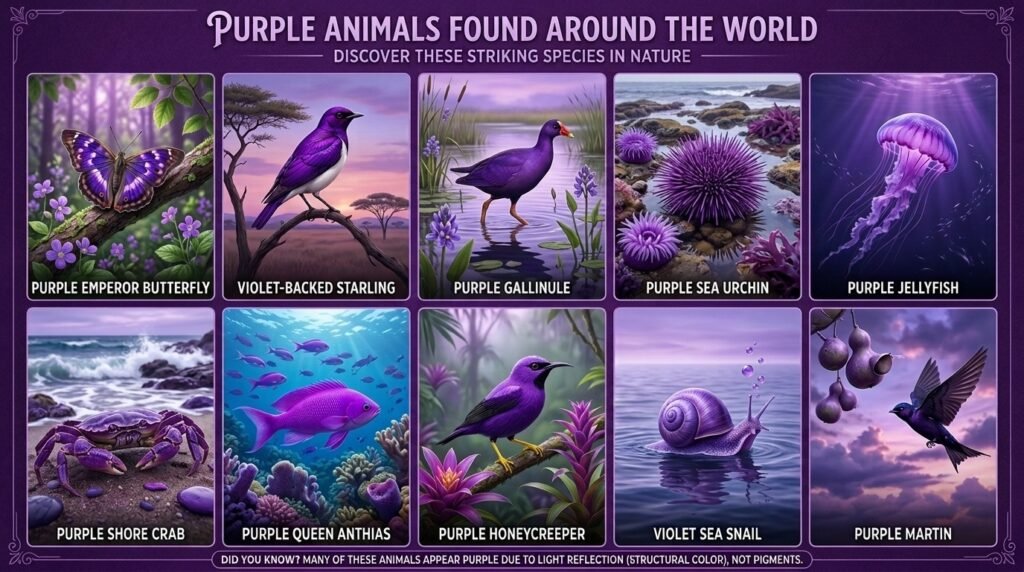
1. Purple Emperor Butterfly
Known for its shimmering wings, this butterfly appears this color due to structural coloration.
2. Violet-Backed Starling
This African bird displays brilliant feathers of this color on its back.
3. Gallinule
A colorful wetland bird with striking blue plumage.
4. Sea Urchin
Found along rocky coastlines, these sea creatures have spines.
5. Jellyfish
Several jellyfish species display coloration in their bell structures.
6. Shore Crab
Some crabs develop shells because of natural pigments.
7. Queen Anthias
A tropical reef fish recognized for its vivid coloration.
8. Honeycreeper
This small tropical bird shows vibrant purple-blue feathers.
9. Violet Sea Snail
A floating ocean snail with a distinctive shell.
10. Martin
North America’s largest swallow has dark feathers with a sheen.
Did You Know? Many animals that appear this color do not actually contain pigments. Instead, microscopic structures reflect light in ways that create the appearance.
Everyday Objects That Are Purple
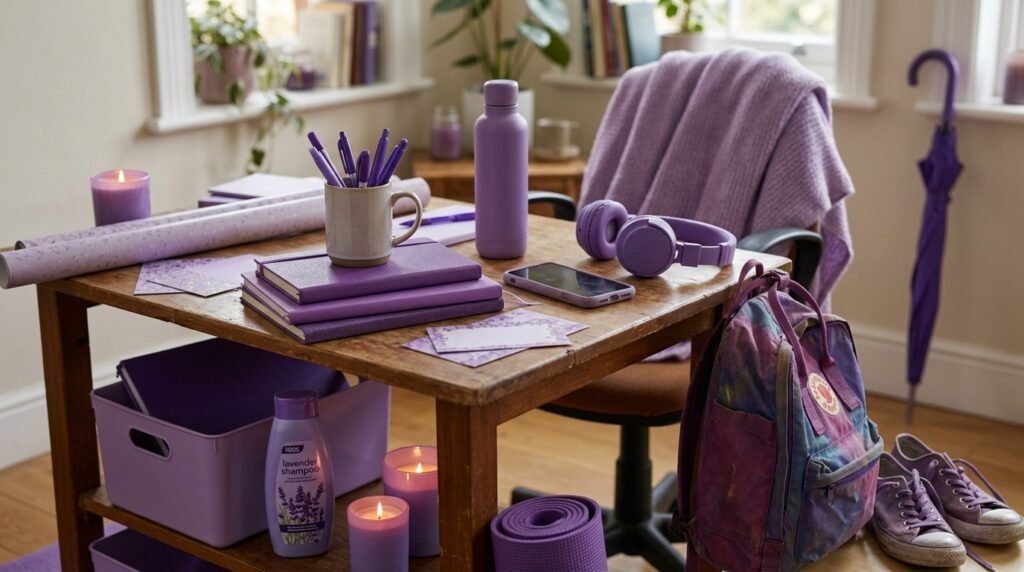
- Notebooks
- Pens
- Markers
- Backpacks
- Water bottles
- Phone cases
- Blankets
- Pillows
- Candles
- Toothbrushes
- Shampoo bottles
- Gift wrap
- Headphones
- Mugs
- Yoga mats
- Umbrellas
- Sneakers
- Storage bins
- Clothing
- Stationery
This color is frequently used in personal products because it stands out while still feeling elegant and calming.
Purple Vegetables and Fruits You Can Eat
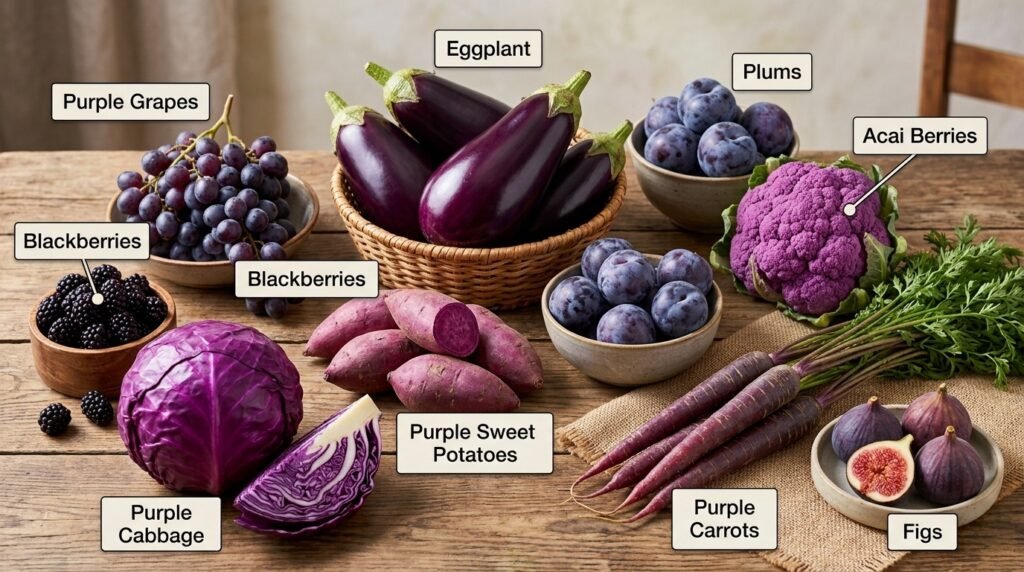
Many delicious foods are naturally due to anthocyanin pigments.
1. Eggplant
Its deep skin contains powerful antioxidants.
2. Grapes
Used for fresh eating, juice production, and winemaking.
3. Blackberries
These berries often appear dark purple when fully ripe.
4. Cabbage
A nutrient-rich vegetable with vibrant coloration.
5. Sweet Potatoes
Popular in Asia and increasingly enjoyed worldwide.
6. Plums
Many plum varieties develop rich purple skins.
7. Cauliflower
A colorful variation of traditional cauliflower.
8. Acai Berries
These Amazonian berries have a dark appearance.
9. Purple Carrots
It was actually cultivated long before orange varieties became dominant.
10. Figs
Many ripe figs display skin and sweet interiors.
Fun Fact
Cabbage juice can act as a natural pH indicator. It changes color depending on whether it is exposed to acidic or alkaline substances.
Science and Technology

Purple LED Lighting
Purple and violet LEDs are used in decorative lighting, scientific instruments, and specialty displays.
Ultraviolet Research
Although ultraviolet light is invisible to humans, it is often represented in educational materials and scientific diagrams.
Medical Sterilization
Ultraviolet technology plays a major role in sterilizing equipment and disinfecting surfaces.
Optical Technologies
Purple wavelengths help scientists study light behavior and improve optical systems.
Advanced Display Screens
Modern screens can reproduce highly accurate purple tones through combinations of red and blue pixels.
Why Industries and Branding Prefer Purple
Purple carries unique psychological associations that appeal to many industries.
Common Traits Associated with Purple
- Luxury
- Creativity
- Wisdom
- Imagination
- Innovation
- Mystery
- Sophistication
- Spirituality
Industries That Commonly Use
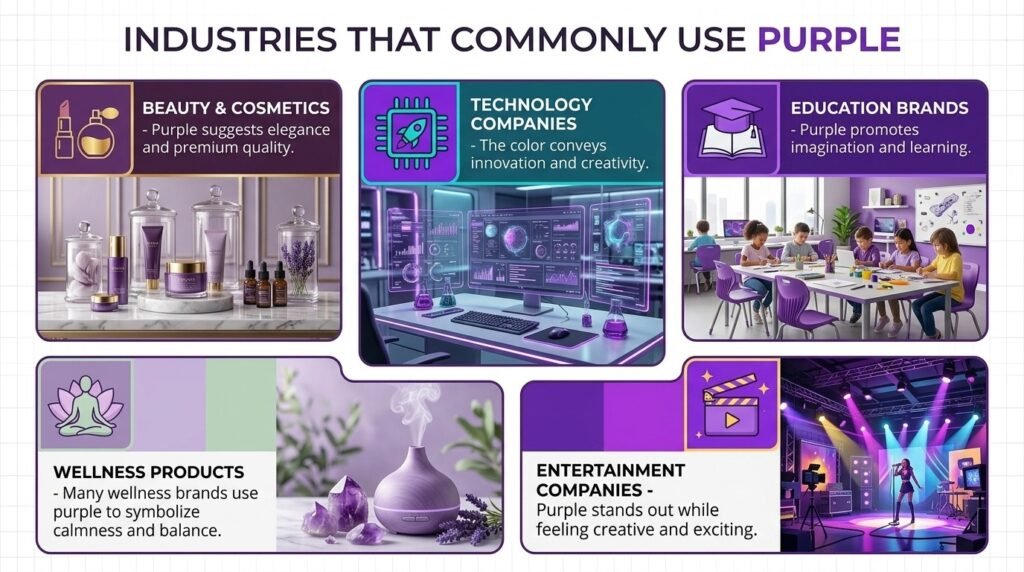
Beauty and Cosmetics
Purple suggests elegance and premium quality.
Technology Companies
The color conveys innovation and creativity.
Education Brands
Promotes imagination and learning.
Wellness Products
Many wellness brands are used to symbolize calmness and balance.
Entertainment Companies
Stands out while feeling creative and exciting.
Interesting Facts About Purple
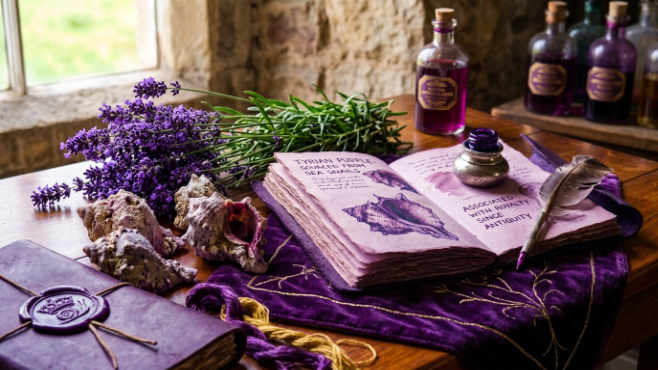
- Purple dye was once among the most expensive substances in the world.
- Ancient royalty frequently wore garments.
- This color combines qualities often associated with both red and blue.
- Amethyst has been prized for thousands of years.
- This color is one of the least common flower colors in some ecosystems.
- Many foods contain antioxidant-rich anthocyanins.
- Some butterflies appear only when viewed from specific angles.
- This color can symbolize creativity in modern psychology.
- Certain marine animals display brilliant coloration underwater.
- This color remains one of the most recognizable luxury-brand colors.
Educational Importance of Learning
Learning about things that are purple helps children and learners develop observation skills, expand vocabulary, and connect concepts across science, nature, art, and everyday life.
Colors provide excellent opportunities for cross-subject learning. Students can explore biology through flowers, chemistry through pigments, and geography through natural landscapes while building visual awareness.
FAQs
Why are some flowers purple?
Many flowers contain anthocyanin pigments that create blue and red shades.
Why are grapes Purple?
Grapes contain anthocyanins in their skins, which produce their characteristic color.
Why do some animals look purple?
Coloration may result from pigments or microscopic structures that reflect light.
Why is amethyst purple?
Amethyst gets its color from iron impurities within quartz crystals.
Why is it associated with royalty?
Historically, dye was rare and expensive, making it affordable only for wealthy individuals.
Why are foods considered healthy?
Many foods contain antioxidants that help protect plant tissues and contribute beneficial nutrients.
Final Thoughts
This is one of the most fascinating colors found in nature and everyday life. From lavender fields and amethyst crystals to grapes, butterflies, and household products, countless things that are purple enrich the world around us. Its combination of beauty, rarity, and scientific intrigue makes it a color worth appreciating. Whether you notice it in a garden, a grocery store, or a piece of technology continues to inspire creativity, curiosity, and wonder.