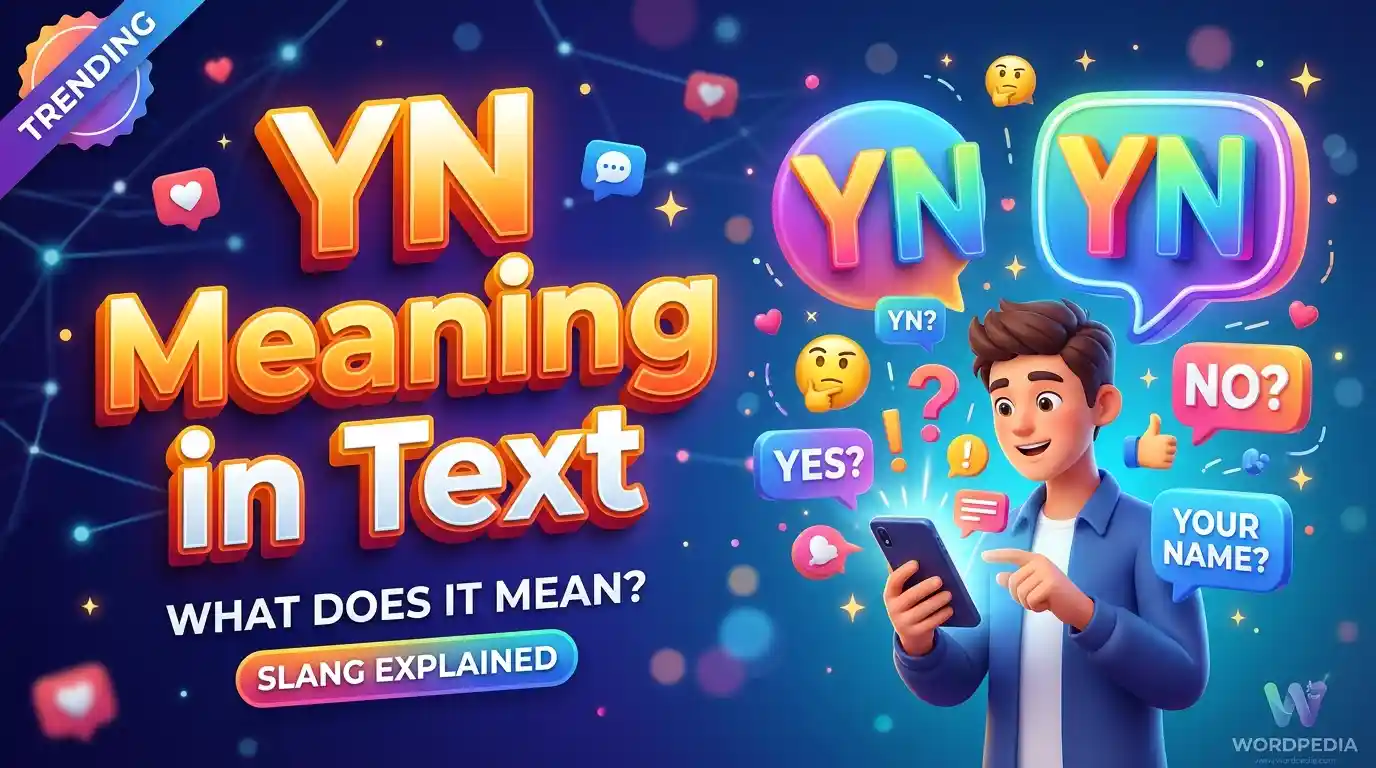
The most common meaning in reader-insert stories is Your Name, where writers use YN as a placeholder for the reader’s name. In this guide, we will explore the YN meaning, its different uses, examples, and popular online contexts. You will also learn how to understand this abbreviation without confusing it with other internet slang.
1. What Does YN Mean in Text?
YN usually stands for Your Name in online stories and reader-focused content. It allows writers to include readers in fictional scenes without knowing their real names.
The abbreviation YN has a simple meaning: Your Name. People often use it in digital writing, fanfiction, social media posts, and interactive stories. Instead of writing a specific person’s name, creators write YN so readers can imagine themselves as the main character.
For example:
- “YN walked into the room and smiled.”
- “He looked at YN and asked if everything was okay.”
- “Everyone waited for YN to arrive.”
In these sentences, YN represents the reader’s own name. If your name is Sarah, you can mentally replace YN with Sarah while reading.
This makes stories feel more personal and engaging. It also helps writers create content for a large audience without choosing one character name.
Why Do People Use YN?
Writers use YN because it makes fictional content more flexible. Readers can imagine themselves in different situations and connect with the characters.
Some common reasons include:
- Personal connection: Readers imagine themselves as the main character.
- Easy storytelling: Writers do not need to create a separate story for every reader.
- Creative freedom: Authors can write romantic, funny, dramatic, or adventurous scenes.
- Reader involvement: The story feels more interactive.
- Simple formatting: A short placeholder saves space and keeps sentences easy to read.
For example, a writer might say, “YN received a surprise message from her favorite character.” Readers can replace the placeholder with their own names and enjoy the scene.
2. YN Meaning in Text Messages and Online Chats
The yn meaning can change in everyday conversations. In texting, YN may represent a yes-or-no question rather than the reader’s name in fictional stories.
When someone sends YN in a private message, they may want a quick answer. For example, a friend might write:
- “Are you joining us tonight? YN”
- “Do you like this picture? YN”
- “Should I call you later? YN”
In these examples, YN means Yes or No. The sender wants a simple response instead of a long explanation.
However, this abbreviation is not universal. Some people may not recognize it, especially when they usually see YN in fanfiction.
If you want to avoid confusion, write the complete phrase. Clear communication matters more than saving two letters.
You may also come across other short expressions in online conversations. Learning common texting abbreviations and meanings can make digital communication easier.
How to Identify the Correct Meaning
The easiest way to understand YN is to examine the surrounding words. The platform and conversation also provide useful clues.
| Where you see YN | Possible meaning |
| Fanfiction | Your Name |
| Reader-insert stories | Your Name |
| A yes-or-no question | Yes or No |
| Online forms | Yes or No |
| Personal usernames | Initials or a personal abbreviation |
| Social media slang | Depends on the community |
For example, “YN entered the classroom” probably refers to a fictional character representing the reader. However, “Are you ready? YN” likely requests a yes-or-no response.
Never assume that every person uses an abbreviation in the same way.
3. What Does YN Mean on TikTok and Social Media?
On TikTok and other social platforms, YN can appear in story videos, comments, captions, and fandom discussions. Its meaning depends on the content and audience.
The yn meaning on social media often connects to reader-insert stories and fictional scenarios. Creators use the abbreviation when they want viewers to imagine themselves in a particular situation.
For example, a TikTok creator might post:
“POV: Your favorite character sees YN at the party.”
Here, YN represents the viewer. The video invites people to imagine themselves meeting a favorite fictional character.
Common Social Media Uses
People may encounter YN in several types of online content:
- TikTok POV videos: Creators use YN to place viewers inside a fictional scene.
- Instagram stories: Fan accounts use it in romantic captions and character scenarios.
- Tumblr posts: Writers include YN in short fictional scenes.
- Wattpad promotions: Authors use it when sharing reader-insert stories.
- Online comments: Users may discuss characters and fictional relationships.
Social media also introduces new slang. Some communities use YN as shorthand for a racial slur-based expression. This usage is sensitive and can offend people. It does not mean Your Name in that context, so avoid repeating it unless you fully understand the discussion.
How Context Changes the Meaning
Consider these examples:
- “YN is the main character in this story.” This refers to Your Name.
- “Do you want to come with us, YN?” This may request a yes-or-no answer.
- “This video is about YN and his favorite character.” The meaning depends on the creator’s intended slang.
The surrounding conversation helps you identify the correct definition. When the meaning remains unclear, ask the person what they intended.
You can also explore other online expressions, such as common abbreviation meanings, to understand how internet language changes across different platforms.
4. How Is YN Used in Fanfiction and Reader-Insert Stories?
Fanfiction is one of the most recognizable places to find YN. Writers use it to make readers feel like active participants in fictional stories.
The yn meaning in fanfiction is Your Name. It works as a placeholder for the reader’s identity, allowing anyone to imagine themselves as the central character.
Reader-insert fiction often uses second-person writing. Instead of describing a character as someone separate from the reader, the writer addresses the audience directly.
For example:
YN opened the door and noticed her favorite character standing outside.
“I’ve been waiting for you,” he said with a smile.
If your name is Emma, you can imagine the scene with Emma as the main character.
Popular Types of YN Stories
Writers use this format in different genres. Each genre creates a different experience for the reader.
- Romance: The reader develops a relationship with a favorite character.
- Comedy: The main character experiences funny and unexpected situations.
- Adventure: The reader joins fictional characters on exciting journeys.
- Fantasy: The reader enters a magical world filled with imaginary creatures.
- Drama: The story explores friendships, emotional conflicts, and difficult decisions.
- Mystery: The reader becomes involved in solving a fictional mystery.
For instance, a romance story might begin with a character sending YN a sweet message. An adventure story might place YN inside a magical kingdom.
Both stories use the same placeholder but offer different experiences.
Why Readers Enjoy Reader-Insert Stories
Reader-insert stories allow people to connect with fictional characters in a personal way. Instead of watching the story from a distance, readers imagine themselves experiencing the events.
This approach offers several benefits:
- Readers can imagine their own identities in the story.
- Writers can reach people with different backgrounds.
- Fictional relationships can feel more personal.
- Readers can explore creative situations without leaving their imagination.
- Stories can build stronger emotional connections.
However, not everyone enjoys this format. Some readers prefer original characters with established names, appearances, and personalities.
Both approaches have their own appeal.
5. Common Abbreviations Related to YN
YN belongs to a wider group of writing shortcuts. Fanfiction authors often use similar abbreviations to leave personal details open for readers.
Understanding these terms makes it easier to follow reader-insert stories. You can also recognize them when exploring new fictional communities.
Here are some common examples:
| Abbreviation | Full meaning | Purpose |
| YN | Your Name | Represents the reader’s name |
| Y/N | Your Name | Common alternative spelling |
| F/N | First Name | Represents the reader’s first name |
| L/N | Last Name | Represents the reader’s surname |
| Y/L/N | Your Last Name | Another surname placeholder |
| H/C | Hair Color | Represents the reader’s hair color |
| E/C | Eye Color | Represents the reader’s eye color |
| N/N | Nickname | Represents the reader’s nickname |
These abbreviations are common conventions rather than fixed rules. Different writers may use different formats or explain their own shortcuts in an author’s note.
YN vs. Y/N: Is There a Difference?
Many readers wonder whether YN and Y/N have different meanings. In most reader-insert stories, they mean exactly the same thing.
The main difference is formatting. Some writers include a slash, while others leave it out.
For example:
- “YN looked at the window.”
- “Y/N looked at the window.”
Both sentences tell the reader to imagine their own name.
Some authors also use brackets, parentheses, or blank spaces. The purpose remains the same.
YN vs. OC: Understanding the Difference
YN and OC are not identical. Both can appear in fanfiction, but they describe different character approaches.
- YN: A placeholder for the reader’s name.
- OC: An original character created by the writer.
An OC usually has a specific identity, personality, and background. YN allows readers to imagine themselves in the character’s position.
For example, an author might create an OC named Lily with a detailed family history. Another author might write YN without assigning a permanent name or personal background.
Readers who understand these differences can choose stories that match their preferences.
6. Real-Life Examples of YN in Different Situations
Examples make internet abbreviations easier to understand. The same letters can communicate different ideas depending on the situation, so always consider the complete message.
The yn meaning becomes clearer when you compare fictional writing with everyday communication. Here are some practical examples.
Example 1: In a Romantic Story
“YN, you make every ordinary day feel special,” he whispered.
Meaning: The writer wants readers to imagine their own names in the romantic scene.
Example 2: In a Fanfiction Conversation
“Where have you been, YN? Everyone was looking for you.”
Meaning: YN represents the reader as a character in the story.
Example 3: In a Group Chat
“Are we meeting at the cafe tomorrow? YN?”
Meaning: The sender wants a yes-or-no response.
Example 4: In a TikTok Caption
“YN finally meets her favorite singer.”
Meaning: The creator uses YN to represent the viewer in a fictional situation.
Example 5: In an Online Form
“Would you like to receive email updates? Y/N”
Meaning: The form asks users to select Yes or No.
Example 6: In a Social Media Comment
“This story makes YN feel like the main character.”
Meaning: The comment discusses the reader’s role in a fictional story.
These examples show why context matters. A simple abbreviation can communicate different ideas without changing its spelling.
7. Why Do People Use Short Forms Like YN?
Online communication moves quickly. People often choose short expressions because they save space and make messages easier to type.
The yn meaning is a good example of how internet communities create shortcuts for common ideas. Writers, readers, and social media users adopt these expressions to make communication more convenient.
Here are some reasons people prefer abbreviations.
1. Faster Communication
Typing two letters takes less time than writing a complete phrase. This can help in quick conversations, comments, and captions.
2. Better Reader Engagement
In fictional writing, YN gives readers a chance to imagine themselves as the main character. It creates a more personal reading experience.
3. Easy Content Creation
Writers can create one story for a large audience. They do not need to change the main character’s name for every reader.
4. Community Understanding
People who regularly read fanfiction often recognize common abbreviations. These shortcuts help writers and readers communicate within their communities.
5. Flexible Storytelling
Authors can use placeholders for names and personal details. This gives readers more freedom to imagine the characters.
However, abbreviations do not always improve communication. Unfamiliar shortcuts can confuse readers, especially when one expression has several meanings.
For example, someone who does not read fanfiction may interpret YN as Yes or No. This is why understanding different texting terms can help prevent misunderstandings.
8. Common Mistakes People Make When Understanding YN
Internet abbreviations are easy to misunderstand. A little attention to context can prevent incorrect interpretations and awkward replies.
Although the yn meaning is straightforward in reader-insert fiction, people sometimes make mistakes when they encounter it elsewhere.
Here are some common mistakes to avoid.
Mistake 1: Assuming YN Always Means Your Name
YN does not have one meaning in every situation. It can represent Your Name, Yes or No, or other community-specific expressions.
Better approach: Read the complete sentence before deciding what it means.
Mistake 2: Confusing YN With a Real Character’s Name
In fanfiction, YN usually does not identify a specific person. It represents the reader.
Better approach: Replace the abbreviation with your own name while reading.
Mistake 3: Ignoring the Slash
Some writers use Y/N, while others prefer YN. Readers sometimes assume these forms have different definitions.
Better approach: Remember that both usually represent Your Name in reader-insert writing.
Mistake 4: Using Unfamiliar Slang Without Checking
Some social media communities use YN in ways that have sensitive or offensive meanings.
Better approach: Check the context and avoid repeating unfamiliar slang casually.
Mistake 5: Using Too Many Abbreviations
A story filled with unfamiliar shortcuts can become difficult to read.
Better approach: Writers should explain uncommon placeholders before the story begins.
Clear writing makes online content more welcoming and enjoyable.
9. Tips for Using YN Correctly in Online Conversations
Knowing an abbreviation is useful, but understanding when to use it matters just as much. The right approach depends on your audience and the type of content you create.
The yn meaning is easiest to communicate when readers already understand the context. These practical tips can help you use the abbreviation correctly.
- Use YN in reader-insert fiction: It works well when readers should imagine themselves as the main character.
- Explain unfamiliar terms: Add a short note when introducing several placeholders.
- Check the conversation: Make sure YN fits the intended meaning before sending it.
- Avoid unnecessary shortcuts: Use complete words when clarity matters.
- Consider your audience: Not everyone understands fanfiction terminology.
- Use consistent formatting: Choose YN or Y/N and follow that style throughout your story.
Should You Use YN in Professional Messages?
Generally, no. YN is more suitable for casual online communication, fictional writing, and informal communities.
In professional emails, workplace messages, and formal documents, complete phrases are usually better.
For example:
Instead of writing:
“Please confirm your attendance. YN?”
Write:
“Please confirm whether you will attend.”
The second version sounds clearer and more professional.
You can explore more common internet expressions to understand how informal language differs from professional communication.
10. Is YN Still Popular in Online Culture?
Internet language continues to change as new platforms, communities, and trends develop. However, reader-insert writing remains a recognizable way to make fictional stories feel personal.
The yn meaning continues to matter to readers who enjoy fanfiction, character-based stories, and creative social media content.
Several factors help explain its continued use:
- Reader-insert stories allow people to imagine themselves alongside fictional characters.
- Social media makes short fictional scenes easy to share.
- Fandom communities create and reuse familiar writing conventions.
- New readers discover older abbreviations through online stories.
- Interactive storytelling encourages personal involvement.
At the same time, some modern writers choose simpler alternatives. They may use the word “you” instead of inserting YN throughout the story.
For example:
With a placeholder:
“YN walked into the room and greeted everyone.”
Without a placeholder:
“You walked into the room and greeted everyone.”
Both versions place the reader inside the scene. The second version may feel more natural because it avoids interrupting the sentence with an abbreviation.
As online storytelling evolves, writers will likely continue experimenting with different ways to connect readers with fictional characters.
Conclusion
Understanding internet abbreviations makes online communication easier and more enjoyable. The yn meaning is usually Your Name in fanfiction, reader-insert stories, and fictional social media content. Writers use it as a placeholder so readers can imagine themselves as the main character.
However, YN can also mean Yes or No in questions, forms, and casual messages. Some social media communities use it differently, so checking the surrounding conversation is always important.
You should also remember related abbreviations such as L/N, F/N, H/C, and E/C. These shortcuts help writers create more personalized stories.
Whether you enjoy fanfiction, TikTok videos, or everyday texting, knowing these expressions can help you understand online conversations. If you want to explore more internet vocabulary, learning the meanings of unfamiliar online phrases is another useful step. Always consider context before interpreting an abbreviation, and choose clear language when communicating with others.
Frequently Asked Questions (FAQs)
1. What does YN mean in texting?
YN can mean Your Name in fictional stories or Yes or No in certain messages. The correct YN meaning depends on the conversation and how the sender uses it.
2. Does YN mean Your Name?
Yes. YN commonly stands for Your Name in fanfiction and reader-insert stories. Readers replace it with their own names while imagining themselves as the main character.
3. What does Y/N mean on Wattpad?
On Wattpad, Y/N usually means Your Name. Writers use it as a placeholder so readers can imagine themselves interacting with their favorite fictional characters.
4. Is YN the same as Y/N?
Yes. Both usually have the same meaning in fanfiction. The slash is simply a formatting difference, and writers can choose either version.
5. What does YN mean on TikTok?
On TikTok, YN often appears in POV videos, fictional scenarios, and fanfiction-related content. It can represent Your Name, but other slang meanings also exist.
6. How do I replace YN with my name?
Simply read YN as your own name whenever it appears in a story. For example, if your name is Alex, replace “YN entered the room” with “Alex entered the room.”