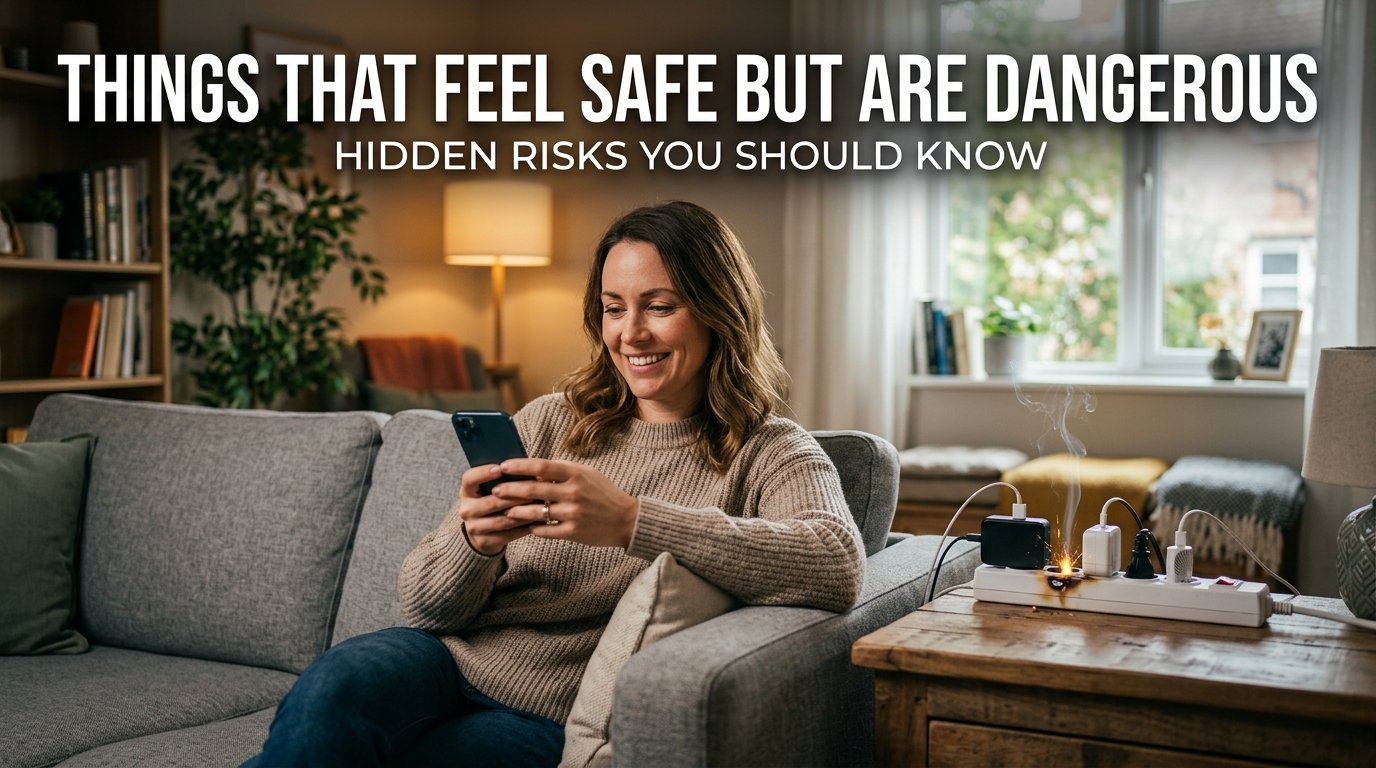
People naturally trust things they see every day. Familiar objects, routines, and places rarely trigger alarm because they feel normal. Most of us walk through our homes, use our devices, eat common foods, and follow daily habits without giving safety much thought. That confidence can sometimes become a problem. Many accidents, injuries, health issues, and security risks happen because people stop noticing dangers that seem ordinary. Some of the most overlooked threats are actually things that feel safe but are dangerous when used incorrectly, ignored, or misunderstood.
From household products and electronic devices to common foods and everyday habits, hidden risks exist in places most people never expect. These risks do not always look dangerous, which makes them easier to underestimate. Understanding these hidden dangers can help you make smarter decisions without becoming fearful.
What Does “Safe but Dangerous” Mean?
A safe-but-dangerous item is something that appears harmless because it is familiar, common, or widely accepted. People encounter it so often that they stop thinking about the risks associated with it. Psychologists call this familiarity bias. The brain becomes comfortable with repeated experiences and assumes that common things are automatically safe. Many things that feel safe but are dangerous become risky only when people become careless, distracted, or overconfident. Understanding that difference is the first step toward improving everyday safety.
60 Things That Feel Safe But Are Dangerous
Many risks do not come from dramatic situations. Instead, they come from ordinary objects, habits, and environments that people encounter daily. Here are some examples of surprisingly dangerous things that deserve more attention.
Household Items That Feel Safe but Can Be Dangerous
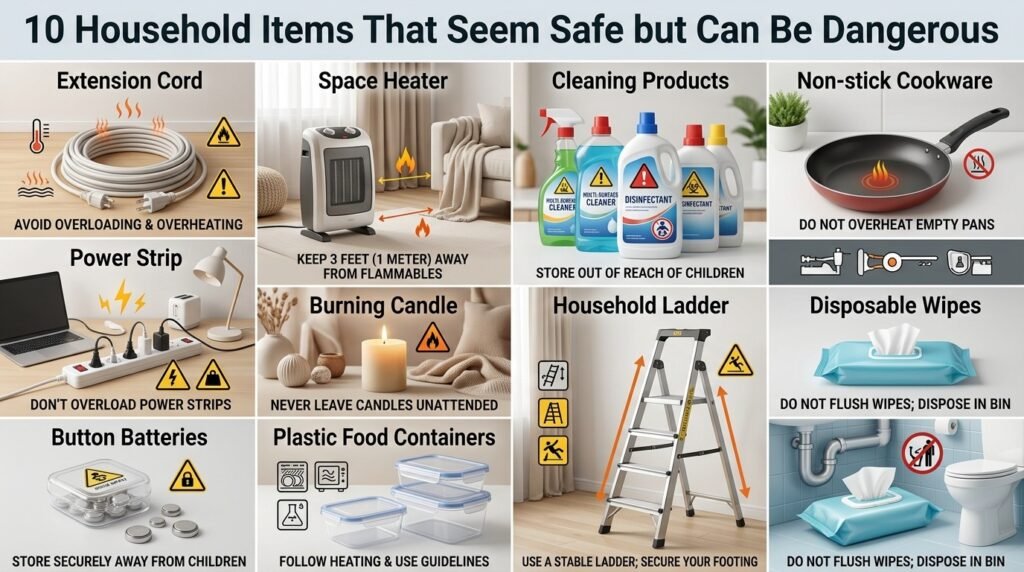
1. Extension Cords
Why it feels safe: Most homes use them regularly.
Hidden danger: Overloading cords can cause overheating and electrical fires.
Safety tip: Use cords only as intended and replace damaged ones immediately.
2. Space Heaters
Why it feels safe: They provide comfortable warmth.
Hidden danger: They can ignite nearby furniture, curtains, or bedding.
Safety tip: Keep at least three feet of clearance around the heater.
3. Cleaning Products
Why it feels safe: They are designed for household use.
Hidden danger: Mixing products can create toxic gases.
Safety tip: Always read labels before combining products.
4. Non-Stick Cookware
Why it feels safe: It makes cooking easier.
Hidden danger: Extremely high temperatures may damage coatings and release harmful fumes.
Safety tip: Avoid overheating empty pans.
5. Power Strips
Why it feels safe: They are common in homes and offices.
Hidden danger: Plugging high-power devices into the same strip can overload circuits.
Possible consequences: Electrical fires.
6. Candles
Why it feels safe: They create a relaxing atmosphere.
Hidden danger: Unattended flames can quickly start fires.
Safety tip: Never leave burning candles unattended.
7. Button Batteries
Why it feels safe: They are tiny and seem harmless.
Hidden danger: Children may swallow them.
Safety tip: Store batteries out of children’s reach.
8. Plastic Food Containers
Why it feels safe: They are used daily.
Hidden danger: Some containers may degrade when exposed to heat.
Safety tip: Use microwave-safe containers only.
9. Ladders
Why it feels safe: They are standard household tools.
Hidden danger: Falls often happen due to improper positioning.
Safety tip: Place ladders on stable surfaces.
10. Disposable Wipes
Why it feels safe: They are marketed for convenience.
Hidden danger: Some clog plumbing systems when flushed.
Safety tip: Dispose of wipes in trash bins unless specifically approved for flushing.
Technology and Electronics
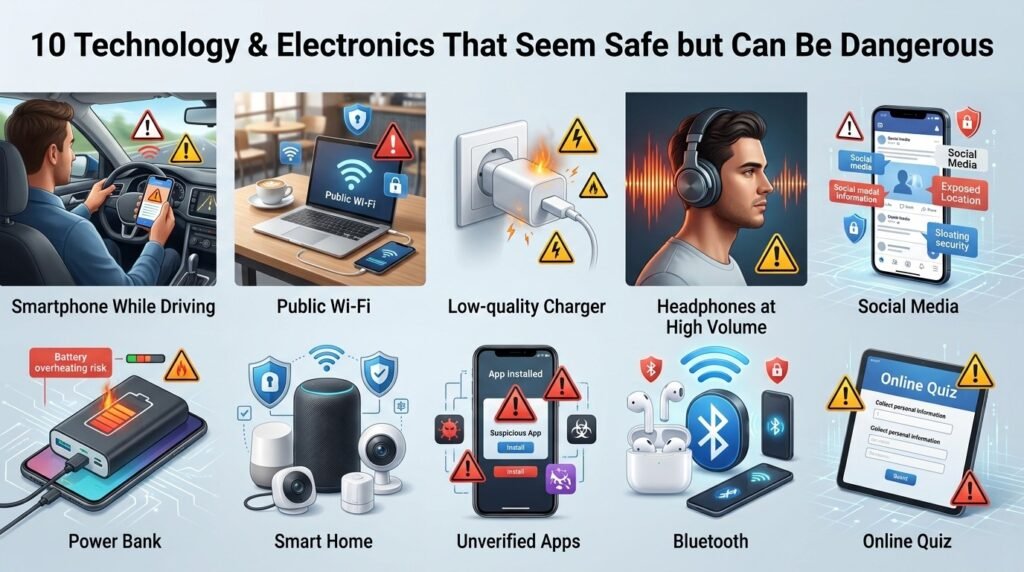
. Smartphones While Driving
Why people trust it: Checking a message takes only seconds.
Hidden risk: Even brief distractions reduce reaction time.
Real-world impact: Increased crash risk.
Prevention: Put the phone away before driving.
12. Public Wi-Fi Networks
Why people trust it: Free internet feels convenient.
Hidden risk: Hackers may intercept data.
Real-world impact: Identity theft and account compromise.
Prevention: Use secure websites and VPNs.
13. Cheap Phone Chargers
Why people trust it: They look similar to branded products.
Hidden risk: Poor manufacturing standards.
Real-world impact: Overheating and fire hazards.
Prevention: Purchase certified chargers.
14. Headphones at High Volume
Why people trust it: Listening feels harmless.
Hidden risk: Long-term hearing damage.
Real-world impact: Permanent hearing loss.
Prevention: Follow safe listening limits.
15. Social Media Oversharing
Why people trust it: Sharing seems normal.
Hidden risk: Sensitive information becomes public.
Real-world impact: Privacy breaches and scams.
Prevention: Review privacy settings regularly.
16. Portable Power Banks
Why people trust it: They are useful travel accessories.
Hidden risk: Damaged batteries can overheat.
Real-world impact: Fires and burns.
Prevention: Replace swollen or damaged units.
17. Smart Home Devices
Why people trust it: They simplify daily tasks.
Hidden risk: Weak security settings.
Real-world impact: Unauthorized access.
Prevention: Use strong passwords and updates.
18. Unverified Apps
Why people trust it: Apps often appear legitimate.
Hidden risk: Malware and spyware.
Real-world impact: Data theft.
Prevention: Download from trusted sources.
19. Bluetooth Devices
Why people trust it: Wireless connections are common.
Hidden risk: Security vulnerabilities.
Real-world impact: Unauthorized device access.
Prevention: Disable Bluetooth when not needed.
20. Online Quizzes Collecting Data
Why people trust it: They seem entertaining.
Hidden risk: Personal information harvesting.
Real-world impact: Targeted scams and privacy issues.
Prevention: Avoid quizzes requesting sensitive details.
Foods and Drinks
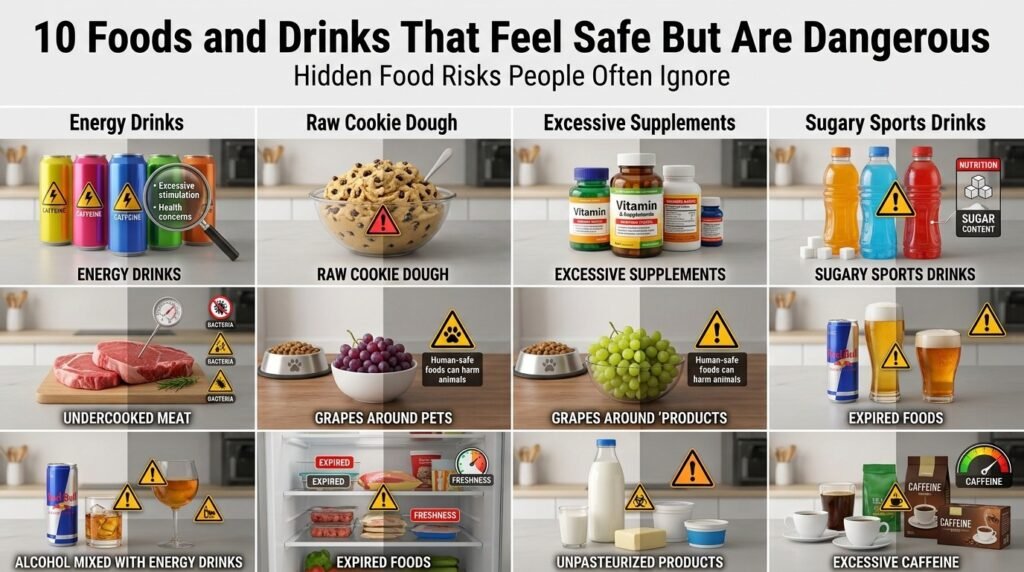
21. Energy Drinks
Why it seems harmless: They are widely available.
Hidden health risk: Excess stimulants can strain the heart.
Safety recommendation: Consume in moderation.
22. Raw Cookie Dough
Why it seems harmless: Many people sample it while baking.
Hidden health risk: Raw ingredients may contain harmful bacteria.
Safety recommendation: Eat only products designed for raw consumption.
23. Excessive Supplements
Why it seems harmless: Vitamins are associated with health.
Hidden health risk: Overuse may cause adverse effects.
Safety recommendation: Follow recommended doses.
24. Sugary Sports Drinks
Why it seems harmless: They are marketed for hydration.
Hidden health risk: Excess sugar intake.
Safety recommendation: Use them appropriately, especially during intense activity.
25. Undercooked Meat
Why it seems harmless: It may appear fully cooked.
Hidden health risk: Harmful bacteria and parasites.
Safety recommendation: Use food thermometers when cooking.
26. Grapes Around Pets
Why it seems harmless: They are healthy for humans.
Hidden health risk: Toxicity in some pets.
Safety recommendation: Keep grapes away from dogs.
27. Alcohol Mixed With Energy Drinks
Why it seems harmless: Popular in social settings.
Hidden health risk: Masks signs of intoxication.
Safety recommendation: Avoid combining stimulants and alcohol.
28. Expired Foods
Why it seems harmless: They often look normal.
Hidden health risk: Bacterial growth.
Safety recommendation: Follow storage guidelines.
29. Unpasteurized Products
Why it seems harmless: Some consider them more natural.
Hidden health risk: Foodborne illness.
Safety recommendation: Purchase pasteurized products when possible.
30. Excessive Caffeine
Why it seems harmless: Coffee is part of many routines.
Hidden health risk: Anxiety, insomnia, and heart-related symptoms.
Safety recommendation: Monitor total daily intake.
Everyday Habits
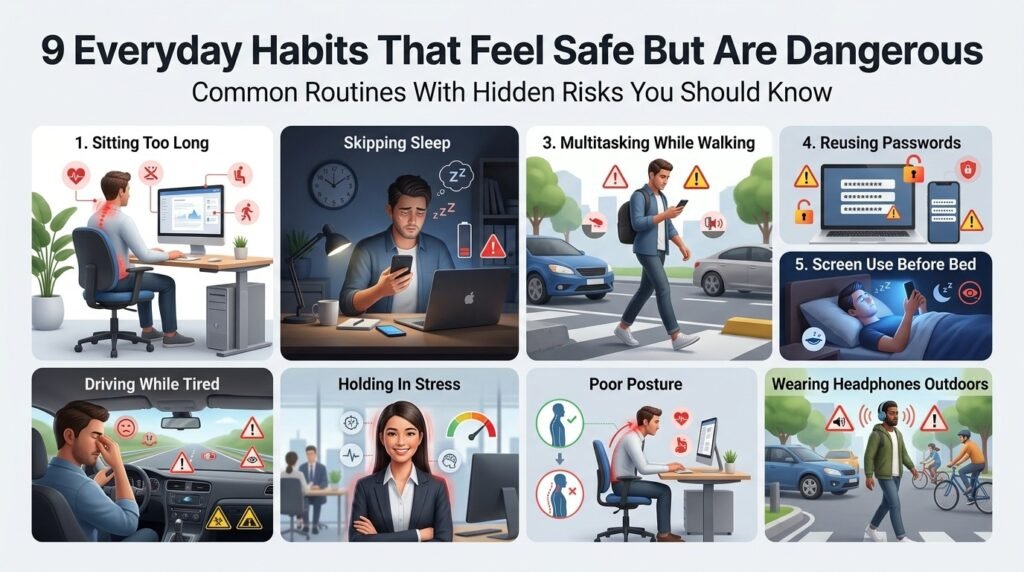
31. Sitting Too Long
Why it feels normal: Many jobs require desk work.
Long-term consequence: Reduced physical health and circulation issues.
Better alternative: Take movement breaks every hour.
32. Skipping Sleep
Why it feels normal: Busy schedules encourage it.
Long-term consequence: Reduced concentration and increased health risks.
Better alternative: Prioritize consistent sleep routines.
33. Multitasking While Walking
Why it feels normal: Smartphones make it common.
Long-term consequence: Trips, falls, and accidents.
Better alternative: Focus on one task at a time.
34. Reusing Passwords
Why it feels normal: It is convenient.
Long-term consequence: Multiple accounts become vulnerable.
Better alternative: Use unique passwords and password managers.
35. Ignoring Minor Injuries
Why it feels normal: Small injuries seem insignificant.
Long-term consequence: Untreated issues may worsen.
Better alternative: Monitor symptoms and seek care when necessary.
36. Screen Use Before Bed
Why it feels normal: Many people use phones, tablets, or laptops at night.
Long-term consequence: Blue light and mental stimulation can interfere with sleep quality.
Better alternative: Reduce screen exposure before bedtime and create a relaxing nighttime routine.
37. Driving While Tired
Why it feels normal: People often underestimate their level of tiredness.
Long-term consequence: Fatigue slows reaction time and decision-making, increasing accident risk.
Better alternative: Rest before driving and avoid long trips when exhausted.
38. Holding In Stress
Why it feels normal: Many people believe they can simply ignore stress.
Long-term consequence: Long-term stress can affect emotional and physical well-being.
Better alternative: Use healthy coping methods such as exercise, relaxation techniques, or talking with someone trusted.
39. Poor Posture
Why it feels normal: Sitting incorrectly does not cause immediate pain.
Long-term consequence: Poor posture may contribute to neck, shoulder, and back problems.
Better alternative: Adjust your workspace and maintain proper alignment.
40. Wearing Headphones Outdoors
Why it feels normal: Music helps people relax while walking.
Long-term consequence: Reduced awareness of vehicles, cyclists, or surroundings.
Better alternative: Keep volume low and stay aware of your environment.
Places That Seem Harmless but Have Hidden Risks
Certain locations feel completely safe because people visit them regularly. However, accidents often happen in familiar places because people lower their guard.
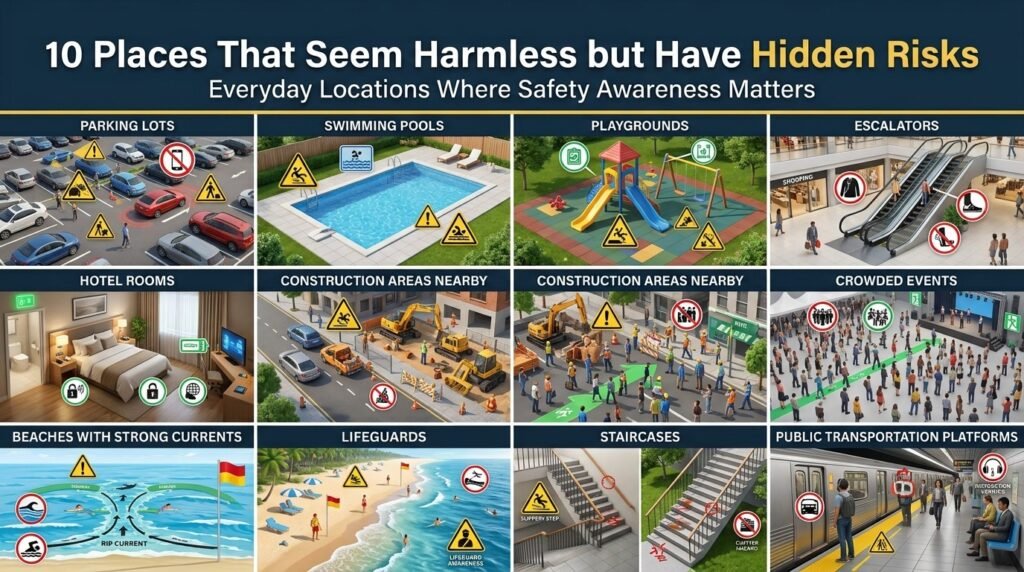
Parking Lots
Common accident: Vehicle collisions and pedestrian injuries.
Hidden danger: Drivers may not notice people while reversing or turning.
Safety precaution: Stay alert, avoid distractions, and make eye contact with drivers.
42. Swimming Pools
Why they seem safe: Pools are designed for recreation.
Hidden danger: Drowning can happen quickly, even in familiar locations.
Safety precaution: Supervise children and avoid swimming alone.
43. Playgrounds
Why they seem safe: They are built for children.
Hidden danger: Falls, broken equipment, and unsafe surfaces.
Safety precaution: Check equipment conditions before use.
44. Escalators
Why they seem safe: Millions of people use them daily.
Hidden danger: Loose clothing, shoes, or distractions can cause accidents.
Safety precaution: Hold the handrail and stay focused
45. Hotel Rooms
Why they seem safe: Hotels are associated with comfort.
Hidden danger: Unknown emergency exits, electrical issues, or security concerns.
Safety precaution: Check exits and keep valuables secure.
46. Construction Areas Nearby
Why they seem safe: People may only be passing by.
Hidden danger: Falling objects, machinery, and unstable surfaces.
Safety precaution: Stay outside restricted areas.
47. Crowded Events
Why they seem safe: Large gatherings feel organized.
Hidden danger: Crowds can create pushing, falls, and emergency challenges.
Safety precaution: Identify exits and avoid unsafe crowd pressure.
48. Beaches With Strong Currents
Why they seem safe: Calm water can look inviting.
Hidden danger: Rip currents can pull swimmers away from shore.
Safety precaution: Learn local warnings and swim near lifeguards.
49. Staircases
Why they seem safe: They are part of everyday life.
Hidden danger: Small mistakes can cause serious falls.
Safety precaution: Use handrails and keep steps clear.
50. Public Transportation Platforms
Why they seem safe: They are designed for passengers.
Hidden danger: Falling near tracks or distracted behavior.
Safety precaution: Stand behind safety lines and stay aware.
Natural Things People Underestimate
Nature often looks peaceful and harmless. However, many natural elements can become dangerous when people underestimate their power.
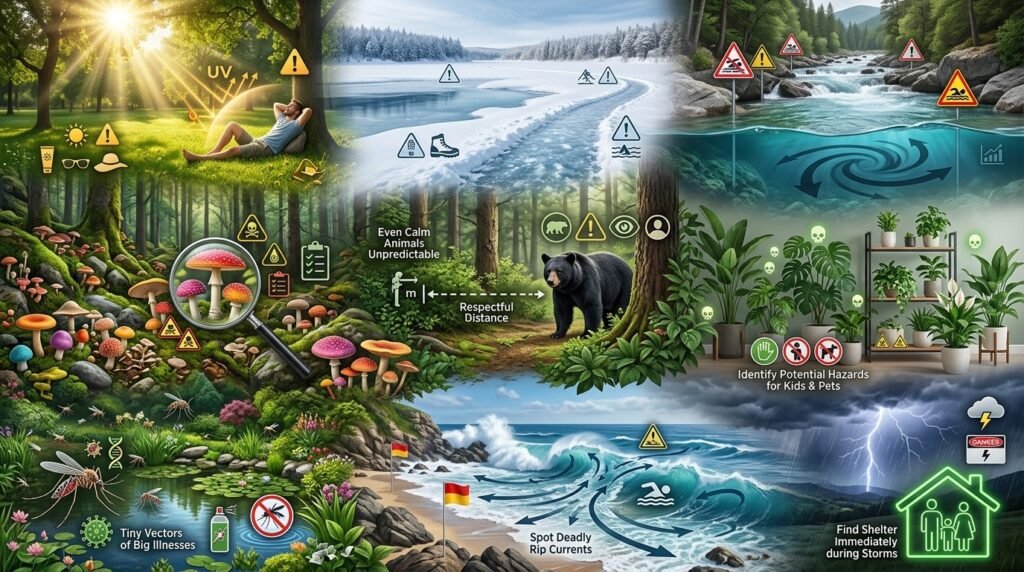
51. Sunlight
Why it seems harmless: Sunshine feels enjoyable and healthy.
Actual risk: Excessive exposure can damage skin and increase health risks.
How to stay safe: Use sunscreen, wear protective clothing, and avoid extreme exposure.
52. Ice-Covered Surfaces
Why it seems harmless: Thin ice can look solid.
Actual risk: Slips, falls, and dangerous situations near frozen water.
How to stay safe: Walk carefully and avoid uncertain ice.
53. Rivers and Streams
Why they seem safe: Calm water can appear peaceful.
Actual risk: Strong currents and changing water levels.
How to stay safe: Avoid unfamiliar water areas and follow warnings.
54. Wild Mushrooms
Why they seem harmless: Many resemble edible varieties.
Actual risk: Some contain dangerous toxins.
How to stay safe: Never eat wild mushrooms unless identified by an expert.
55. Wild Animals
Why they seem harmless: Some animals appear cute or calm.
Actual risk: Bites, diseases, and unpredictable behavior.
How to stay safe: Keep distance and avoid feeding wild animals.
56. Toxic Houseplants
Why they seem harmless: Indoor plants improve appearance.
Actual risk: Some plants can harm children and pets.
How to stay safe: Research plants before bringing them home.
57. Ticks
Why they seem harmless: They are extremely small.
Actual risk: They may spread infections.
How to stay safe: Check your body after outdoor activities.
58. Mosquitoes
Why they seem harmless: Their bites appear minor.
Actual risk: Some mosquitoes transmit diseases.
How to stay safe: Use insect protection and remove standing water.
59. Lightning
Why it seems harmless: Storms may appear distant.
Actual risk: Lightning can strike far from rainfall.
How to stay safe: Seek shelter during storms.
60. Strong Ocean Waves
Why they seem harmless: Waves are part of normal beach conditions.
Actual risk: Powerful waves can knock people down or pull them away.
How to stay safe: Respect warning signs and ocean conditions.
Why People Ignore Obvious Risks
Many common dangers people ignore are not ignored because people do not care about safety. Instead, the human brain naturally adjusts to repeated experiences.
Familiarity Bias
When people encounter something regularly, they become less cautious.
A staircase, electrical outlet, or daily commute feels predictable. Because nothing bad happened yesterday, people assume nothing bad will happen today.
This thinking can make risks hiding in plain sight easier to miss.
Overconfidence
Experience can improve skills, but it can also create false confidence.
Someone who has driven for many years may believe they can safely check a phone while driving. However, experience does not remove distraction risks.
Social Influence
People often copy what others do.
If everyone around someone ignores safety rules, that behavior can start feeling acceptable.
For example, seeing many people cross roads while distracted can make the habit appear normal.
Risk Normalization
Dangerous situations can slowly become ordinary.
A loose electrical wire, cluttered staircase, or unsafe workplace habit may remain unnoticed because people become used to seeing it.
Convenience Over Safety
People often choose the easiest option.
Skipping protective equipment, ignoring updates, or rushing tasks may save seconds but create larger problems later.
How to Identify Hidden Dangers in Daily Life
Recognizing hidden risks does not require fear. It requires awareness and simple habits.
Use this checklist:
✅ Look for damaged equipment before using it.
✅ Read warning labels carefully.
✅ Follow manufacturer instructions.
✅ Keep emergency contacts available.
✅ Replace old or unsafe products.
✅ Teach children basic safety rules.
✅ Review home safety regularly.
✅ Stay updated about product recalls.
✅ Use protective equipment when needed.
A quick safety check can prevent many accidents before they happen.
How to Stay Safe Without Becoming Fearful
Awareness should improve daily life, not create constant worry.
The goal is not to avoid everything. The goal is to make smarter choices.
A balanced approach includes:
- Understanding realistic risks
- Building simple safety habits
- Paying attention when situations change
- Preparing without overreacting
- Teaching others useful safety practices
Safety is not about fear. It is about making informed decisions.
Many everyday things that are dangerous become safer when people understand how to use them correctly.
Frequently Asked Questions
1. What are things that feel safe but are dangerous?
Things that feel safe but are dangerous are ordinary objects, habits, foods, or places that seem harmless but can create risks when used incorrectly. Examples include extension cords, distracted driving, unsafe food handling, and ignoring small safety problems.
2. Why do people underestimate common dangers?
People often underestimate risks because familiarity makes situations feel predictable. When something happens regularly without causing harm, the brain assumes it is safe. This can reduce awareness and create careless behavior.
3. What household items cause the most accidents?
Common household hazards include ladders, electrical equipment, cleaning chemicals, candles, heaters, and unsafe cookware. Many accidents happen because people use these items frequently and stop noticing potential risks.
4. Are everyday habits more dangerous than people think?
Yes. Habits such as poor sleep, distracted walking, sitting too long, and ignoring stress may seem harmless but can affect health and safety over time.
5. What foods seem safe but can be risky?
Some risky foods include raw cookie dough, undercooked meat, excessive caffeine products, unpasteurized foods, and excessive supplements. Proper preparation and moderation reduce these risks.
6. How can I identify hidden dangers at home?
Inspect your home regularly, check electrical items, store chemicals safely, remove clutter, follow product instructions, and pay attention to warning signs.
7. Why does familiarity reduce caution?
The brain saves energy by treating familiar situations as predictable. This helps daily life but can cause people to overlook hazards.
8. What are the most overlooked safety risks?
Common overlooked risks include distracted driving, household falls, unsafe electrical use, poor sleep, and improper medication use.
9. Can technology create hidden dangers?
Yes. Smartphones, apps, smart devices, and online services can create privacy, security, and health risks when used carelessly.
10. How can families improve everyday safety?
Families can improve safety by discussing risks openly, creating emergency plans, teaching children safety habits, and regularly checking their home environment.
Conclusion
Many dangers are overlooked not because they are rare, but because they become part of normal life. The objects we use, places we visit, and habits we repeat can slowly become invisible risks. Understanding things that feel safe but are dangerous helps people recognize problems before they become accidents. Simple actions, such as reading instructions, staying alert, maintaining equipment, and practicing safer habits, can make a major difference. Safety does not require avoiding everyday life. It requires awareness, preparation, and thoughtful choices.