Silver is a fascinating shade that appears throughout nature, technology, art, and everyday life. When people search for things that are silver, they often imagine shiny metals, elegant objects, futuristic designs, and natural wonders that reflect light in unique ways.
The color silver is commonly associated with sophistication, modernity, balance, and value. Across different cultures, it represents elegance, achievement, and innovation. From moonlit landscapes and shimmering animals to household items and advanced technology, this metallic shade has a special place in the world around us.
In this ultimate list of things that are silver, we will explore examples from nature, birds, animals, food, science, technology, industries, and daily life.
Why Silver Is So Special and Unique
Unlike many colors created by pigments, this metallic shade often comes from the way surfaces interact with light. Many objects appear silver because their surfaces reflect a broad range of visible wavelengths instead of absorbing specific colors.
Pure metals such as silver, aluminum, and polished steel create a bright appearance because their electrons interact with light and reflect it back to our eyes. In nature, some animals and minerals achieve a similar effect through microscopic structures that scatter and reflect light.
Did you know? Some animals do not contain silver-colored pigments. Instead, tiny structures in their feathers, scales, or skin create a shiny appearance through structural coloration.
Things that are silver in Nature
Nature contains many examples of objects and living things that display metallic gray or shiny tones. These appearances can come from minerals, reflections, textures, or specialized biological structures.
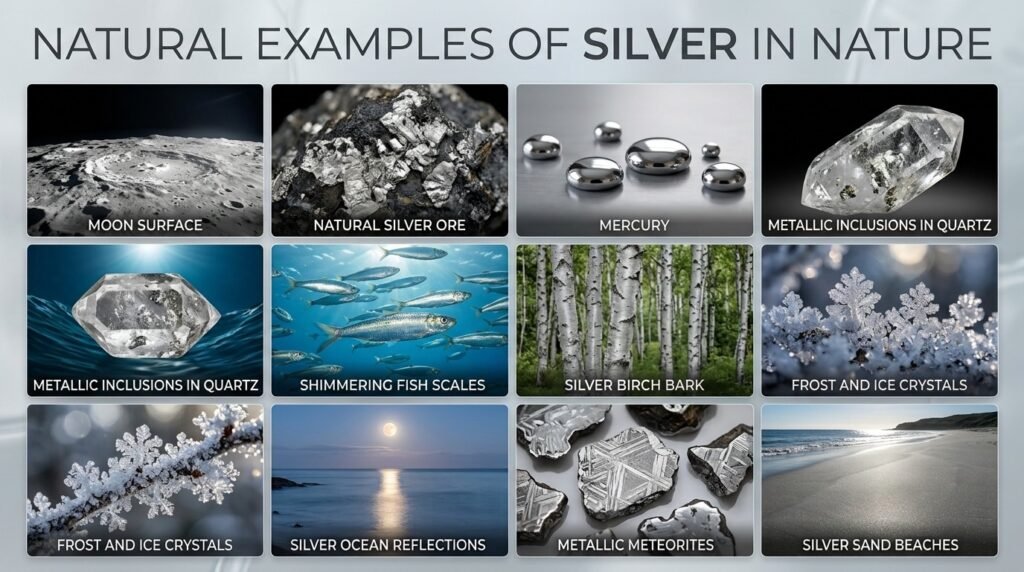
1. Moon Surface
The Moon often appears silver in the night sky because its rocky surface reflects sunlight. Its gray appearance comes from minerals such as silicates and iron-rich materials covering the lunar landscape.
2. Silver Ore
Natural silver deposits form as metallic minerals inside rocks. These rare mineral formations have been valued for centuries because of their beauty and usefulness.
3. Mercury
Mercury is a naturally occurring metal known for its shiny liquid appearance. Unlike most metals, it remains liquid at room temperature.
4. Metallic Quartz
Some quartz specimens contain inclusions that create a bright metallic shine. These stones are popular among collectors because of their unusual appearance.
5. Fish Scales
Many fish have reflective scales that appear silver because tiny crystal structures reflect light. This helps some species blend into underwater environments.
6. Silver Birch Trees
The bark of silver birch trees has a pale, metallic-gray appearance due to compounds in the outer bark layer.
7. Frost and Ice Crystals
Frozen surfaces can appear silvery when light reflects from countless tiny ice crystals. The effect is especially noticeable during sunlight or moonlight.
8. Ocean Water Reflections
Large bodies of water can appear silver under certain lighting conditions. Calm water reflects the sky, moon, and surrounding environment like a natural mirror.
9. Metallic Meteorites
Some meteorites contain iron and nickel alloys that create a shiny metallic surface when exposed.
10. Silver Sand Beaches
Certain beaches contain minerals that give sand a grayish, shimmering appearance when sunlight hits the grains.
Birds That Are Silver in Coloring
Birds use feathers not only for flight but also for protection, communication, and attracting mates. Some species display shiny gray or metallic feather patterns created through feather structure and light reflection.
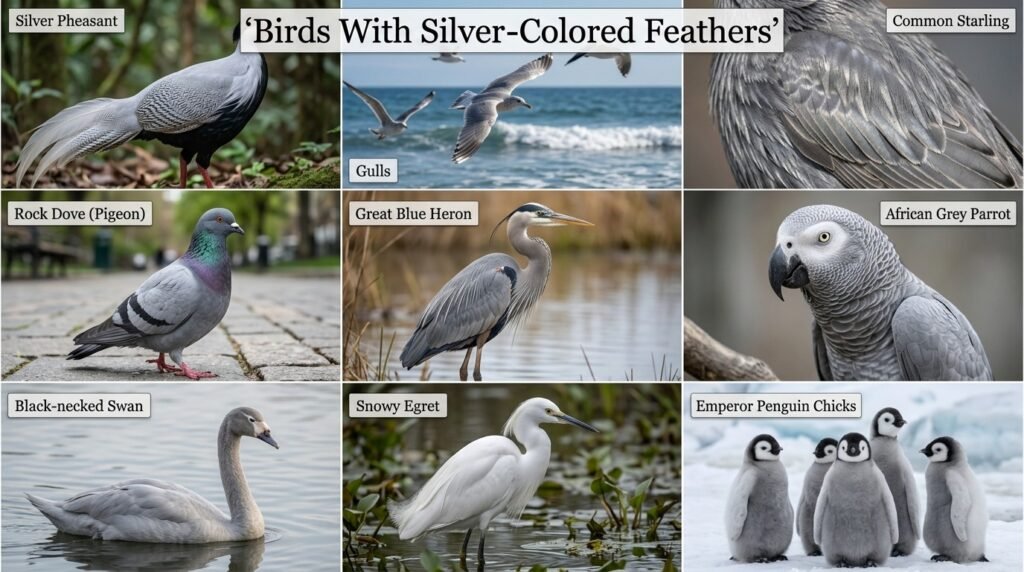
1. Silver Pheasant
The silver pheasant has striking pale feathers with dark markings. Its appearance comes from specialized feather structures rather than a simple color pigment.
2. Gulls
Many gull species have gray-and-white feathers that can appear silver when sunlight reflects from their wings.
3. Common Starling
Starlings may show glossy gray and metallic tones because their feathers contain microscopic structures that reflect light.
4. Rock Dove (Pigeon)
Many pigeons have shiny gray bodies with reflective neck feathers that create colorful metallic effects.
5. Great Blue Heron
Although its name includes blue, its feathers can appear silvery gray from a distance due to their muted coloration.
6. African Grey Parrot
This famous parrot has mostly gray feathers with lighter patterns, creating a soft metallic appearance.
7. Black-necked Swan
This swan species has pale body feathers that may appear gray or silver in certain lighting.
8. Snowy Egret
The snowy egret’s bright feathers can take on a soft silver tone when viewed under shaded light.
9. Emperor Penguin Chicks
Young emperor penguins have fluffy gray feathers that give them a silvery appearance before adulthood.
Animals With Silver Coloring
Many animals have metallic or gray appearances because of camouflage, protection, or specialized body structures.
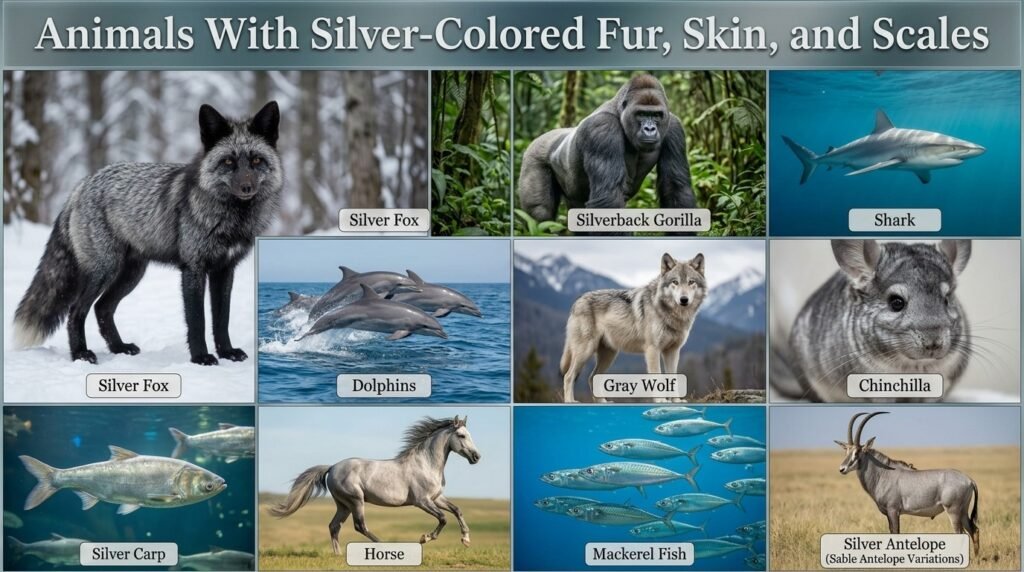
1. Silver Fox
The silver fox is a color variation of the red fox with dark fur mixed with pale guard hairs, creating a shimmering effect.
2. Silverback Gorilla
The mature male gorilla develops a patch of gray hair across its back, giving it the famous “silverback” appearance.
3. Sharks
Many shark species have gray reflective skin that helps them blend into ocean environments.
4. Dolphins
Dolphins often have smooth gray skin that can look metallic when sunlight reflects from their wet bodies.
5. Gray Wolf
Gray wolves may have coats containing lighter hairs that create a silver-gray appearance.
6. Chinchilla
Chinchillas have extremely dense fur with gray tones caused by their unique hair structure.
7. Silver Carp
This freshwater fish has shiny scales that reflect light and create a bright metallic look.
8. Horses With Gray Coats
Some horse breeds develop gray coats that can appear silver, especially under sunlight.
9. Mackerel Fish
Mackerel have reflective bodies that help reduce visibility in open water.
10. Silver Antelope (Sable Antelope Variations)
Some antelope varieties can display grayish coats with a metallic appearance.
Everyday Things That Are Silver
The metallic shade is popular in everyday products because it often creates a clean, modern, and premium appearance. Manufacturers frequently use it for durability, simplicity, and visual appeal.
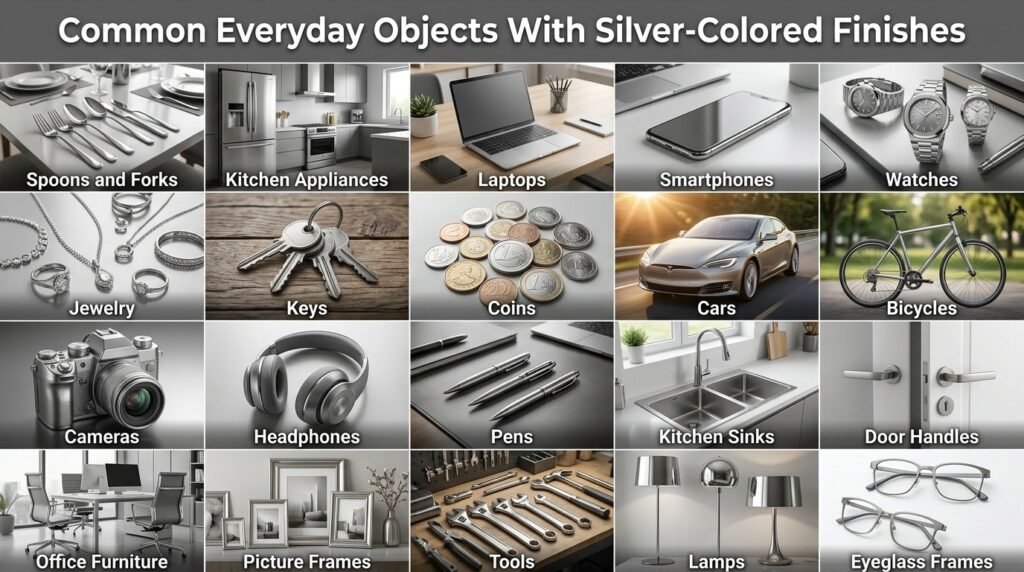
Common examples include:
- Spoons and forks – Stainless steel creates a polished metallic look.
- Kitchen appliances – Refrigerators and ovens often use metallic finishes for a modern style.
- Laptops – Many computer designs use aluminum bodies for strength and lightweight construction.
- Smartphones – Metallic frames create a premium appearance.
- Watches – Metal cases are associated with elegance and durability.
- Jewelry – Silver-colored accessories are popular for their classic appearance.
- Keys – Most keys use metal alloys with a gray metallic finish.
- Coins – Many currencies use metals that appear silver.
- Cars – Metallic paint is popular because it reflects light beautifully.
- Bicycles – Aluminum frames often have a natural metallic surface.
- Cameras – Professional equipment frequently uses metal finishes.
- Headphones – Metallic designs are common in modern electronics.
- Pens – Metal pens are often chosen for a professional look.
- Kitchen sinks – Stainless steel provides shine and resistance.
- Door handles – Metal finishes are widely used in homes.
- Office furniture – Metallic frames create a modern workplace style.
- Picture frames – Metallic finishes add a decorative touch.
- Tools – Many hand tools are made from polished metals.
- Lamps – Metallic designs are common in contemporary interiors.
- Eyeglass frames – Metal frames often feature gray metallic tones.
Food Examples That Appear Silver or Metallic
Although food is not usually metallic in color, some natural foods, decorations, and culinary ingredients can display a silver-like appearance because of their surface structure, coatings, or preparation methods.
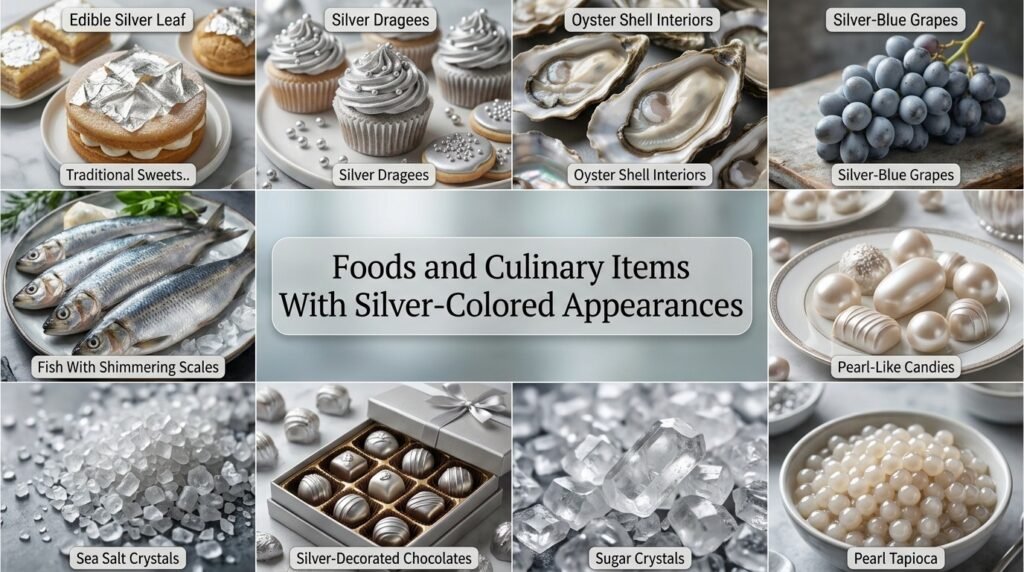
1. Silver Leaf (Edible Decoration)
Edible silver leaf is a thin layer of pure metal used to decorate desserts, sweets, and luxury foods. It has been used in traditional cuisines for centuries, especially in South Asia and parts of the Middle East.
2. Silver Dragees
Silver dragees are small decorative sugar pieces covered with a metallic-looking coating. They are commonly used on cakes, cookies, and celebration desserts.
3. Oyster Shell Interiors
The inner surface of oyster shells can have a shiny, pearl-like appearance. This reflective layer is created by nacre, the same material responsible for the beauty of pearls.
4. Silver-Blue Grapes
Some grape varieties have a grayish or dusty coating called bloom, which can create a soft metallic appearance.
5. Fish With Shimmering Scales
Many edible fish, such as sardines and herring, have reflective scales that appear metallic. Their shiny bodies help them blend with sunlight in aquatic environments.
6. Pearl-Like Candies
Some candies and chocolates use edible coatings to create a shiny metallic finish for decorative purposes.
7. Sea Salt Crystals
Certain large salt crystals can appear pale gray or shiny because of their crystalline structure and light reflection.
8. Silver-Decorated Chocolates
Luxury chocolates sometimes feature edible metallic decorations to create an elegant appearance.
9. Sugar Crystals
Large sugar crystals may reflect light and appear glassy or slightly metallic under certain conditions.
10. Pearl Tapioca
Some tapioca pearls have a glossy surface that can create a subtle reflective appearance after cooking.
Fun Fact: Edible silver leaf is extremely thin. Traditional makers can hammer metal into sheets so delicate that they become almost transparent while keeping their metallic shine.
Science and Technology
The metallic appearance has played an important role in science and engineering. Its reflective properties, conductivity, and resistance to corrosion make it valuable in many industries.
Image Caption: Scientific and technological applications using silver-colored materials
1. Electronics and Electrical Components
Silver metal is one of the best electrical conductors known. It is used in electrical contacts, solar panels, circuit components, and specialized electronics because electricity moves through it efficiently.
2. Space Technology and Reflective Materials
Space equipment often uses reflective coatings to control heat. Materials with a shiny metallic surface can reflect sunlight and help protect sensitive instruments.
3. Medical Applications
Silver-based materials have been used in healthcare because silver ions can help reduce the growth of certain microorganisms. They are found in some specialized wound dressings and medical products.
4. Transportation and Engineering
Aluminum and other metallic materials are widely used in aircraft, vehicles, and machines because they are lightweight, strong, and resistant to corrosion.
5. Photography and Imaging
Silver compounds played a major role in traditional photographic film. Light-sensitive silver-based chemicals helped capture images before digital photography became dominant.
Why Industries and Brands Prefer Silver
The color has a strong psychological connection with modern design and innovation. Companies often choose metallic shades because they communicate quality, technology, and professionalism.
Common associations include:
- Elegance – Often linked with luxury products and premium designs.
- Modernity – Frequently used for futuristic technology and innovation.
- Strength – Connected with durable metals and industrial materials.
- Cleanliness – Used in appliances and medical equipment.
- Professionalism – Common in business products, tools, and electronics.
- Sophistication – Creates a refined and high-end appearance.
Industries that frequently use this color include:

- Technology companies – To represent innovation and advanced engineering.
- Automobile brands – Because metallic finishes suggest speed and quality.
- Jewelry companies – Due to associations with beauty and value.
- Architecture and interior design – For modern, minimal styles.
- Aerospace industries – Because metallic materials symbolize engineering and exploration.
Interesting Facts About Silver Colors
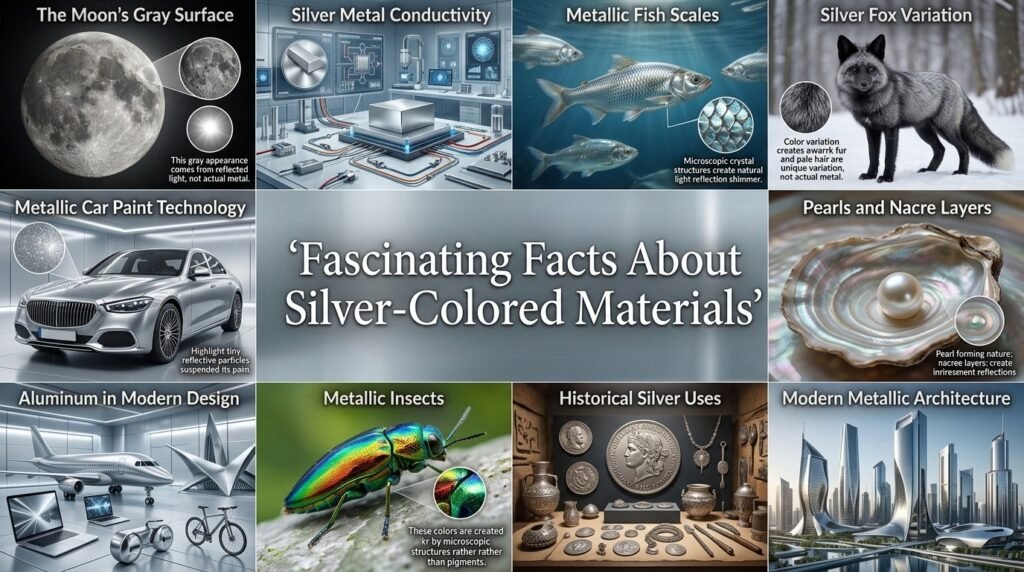
1. The Moon is not actually made of silver. Its gray appearance comes from reflected sunlight interacting with rocky minerals on its surface.
2. Silver metal has the highest electrical conductivity of all elements. This makes it extremely valuable in specialized technology.
3. Many fish look metallic because of tiny crystals in their scales. These structures reflect light and create a shiny appearance.
4. Silver foxes are not a separate species. They are a color variation of the red fox.
5. Metallic car paints contain tiny particles. These particles reflect light and create a sparkling finish.
6. Pearls shine because of layers of nacre. The same natural material creates the beautiful glow inside some shells.
7. Aluminum helped change modern design. Its lightweight nature and metallic appearance made it popular in transportation and technology.
8. Some insects appear metallic without containing metallic pigments. Their colors can come from microscopic structures that control reflected light.
9. Silver has been valued by humans for thousands of years. Ancient civilizations used it for coins, decorations, and tools.
10. Metallic finishes are popular in modern architecture. They are often used to create clean, futuristic buildings.
Educational Importance of Learning About Silver-Colored Things
Learning about things that are silver helps children and learners connect everyday observations with science, nature, and creativity.
Exploring colors improves vocabulary, observation skills, and curiosity. Students can discover how physics explains reflections, how biology creates animal patterns, and how chemistry influences materials.
This topic also encourages cross-subject learning by connecting:
- Science – Light reflection, minerals, metals, and animal adaptations.
- Art – Color perception and design.
- History – Human use of precious materials.
- Technology – Engineering and modern inventions.
Understanding colors in the real world helps learners become better observers and appreciate the science behind ordinary objects.
Frequently Asked Questions About Things That Are Silver
1. Why do metals look silver?
Metals appear silver because their electrons reflect most visible light wavelengths instead of absorbing specific colors. This creates a bright metallic appearance.
2. Why do fish often have silver bodies?
Many fish have reflective scales that help them blend into underwater environments. The shiny surface scatters light and makes them harder for predators to see.
3. Are silver animals actually covered in silver?
No. Animals with this appearance usually have gray pigments, specialized hairs, feathers, scales, or microscopic structures that reflect light.
4. Why is silver popular in technology?
Metallic materials are often used because they can be strong, lightweight, conductive, or resistant to damage. Their appearance also gives products a modern style.
5. Why does the Moon look silver?
The Moon appears grayish or silver because sunlight reflects from its rocky surface and travels through space to reach our eyes.
6. Is edible silver safe to eat?
Food-grade edible silver leaf is considered safe when produced specifically for culinary use. It is used mainly as decoration rather than as a source of nutrition.
7. Why do cars often have metallic finishes?
Metallic paint contains tiny reflective particles that create depth and shine. These finishes are popular because they look stylish and hide small imperfections.
Final Thoughts
From shimmering fish scales and moonlit landscapes to advanced electronics and everyday household products, things that are silver show how one color can connect nature, science, culture, and human creativity.
This metallic shade represents far more than appearance. It reflects ideas of innovation, elegance, strength, and discovery. Whether found in a natural mineral, a bird’s feathers, or a modern device, silver-colored objects remind us that the world around us is full of fascinating details waiting to be explored.