From towering trees and desert landscapes to delicious foods and everyday objects, things that are brown appear everywhere around us. This earthy color has a unique connection with nature, stability, warmth, and comfort. It often represents reliability, simplicity, and a strong connection to the natural world.
Across different cultures, this color is associated with the soil that supports life, wooden materials used for shelter, and natural resources that humans have depended on for thousands of years. Designers and artists also use it to create feelings of authenticity, tradition, and elegance.
Image Caption: Natural and everyday examples showcasing earthy tones across the world
Why Brown Is So Special and Unique
The appearance of this earthy shade comes from the way materials absorb and reflect light. Unlike bright colors that often come from specific pigments, this tone is usually created by a mixture of wavelengths, especially when red, orange, and darker shades combine.
In nature, this coloration is extremely common because many biological materials contain compounds that produce it. Melanin, a pigment found in animals, plants, and fungi, is one of the main reasons many living things develop darker earthy shades.
This color also appears in minerals and landscapes because of chemical elements. For example, iron compounds can create reddish or earthy appearances in rocks and soil. Organic materials such as leaves, wood, and decaying plants also develop these tones as they break down.
Did you know?
The color of many soils comes from tiny mineral particles and organic matter. The amount of iron, moisture, and plant material can dramatically change how soil looks.
Examples in Nature: Beautiful Things That Are Brown
Nature contains countless examples of this earthy shade. From ancient forests to valuable minerals, these natural examples show how diverse colors can be in the environment.
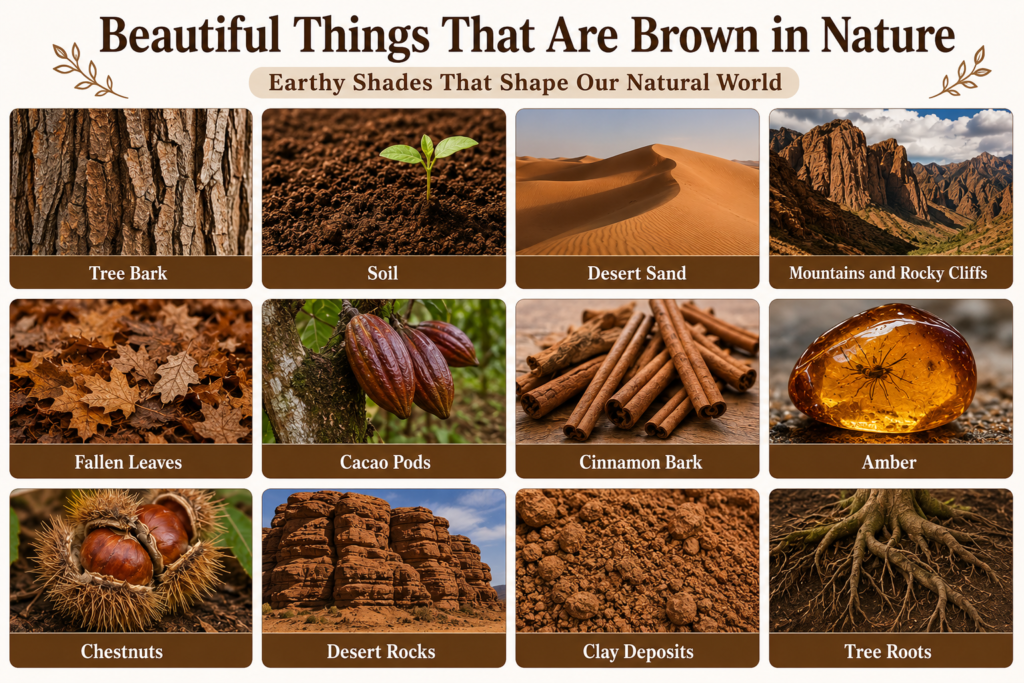
Tree Bark
Tree bark is one of the most recognizable natural examples. Many trees develop protective outer layers containing compounds that create darker shades, helping protect them from weather and environmental damage.
Brown Soil
Healthy soil often appears in earthy shades because of minerals and decomposed organic material. The darkest soils usually contain high amounts of humus, which comes from broken-down plants and animals.
Desert Sand
Many deserts contain warm earthy sand because of mineral particles such as quartz and iron-containing materials. The exact shade changes depending on the local geology.
Mountains and Rocky Cliffs
Many mountain surfaces display earthy tones due to exposed rocks, weathering, and mineral deposits. Over millions of years, erosion shapes these landscapes into remarkable formations.
Brown Fallen Leaves
During autumn, many leaves change from green to earthy shades as chlorophyll breaks down. Other pigments become visible, creating warm seasonal colors.
Cacao Pods
Cacao pods develop rich outer colors as they mature. Inside these pods are cacao beans, which are later processed into chocolate products.
Cinnamon Bark
Cinnamon comes from the inner bark of certain trees. Its naturally occurring compounds create its familiar warm appearance and distinctive aroma.
Amber
Amber is a fossilized tree resin that can range from pale golden shades to deeper earthy tones. Some pieces contain preserved insects or plant material from ancient forests.
Chestnuts
Chestnuts are naturally covered with a smooth protective shell. Their appearance helps distinguish them from other nuts found in forests.
Brown Desert Rocks
Many desert rocks gain earthy colors from oxidation and mineral changes. Wind and sunlight slowly transform their surfaces over thousands of years.
Clay Deposits
Clay often appears in earthy shades because of minerals such as iron oxides. Humans have used clay for pottery, construction, and art for thousands of years.
Tree Roots
Exposed tree roots often display natural earthy colors because they contain protective tissues and remain connected with underground soil environments
Birds That Display Brown
Birds use natural coloration for camouflage, attracting mates, and adapting to their surroundings. Many species have feathers with earthy shades that help them blend into forests, grasslands, and wetlands.
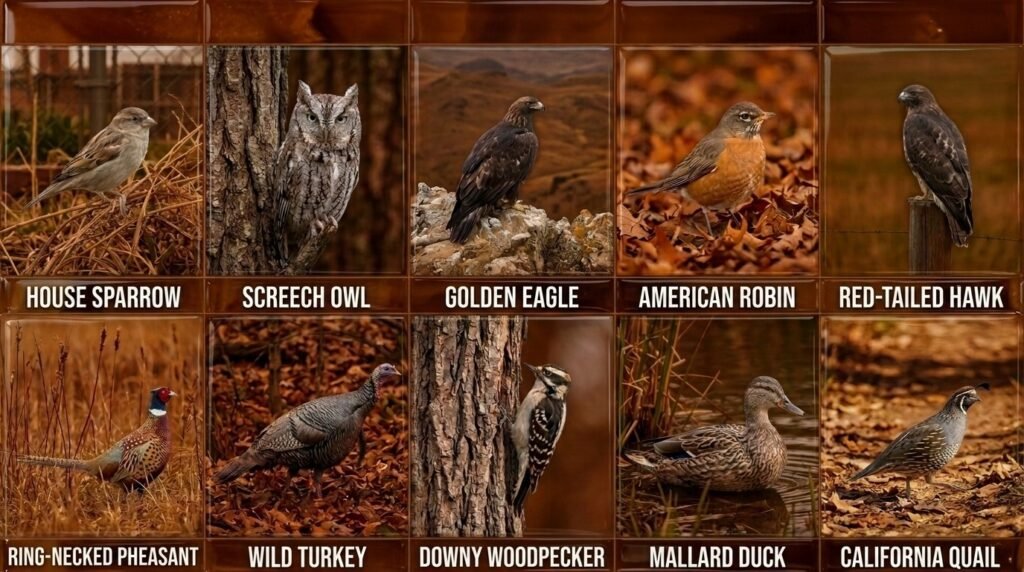
Brown Sparrow
Sparrows commonly have muted earthy feathers that help them blend into urban areas, gardens, and grasslands.
Owl
Many owl species have patterned feathers that help them disappear against tree bark and forest backgrounds.
Eagle
Several eagle species display darker feathers that provide camouflage while hunting across mountains and open landscapes.
Robin
Some robin species have warm-colored feathers, especially around their wings and back, creating a recognizable appearance.
Hawk
Hawks often have darker feathers that help them remain less visible while observing prey from high locations.
Pheasant
Male pheasants can display beautiful mixed feather patterns containing earthy shades along with brighter colors.
Turkey
Wild turkeys have naturally patterned feathers that include deep earthy tones, helping them hide in woodland environments.
Woodpecker
Many woodpecker species have patterned feathers that allow them to blend with tree trunks while searching for insects.
Duck
Certain duck species have muted feathers that provide camouflage near rivers, lakes, and wetlands.
Quail
Quails often have speckled feathers that help them remain hidden among grass, leaves, and soil.
Animals That Display Brown
Animals develop natural pigmentation for many reasons, including camouflage, protection, and communication. These species demonstrate the importance of coloration in survival.
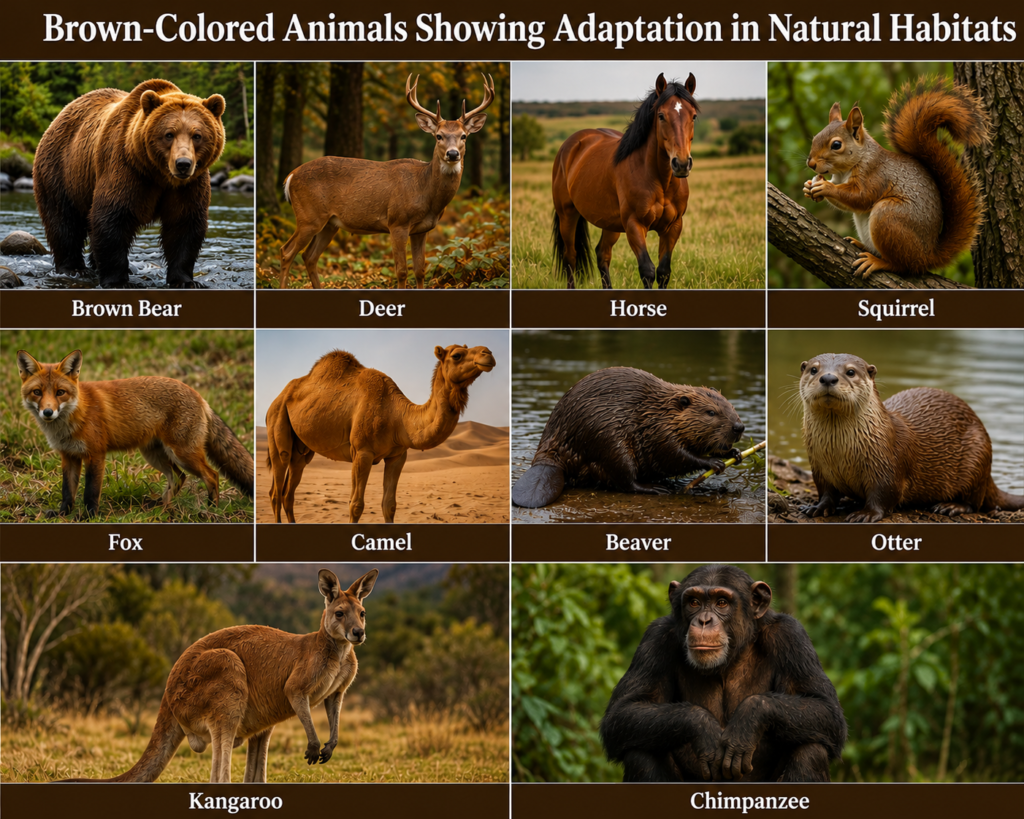
Brown Bear
Brown bears have dense fur containing melanin pigments. Their coloring helps them blend into forests, mountains, and riverside environments.
Deer
Many deer species have coats with earthy shades that provide camouflage among trees and vegetation.
Brown Horse
Several horse breeds naturally develop dark coats due to genetic variations affecting pigment production.
Squirrel
Squirrels often have darker fur that helps them hide among tree branches and forest floors.
Fox
Some foxes display reddish-earthy coats that protect woodland and grassland environments.
Camel
Camels have sandy-colored coats that help them blend into desert landscapes.
Beaver
Beavers have thick waterproof fur with dark pigmentation that protects them in freshwater habitats.
Otter
Many otters have rich dark coats that help regulate body temperature and provide protection while swimming.
Kangaroo
Some kangaroo species have earthy-colored fur that helps them remain less noticeable in Australian landscapes.
Chimpanzee
Chimpanzees often have dark hair that varies between individuals and populations.
Everyday Objects That Are Brown
Many household and lifestyle items use this color because it creates feelings of warmth, reliability, and natural beauty. Manufacturers often choose these shades for materials like wood, leather, and packaging because they appear classic and timeless.

- Wooden furniture – Tables, chairs, cabinets, and shelves often use natural wood finishes.
- Leather wallets – Leather products are traditionally associated with durability and craftsmanship.
- Belts – Classic leather belts commonly use earthy shades.
- Bookshelves – Wooden shelves create a warm and traditional appearance.
- Coffee tables – Many designs use wood textures for a comfortable home atmosphere.
- Picture frames – Wooden frames add a natural decorative style.
- Paper bags – Kraft paper often has a natural earthy appearance.
- Cardboard boxes – Unbleached cardboard gets its color from plant fibers.
- Wooden doors – Many homes use wooden finishes for a timeless look.
- Flooring materials – Hardwood floors often feature natural wood tones.
- Backpacks – Canvas and leather backpacks frequently use these shades.
- Shoes – Leather footwear commonly appears in classic earthy colors.
- Jackets – Leather jackets are often designed in darker natural shades.
- Coffee mugs – Ceramic designs frequently use warm neutral colors.
- Wooden toys – Traditional toys often highlight natural materials.
- Musical instruments – Guitars and violins commonly use polished wood.
- Office desks – Wooden desks create a professional and comfortable workspace.
- Watches – Leather straps often feature classic earthy designs.
Brown food Examples
Food often develops earthy shades through natural pigments, cooking processes, and aging. Many popular foods get their appearance from ingredients such as cocoa, spices, roasted grains, and caramelized sugars.

Chocolate
Chocolate gets its rich appearance from cocoa solids, which contain natural compounds called flavonoids. The roasting and processing of cocoa beans also deepen its color and flavor.
Brown Coffee Beans
Coffee beans develop their familiar appearance during roasting. Heat causes chemical reactions that transform green coffee seeds into aromatic roasted beans.
Bread Crust
Bread crust becomes darker during baking because of the Maillard reaction, a chemical process between sugars and proteins that creates new flavors and colors.
Cinnamon
Cinnamon spice comes from tree bark and is widely used in desserts, drinks, and traditional recipes because of its warm flavor.
Almonds
Almonds have a naturally protective outer skin with a darker earthy appearance. They are popular worldwide as a nutritious snack.
Walnuts
Walnuts have a textured outer shell and edible interior that contain natural oils, making them valuable in cooking and baking.
Mushrooms
Many mushroom varieties have earthy-colored caps that help them blend into forest environments where they grow.
Caramel
Caramel gets its appearance through heating sugar. The process changes sugar molecules and creates a sweet flavor with a deeper shade.
Brown Dates
Dates naturally develop a dark appearance as they ripen. They have been an important food source in Middle Eastern and North African cultures for centuries.
Roasted Peanuts
Peanuts often become darker after roasting because heat changes their surface and enhances their nutty flavor.
Fun Fact:
The Maillard reaction is responsible for many appealing food aromas and flavors, including the smell of freshly baked bread and roasted coffee.
Science and Technology: How Brown Color Appears in Innovation
Although often associated with nature, earthy colors also play an important role in science, engineering, medicine, and technology.
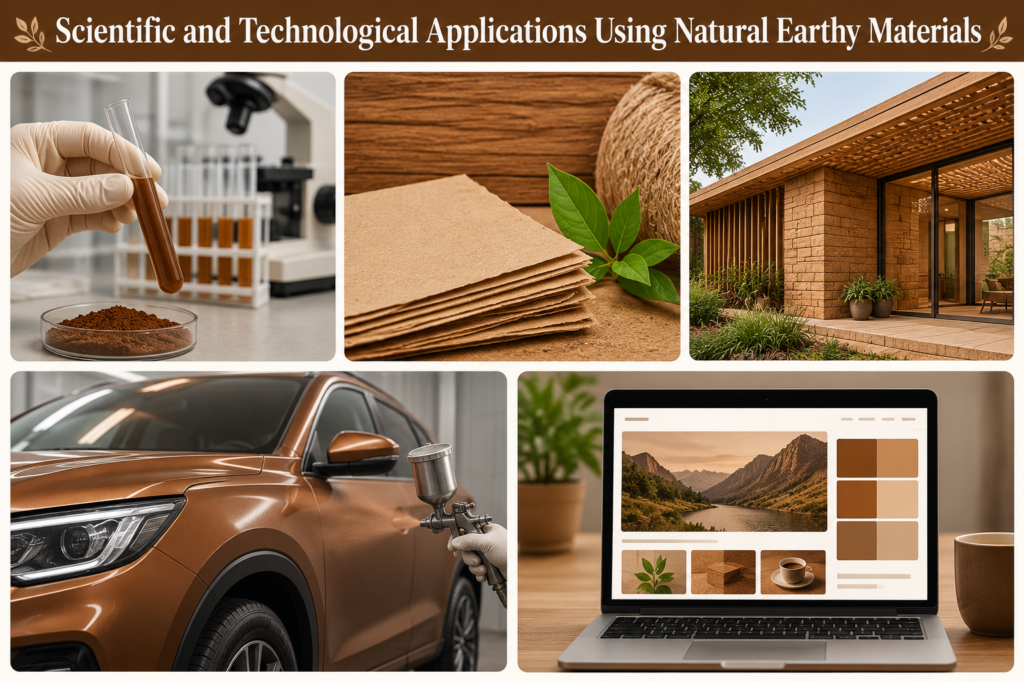
1. Medical and Biological Research
Scientists study melanin, the pigment responsible for many dark natural colors, to understand skin, hair, and eye coloration, and protective biological functions. Melanin also helps protect living organisms from harmful ultraviolet radiation.
2. Sustainable Materials
Many modern industries use wood fibers, recycled paper, and natural materials because they provide renewable alternatives to synthetic products. These materials often maintain their original earthy appearance.
3. Construction and Architecture
Natural materials such as wood, clay, and stone have been used in buildings for thousands of years. Modern architecture continues using these materials because they provide warmth and a connection with nature.
4. Industrial Coatings
Manufacturers create protective coatings and paints in earthy shades for vehicles, buildings, and equipment. These finishes can provide a traditional appearance while offering surface protection.
5. Digital Design and User Interfaces
Designers often use earthy tones in websites and applications to create feelings of trust, comfort, and authenticity. These colors are common in environmental, lifestyle, and luxury branding.
Why Industries and Brands Prefer This Color
Companies carefully select colors because they influence emotions and customer perception. Earth-inspired shades are often chosen because they create a sense of stability and authenticity.
Common associations include:
- Reliability – Often connected with trust and dependability.
- Comfort – Creates warm and welcoming feelings.
- Nature – Represents sustainability and environmental awareness.
- Tradition – Suggests craftsmanship and history.
- Luxury – Frequently used in premium leather goods and elegant designs.
- Simplicity – Gives products a natural and timeless appearance.
Industries that commonly use this color include:
- Food brands – Especially coffee, chocolate, and organic products.
- Fashion companies – Leather goods and outdoor clothing often use earthy shades.
- Interior design – Furniture and home décor frequently use natural tones.
- Outdoor brands – Camping and adventure products use these shades for a connection with nature.
- Eco-friendly businesses – Natural colors help communicate sustainability.
Interesting Facts About brown
Here are some fascinating facts about things that are brown and their connection to science, nature, and history:
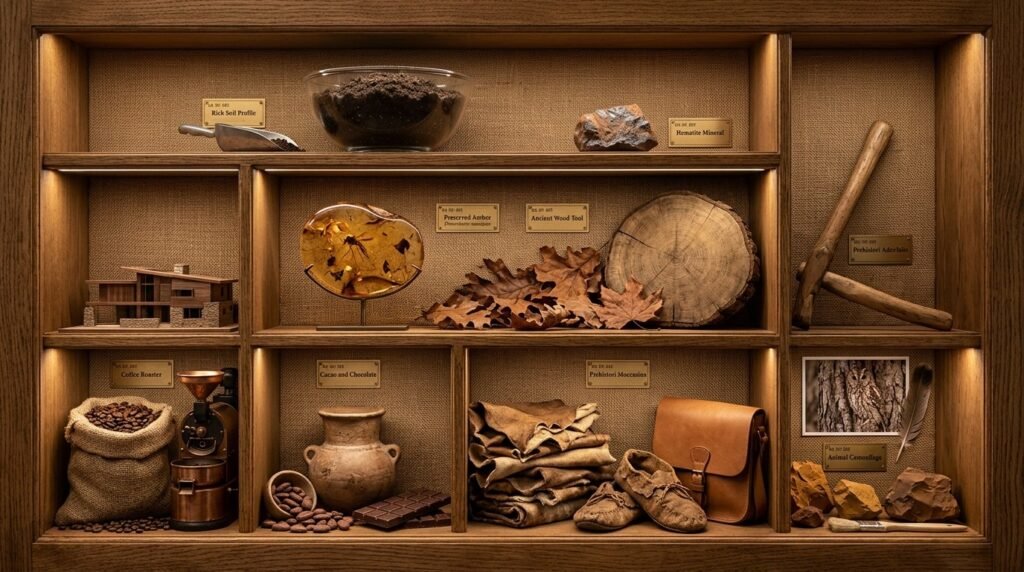
- 1. Soil color can reveal its composition. Darker soils often contain more organic material, while lighter soils may contain fewer nutrients.
- 2. Wood has been used by humans for thousands of years. Ancient civilizations relied on trees for tools, buildings, and transportation.
- 3. Chocolate was once considered a luxury drink. Ancient civilizations valued cacao before it became a common modern treat.
- 4. Amber can preserve ancient life. Some fossilized resin pieces contain insects and plant remains from millions of years ago.
- 5. Animal camouflage is a survival strategy. Many creatures use natural coloring to hide from predators or prey.
- 6. Coffee is one of the world’s most traded agricultural products. Its popularity has made roasted beans an important global commodity.
- 7. Leather has been used since prehistoric times. Early humans used animal hides for clothing and protection.
- 8. Many natural pigments come from minerals. Iron compounds are responsible for many earthy shades found in rocks and soil.
- 9. Autumn leaves change color because pigments break down. When chlorophyll disappears, other pigments become visible.
- 10. Natural materials inspired modern design. Architects and designers often look to forests, stones, and landscapes for inspiration.
Educational Importance of Learning About brown
Learning about colors helps children and students develop observation skills and understand connections between different subjects.
Exploring things that are brown can introduce learners to:
- Biology through animal adaptations and plant pigments.
- Earth science through minerals, soil, and landscapes.
- Chemistry through pigments and natural reactions.
- Art and design through color combinations and creativity.
- Vocabulary development through describing objects and environments.
Color-based learning encourages curiosity because students can connect classroom knowledge with real-world examples.
FAQs About Things That Are Brown
1. Why are tree trunks brown?
Tree trunks usually have this appearance because of compounds in bark, including tannins and other protective materials. The outer layer helps protect trees from insects, weather, and disease.
2. Why do many animals have earthy-colored fur?
Many animals develop these colors through melanin pigments. This helps them blend into forests, grasslands, deserts, and other natural habitats.
3. Why does chocolate have a Brown appearance?
Chocolate gets its color from cocoa solids. Roasting and processing cocoa beans create deeper shades and stronger flavors.
4. Why is soil often brown?
Soil color depends on minerals, moisture, and organic matter. Decomposed plants and iron compounds are major factors affecting its appearance.
5. Why does wood usually have natural earthy tones?
Wood contains pigments, fibers, and chemical compounds that create its characteristic appearance. Different tree species produce different shades.
6. Why do foods become darker when cooked?
Cooking can trigger chemical reactions such as the Maillard reaction and caramelization, which create new colors and flavors.
Final Thoughts
From forests and mountains to food, technology, and everyday objects, things that are brown demonstrate how closely human life is connected with nature. This earthy shade appears through fascinating biological processes, mineral formations, and human creativity.
It reminds us of the materials that build our homes, the landscapes that support life, and the natural resources that have shaped civilizations for generations.
Whether found in a tree’s bark, a bird’s feathers, a favorite food, or a household item, this color represents warmth, balance, and a lasting connection with the world around us.