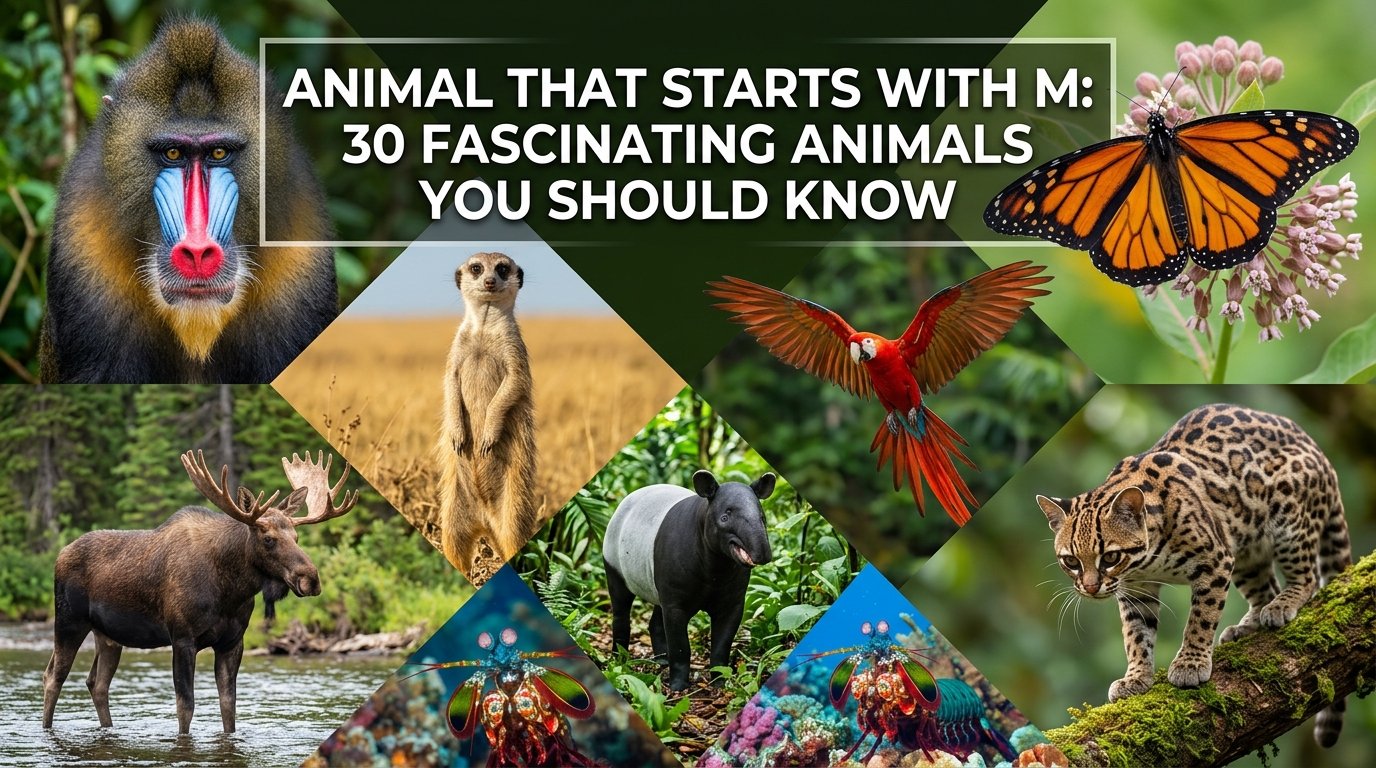
Looking for an animal that starts with M? Nature offers an impressive collection of animals whose names begin with the letter M. From the powerful moose and mysterious mole to the colorful monarch butterfly and enormous manta ray, these animals live in forests, oceans, rivers, deserts, grasslands, and even cities.
This guide explores fascinating animals, including land animals, water animals, insects, and reptiles. Each example includes a simple fact that makes the animal easier to remember.
Land Animals That Starts With M
Many animals beginning with M spend most or all of their lives on land. They range from tiny burrowing mammals to large forest herbivores.
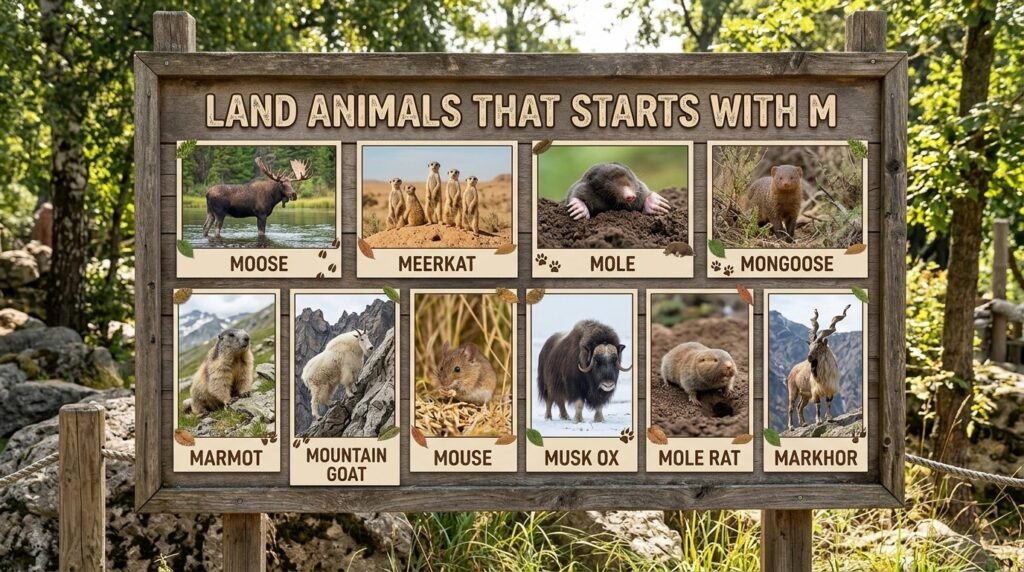
- Moose — This massive herbivore uses its long legs to move through forests, wetlands, and deep snow.
- Meerkat — Meerkats live in social groups and use underground burrows for shelter and protection.
- Mole — Moles are specialized diggers with broad front feet designed for moving soil.
- Mongoose — Mongooses have quick reflexes and flexible bodies that help them hunt small animals.
- Marmot — These chunky rodents often live in rocky mountain areas and spend winter underground.
- Mountain Goat — Despite its name, the mountain goat is not a true goat. It is specially adapted to steep, rocky mountain slopes.
- Mouse — Mice are small, adaptable mammals found in many habitats, including forests, fields, farms, and human settlements.
- Musk Ox — The musk ox has a thick coat that protects it from extremely cold Arctic conditions.
- Mole Rat — Several mole rat species spend most of their lives underground, where they dig complex tunnel systems.
- Markhor — The markhor is a wild goat known for its impressive corkscrew-shaped horns and ability to climb steep mountain terrain.
Water Animals That Starts With M
The oceans, rivers, and wetlands contain many remarkable animals beginning with M. Some are enormous, while others are small creatures that play important roles in aquatic ecosystems.
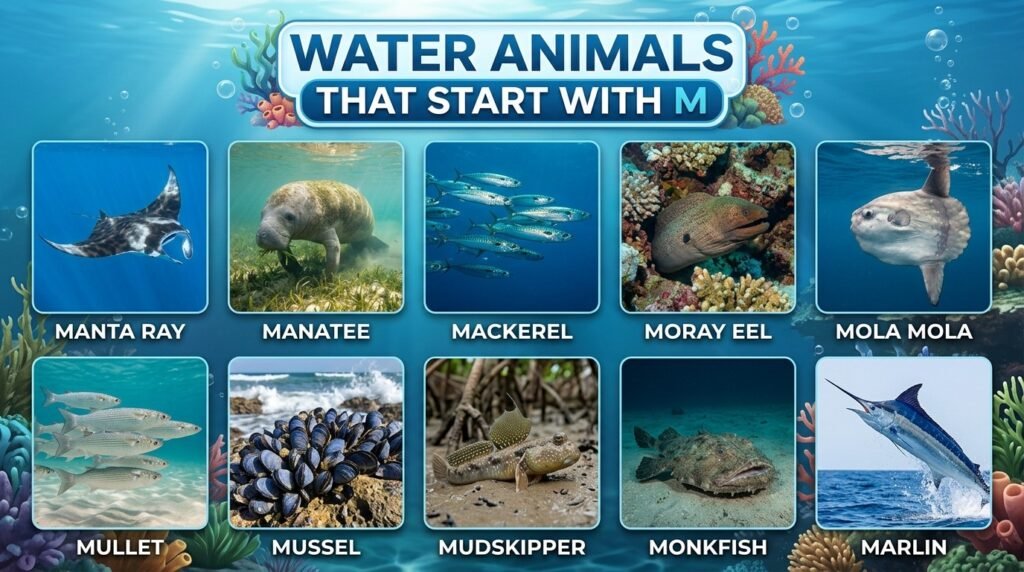
- Manta Ray — Manta rays are large, graceful rays that use their broad fins to glide through the water. They mainly feed on plankton and small organisms.
- Manatee — Manatees are slow-moving aquatic mammals that feed heavily on aquatic plants. They use their paddle-like tails to move through rivers, estuaries, and coastal waters.
- Mackerel — Mackerel are fast-swimming fish found in many marine environments. Their streamlined bodies allow them to move efficiently through open water.
- Moray Eel — Moray eels usually hide among rocks, reefs, and crevices. Their long bodies and powerful jaws make them effective predators.
- Mola Mola — Also known as the ocean sunfish, the mola mola has a remarkably deep, rounded body and can grow to an enormous size.
- Mullet — Mullet are schooling fish that live in coastal waters, estuaries, and some freshwater environments. They often travel in groups while searching for food.
- Mussel — Mussels are shellfish that commonly attach themselves to rocks and other hard surfaces. Many species filter tiny particles from the surrounding water.
- Mudskipper — Mudskippers are unusual fish that can spend considerable time out of water. Their ability to move across muddy surfaces makes them especially interesting among fish.
- Monkfish — Monkfish are bottom-dwelling marine fish with large mouths and distinctive bodies. Some species use a modified structure near the head to help attract prey.
- Marlin — Marlins are powerful ocean fish known for their elongated bodies and pointed bills. They are among the fastest fish in the sea.
Insects and Reptiles That Start With M
The letter M appears in the names of many fascinating insects and reptiles. Their colors, body shapes, behaviors, and survival strategies make them especially interesting.
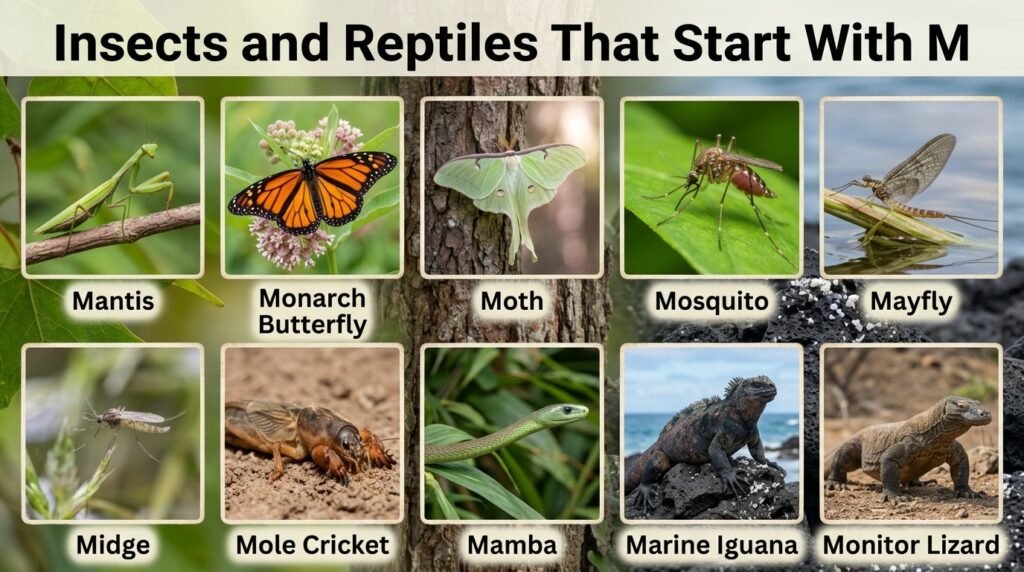
- Mantis
Mantises are predatory insects with long front legs designed for grabbing prey. - Monarch Butterfly
The monarch butterfly is famous for its orange-and-black wings and remarkable seasonal migration. - Moth
Moths belong to the same broad insect order as butterflies. Many moth species are active at night. - Mosquito
Mosquitoes are small flying insects found in many parts of the world. Only female mosquitoes of species that blood-feed take blood meals. - Mayfly
Mayflies spend most of their lives as aquatic young before emerging as adults. - Midge
Midges are tiny flies that occur in many environments. Some species live near water. - Mole Cricket
Mole crickets have powerful front legs adapted for digging. Their underground lifestyle gives them a body shape - Mamba
Mambas are highly venomous snakes native to Africa. They are slender, active snakes that spend much of their time moving. - Marine Iguana
The marine iguana is native to the Galápagos Islands and is famous for feeding on marine algae. It can dive into the ocean. - Monitor Lizard
Monitor lizards include species ranging from relatively small reptiles to the enormous Komodo dragon.
Did you know? The monarch butterfly’s migration is particularly remarkable because individual butterflies may travel long distances during seasonal movements, while later generations continue the journey.
Another scientific aside: Some reptiles can regulate their body temperature behaviorally by moving between sunny and shaded areas. This behavior helps them remain active without producing as much internal heat as mammals do.
FAQs About Animal That Starts With M
Why is the moose so large?
Moose are the largest living members of the deer family. Their large bodies, long legs, and broad hooves help them survive in cold northern environments and move through snow and wetlands.
Why is the manta ray called a ray?
The manta ray belongs to the ray group of cartilaginous fish. Its wide, flattened body and wing-like pectoral fins give it the distinctive shape associated with rays.
Why do monarch butterflies have bright colors?
Monarch butterflies have bright orange and black patterns that can warn predators that they may be unpleasant to eat. Their caterpillars obtain defensive chemicals by feeding on milkweed.
Why do moles live underground?
Moles are adapted to life beneath the soil, where they search for earthworms, insects, and other small organisms. Their powerful front limbs and sensitive sensory systems support their underground lifestyle.
Why can marine iguanas swim in the ocean?
Marine iguanas have adaptations that allow them to enter cold coastal waters and feed on marine algae. They can also conserve heat by returning to land and basking in the sun after diving.
Why do mosquitoes need blood?
Female mosquitoes of blood-feeding species take blood meals because the nutrients can support egg development. Mosquitoes also obtain other nutrients, such as sugars, from plant sources.
Final Thoughts
The world of the animal that starts with m is far more diverse than it may first appear. From the giant moose and powerful marlin to the tiny midge and colorful monarch butterfly, these animals show how evolution has produced countless ways to survive.
Learning animal names can also make everyday nature more interesting. A walk through a forest, a visit to a coast, or even a look at insects in a garden can reveal examples of the incredible variety found across the natural world. The letter M is only one small part of the alphabet, but it opens the door to a remarkable collection of life.