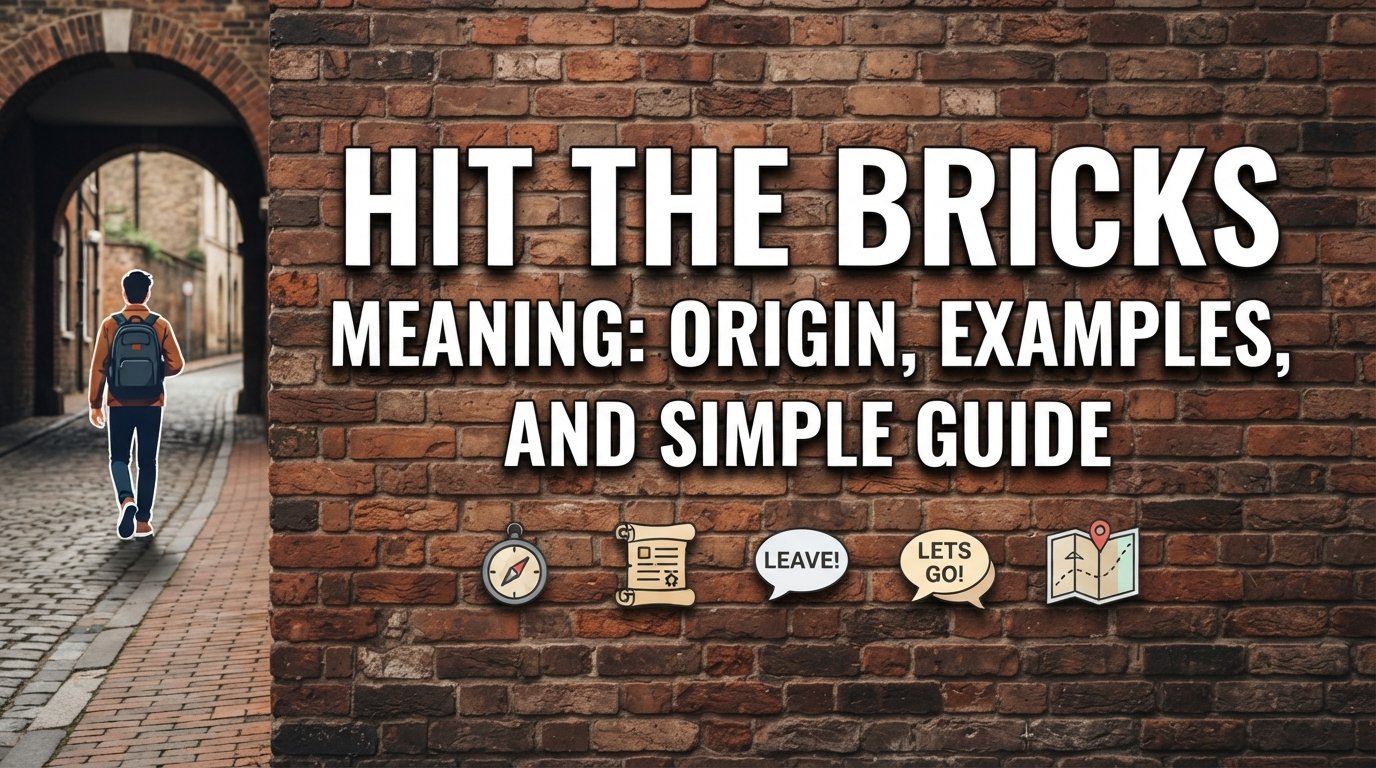
When it comes to everyday English, some phrases can sound strange when you hear them for the first time. Hit the bricks meaning is a good example. It does not usually mean physically hitting bricks. Instead, it is an informal expression that tells someone to leave, go away, or start moving. The phrase can sound playful, direct, rude, or even humorous depending on the situation. In this guide, you will learn what the expression means, where it may have come from, how people use it in conversation, and how it differs from similar phrases such as “hit the road” and “get lost.” You will also see clear examples, common mistakes, and tips for using this idiom naturally.
What Does Hit the Bricks Mean?
The phrase means to leave a place or go away. It often sounds informal and can sometimes carry a command-like tone. The speaker usually wants another person to stop staying where they are and leave.
For example, someone might say, “It is getting late, so I am going to hit the bricks.” Here, the speaker simply means that they are going to leave.
However, the expression can also tell another person to leave. Consider this example: “You have caused enough trouble. Hit the bricks!” In this case, the phrase sounds much stronger because the speaker is ordering someone to go away.
The exact feeling depends on context, voice, and the relationship between the speakers. Friends may use it jokingly, while strangers may hear it as rude.
Hit the Bricks Meaning in Everyday English
In everyday English, the expression usually means “leave” or “go away.” It is especially common in casual speech, informal writing, jokes, stories, and dialogue.
The phrase can have several shades of meaning:
- Leave a place: “I need to hit the bricks before traffic gets worse.”
- Tell someone to leave: “If you do not like the rules, hit the bricks.”
- Suggest leaving: “We have finished dinner. Let’s hit the bricks.”
- Jokingly dismiss someone: “You ate the last cookie. Now hit the bricks!”
- Describe someone starting a journey: “We packed our bags and hit the bricks early.”
The expression often creates a stronger image than the simple verb “leave.” It can make casual conversation sound more colorful.
Still, you should consider the setting before using it. A phrase that sounds funny among friends may sound disrespectful at work or in a formal conversation.
What Does “Hit” Mean in This Expression?
The word “hit” does not refer to physical violence here. English often uses “hit” in informal expressions to describe reaching, starting, or going somewhere.
For example, people say:
- “hit the road”
- “hit the town”
- “hit the beach”
- “hit the trail”
These expressions use “hit” in a figurative way. They suggest moving toward or entering a place or activity.
“Hit the bricks” follows a similar pattern. The bricks represent the streets or surroundings associated with leaving on foot. The expression therefore developed as a colorful way to describe going out or departing.
Hit the Bricks Meaning and Possible Origin
The exact origin of the phrase is not completely certain, so it is better to avoid claiming one definite source. The expression belongs to a group of informal phrases that connect movement with streets, roads, or physical surfaces.
One likely explanation relates to the old association between bricks and city streets. Before modern road surfaces became widespread, many urban streets used brick paving. Telling someone to “hit the bricks” could therefore suggest getting out onto the street and leaving.
The phrase also fits a broader tradition of American informal speech. English speakers have long created colorful expressions for leaving, including “hit the road,” “take a hike,” and “beat it.”
Why Do Bricks Suggest the Street?
The connection becomes easier to understand when you picture an old city street made from brick.
If someone leaves a building and walks outside, their feet eventually meet the street. In an informal expression, “hit the bricks” can create the image of a person heading out onto the pavement.
This does not mean every use of the phrase refers specifically to brick-paved streets. Over time, idioms often lose their original physical connection. Modern speakers can use the expression without thinking about actual bricks at all.
That is common with idioms. Their original images may remain in the language even after everyday life changes.
How to Use Hit the Bricks in a Sentence
The phrase can work in several grammatical patterns. Most often, it appears after a subject with a form of “hit.”
For example:
“I think it is time to hit the bricks.”
This means the speaker thinks it is time to leave.
You can also use it as an instruction:
“You should hit the bricks before the storm starts.”
Here, the speaker tells someone that leaving would be a good idea.
The expression can become more forceful when used as a short command:
“Hit the bricks!”
This version can sound rude, angry, humorous, or playful. The speaker’s tone matters greatly.
Another common pattern uses “let’s”:
“Let’s hit the bricks and find somewhere quieter.”
This version usually sounds friendly because the speaker includes themselves in the action.
Examples in Casual Conversation
Here are several examples that show different uses:
Example 1:
“I have an early meeting tomorrow, so I am going to hit the bricks.”
The speaker means they are leaving.
Example 2:
“If you are not interested in helping, you can hit the bricks.”
The speaker tells someone to leave. The tone may sound unfriendly.
Example 3:
“We have been sitting here for hours. Let’s hit the bricks.”
The speakers want to leave and do something else.
Example 4:
“The store is closing soon, so customers need to hit the bricks.”
The phrase means customers need to leave the location.
Example 5:
“My brother kept annoying me, so I jokingly told him to hit the bricks.”
The word “jokingly” changes how the command should be understood.
Hit the Bricks Meaning vs. Similar Expressions
Several English expressions have almost the same basic meaning. However, their tone and usage can differ.
| Expression | Basic Meaning | Typical Tone |
| Hit the bricks | Leave or go away | Informal, sometimes blunt |
| Hit the road | Leave or begin a journey | Informal and common |
| Take a hike | Go away | Often rude or dismissive |
| Get lost | Go away | Strong and often rude |
| Beat it | Leave quickly | Informal and forceful |
| Get going | Start moving or leave | Usually neutral |
| Take off | Leave | Casual and flexible |
“Hit the road” is probably more familiar to many English learners. It can describe leaving for another place or simply departing.
“Take a hike” is more dismissive. It can suggest that the speaker does not want the other person around.
“Get lost” is even more direct and can sound hostile.
“Get going” is generally softer. It can simply mean that someone should start moving.
Hit the Bricks vs. Hit the Road
These two phrases are especially similar. Both can mean leaving.
“I need to hit the road” often suggests starting a trip or journey. It can also mean simply leaving a location.
“I need to hit the bricks” usually sounds more colorful and informal. It may focus more on getting out or leaving rather than beginning a long journey.
For example:
“We need to hit the road early tomorrow.”
This sounds natural when discussing a trip.
By contrast:
“The party is over, so we should hit the bricks.”
This focuses on leaving the current place.
Common Mistakes When Using the Phrase
English learners sometimes misunderstand this expression because of its unusual wording. A few common mistakes are worth avoiding.
Taking the Phrase Literally
The first mistake is assuming that “hit” means physically strike and “bricks” refers to construction material.
The expression is figurative. It describes leaving rather than hitting anything.
Using It in Formal Writing
Although the phrase is understandable, it has an informal flavor. It may not fit a formal report, business letter, academic paper, or official announcement.
For formal writing, choose words such as:
- leave
- depart
- exit
- proceed
- return home
- head elsewhere
The right choice depends on the situation.
Assuming It Always Sounds Friendly
The phrase can sound playful, but it can also sound dismissive. Context determines the emotional effect.
If someone says, “Let’s hit the bricks,” the phrase may sound lighthearted.
If someone shouts, “Hit the bricks!” the same words can sound aggressive.
Confusing It With “Hit the Road”
These expressions overlap, but they are not identical in every situation. “Hit the road” often connects with travel or starting a journey. “Hit the bricks” more often emphasizes leaving or going away.
Understanding this small difference can help you choose the more natural expression.
Hit the Bricks Meaning in Movies, Stories, and Pop Culture
Informal expressions often appear in fictional dialogue because they make characters sound natural. A character who says “hit the bricks” may come across as confident, annoyed, humorous, old-fashioned, or casual.
Writers can use the phrase to show a character’s attitude without explaining it directly.
For example, imagine a detective speaking to an unwanted visitor:
“You have said your piece. Now hit the bricks.”
The words communicate more than “leave.” They also suggest impatience and authority.
A comedy might use the same expression differently:
“You finished all the pizza. Hit the bricks!”
Here, the phrase creates a playful exaggeration.
This flexibility makes idioms useful in dialogue. Their meaning comes from both the words and the situation.
Frequently Asked Questions
What is hit the bricks meaning?
The phrase means to leave, go away, or get moving. It is informal and can sometimes sound blunt or dismissive, especially when directed at another person.
Is hit the bricks rude?
It can be rude when used as a direct command. However, friends may use it jokingly. The relationship, situation, and tone determine whether listeners see it as playful or offensive.
Is hit the bricks the same as hit the road?
They have similar meanings because both can refer to leaving. “Hit the road” often suggests beginning a journey, while “hit the bricks” commonly emphasizes leaving or going away.
Can I use hit the bricks in formal writing?
It is better to avoid it in formal writing. The expression has an informal tone. Use words such as “leave,” “depart,” or “exit” when writing for professional or academic audiences.
Where did hit the bricks come from?
The exact origin is not certain. A common explanation connects the phrase with brick-paved streets and the idea of going out onto the street. However, the expression developed within broader informal English used for telling someone to leave.
Can hit the bricks describe leaving by car?
Yes. The phrase does not require a particular method of transportation. It can describe leaving by foot, car, or another means. The main idea is departure.
Final Thoughts
Understanding hit the bricks meaning becomes much easier when you focus on the phrase’s main idea: leaving or going away. It is an informal idiom that can describe your own departure or tell another person to leave. Its tone can range from humorous and playful to blunt and dismissive, so context matters. For everyday conversation, the phrase can add personality and humor. However, it is not the best choice for formal situations. When speaking with coworkers, clients, teachers, or people you do not know well, a neutral phrase such as “I need to leave” is safer.