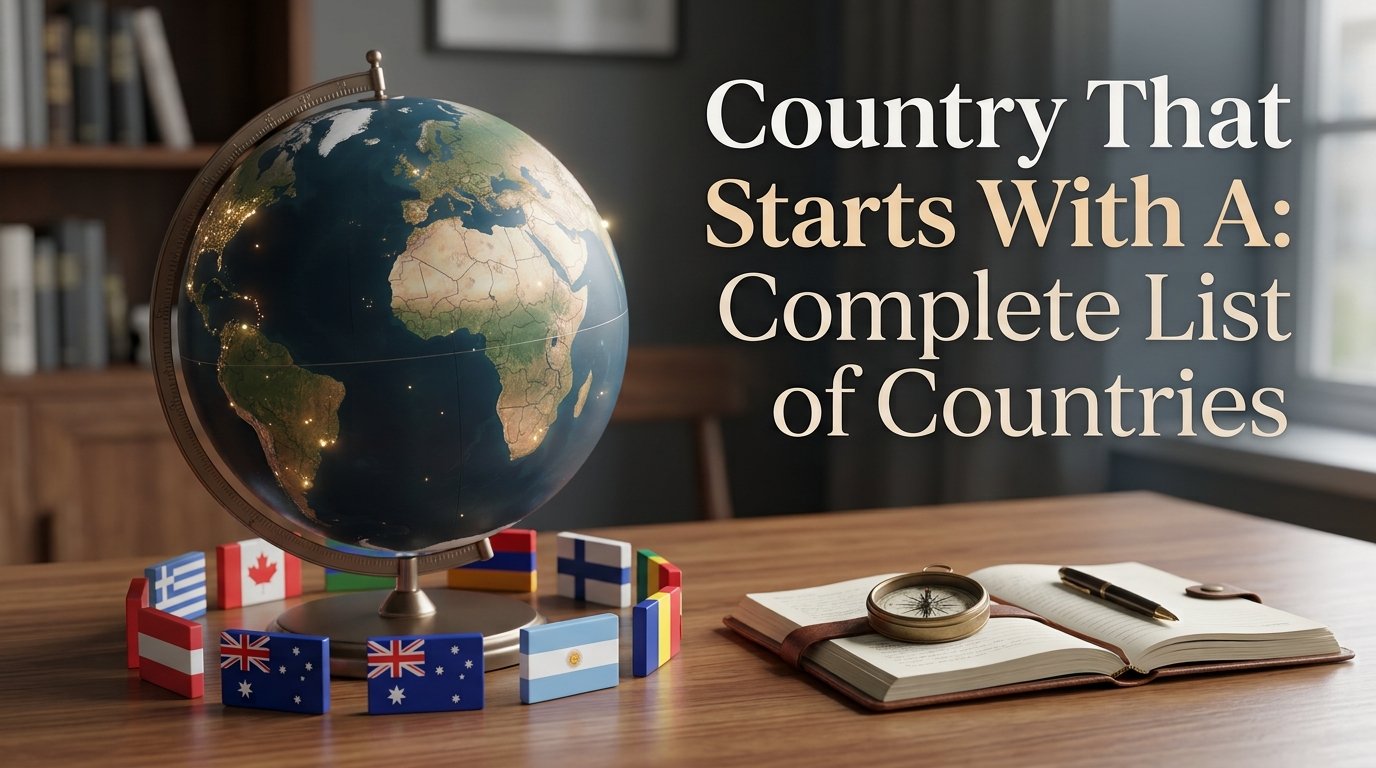
If you are searching for a country that starts with A, you have several correct answers. In fact, 11 sovereign countries begin with the letter A. They are spread across Asia, Europe, Africa, Oceania, and the Caribbean, so this single letter covers a wide range of cultures and geographic regions.
The countries are Afghanistan, Albania, Algeria, Andorra, Angola, Antigua and Barbuda, Argentina, Armenia, Australia, Austria, and Azerbaijan. The United Nations lists all 11 among its member states.
This guide explores each country, its location, capital, and key geographic facts. It also explains why some places beginning with A should not be confused with independent countries.
Is There a Country That Starts With A?
Yes, there are 11 independent countries that start with A. These nations have their own governments and international identities, although they differ greatly in size, population, geography, culture, and political systems.
The United Nations member-state list confirms Afghanistan, Albania, Algeria, Andorra, Angola, Antigua and Barbuda, Argentina, Armenia, Australia, Austria, and Azerbaijan as member states.
So, if you need a country name beginning with A for a geography quiz, school project, word game, or educational list, you have many options.
Country Names That Start With A
The following are the 11 sovereign countries beginning with A:
| Country | Capital | Region |
| Afghanistan | Kabul | Asia |
| Albania | Tirana | Europe |
| Algeria | Algiers | Africa |
| Andorra | Andorra la Vella | Europe |
| Angola | Luanda | Africa |
| Antigua and Barbuda | St. John’s | Caribbean |
| Argentina | Buenos Aires | South America |
| Armenia | Yerevan | Asia |
| Australia | Canberra | Oceania |
| Austria | Vienna | Europe |
| Azerbaijan | Baku | Asia |
The UN’s official member-state directory places all 11 names under the letter A.
Afghanistan
Afghanistan is a landlocked country in South-Central Asia, known for its rugged mountains, deep valleys, high plateaus, and long history. Its capital city is Kabul, which is also the country’s largest urban center and an important hub for government, trade, education, and transportation.
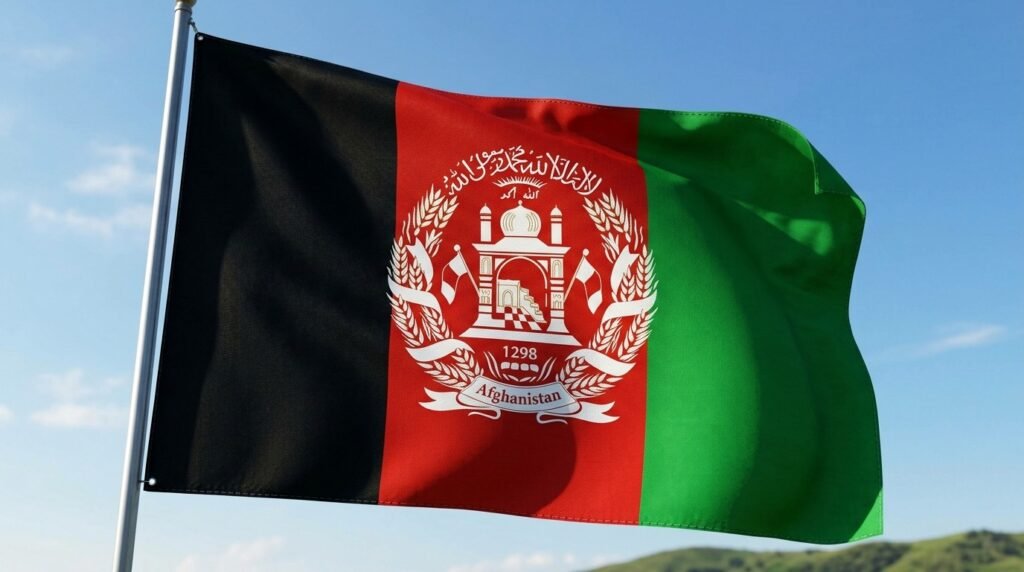
Afghanistan shares borders with Pakistan, Iran, Turkmenistan, Uzbekistan, Tajikistan, and China, giving it a strategic location between Central Asia and South Asia. Although the country has no coastline, it has historically connected important trade and travel routes between neighboring regions.
The geography of Afghanistan is strongly shaped by the Hindu Kush mountain range, which stretches across much of the country. These mountains affect local climates, rainfall, transportation, and settlement patterns. The country also contains fertile valleys, dry plains, and high-altitude areas, creating major differences between its regions. Winters can be very cold in mountainous areas, while some lower regions experience hot and dry summers. Because Afghanistan has no direct access to the sea, it relies on neighboring countries and regional transport networks to reach international seaports and global markets.
Albania
Albania is a country in southeastern Europe located on the Balkan Peninsula. Its capital city is Tirana, which serves as the country’s political, economic, cultural, and administrative center.
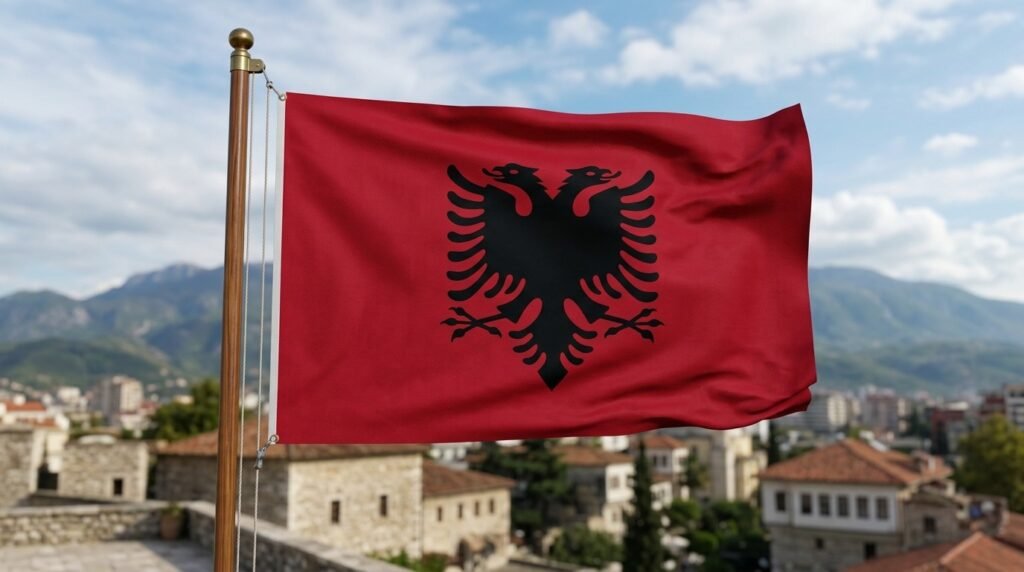
Albania has a coastline along both the Adriatic Sea and the Ionian Sea, giving it access to the Mediterranean region. It shares land borders with Montenegro, Kosovo, North Macedonia, and Greece, while Italy lies across the Adriatic Sea. This location places Albania at an important meeting point between the Balkan interior and southern Europe.
Albania is known for its beautiful mountains, coastal landscapes, historic towns, and Mediterranean climate. Much of the country has a mountainous or hilly landscape, while fertile plains are found in several areas. Its coastline includes sandy beaches, rocky shores, bays, and small coastal settlements that attract visitors during the warmer months. Albania also has a rich cultural history influenced by different civilizations that lived or traded in the region over many centuries. Today, tourism, agriculture, services, and other industries contribute to its economy, while its location continues to make it an important part of southeastern Europe.
Algeria
Algeria is a large country in North Africa and is the largest country on the African continent by land area. Its capital and largest city is Algiers, a major Mediterranean port located along the country’s northern coast.
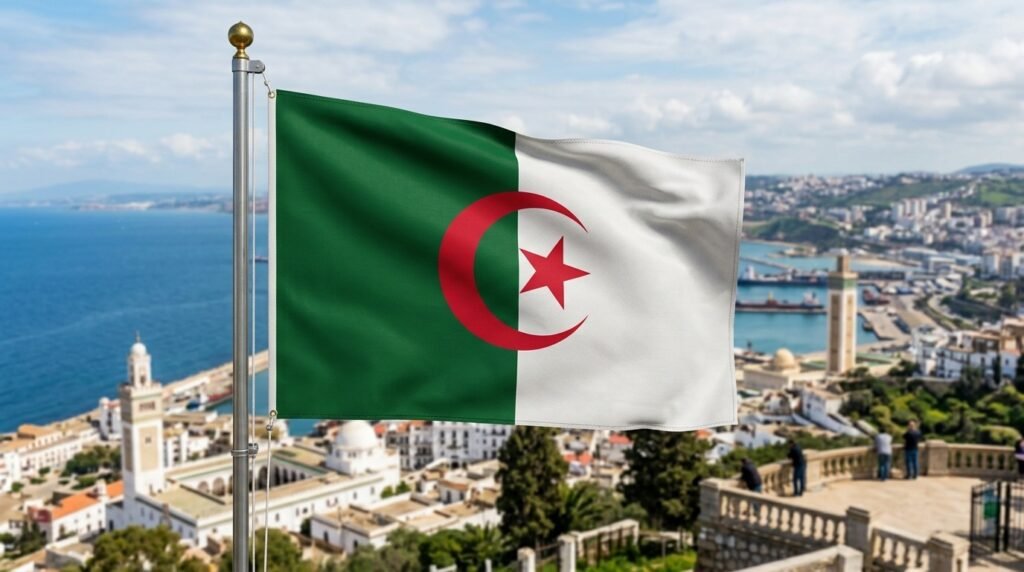
Algeria shares borders with Tunisia, Libya, Niger, Mali, Mauritania, Western Sahara, and Morocco, giving it connections with several parts of North and West Africa. Its northern coastline along the Mediterranean Sea has helped support trade, fishing, transportation, and settlement for centuries.
A major feature of Algeria’s geography is the Sahara Desert, which covers a very large portion of the country’s southern territory. However, Algeria is not entirely desert. The northern part includes the fertile coastal region, mountain ranges, forests, agricultural areas, and Mediterranean landscapes. The Atlas Mountains also influence the country’s terrain and climate. Algeria has important natural resources, especially oil and natural gas, which play a major role in its economy. Because of its enormous size, the country contains several distinct geographic zones, ranging from Mediterranean coastal areas in the north to vast desert landscapes in the south.
Andorra
Andorra is a small, landlocked country in southwestern Europe located in the Pyrenees Mountains between France and Spain. Its capital city, Andorra la Vella, is one of the highest capital cities in Europe and serves as the country’s main center for government, business, and tourism.
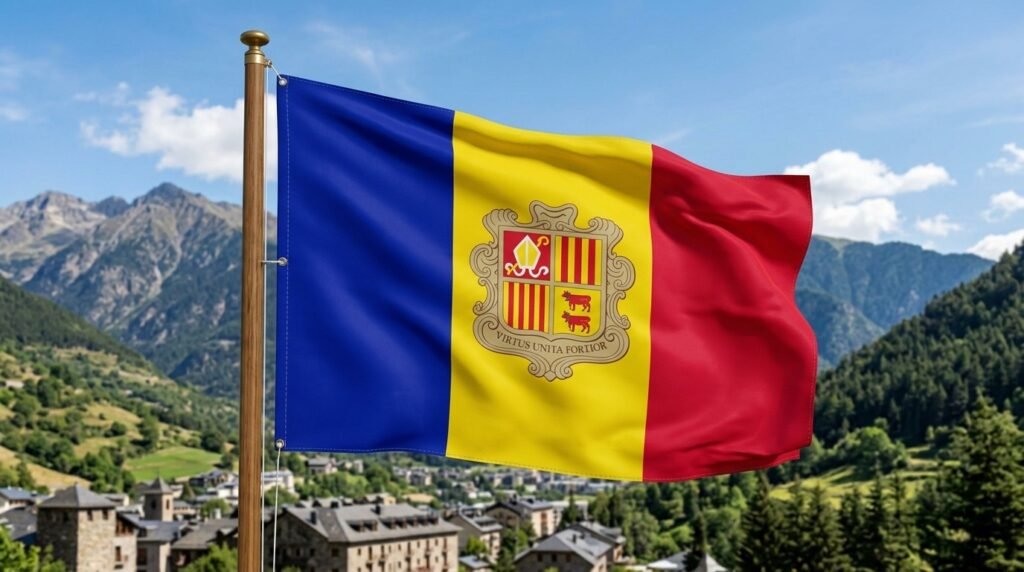
Despite its small territory, Andorra is a fully sovereign country and has its own government, laws, and international identity. Its mountainous location gives it a distinctive geographic character compared with many other European nations.
The country is famous for its dramatic mountain scenery, narrow valleys, forests, and winter sports facilities. Skiing and snowboarding are especially important to its tourism industry, while visitors also come for hiking, shopping, nature, and mountain activities during other seasons. Andorra has no coastline and is surrounded entirely by France and Spain. Its economy has traditionally relied heavily on tourism, retail, finance, and services. The combination of mountain landscapes, a mild summer climate, and winter snowfall makes Andorra a popular destination for travelers seeking outdoor activities in the Pyrenees.
Angola
Angola is a large country on the southwestern coast of Africa, with its capital city, Luanda, located on the Atlantic Ocean. Luanda is the country’s largest city and an important center for government, commerce, transportation, and industry.
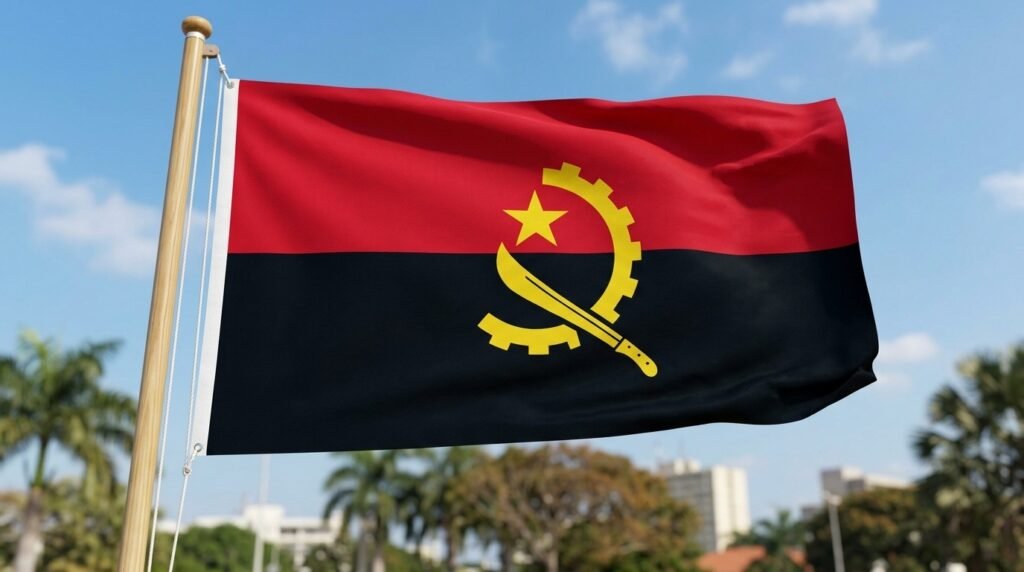
Angola shares borders with Namibia, Zambia, and the Democratic Republic of the Congo, while its western coastline provides direct access to the Atlantic Ocean. The country also includes Cabinda, an exclave separated from the main part of Angola by territory belonging to the Democratic Republic of the Congo.
Angola has a varied landscape that includes coastal plains, high plateaus, tropical forests, grasslands, savannas, and semi-arid areas. The country’s interior generally rises toward higher elevations, creating differences in climate and vegetation between coastal and inland regions. Angola also has significant natural resources, particularly oil and diamonds, which have played an important role in its economy. Its long Atlantic coastline supports ports, fishing, and maritime activities. In addition, Angola’s rivers, forests, wildlife areas, and diverse landscapes give it considerable potential for agriculture, tourism, and environmental development.
Antigua and Barbuda
Antigua and Barbuda is a sovereign island country in the Caribbean Sea, made up mainly of the islands of Antigua and Barbuda along with several smaller islands and islets. Its capital city is St. John’s, located on Antigua, which is the country’s largest and most developed island.
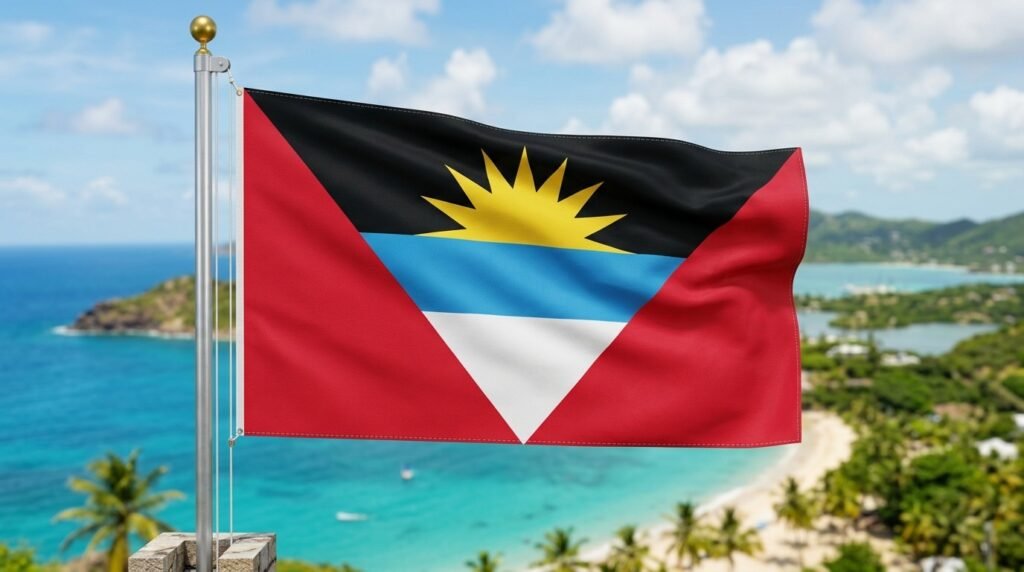
The nation lies in the eastern Caribbean and forms part of the Lesser Antilles. Its location gives it a strong connection to the surrounding sea, and maritime activities have played an important role in its history and economy.
Antigua and Barbuda is well known for its beaches, warm tropical climate, coral reefs, and clear coastal waters. Antigua has many bays and sheltered harbors, while Barbuda is known for its natural environment, beaches, and wildlife. Tourism is one of the country’s most important economic activities, attracting visitors interested in beaches, sailing, water sports, and island scenery. The islands also have a long maritime tradition, and sailing remains an important part of their culture and tourism industry. Unlike landlocked countries such as Afghanistan or Andorra, the sea strongly shapes daily life, transportation, trade, and economic activity across Antigua and Barbuda.
Argentina
Argentina is a large country in South America and one of the continent’s most geographically diverse nations. Its capital and largest metropolitan area is Buenos Aires, a major cultural, economic, and political center located near the Río de la Plata.
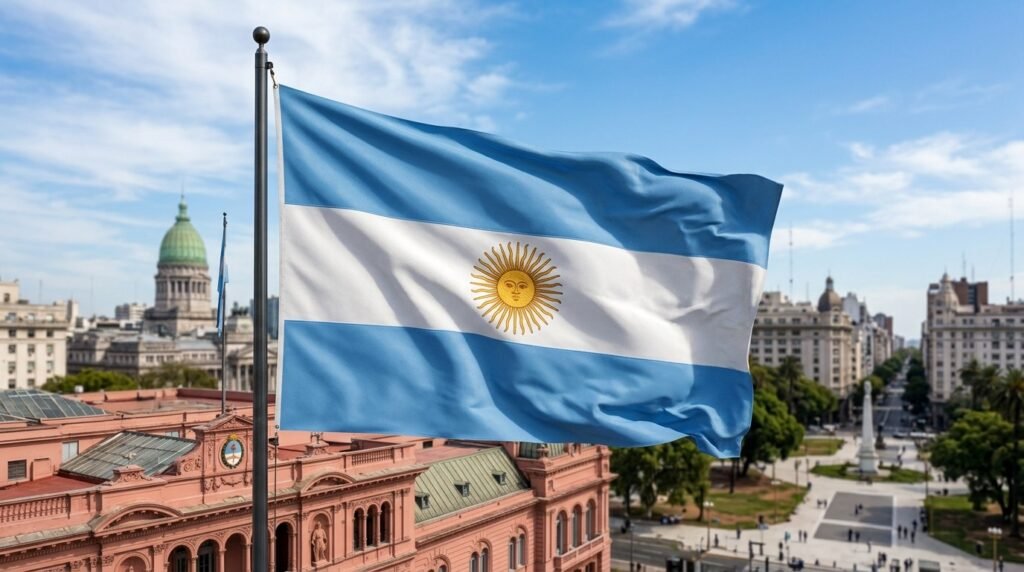
Argentina stretches a great distance from the northern subtropical regions to the southern landscapes of Patagonia, giving it a wide range of climates and environments. It shares borders with Chile, Bolivia, Paraguay, Brazil, and Uruguay, while its eastern side faces the South Atlantic Ocean.
Argentina contains many remarkable natural landscapes, including the Andes Mountains, Pampas grasslands, deserts, forests, lakes, glaciers, and coastal areas. The Andes form much of the country’s western boundary and include some of the highest peaks in the Americas. The fertile Pampas region is especially important for agriculture and livestock farming, while Patagonia is known for its mountains, glaciers, open plains, and dramatic scenery. Argentina also contains parts of the southern Andes and extensive protected natural areas. Because of its enormous geographic range, the country supports many different ecosystems and offers a wide variety of landscapes, climates, and cultural experiences.
Armenia
Armenia is a landlocked country in the South Caucasus, situated at the crossroads of Europe and Asia. Its capital city is Yerevan, a major cultural, economic, and political center and one of the region’s oldest continuously inhabited cities.
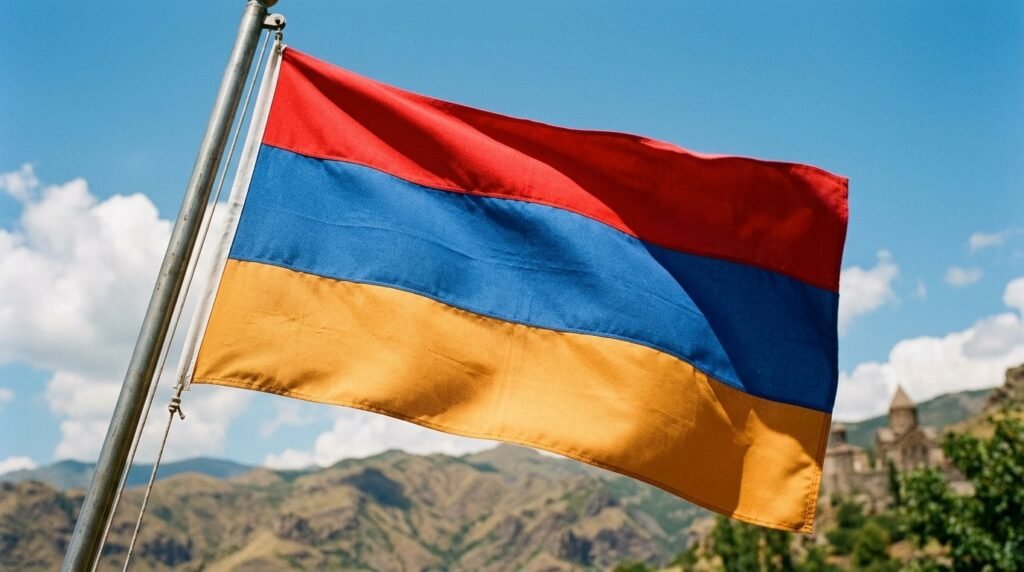
Armenia shares borders with Georgia, Azerbaijan, Iran, and Turkey, although its regional relationships have been shaped by a complex history. The country has no coastline, so its transportation and trade connections depend on routes through neighboring states.
Armenia has a mountainous landscape with high plateaus, valleys, volcanic formations, and rugged terrain. Mount Aragats is the country’s highest mountain, while Lake Sevan is one of its most important natural features and a major source of freshwater. Armenia is also known for its ancient cultural heritage, historic monasteries, stone churches, and archaeological sites. Its position in the South Caucasus has exposed it to influences from different civilizations throughout history. Today, the country’s landscape, history, architecture, and cultural traditions make it an important destination for people interested in the heritage of the Caucasus region.
Australia
Australia is a sovereign country and continent located in the Southern Hemisphere, making it one of the most geographically distinctive countries beginning with A. Its capital city is Canberra, while Sydney, Melbourne, Brisbane, Perth, and Adelaide are among its largest and best-known cities.
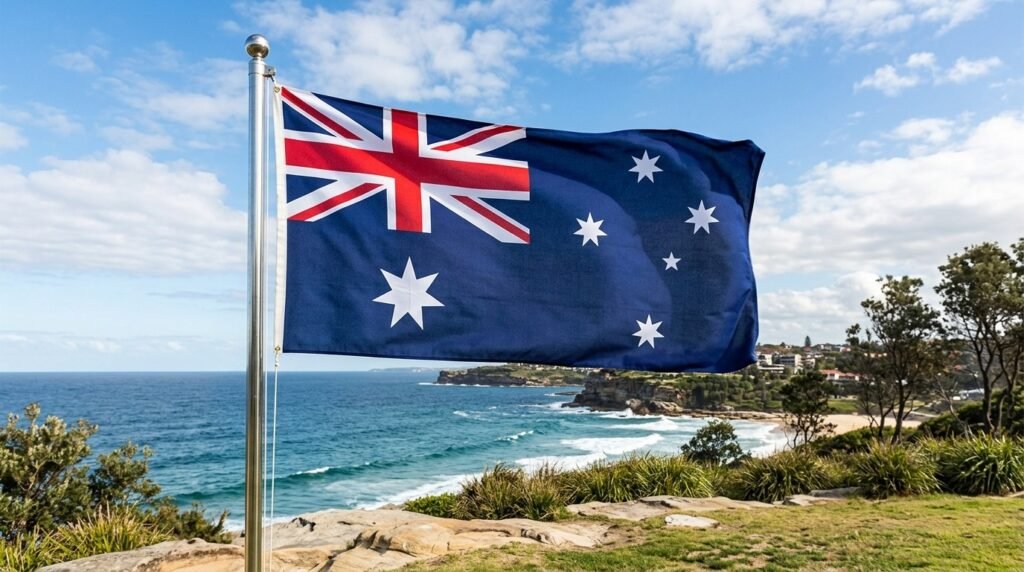
Australia occupies most of the Australian continent and also includes the island of Tasmania and many smaller islands. It is surrounded by the Indian and Pacific Oceans and has one of the longest coastlines among the world’s countries.
Australia has an extraordinary range of landscapes and ecosystems. The northern part includes tropical areas, while the southeast has more temperate environments, and much of the interior consists of dry and semi-arid land known as the Outback. The country is famous for unique wildlife, including kangaroos, koalas, wombats, and many species found nowhere else in the world. Australia also has major natural attractions such as the Great Barrier Reef, extensive beaches, rainforests, deserts, and mountain regions. Its large size creates significant differences in climate, vegetation, and population distribution, with most people living in cities and towns along the coast.
Austria
Austria is a landlocked country in Central Europe, with Vienna as its capital and largest city. It shares borders with Germany, Czechia, Slovakia, Hungary, Slovenia, Italy, Switzerland, and Liechtenstein, placing it at the center of several important European routes.
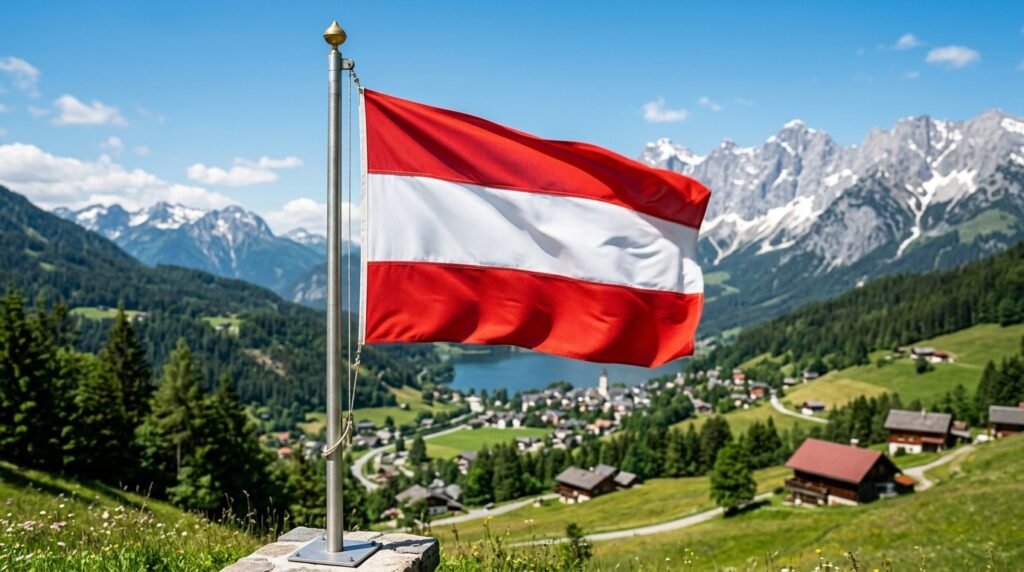
Austria is widely recognized for its Alpine landscapes, historic cities, classical music heritage, and well-preserved architecture. Its central location has also made it an important cultural and economic link between western, northern, and southeastern Europe.
The Alps cover a large part of Austria and strongly influence the country’s scenery, climate, tourism, and outdoor activities. The country contains high mountains, green valleys, forests, lakes, and rolling lowlands. Winter sports such as skiing are especially popular in Alpine areas, while hiking and sightseeing attract visitors during warmer months. Vienna is known for its historic buildings, museums, music, and cultural institutions, while cities such as Salzburg and Innsbruck also have major historical and tourism importance. Austria’s combination of mountain scenery, cultural heritage, and central European location makes it a distinctive country within the region.
Azerbaijan
Azerbaijan is a country in the South Caucasus, located between the Caucasus Mountains and the Caspian Sea. Its capital city is Baku, a major city and port situated on the western shore of the Caspian Sea.
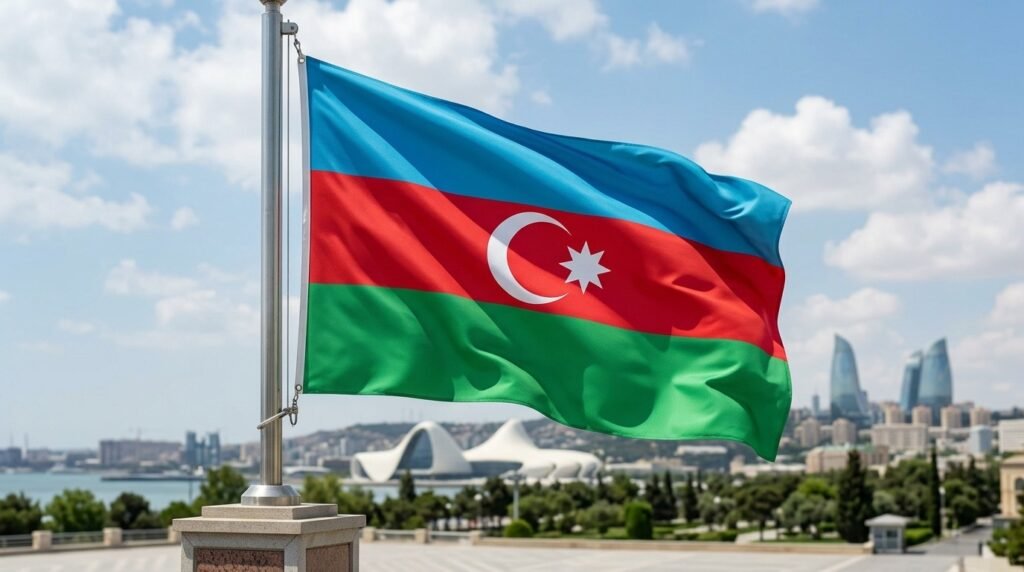
Azerbaijan shares land borders with Russia, Georgia, Armenia, and Iran, while the Caspian Sea forms its eastern boundary. The country’s location connects the Caucasus with Central Asia and the Middle East, giving it strategic importance for regional transportation and trade.
Azerbaijan has a diverse landscape that includes mountains, lowlands, semi-arid areas, forests, and coastal plains. The Greater Caucasus and Lesser Caucasus mountain systems influence much of the country’s terrain and climate. Azerbaijan is also well known for its oil and natural gas resources, which have played a major role in its modern economy. Baku has developed into an important economic and cultural center, combining modern architecture with historic areas. Beyond the capital, the country offers mountain villages, forests, valleys, mud volcanoes, and Caspian coastal landscapes, making its geography much more varied than its oil-producing reputation alone might suggest.
Why Are There So Many Countries Starting With A?
The letter A happens to appear at the beginning of many country names because of the historical development of languages, place names, and national identities. Country names often come from ancient peoples, geographic features, historical kingdoms, or older names used by neighboring cultures.
For example, Argentina comes from a historical name associated with silver, while Australia comes from the Latin expression Terra Australis, meaning southern land. Algeria developed from the name of its capital, Algiers, and Albania has roots in an ancient regional name.
Therefore, there is no special geographical rule that causes countries to start with A. The pattern simply reflects how national names developed over time.
Places That Start With A
Not every place beginning with A is a sovereign country. The letter also appears at the beginning of many territories, islands, regions, cities, and geographic features.
For example, American Samoa is a territory of the United States, not an independent sovereign country. Aruba is a constituent country of the Kingdom of the Netherlands, while Anguilla is a British Overseas Territory.
This distinction matters when answering questions about countries. A place can have its own local government, culture, flag, or geographic identity without being an independent sovereign state.
Are There Territories That Start With A?
Yes, several territories and other geographic areas start with A. However, they should not be added to the list of 11 sovereign countries.
Examples include:
- American Samoa — U.S. territory in the South Pacific
- Anguilla — British Overseas Territory in the Caribbean
- Aruba — constituent country within the Kingdom of the Netherlands
- Ascension Island — island that forms part of the British Overseas Territory of Saint Helena, Ascension and Tristan da Cunha
These examples show why country lists can sometimes look different from general lists of places. A geographic name does not automatically represent an independent nation.
Is Wales a Country That Starts With A?
No. Wales does not start with A, so it is not relevant to a list of countries beginning with this letter. However, Wales is often discussed in country-name questions because it is commonly described as one of the four countries that make up the United Kingdom.
The four constituent countries of the United Kingdom are England, Scotland, Wales, and Northern Ireland. Wales is therefore a constituent country, but it is not a sovereign independent state separate from the United Kingdom.
For a list specifically focused on the letter A, Wales should not be included.
Other World Places Starting With A
Many famous cities and geographic locations also begin with A. These names can be useful if you are creating a broader list of places starting with A rather than a list limited to sovereign countries.
Some examples include:
- Amsterdam — city in the Netherlands
- Athens — capital city of Greece
- Auckland — city in New Zealand
- Abu Dhabi — capital of the United Arab Emirates
- Alexandria — major city in Egypt
- Adelaide — city in Australia
- Alaska — U.S. state
- Andalusia — autonomous community in Spain
- Amazon River — major river in South America
- Atlantic Ocean — major ocean between the Americas and Europe/Africa
These examples show the difference between country names beginning with A and other places beginning with the same letter.
Countries Starting With Other Letters
The world’s country names cover almost every letter of the alphabet, although some letters have far fewer examples than others. For instance, countries beginning with B include Brazil, Belgium, Bangladesh, and Bhutan, while countries beginning with C include Canada, China, Chile, Colombia, and several others.
If you are building an A-to-Z geography list, it helps to separate sovereign countries from territories, constituent countries, cities, and regions. This approach keeps the information accurate and prevents places such as Aruba or American Samoa from being incorrectly counted as independent states.
Frequently Asked Questions
Is there a country that starts with A?
Yes. There are 11 sovereign countries beginning with A: Afghanistan, Albania, Algeria, Andorra, Angola, Antigua and Barbuda, Argentina, Armenia, Australia, Austria, and Azerbaijan. The United Nations lists all 11 as member states.
What country begins with the letter A?
Several countries begin with A. Afghanistan is the first in alphabetical order, followed by Albania, Algeria, Andorra, Angola, Antigua and Barbuda, Argentina, Armenia, Australia, Austria, and Azerbaijan.
Is Australia a country that starts with A?
Yes. Australia is a sovereign country and also occupies an entire continent. Its capital city is Canberra, and it is one of the world’s largest countries by land area.
Are there any territories starting with A?
Yes. American Samoa, Anguilla, Aruba, and Ascension Island are examples of places beginning with A that have different political statuses. They should not be counted among the 11 sovereign countries beginning with A.
Why are there so many countries beginning with A?
There is no official rule that creates a large number of A countries. Their names developed independently through history, language, geography, and cultural traditions. As a result, several unrelated country names happen to begin with the same letter.
What places start with A?
Many cities, regions, islands, territories, and geographic features start with A. Examples include Amsterdam, Athens, Auckland, Abu Dhabi, Alaska, Aruba, and Anguilla. Their political and geographic categories differ, so they should not all be called countries.
Which country names are hardest to find by letter?
Some letters have very few or no sovereign country names. Letters such as A have many examples, while letters such as Q and X have no sovereign countries commonly listed in English. This makes alphabetical geography lists more challenging for certain letters.
Conclusion
There are 11 sovereign countries that start with A, giving this letter one of the more extensive country lists in the alphabet. They include nations from Asia, Europe, Africa, South America, the Caribbean, and Oceania.
It is also important to separate countries from territories, regions, cities, and constituent countries. Places such as Aruba, Anguilla, and American Samoa may appear in broader lists of places beginning with the letter A, but they have different political statuses. Therefore, when someone asks for a country that starts with A, the 11 sovereign states above provide the accurate answer.
The complete list is Afghanistan, Albania, Algeria, Andorra, Angola, Antigua and Barbuda, Argentina, Armenia, Australia, Austria, and Azerbaijan. The United Nations officially lists these countries among its member states.