When it comes to learning about fire, an alphabet approach makes complex ideas easier to understand. The fire alphabet a to z connects every letter with a simple fire-related word, concept, tool, or safety idea. This format works well for children, teachers, parents, writers, and anyone creating educational activities around fire. From alarm and blaze to water and zone, each letter introduces a useful term. Some words describe fire itself, while others explain firefighting, prevention, emergency response, or safety. In this guide, you will find an A-to-Z collection with clear meanings, examples, learning tips, and practical ways to use these words in classrooms, worksheets, games, and creative projects.
What Is the Fire Alphabet A to Z?
A fire alphabet a to z is an educational list that assigns a fire-related word to every letter, creating a simple framework for learning terminology and safety concepts.
The idea is straightforward: choose one meaningful fire-related word for each letter from A through Z. The words can cover several areas, including fire behavior, firefighting equipment, emergency planning, fire prevention, and safety.
For example:
- A — Alarm: A warning system that alerts people to a possible fire.
- B — Blaze: A strong or visible fire.
- C — Combustion: The chemical process that produces heat and often light.
- D — Detector: A device that senses signs of fire, such as smoke.
- E — Escape: Leaving a dangerous building safely.
- F — Firefighter: A trained professional who responds to fires and other emergencies.
An alphabet format has an important educational advantage. It breaks a broad subject into small pieces. A learner does not need to memorize a long glossary at once.
Instead, each letter becomes a memory cue.
This approach can also support vocabulary development. Teachers can ask students to define each word, draw a picture, create a sentence, or explain how the term relates to fire safety.
Fire Alphabet A to F
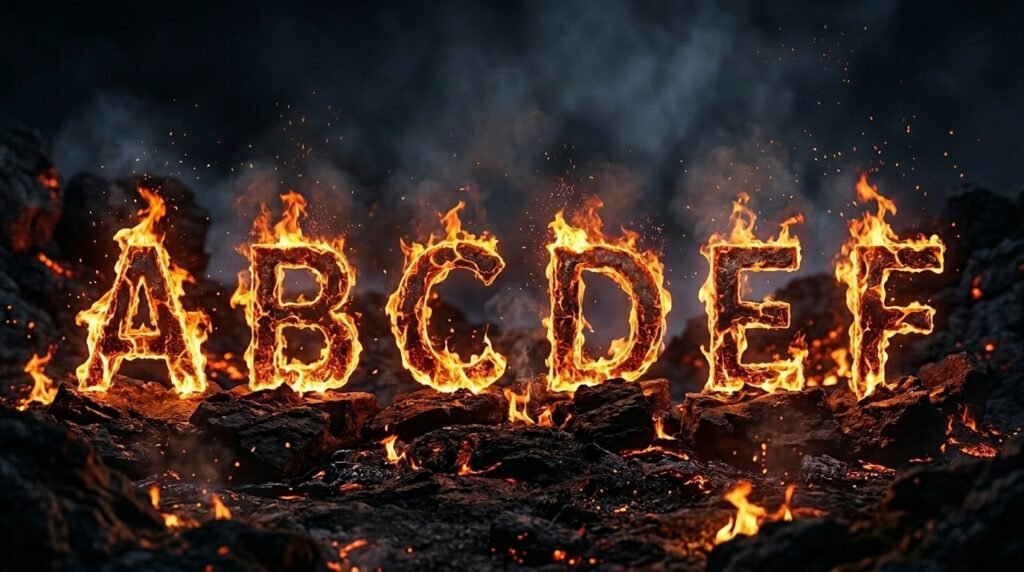
The first six letters introduce basic fire terms, warning systems, emergency actions, and the people who respond when fires occur.
A — Alarm
A fire alarm provides an important warning when a fire or smoke event is detected. It can alert people so they have time to leave a building.
Fire alarms may include audible sounds, flashing lights, or other warning signals. In larger buildings, alarm systems can connect with other emergency equipment.
For children, alarm is an easy word to remember because it connects directly with an important safety rule: when an alarm sounds, take it seriously and follow the building’s evacuation instructions.
B — Blaze
A blaze means a large or strongly burning fire. The word often appears in news reports, books, stories, and everyday descriptions of serious fires.
A blaze can spread when enough fuel, oxygen, and heat are available. Wind can also influence how quickly an outdoor fire moves.
For vocabulary activities, blaze provides a simple alternative to repeatedly using the word “fire.”
C — Combustion
Combustion is a chemical reaction in which a substance reacts with an oxidizer and releases energy, commonly producing heat and sometimes light.
Many ordinary fires involve combustion. Wood, paper, natural gas, gasoline, and other fuels can burn when conditions allow combustion to continue.
Understanding this term helps learners move beyond the idea that fire is simply something that “burns.” It introduces the science behind burning.
D — Detector
A detector senses a condition associated with fire. Smoke detectors, for example, can detect smoke particles and provide an early warning.
Some systems also use heat detectors or other sensing technologies. Different detectors suit different environments and applications.
The key lesson is simple: detection helps people recognize danger earlier, which can improve their ability to respond safely.
E — Escape
Escape means moving away from danger. During a building fire, people should leave using a safe evacuation route rather than trying to collect belongings.
A good emergency plan identifies exits before an emergency occurs. People should also know where they can meet after leaving the building.
For young learners, the word escape can reinforce an important message: personal safety comes before possessions.
F — Firefighter
A firefighter is a trained emergency responder who handles fires, rescues, hazardous situations, and other incidents depending on their role and department.
Firefighters receive training in areas such as fire suppression, rescue, equipment use, emergency medical response, and incident safety.
The word also provides an opportunity to teach children about the protective clothing and equipment firefighters use, including helmets, protective coats, gloves, boots, and breathing equipment.
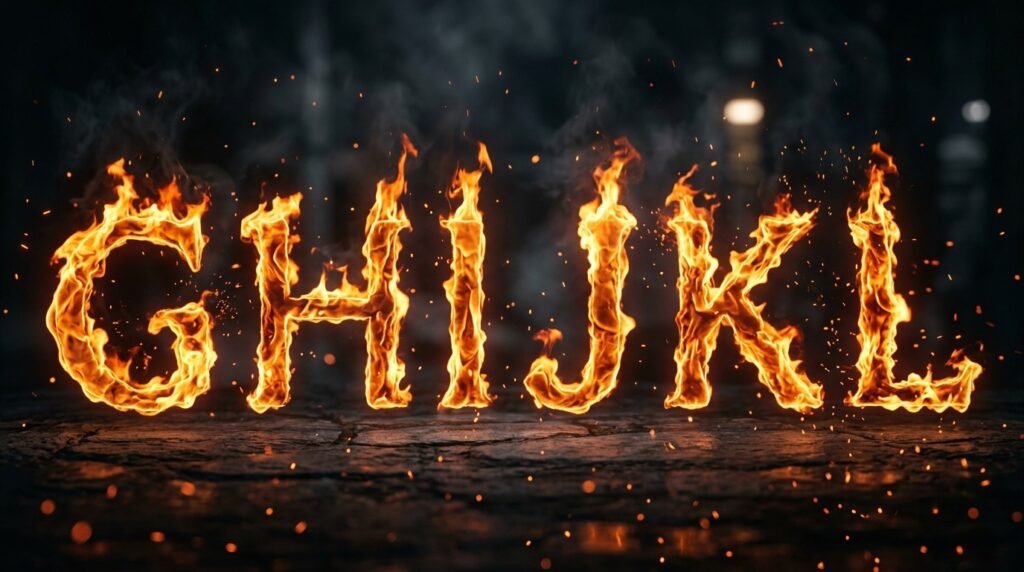
Fire Alphabet G to L
Letters G through L introduce useful terms connected with heat, hoses, ignition, smoke, and firefighting tools.
G — Gas
Gas can act as a fuel for combustion. Natural gas and liquefied petroleum gas are common examples of fuels used in homes, businesses, and industries.
Gas leaks can create serious fire and explosion hazards. People should never investigate a suspected gas leak by creating a flame or spark.
In educational settings, gas is useful for explaining that different fuels can support fire.
H — Hose
A fire hose carries water, or another approved extinguishing agent, from a water supply or firefighting system toward a fire.
Fire hoses come in different types and sizes for different purposes. Firefighters train to handle them safely because water flow can create significant force.
A hose is one of the most recognizable pieces of firefighting equipment and makes an excellent visual element for alphabet worksheets.
I — Ignition
Ignition is the process of starting combustion. A fuel needs suitable conditions before it can ignite.
A spark, flame, hot surface, or other heat source may provide the energy needed to begin combustion, depending on the material.
Understanding ignition helps explain why keeping combustible materials away from heat sources is an important fire prevention practice.
J — Jacket
A firefighter’s protective jacket forms part of specialized clothing designed to protect against heat, flames, and other hazards.
Modern protective clothing is engineered for demanding emergency environments. It does not make firefighters immune to heat or eliminate every danger.
The letter J can therefore introduce learners to the protective equipment professionals rely on during emergency operations.
K — Kitchen
Kitchens contain several potential fire hazards, including cooking oils, stovetops, ovens, electrical appliances, and combustible materials.
Cooking fires require particular care. A small cooking fire can become dangerous quickly if handled incorrectly.
Basic prevention includes staying attentive while cooking, keeping flammable items away from heat, and maintaining suitable fire safety equipment where appropriate.
L — Ladder
A ladder can help firefighters reach elevated locations, access buildings, perform rescues, or carry out other emergency tasks.
Fire service ladders come in different forms and sizes. Their use requires training because climbing and positioning equipment around a fire scene can involve significant hazards.
For alphabet learning, ladder is easy to illustrate and connects naturally with the work of firefighters.
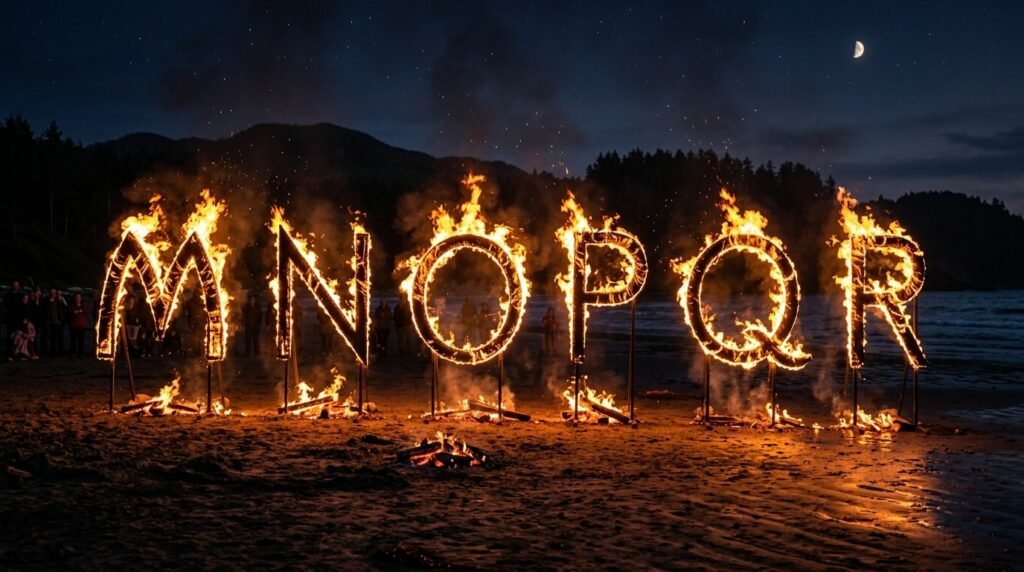
Fire Alphabet M to R
The middle section covers materials, oxygen, prevention, rescue, and emergency response concepts that help explain how fires develop and how people respond.
M — Match
A match can create a flame and therefore serves as a simple example of an ignition source.
Matches should be stored safely and kept away from children and combustible materials. Even a small flame can ignite paper, fabric, dry vegetation, or other fuels.
The word match offers a clear opportunity to discuss responsible handling of ignition sources.
N — Nozzle
A nozzle is the fitting at the end of a hose that controls or directs the flow of water or another firefighting agent.
Firefighters can use different nozzle types for different situations. Proper nozzle selection and handling require training and knowledge of the equipment.
For students, the nozzle demonstrates how firefighting equipment turns a water supply into a directed stream.
O — Oxygen
Oxygen supports combustion. Ordinary air contains oxygen, which helps many materials burn when enough heat and fuel are present.
Oxygen is one part of the basic fire triangle, along with heat and fuel. Remove or reduce one necessary element, and combustion may stop.
This makes oxygen an important scientific term in any fire vocabulary lesson.
P — Prevention
Fire prevention focuses on reducing the chance of fires starting and limiting the consequences if they occur.
Examples include maintaining electrical equipment, storing combustible materials properly, observing cooking safety practices, and keeping escape routes clear.
Prevention is especially important because avoiding a fire is generally safer than responding after one has already started.
Q — Quick Response
Quick response means taking appropriate action without unnecessary delay when an emergency occurs.
During a fire, this can include activating an alarm, calling emergency services, evacuating, and following established safety procedures.
However, quick does not mean reckless. People should not enter dangerous areas or attempt actions beyond their training simply because they want to act quickly.
R — Rescue
Rescue involves helping people or animals escape dangerous situations. Firefighters may perform rescues during building fires, vehicle incidents, and other emergencies.
Rescue operations can involve smoke, heat, unstable structures, traffic, or other hazards. Professionals use specialized training and equipment to manage these risks.
For general learners, rescue highlights the human purpose behind emergency response.
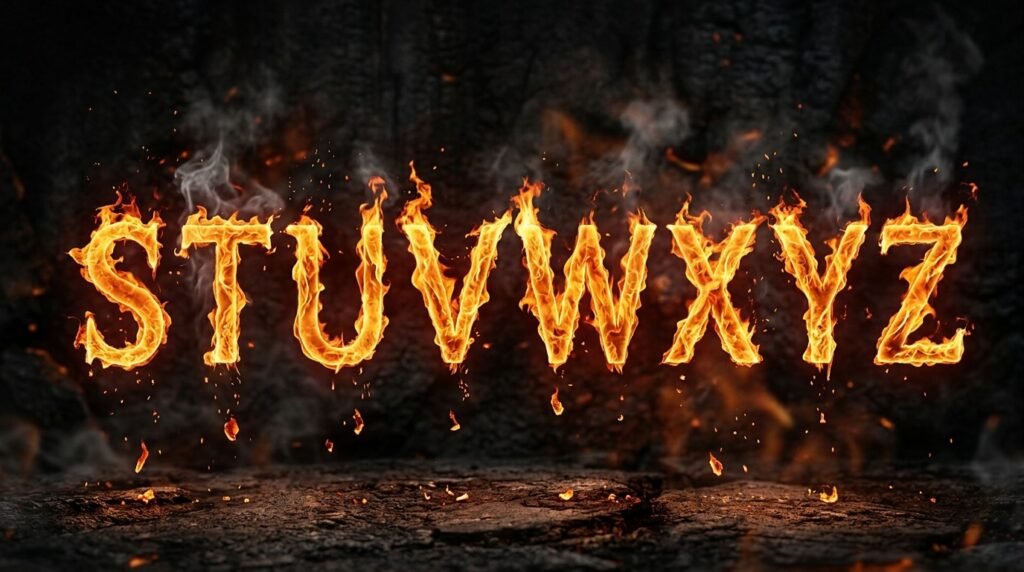
Fire Alphabet S to Z
The final letters include smoke, temperature, ventilation, water, and other useful concepts that complete the alphabet while reinforcing safety awareness.
S — Smoke
Smoke is a mixture of gases, particles, and other products produced during combustion. It can be extremely dangerous, even when flames are not immediately visible.
Smoke can reduce visibility and may contain toxic substances. People should avoid breathing smoke and leave hazardous areas as quickly and safely as possible.
Smoke alarms are especially valuable because they can provide an early warning before a fire becomes obvious.
T — Temperature
Temperature describes how hot or cold something is. In fire science, temperature matters because materials need suitable thermal conditions before they can ignite or continue burning.
Different fuels behave differently as they heat. Some release flammable vapors before visible flames appear.
Teaching temperature helps students understand that heat plays a central role in fire development.
U — Underwriters
Underwriters Laboratories, commonly known as UL, is an organization associated with safety testing and certification of many products and systems.
The term can introduce a broader lesson about product safety. Consumers should look for appropriate safety certifications or approvals relevant to their country and product type.
When discussing specific safety marks, learners should understand that requirements differ between jurisdictions and products.
V — Ventilation
Ventilation refers to the movement and exchange of air. Fire behavior can change significantly when openings allow fresh air into a burning structure.
Firefighters study ventilation because changes in airflow can affect heat, smoke, and fire conditions.
For beginners, the key concept is simple: air movement can influence how a fire behaves.
W — Water
Water is one of the most familiar firefighting agents. It can absorb heat and is effective against many ordinary combustible-material fires.
However, water is not appropriate for every type of fire. For example, using water on energized electrical equipment or certain burning liquids can create additional hazards.
The correct extinguishing method depends on the fire and the materials involved.
X — eXit
Because X is difficult to match with a common fire term, eXit uses the letter creatively while keeping the safety message clear.
An exit provides a route out of a building or enclosed area. Emergency exits should remain accessible, clearly identified, and free from unnecessary obstruction.
For an alphabet worksheet, emphasizing the X makes the word memorable while reinforcing evacuation awareness.
Y — Yard
A yard can contain potential fire hazards such as dry vegetation, grills, outdoor heaters, fuel containers, and electrical equipment.
Outdoor fire safety includes maintaining vegetation, using grills responsibly, storing fuels correctly, and following local rules for outdoor burning.
The word yard connects fire safety with the home environment rather than limiting the discussion to indoor spaces.
Z — Zone
A zone is a defined area. Firefighters and emergency planners may divide an incident location into areas for organization, safety, operations, or access control.
The exact meaning of a zone depends on the emergency system or organization using the term.
For children, the word can simply introduce the idea that emergency scenes are organized into specific areas to help responders work safely.
How to Use a Fire Alphabet A to Z for Learning
A fire alphabet a to z can become more than a vocabulary list when teachers and parents turn each letter into an interactive learning activity.
Here are several practical ideas:
- Alphabet worksheets: Ask learners to match each letter with its word and definition.
- Drawing activities: Students can draw an alarm, hose, ladder, firefighter, or other term.
- Sentence building: Ask children to write one sentence using each vocabulary word.
- Matching games: Place words and definitions on separate cards and let students match them.
- Safety discussions: Use terms such as alarm, escape, prevention, and smoke to introduce basic safety concepts.
- Classroom posters: Display the complete alphabet on a wall for repeated vocabulary practice.
- Story writing: Have students create a short story that includes several alphabet words.
- Quiz activities: Give learners a letter and ask them to recall the related term.
These activities work because they combine memory, language, visuals, and practical understanding.
Common Mistakes When Teaching Fire Vocabulary
A common mistake is treating fire vocabulary as simple memorization without explaining how each term connects to real safety, science, or emergency response.
Another mistake is presenting every fire as if it behaves in the same way. Different fuels and environments create different hazards.
Avoid these problems by:
- Explaining unfamiliar words in plain language.
- Using pictures for equipment and safety terms.
- Separating fire science from emergency instructions.
- Avoiding dangerous demonstrations.
- Teaching children to seek adult help.
- Reinforcing evacuation rather than curiosity about flames.
- Updating safety information when local guidance changes.
It is also important not to encourage children to experiment with fire. Educational activities should use pictures, diagrams, videos, supervised discussions, and safe classroom materials instead.
Why Fire Alphabet Lists Are Useful
Alphabet lists turn a broad subject into small, memorable units. This structure can help readers learn unfamiliar vocabulary without feeling overwhelmed.
They also work across different formats. A teacher can create a worksheet, a parent can use the words for a home learning activity, and a content creator can build a children’s educational page around the same structure.
The approach also supports repetition. A learner who sees “S — Smoke” several times may remember the term more easily than someone who encounters it in a long technical paragraph.
Another benefit is flexibility. The list can emphasize:
- Fire safety
- Fire science
- Firefighting equipment
- Emergency vocabulary
- Children’s learning
- Creative writing
- Classroom activities
The important point is to keep definitions accurate and safety messages responsible.
Conclusion
Learning fire-related vocabulary through an alphabet format makes a large subject easier to approach. The fire alphabet a to z presented here covers basic warnings, scientific concepts, firefighting equipment, emergency actions, and everyday safety ideas. From alarm and combustion to smoke, water, and zones, every letter offers a chance to introduce a useful concept.
For children, the list can support spelling, vocabulary, drawing, matching, and classroom discussion. For adults, it can serve as a quick starting point for understanding common fire terminology. The most important lesson is that fire deserves respect. Simple prevention habits, working alarms, clear exits, and good emergency planning can make a meaningful difference.
Use the alphabet as a learning tool, not as a substitute for professional fire-safety guidance. When teaching emergency procedures, always follow the recommendations of qualified local fire authorities. A clear understanding of basic terms can help people recognize hazards, communicate more effectively, and make safer decisions when it matters most.
Frequently Asked Questions
What is a fire alphabet A to Z?
A fire alphabet a to z is an A-to-Z collection of words connected with fire, firefighting, fire science, emergency response, and fire prevention.
What is the best fire-related word for A?
Alarm is a strong choice for A because it represents an important fire-safety warning system and is easy for children to understand.
Why is oxygen important to fire?
Oxygen supports combustion. In many ordinary fires, removing or reducing access to oxygen can help stop combustion, although the exact method depends on the fire.
Is water suitable for every fire?
No. Water is effective for many ordinary combustible-material fires, but it can be dangerous or ineffective for some fires, including certain electrical or flammable-liquid fires.
Can children learn fire safety through alphabet activities?
Yes. Alphabet activities can make vocabulary memorable, but lessons should use age-appropriate information and should never involve unsafe experiments with real flames.
Why is smoke dangerous?
Smoke can contain harmful gases and particles and can reduce visibility. It may pose a danger during a building fire, even when flames are not nearby.