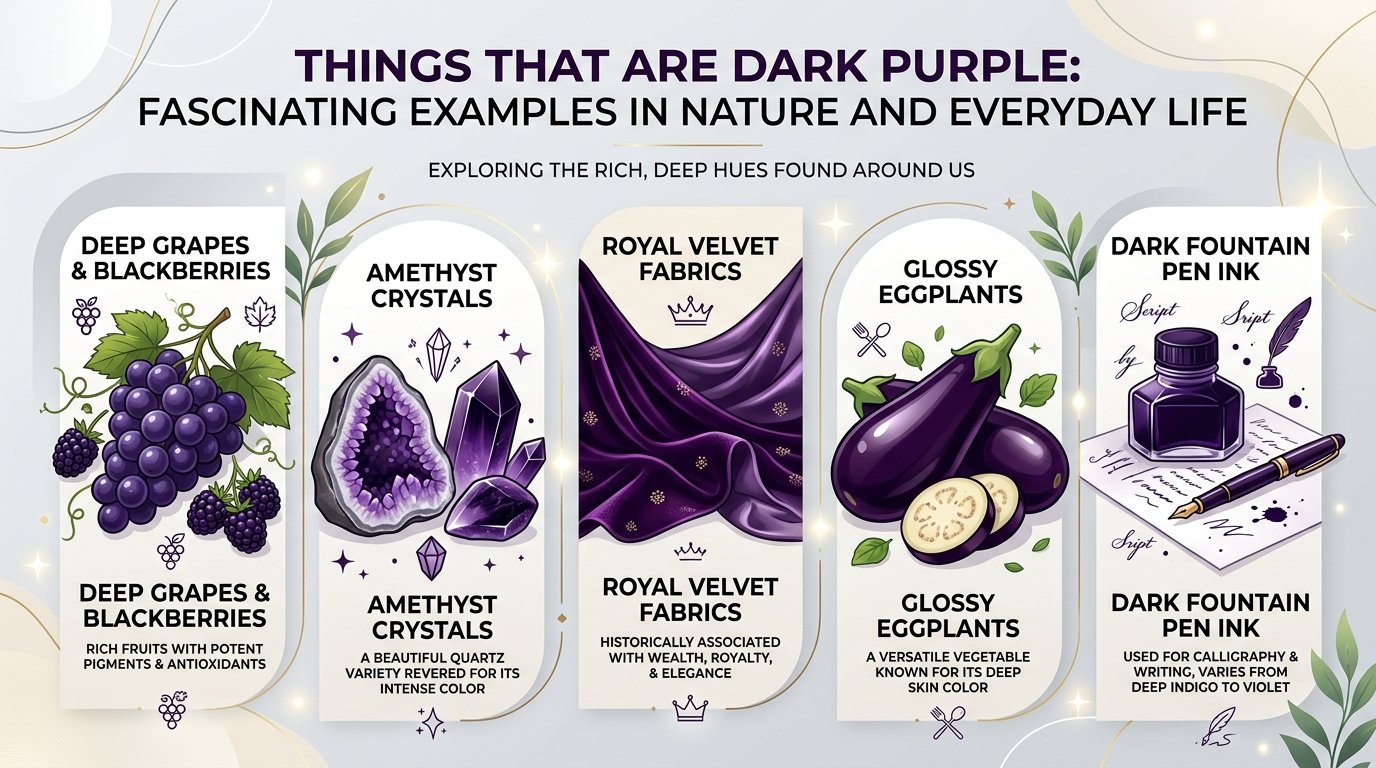
Things That Are Dark Purple: From rare flowers and gemstones to fruits, animals, and modern technology, this rich color appears in surprising places. Dark purple is often associated with mystery, luxury, creativity, wisdom, and spirituality. Throughout history, it has symbolized royalty because purple dyes were once rare and expensive.
In this guide, you’ll discover 100 things that are dark purple across nature, science, food, technology, and everyday life. Whether you’re researching colors, teaching students, or simply curious about the world around you, these fascinating examples reveal how dark purple shapes our environment and culture.
Why Dark Purple Is So Special
Dark purple is one of the most visually striking colors in nature. It typically appears when red and blue wavelengths combine, creating a deep, rich tone that stands out against greens, browns, and other natural colors.
In plants, purple often comes from anthocyanin pigments, which help protect tissues from sunlight and environmental stress. These pigments are responsible for the deep shades seen in berries, flowers, and vegetables.
In minerals and gemstones, purple colors result from trace elements and crystal structures that affect how light is absorbed and reflected.
Did You Know? Many purple fruits become darker as anthocyanin levels increase during ripening.
Things That Are Dark Purple: Examples in Nature
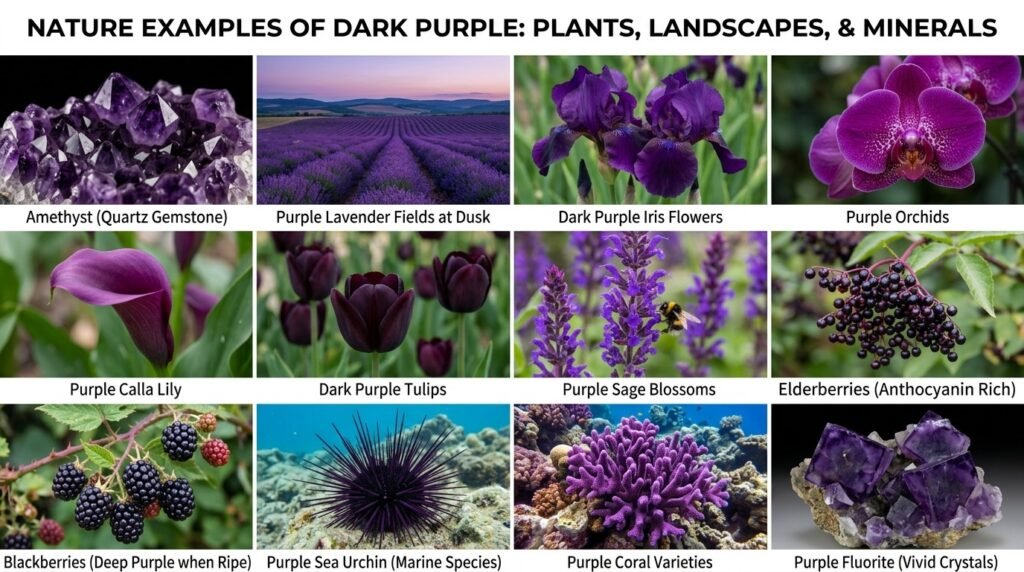
- Amethyst
- A quartz gemstone colored by trace amounts of iron and natural radiation.
- Purple Lavender Fields at Dusk
- Lavender flowers often appear deep purple under low light conditions.
- Dark Purple Iris Flowers
- Their petals contain concentrated anthocyanin pigments.
- Purple Orchids
- Many orchid species naturally produce dark violet-purple blooms.
- Purple Calla Lily
- Known for its elegant trumpet-shaped flowers.
- Dark Purple Tulips
- Some varieties appear almost black due to their extremely dark pigments.
- Purple Sage Blossoms
- These flowers attract pollinators and display rich purple hues.
- Elderberries
- Their dark purple color comes from high anthocyanin content.
- Blackberries
- Although called black, they are often dark purple when ripe.
- Purple Sea Urchin
- Marine species with dark purple spines.
- Purple Coral Varieties
- Certain coral species develop deep purple pigmentation.
- Purple Fluorite
- A mineral famous for its vivid dark purple crystals.
Animals and Birds That Display Dark Purple
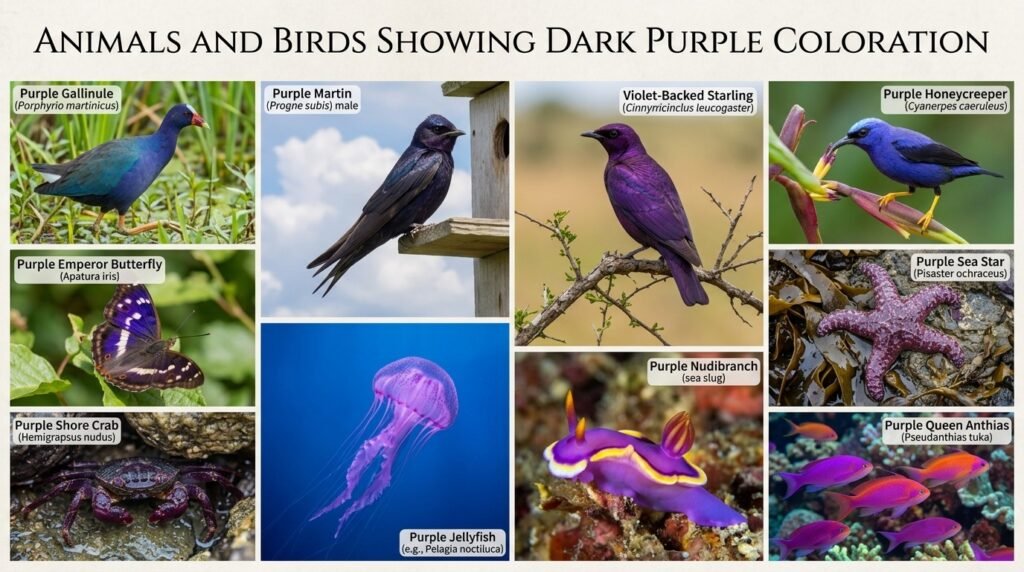
- Purple Gallinule
- A colorful wetland bird with iridescent purple feathers.
- Purple Martin
- North America’s largest swallow, displaying glossy dark purple plumage.
- Violet-Backed Starling
- Males exhibit shimmering purple coloration.
- Purple Honeycreeper
- Tropical bird known for vibrant purple-blue feathers.
- Purple Emperor Butterfly
- Shows flashes of dark purple through structural coloration.
- Purple Sea Star
- Found along rocky coastlines.
- Purple Shore Crab
- Some populations display dark purple shells.
- Purple Jellyfish
- Certain species develop purple pigments around their bells.
- Purple Nudibranch
- Sea slugs famous for brilliant colors.
- Purple Queen Anthias
- Reef fish displaying vivid purple shades.
Everyday Objects Associated With Dark Purple

Dark purple is frequently chosen because it conveys elegance, sophistication, and creativity.
- Purple notebooks
- Luxury gift boxes
- Velvet cushions
- Decorative candles
- Smartphone cases
- Throw blankets
- Umbrellas
- Water bottles
- Fashion handbags
- Winter scarves
- Nail polish bottles
- Decorative vases
- Curtains
- Bed linens
- Wall art
- Cosmetic packaging
- Perfume bottles
- Gaming accessories
- Journals
- Fountain pens
Many brands use of this color packaging because it creates a premium appearance and stands out on store shelves.
Food Examples That Are Dark Purple
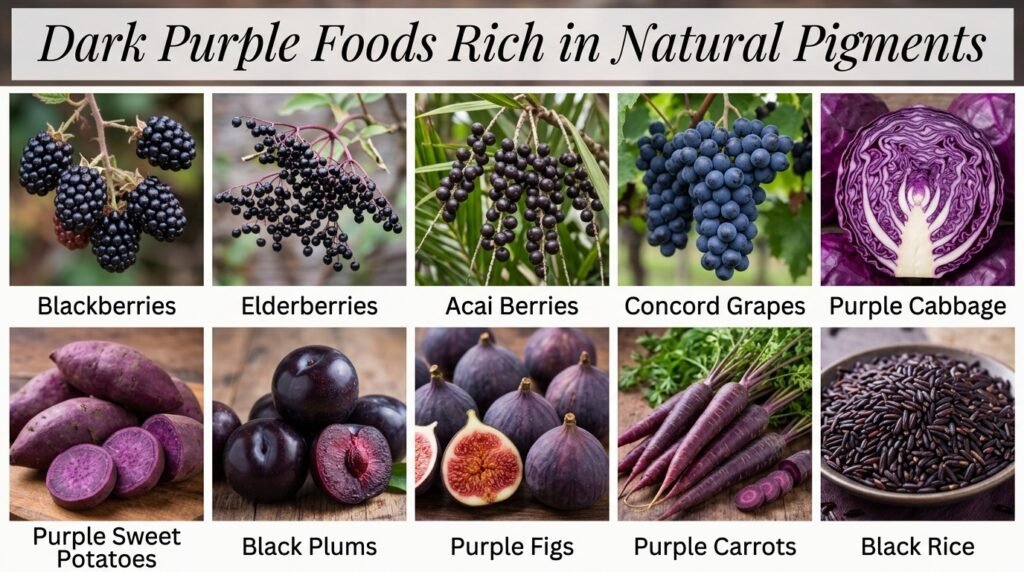
- Blackberries
Blackberries are aggregate fruits made of tiny drupelets, giving them their distinctive color and rich antioxidant content.
- Elderberries
Elderberries are small, nutrient-rich berries known for their deep purple color and long history in traditional herbal remedies.
- Acai Berries
Acai berries are tropical palm fruits famous for their nearly black-purple skin and exceptionally high anthocyanin levels.
- Concord Grapes
Concord grapes are intensely flavored and prized for their aromatic juice, jelly, and antioxidant compounds.
- Purple Cabbage
Purple cabbage is a colorful leafy vegetable whose Deep Purple hue comes from anthocyanins that can change color with pH levels.
- Purple Sweet Potatoes
Purple sweet potatoes are vibrant root vegetables packed with natural pigments that give their flesh a striking purple color.
- Black Plums
Black plums are juicy stone fruits with deep purple skin that develops as natural pigments concentrate during ripening.
- Purple Figs
Purple figs are sweet, soft fruits recognized for their rich purple exterior and honey-like flavor profile.
- Purple Carrots
Purple carrots are one of the oldest carrot varieties, containing anthocyanins that create their unique Deep Purple coloration.
- Black Rice
Black rice, often called “forbidden rice,” is a nutrient-dense grain whose dark purple-black color comes from powerful plant pigments.
Fun Fact
Purple cabbage changes color when exposed to acids and bases, making it a natural pH indicator often used in science experiments.
Science and Technology
Deep Purple in Medical Imaging
Dark purple color scales are often used in medical visualization software because they provide strong contrast and improve readability of complex scans.
Deep Purple in Laboratory Stains
Several biological stains produce purple appearances that help scientists identify cells, tissues, and microorganisms under microscopes.
Deep Purple in LED Technology
Purple LEDs are commonly used in decorative lighting, horticulture systems, and display technologies.
Dark Purple in Optical Research
Researchers use purple wavelengths in experiments involving light absorption, fluorescence, and spectroscopy.
Deep Purple in Industrial Coatings
Manufacturers create dark purple pigments for automotive paints, specialty plastics, and architectural finishes.
Why Industries and Branding Prefer Dark Purple
Purple communicates several powerful psychological traits, and Industries that commonly use Deep Purple include:
- Luxury
- Creativity
- Wisdom
- Sophistication
- Mystery
- Innovation
- Prestige
- Spirituality
- Beauty and cosmetics
- Luxury fashion
- Technology brands
- Wellness products
- Educational organizations
- Premium food packaging
- Creative agencies
- Entertainment companies
These industries use Deep Purple because it creates a memorable and premium impression.
Interesting Facts About Dark Purple
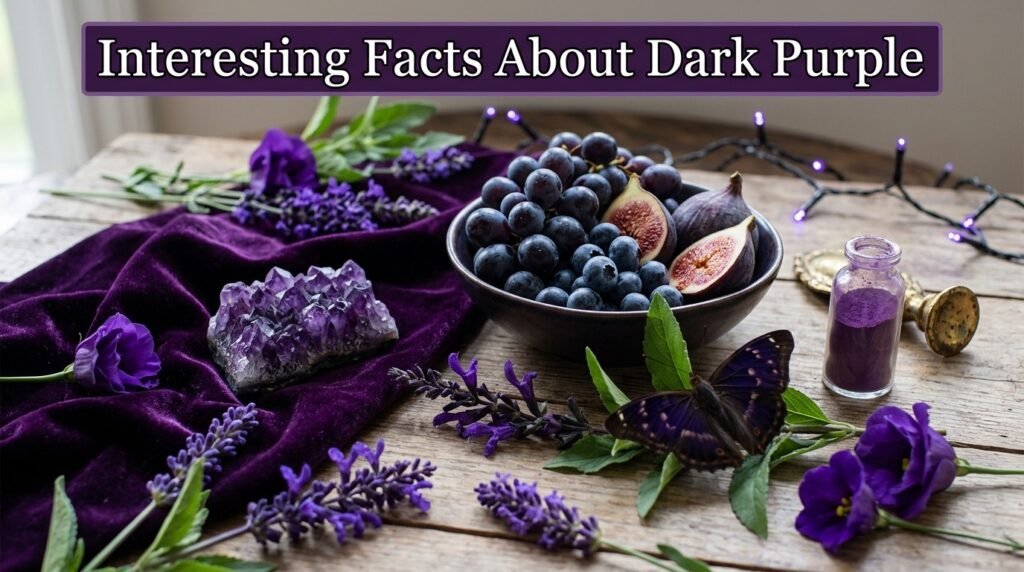
- Purple dye was once more valuable than gold in some regions.
- Ancient royalty often reserved purple clothing for elite classes.
- Amethyst has been treasured for thousands of years.
- Many dark purple fruits contain powerful antioxidants.
- Purple is one of the least common flower colors in some ecosystems.
- Some butterflies appear purple through structural coloration rather than pigment.
- Deep Purple is often associated with imagination and creativity.
- Purple LEDs are widely used in decorative lighting.
- Several marine animals naturally display purple coloration.
- Deep purple flowers are especially attractive to certain pollinators.
Educational Importance
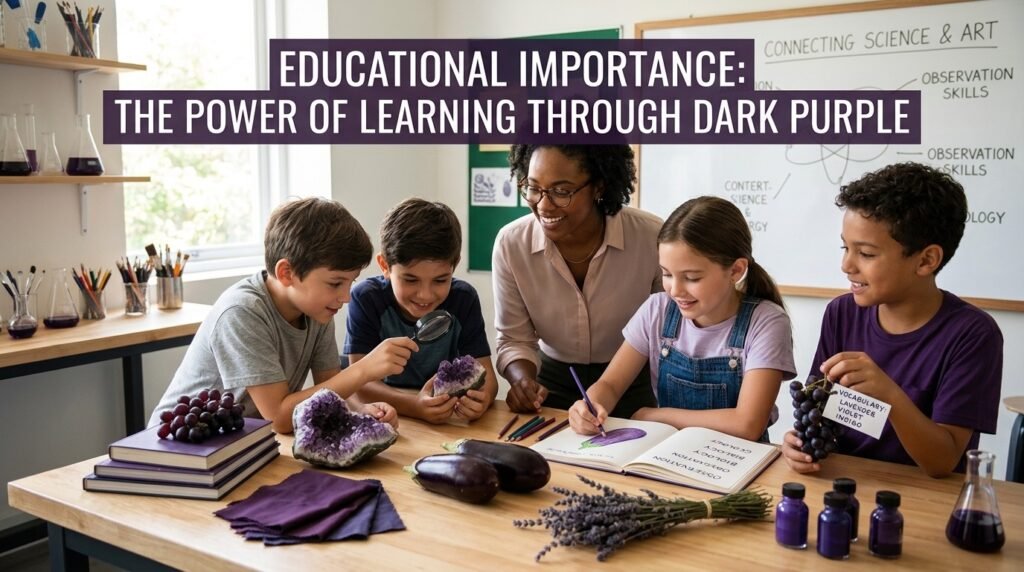
Learning about things that are dark purple helps children and learners improve observation skills while connecting science, nature, art, and language. Studying colors encourages curiosity about biology, chemistry, geology, and visual design.
Color-based learning also strengthens vocabulary and helps students identify patterns in the natural world.
FAQs
Why are some fruits dark purple?
Most Deep Purple fruits contain high levels of anthocyanins, pigments that produce red, blue, and purple colors.
Why is amethyst purple?
Amethyst gets its color from trace iron impurities combined with natural geological processes.
Why do flowers develop Deep Purple petals?
Dark pigments attract pollinators and may help protect plant tissues from environmental stress.
Why is purple associated with royalty?
Historically, purple dyes were rare and expensive, making them symbols of wealth and status.
Are Deep Purple foods healthy?
Many Deep Purple foods contain antioxidants and beneficial plant compounds linked to overall health.
Why are purple animals uncommon?
Many animals rely on camouflage colors, while purple pigmentation is more common in flowers, fruits, and marine species.
Final Thoughts
Things That Are Dark Purple reveal just how fascinating color can be. From amethyst gemstones and elegant flowers to nutritious fruits, exotic animals, and modern technology, Deep Purple appears in remarkable forms throughout our world. Its connection to luxury, creativity, and mystery has made it one of the most admired colors across cultures. By exploring these examples, we gain a deeper appreciation for the science, beauty, and diversity hidden within everyday color.