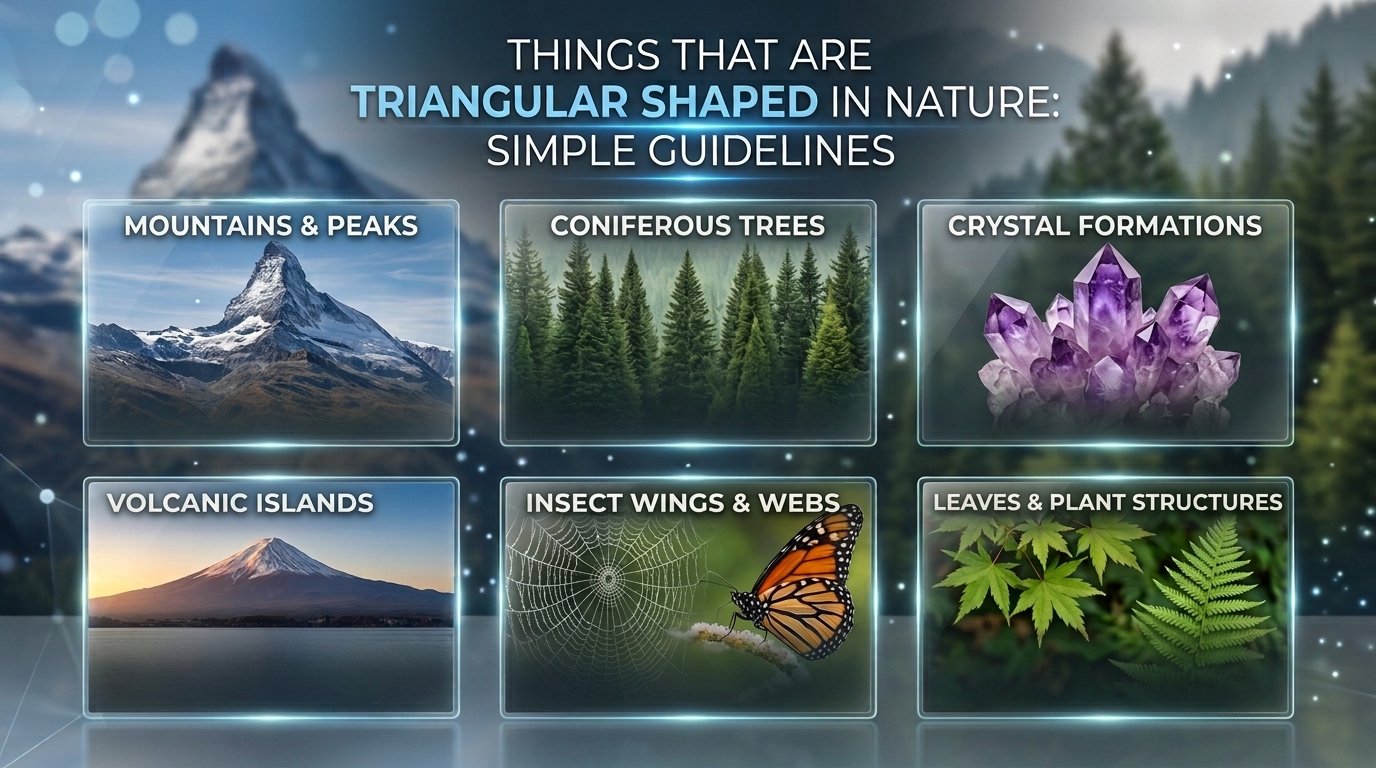
Things That Are Triangular Shaped appear in surprising places, from mountain peaks and leaves to crystals, animals, and human-made designs that humans create by taking inspiration from nature. A triangle is one of the most recognizable geometric forms, often representing strength, balance, direction, and stability. In many cultures, triangular forms are connected with growth, harmony, and energy.
This guide explores more than 80 examples of triangular forms across nature, science, food, technology, and everyday life. These examples show how this simple shape appears in the natural world and how humans use it for practical and creative purposes.
Why Triangular Forms Are So Special and Unique
Triangles are among the strongest geometric structures because their three sides create a stable framework. This is why triangles appear in natural formations such as mountain peaks, crystals, and animal features.
In nature, triangular patterns often develop because of growth processes, physical forces, or evolutionary advantages. Leaves may grow into pointed shapes to capture sunlight, while animals may use triangular markings for camouflage or communication.
Did you know? The triangle is the only polygon that cannot change shape without changing the length of its sides, making it extremely useful in engineering and architecture.
Things That Are Triangular Shaped in Nature
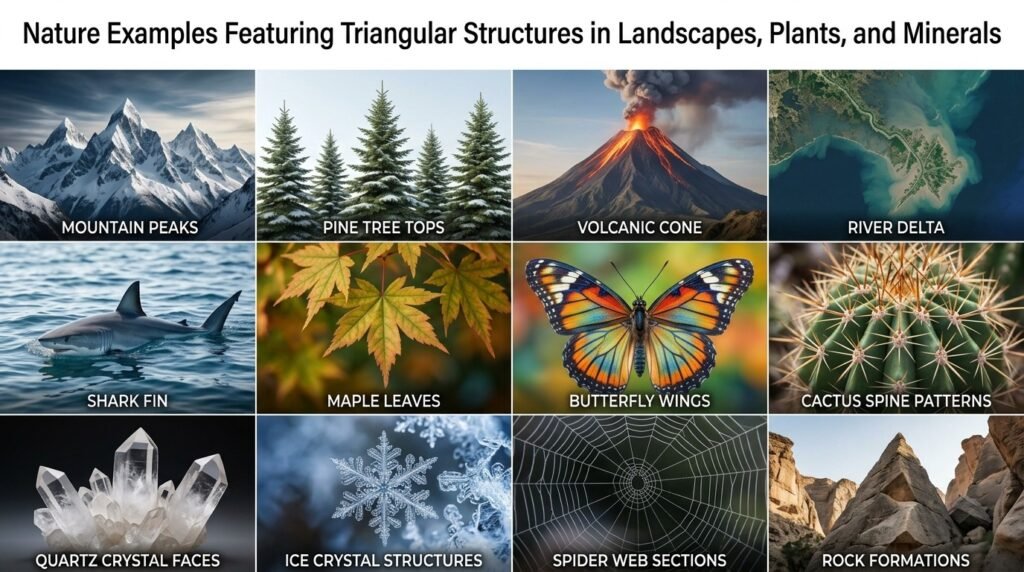
Here are some fascinating natural examples:
- Mountain Peaks – Many mountains form pointed triangular silhouettes because erosion and geological pressure create sharp slopes.
- Pine Tree Tops – Evergreen trees often have triangular outlines that help snow slide away and allow sunlight to reach lower branches.
- Shark Fins – The dorsal fin of many sharks creates a triangular shape that helps with stability while swimming.
- Maple Leaves – Many maple species have pointed leaves with three or more sharp sections forming a triangular appearance.
- Cactus Spines Arrangement – Some cactus structures create repeating triangular patterns for protection and water conservation.
- Quartz Crystal Faces – Certain quartz crystals develop pointed geometric faces because of natural mineral growth.
- Volcanic Cones – Volcanoes often create triangular profiles as lava and ash build upward over time.
- Delta Landforms – River deltas commonly spread into triangular patterns where water deposits sediment.
- Butterfly Wings – Many butterfly wings contain triangular patches and markings created by scales reflecting light.
- Ice Crystal Structures – Snowflakes and ice formations can include triangular geometric patterns during freezing.
- Spider Web Sections – Some web designs contain triangular spaces created by the arrangement of silk strands.
- Rock Formations – Weathering and erosion can naturally carve triangular edges into cliffs and stones.
Everyday Objects With Triangular Shapes
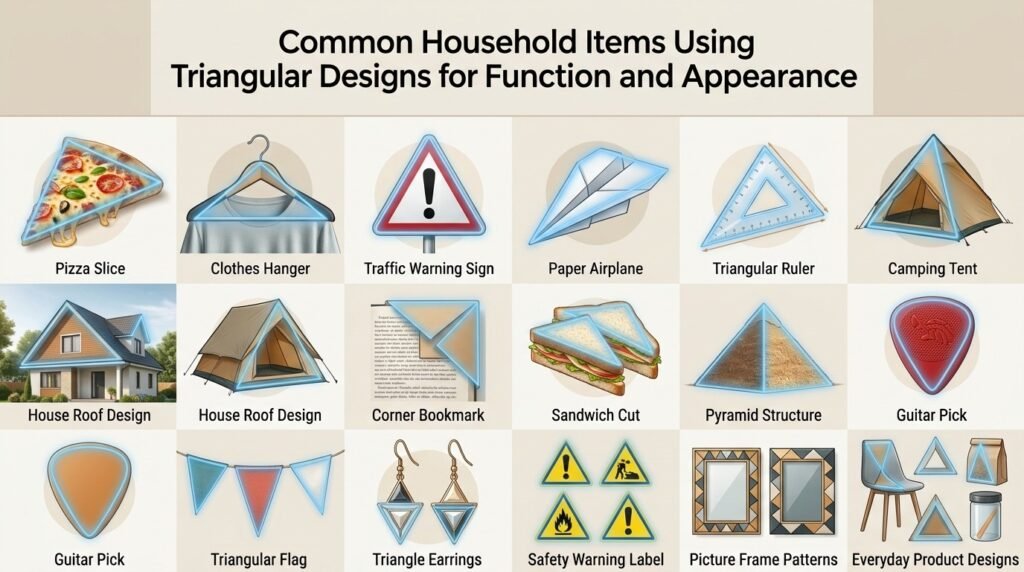
Triangles are common in daily products because they provide strength and visual balance.
- Pizza slices – A classic triangular food shape created from circular pizzas.
- Clothes hangers – Their triangular frame supports clothing weight.
- Traffic signs – Warning signs often use triangles for quick recognition.
- Paper airplanes – Folded designs use triangular surfaces for flight.
- Rulers – Some measuring tools have triangular cross-sections.
- Tents – Many camping tents use triangular structures for stability.
- Roof designs – Roof peaks commonly create triangular profiles.
- Bookmarks – Corner bookmarks often use folded triangular designs.
- Sandwich cuts – Many sandwiches are sliced into triangles.
- Pyramids – Famous structures use triangular faces.
- Musical picks – Guitar picks commonly use rounded triangular forms.
- Flags – Some decorative flags use triangular shapes.
- Earrings – Many jewelry designs feature triangles.
- Warning labels – Safety symbols often use triangles.
- Picture frames – Decorative frames may include triangular patterns.
Triangular Shaped Food
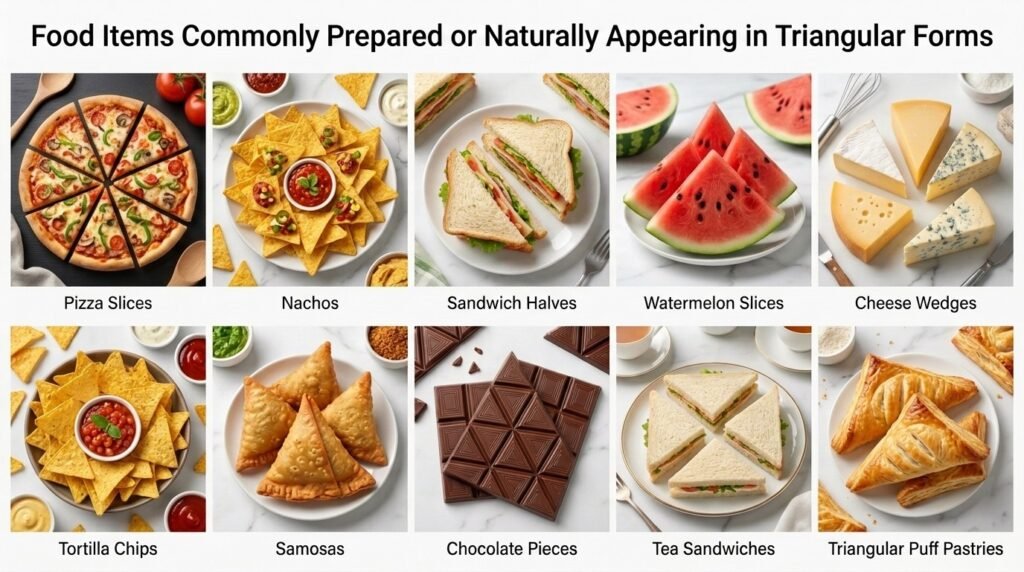
- Pizza Slices – The most famous triangular-shaped food example worldwide.
- Nachos – People commonly cut corn chips into triangular pieces.
- Sandwich Halves – People often cut sandwiches diagonally to create triangular halves.
- Watermelon Slices – Large wedges naturally create triangular pieces.
- Cheese Wedges – Many cheeses are served as triangular portions.
- Tortilla Chips – Their shape makes them easy to dip and share.
- Samosas – This popular snack has a triangular pastry design.
- Chocolate Pieces – Some chocolate bars are manufactured with triangular sections.
- Tea Sandwiches – Traditional afternoon tea sandwiches often use triangular cuts.
- Puff Pastry Shapes – Bakers frequently create triangular pastries.
Fun Fact: The triangular shape of pizza slices is not just a tradition; it helps people divide a large circular pizza into easy-to-hold portions.
Science and Technology Uses of Triangular Designs
Engineering Structures
Triangles are widely used in bridges, towers, and buildings because they distribute forces efficiently.
Aerospace Technology
Aircraft wings and spacecraft components often include triangular designs to improve aerodynamics and strength.
Medical Imaging
Some medical equipment uses geometric arrangements to organize sensors and create accurate measurements.
Computer Graphics
Triangles are the basic building blocks of many 3D models because computers can process them efficiently.
Solar Technology
Some solar panel arrangements use triangular layouts to maximize available space and energy collection.
Why Industries Prefer Triangular Designs
Companies often choose triangular designs because they communicate:
- Strength – Triangles appear stable and dependable.
- Progress – Pointing upward can suggest growth and improvement.
- Direction – Sharp points create a sense of movement.
- Modern style – Geometric designs often feel innovative.
Industries using triangular imagery include:
- Architecture
- Automotive design
- Technology companies
- Sports brands
- Construction businesses
- Education platforms
Interesting Facts About Triangular Shapes
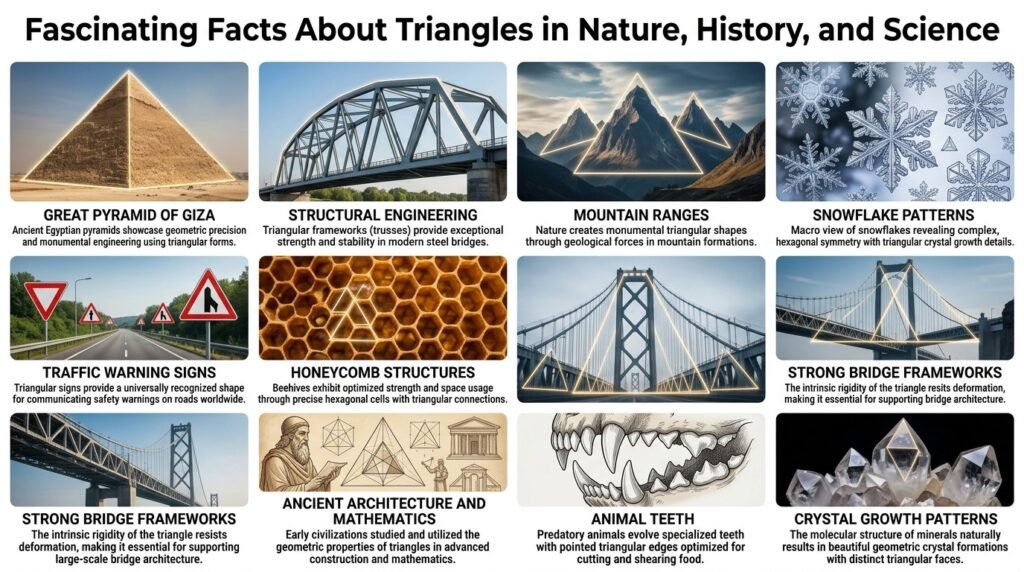
- The Great Pyramid of Giza has four triangular outer faces.
- Triangles are essential in structural engineering.
- Many mountain ranges appear triangular from a distance.
- Snowflakes can develop geometric patterns with triangular elements.
- Triangular road signs are internationally recognized warning symbols.
- Honeycomb structures sometimes include angular patterns.
- The strongest bridge designs often use triangle frameworks.
- Ancient civilizations used triangles in architecture and mathematics.
- Some animal teeth have pointed triangular edges for cutting food.
- Triangles appear frequently in crystals because of mineral growth patterns.
FAQs About Triangular Forms
Why do mountains look triangular?
Mountains often appear triangular because erosion, weather, and geological forces create steep slopes and pointed peaks.
Why are triangles strong?
Triangles are strong because their three sides create a stable structure that resists bending and movement.
Why do leaves have pointed shapes?
Many leaves develop pointed forms to improve sunlight collection and help water flow away.
Why do animals have triangular ears?
Triangular ears can improve hearing ability by helping animals detect sounds from different directions.
Why are triangles common in architecture?
Architects use triangles because they provide strength, stability, and attractive designs.
Are triangular shapes found outside Earth?
Yes, scientists have observed geometric patterns and pointed formations in natural structures throughout space and across different planetary environments.
Final Thoughts about Triangular Shaped
Things That Are Triangular Shaped reveal how a simple geometric form connects nature, science, and human creativity. From mountains and animals to technology and everyday objects, triangles appear because they provide strength, balance, and efficiency.
Exploring these examples helps us understand that geometry goes beyond textbooks—it surrounds us in the world we see and interact with every day.