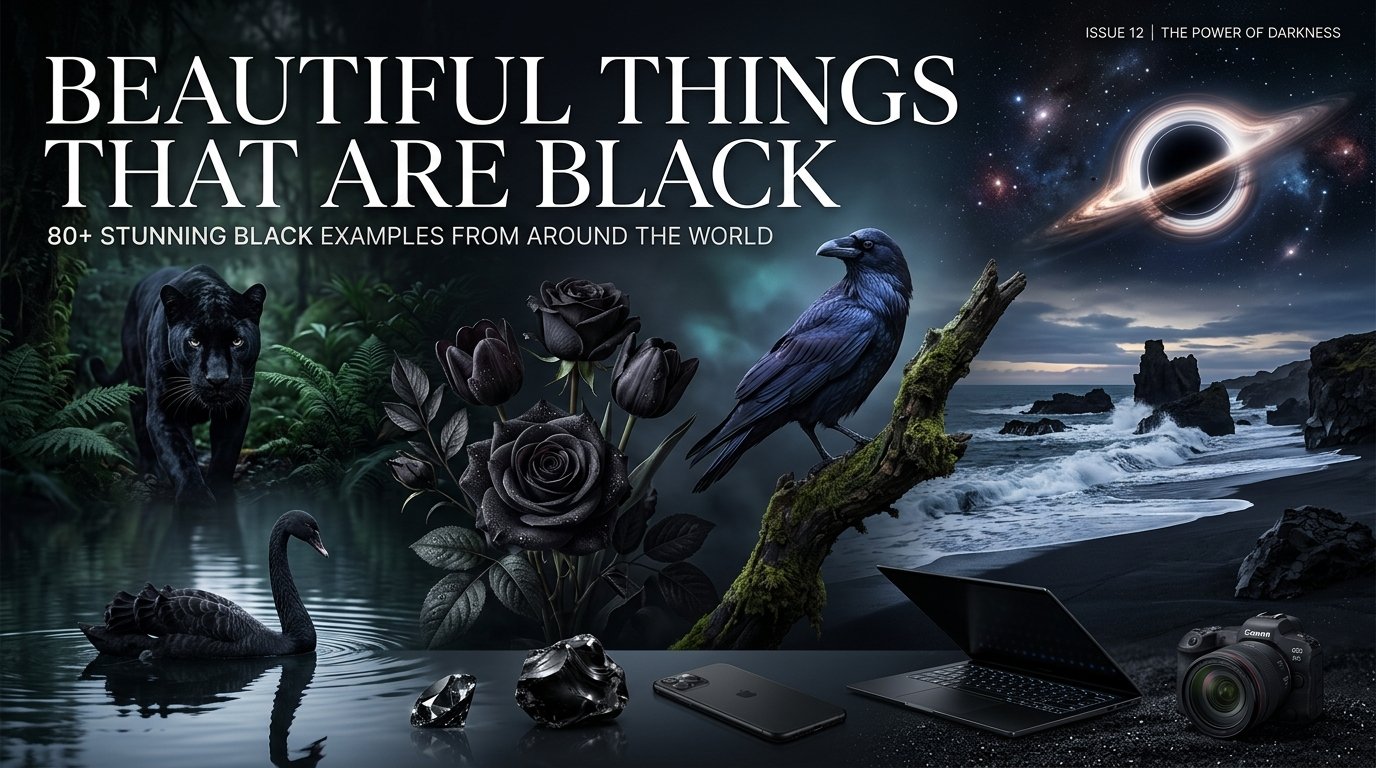
Things that are black appear everywhere, from the natural world to modern technology, fashion, and everyday objects. This powerful shade is often connected with elegance, mystery, strength, sophistication, and authority. Across different cultures, it can represent both luxury and simplicity.
From deep oceans and rare minerals to birds, animals, foods, and innovative technology, this guide explores more than 80 stunning examples of this fascinating color. You will discover how nature creates dark shades, why people are attracted to them, and how industries use them to create memorable designs.
Why Black Is So Special and Unique
Black is created when an object absorbs most visible light instead of reflecting it back to our eyes. Unlike many bright colors that come from specific wavelengths, this shade often results from the absence of reflected light.
In nature, true darkness is relatively uncommon compared with colors like green or brown. Many creatures and materials appear dark because of pigments, microscopic structures, or light absorption properties.
Did you know? Some animals that appear completely dark actually use tiny structures in their feathers, scales, or skin to control how light is scattered.
Things That Are Black in Nature:
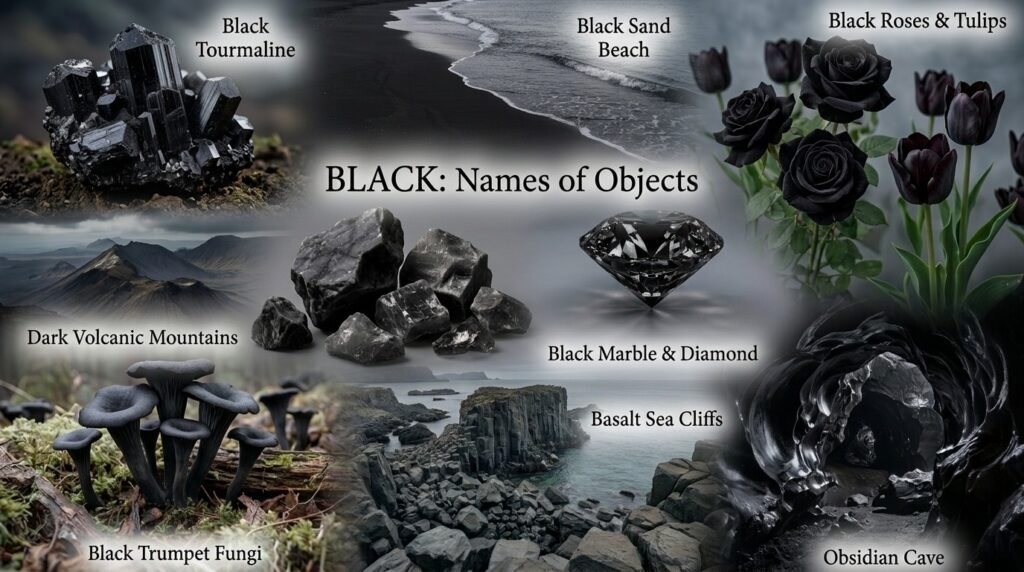
- Obsidian – A volcanic glass formed when lava cools quickly, creating a shiny dark surface.
- Black sand beaches – Created from volcanic minerals and eroded lava fragments.
- Coal – A fossil fuel formed from ancient plant material compressed over millions of years.
- Black diamonds – Rare gemstones containing graphite and other mineral inclusions.
- Black roses – Certain rose varieties appear nearly dark due to concentrated pigments.
- Black tulips – Specially bred flowers with deep purple pigments that look almost dark.
- Black mushrooms – Several fungi species develop dark caps or surfaces as they mature.
- Charcoal – Produced by heating wood with limited oxygen, leaving carbon-rich material.
- Black caves – Deep cave environments often appear dark because sunlight cannot reach them.
- Black volcanic rocks – Basalt and similar rocks commonly have dark mineral compositions.
Birds With Black Coloration
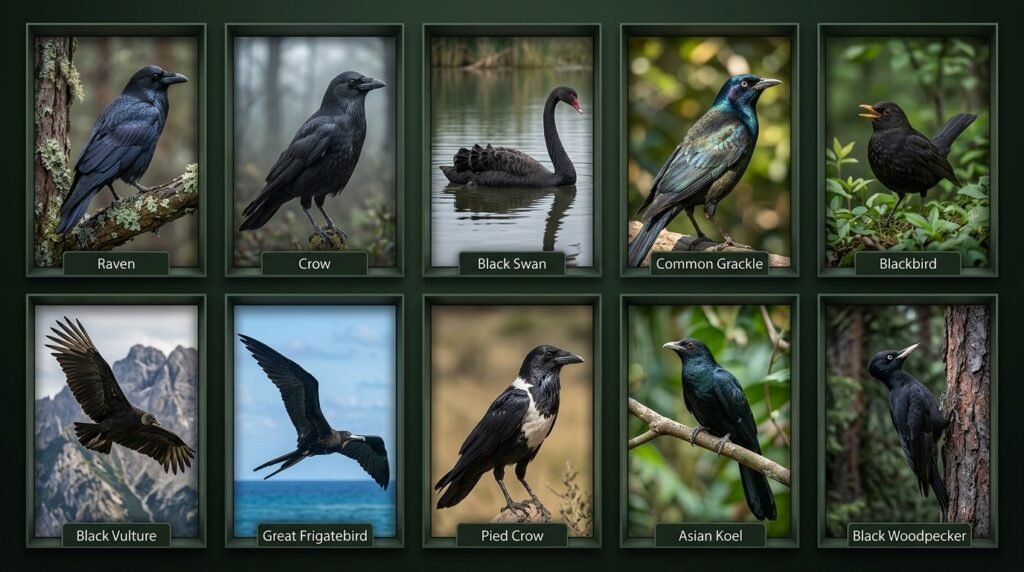
- Raven – Known for glossy feathers that can reflect blue and purple tones.
- Crow – A highly intelligent bird with dark plumage found worldwide.
- Black swan – Famous for its dark feathers and elegant appearance.
- Common grackle – Displays shiny feathers with colorful reflections.
- Blackbird – A familiar songbird with dark body feathers.
- Black vulture – A large scavenger with dark wings and body.
- Great frigatebird – Males have dark feathers and impressive throat displays.
- Pied crow – Features dark feathers combined with lighter markings.
- Asian koel – Males often have glossy dark plumage.
- Black woodpecker – A large forest bird with mostly dark feathers.
Animals With Black Coloration
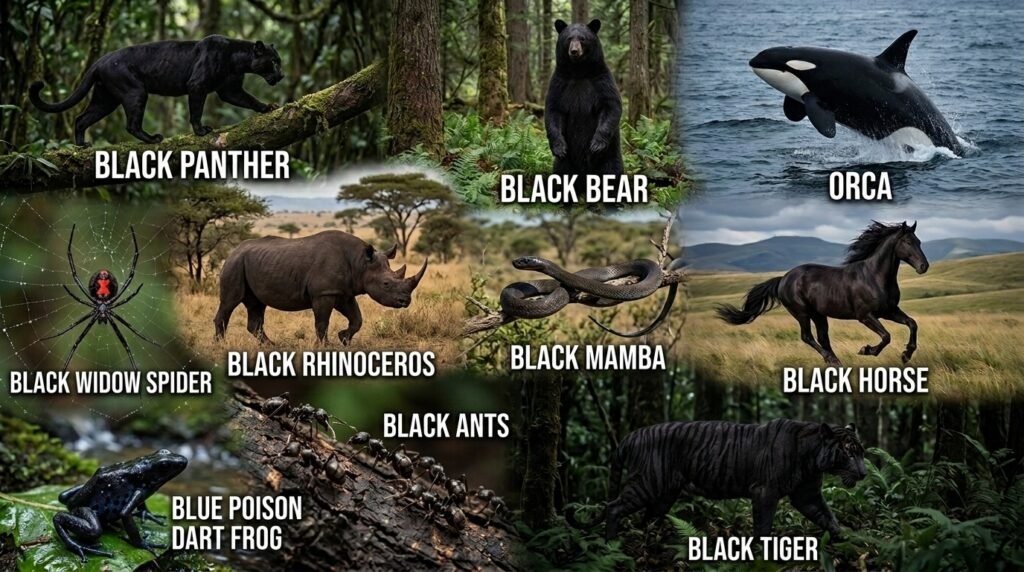
- Panther – A dark-coated leopard or jaguar caused by excess melanin.
- Bear – A widespread mammal with dark fur in many regions.
- Mamba – A venomous snake named for its dark mouth interior.
- Orca – A marine mammal recognized by its dark-and-white pattern.
- Black rhinoceros – A large African herbivore with grayish-dark skin.
- Widow spider – Known for its dark body and distinctive markings.
- Ant – Many ant species develop dark protective exoskeletons.
- Black tiger – Extremely rare dark-patterned tigers caused by genetic variation.
- Stallion – Horses with a naturally dark coat are admired worldwide.
- Black frog – Some frog species develop dark skin for camouflage.
Everyday Objects That Are Black

Dark designs are popular because they often look modern, practical, and premium. Many products use this shade because it hides dirt, creates contrast, and gives a professional appearance.
- Smartphones
- Laptops
- Keyboards
- Television screens
- Cameras
- Watches
- Sunglasses
- Wallets
- Backpacks
- Shoes
- Jackets
- Cars
- Furniture
- Office chairs
- Pens
- Notebooks
- Headphones
- Kitchen appliances
- Water bottles
- Picture frames
Foods That are Black

- Blackberries – Berries rich in natural pigments called anthocyanins.
- Black rice – A grain with dark coloring caused by plant pigments.
- Black sesame seeds – Used in Asian cuisine for flavor and decoration.
- Olives – Mature olives develop darker skin as they ripen.
- Black tea – Gets its color from oxidation during processing.
- Coffee – Appears dark because roasted beans release rich compounds.
- Black garlic – Made by aging garlic under controlled heat and humidity.
- Lentils – Small dark legumes used in many dishes.
- Black truffles – Rare fungi valued for their strong aroma.
- Cocoa – A highly processed cocoa powder with a deep appearance.
Fun fact: Black garlic becomes dark because natural sugars and amino acids react during aging, creating new flavors and aromas.
Science and Technology Applications

Solar Technology
Dark surfaces are often used in solar equipment because they absorb more light energy. This helps improve heat collection in certain solar systems.
Medical Imaging
Dark contrast materials can help doctors identify structures inside the body during imaging procedures.
Space Technology
Many spacecraft use dark coatings to manage heat absorption and reduce unwanted reflections.
Industrial Materials
Carbon-based materials are used in batteries, filters, electronics, and advanced manufacturing.
Photography
Professional cameras and studio equipment often use dark finishes to reduce unwanted light reflections.
Why Industries and Brands Prefer Black
Many companies choose this color because it communicates:
- Luxury – Common in premium fashion and automotive industries.
- Power – Often associated with confidence and authority.
- Professionalism – Frequently used in business products.
- Modern style – Popular in technology and interior design.
- Simplicity – Creates clean and timeless visuals.
Industries that commonly use this color include fashion, technology, automotive, cosmetics, luxury goods, and architecture.
Interesting Facts About Black
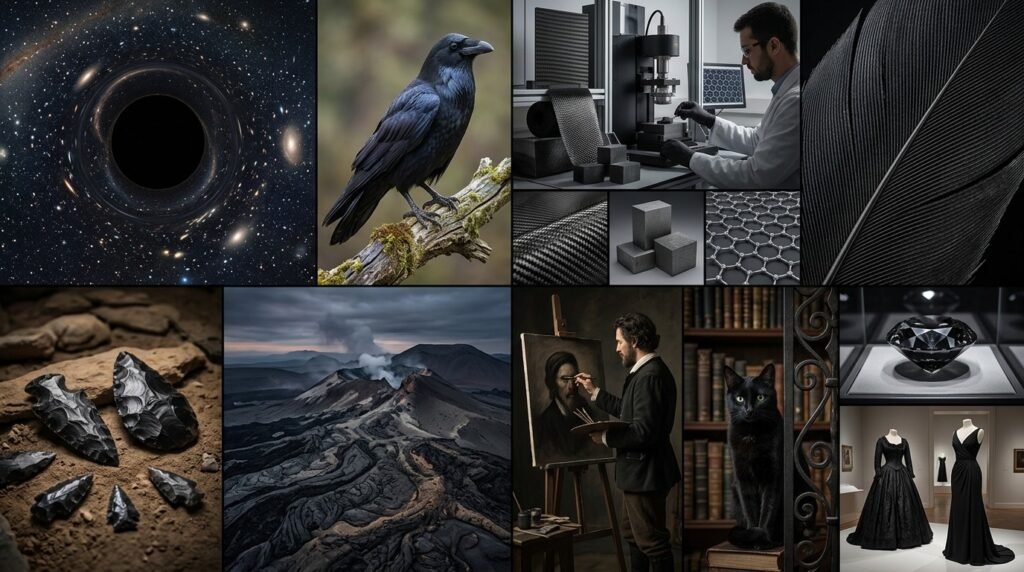
- Black diamonds are among the rarest diamond varieties.
- Ravens can solve complex problems and use advanced intelligence.
- Obsidian tools were used by ancient civilizations.
- Black cats have appeared in myths and folklore around the world.
- Carbon is one of the most important elements associated with dark materials.
- Black holes absorb light because their gravity prevents escape.
- Dark pigments have been used in art for thousands of years.
- Black clothing became strongly connected with fashion and elegance.
- Volcanic landscapes often create dramatic dark scenery.
- Dark feathers can shine because of microscopic feather structures.
Educational Importance
Learning about colors helps children and learners improve observation skills, vocabulary, and scientific understanding. Exploring natural examples connects subjects like biology, chemistry, geography, and art.
Studying colors also encourages curiosity about how materials, animals, and environments interact with light.
FAQs About Things That Are Black
Why do some animals have black coloring?
Many animals develop dark coloration because of melanin, which can provide camouflage, protection, or help with communication.
Why are some rocks dark?
Rocks may appear dark because of minerals such as iron, magnesium, or carbon compounds.
Why do black clothes feel warmer in sunlight?
Dark materials usually absorb more light energy, which can convert into heat.
Why are black diamonds dark?
Their appearance comes from mineral inclusions and graphite within the diamond structure.
Why is space called black?
Space appears dark because there is very little matter to scatter visible light.
Why do brands use dark colors?
Companies often choose dark shades because they suggest elegance, reliability, and premium quality.
Final Thoughts
The world is filled with fascinating examples of dark beauty, from natural landscapes and wildlife to technology and everyday designs. These examples show that color is more than appearance — it reflects science, culture, creativity, and human imagination.
Exploring things that are black reveals how nature and innovation use light, materials, and design in remarkable ways. This timeless shade continues to inspire artists, scientists, designers, and people around the world.