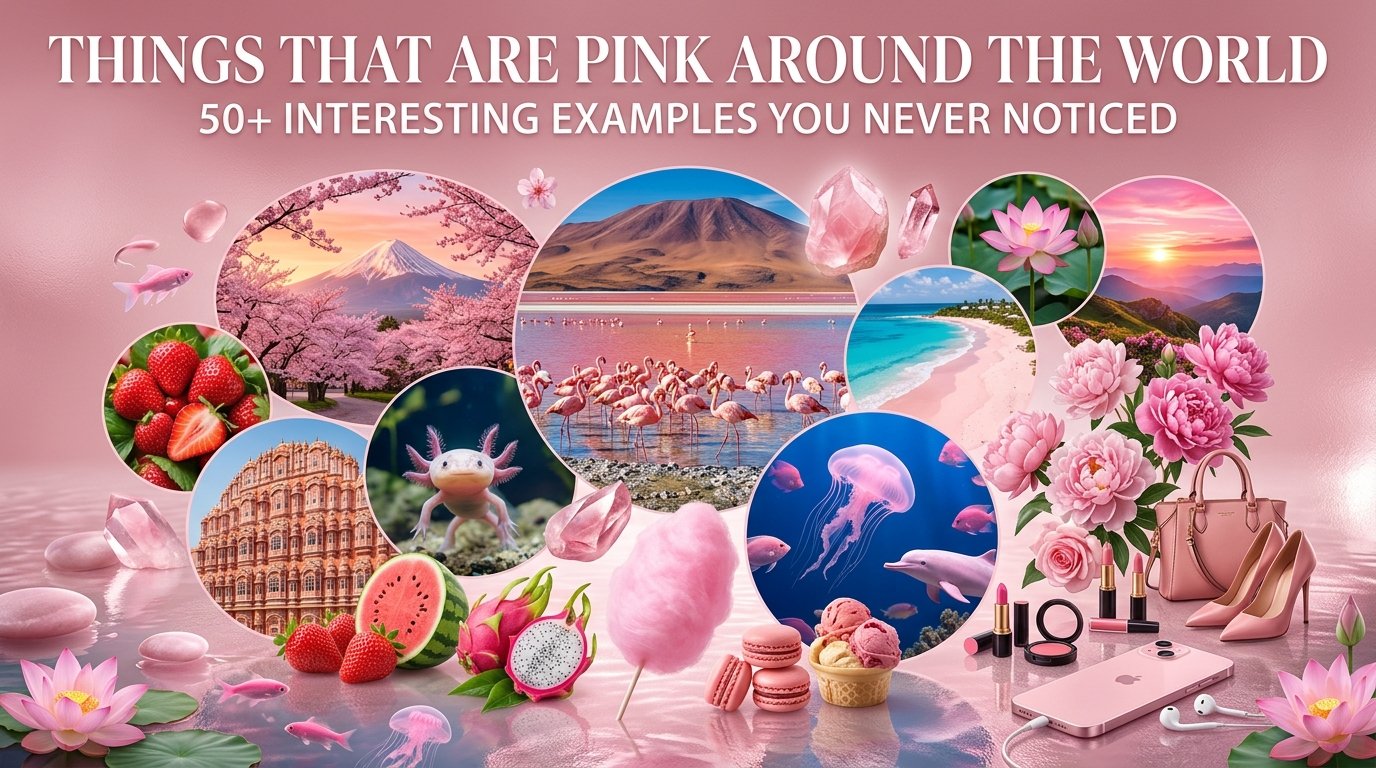
From delicate flowers to rare animals and everyday objects, things that are pink appear in more places than most people realize. This soft yet eye-catching hue has fascinated humans for centuries because it represents beauty, kindness, creativity, and emotion across many cultures.
The rosy shade is often linked with love, calmness, compassion, and playfulness. In nature, this color can come from natural pigments, reflected light, minerals, and biological processes. From tropical landscapes to modern technology, this guide explores 90+ fascinating examples found around the world.
Why Pink Is So Special and Unique
The appearance of this color in nature is created through different scientific processes. Some plants and animals produce special pigments called anthocyanins, which can create red, purple, and rosy shades depending on chemical conditions.
In other cases, the color comes from how light interacts with surfaces. Certain animals appear colorful because of microscopic structures that reflect specific wavelengths of light.
Did you know? Flamingos do not naturally develop their famous color at birth. Their feathers become brighter because of carotenoid pigments found in their diet.
Things That Are Pink in Nature:
Nature provides some of the most amazing examples of this unique shade. From minerals to landscapes, these examples show how diverse natural coloring can be.
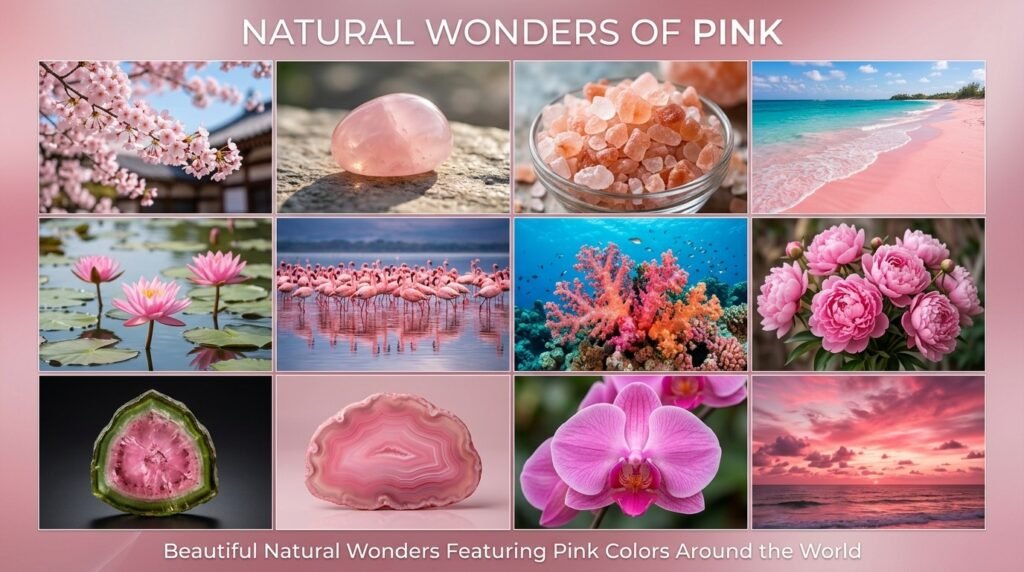
- Cherry Blossoms
Cherry blossom trees are famous for their soft petals that bloom in spring. Their gentle color comes from natural plant pigments called anthocyanins. - Rose Quartz
Rose quartz is a popular gemstone known for its pale rosy appearance. Scientists believe tiny amounts of minerals such as titanium or iron contribute to its color. - Himalayan Salt
Some Himalayan salt crystals display a blush tone because of trace minerals trapped inside the salt structure. - Pink Sand Beaches
Certain beaches around the world have naturally colored sand created by tiny marine organisms, coral fragments, and shells mixing with regular sand. - Lotus Flowers
Lotus blooms often appear in soft shades ranging from white to deep rosy tones. They are culturally important symbols of purity and beauty. - Flamingo Lakes
Some lakes become famous for their colorful appearance because of algae and microorganisms that influence water reflections. - Pink Coral
Certain coral species display beautiful warm tones due to natural pigments and their relationship with marine environments. - Peonies
These garden flowers are admired for their large, layered petals and wide range of rosy shades created by plant pigments. - Watermelon Tourmaline
This gemstone displays multiple colors, including a rosy center, because of changing mineral conditions during formation. - Sunsets
Some sunsets appear with pink and reddish tones when sunlight passes through atmospheric particles and scatters different wavelengths.
Birds That Display This Color
Birds use bright feathers for communication, attracting mates, and species recognition. Many colorful birds get their appearance from pigments in their food.
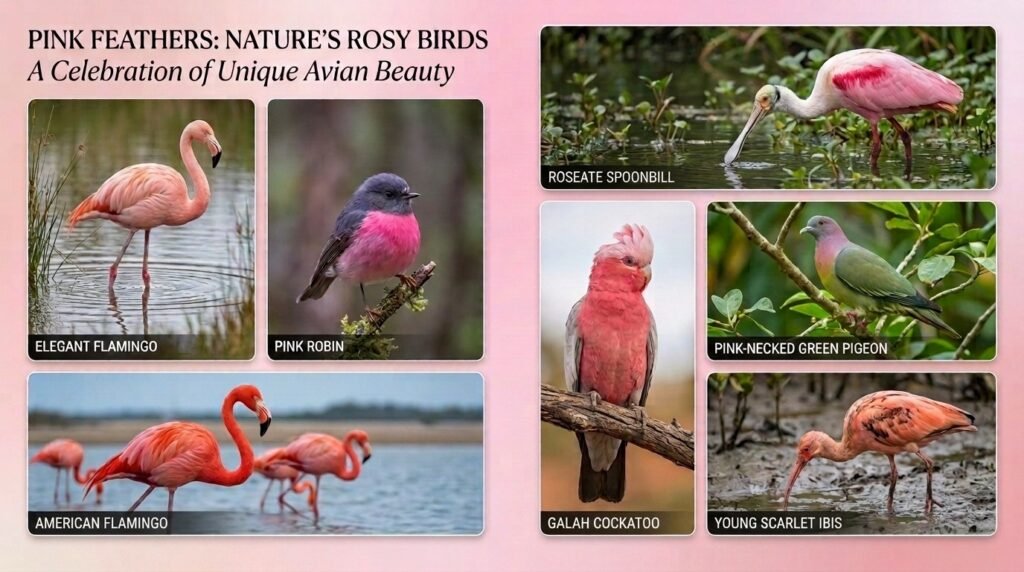
- Flamingo
Flamingos develop their famous rosy feathers from carotenoids found in algae and small aquatic organisms. - Roseate Spoonbill
This beautiful bird has bright feathers influenced by pigments in its diet and is found in wetlands. - Pink Robin
Native to Australia, the male pink robin has a soft rosy breast that helps distinguish it from other birds. - Galah Cockatoo
This Australian parrot combines gray feathers with a bright rosy chest and face. - Rosy Maple Moth
Although technically an insect rather than a bird, this species is often admired alongside colorful wildlife because of its bright appearance. - Pink-necked Green Pigeon
This bird features a distinctive rosy neck area along with green body feathers. - American Flamingo
Found in parts of the Caribbean, this species is known for its vibrant feathers and curved bill. - Scarlet Ibis (Young Birds)
Some juvenile birds display softer warm shades before developing their adult coloration.
Animals With Pink Coloring
Many animals use bright shades for survival, communication, or attracting attention.
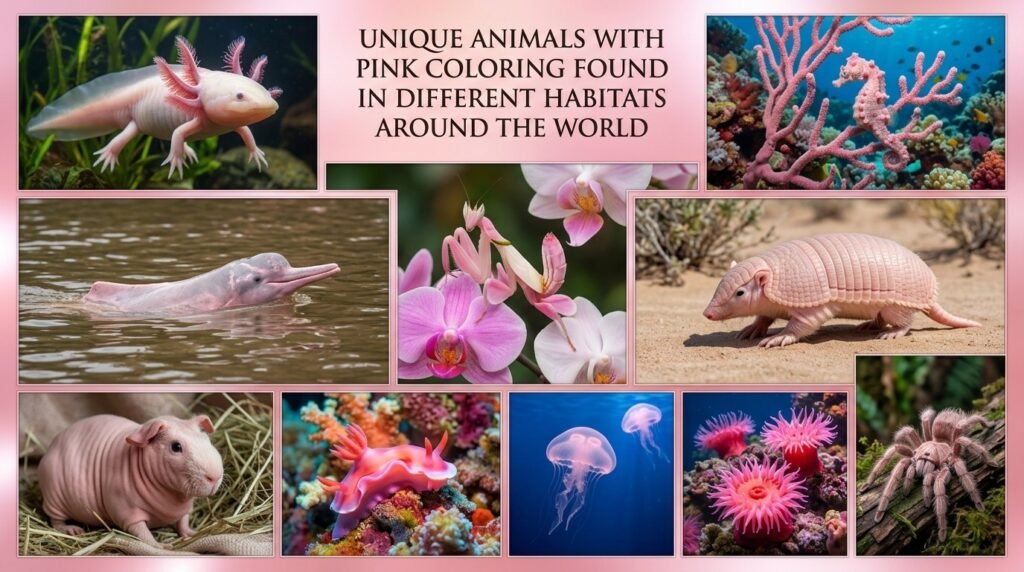
- Axolotl
The albino axolotl variety has a pale rosy body and visible external gills. - Pygmy Seahorse
Some pygmy seahorses blend into coral environments with soft rosy patterns. - Pink River Dolphin
The Amazon river dolphin can develop a lighter body color as it ages. - Nudibranchs
Certain sea slugs display bright shades as a warning or camouflage strategy. - Orchid Mantis
This insect can appear in rosy tones, helping it blend among flowers. - Hairless Guinea Pig
Some varieties have exposed skin that gives them a soft rosy appearance. - Pink Fairy Armadillo
This rare desert animal from Argentina has a pale shell with a rosy tint. - Sea Anemones
Some species show bright colors because of pigments and relationships with marine organisms. - Pink Toe Tarantula
Young individuals may show lighter coloring on their legs and body. - Certain Jellyfish Species
Some jellyfish appear rosy because of natural pigments and light reflection in water.
Everyday Objects That Are Pink
Many daily items use this color because it creates feelings of comfort, friendliness, and creativity. Designers often choose soft or bright shades to make products look attractive and memorable.

Clothing and Fashion Items
Shirts, dresses, shoes, and accessories often use rosy shades because they are associated with style and self-expression.
Notebooks and Stationery
Pens, journals, folders, and school supplies frequently use this color to create a cheerful appearance.
Toys
Many children’s toys feature bright shades because they are visually appealing and easy to recognize.
Water Bottles
Reusable bottles often come in pastel colors to create a stylish and personalized look.
Phone Cases
Mobile covers use soft tones because they give devices a fashionable appearance.
Balloons
Celebration decorations commonly include this shade for birthdays, parties, and special events.
Gift Wrapping Paper
Decorative paper often uses rosy designs because they create a warm and elegant feeling.
Candles
Scented candles frequently use soft colors to match relaxing themes.
Kitchen Accessories
Cups, plates, and utensils may feature this color for a playful or vintage style.
Beauty Products
Makeup packaging, brushes, and skincare containers commonly use it because it represents beauty and care.
Headphones
Many electronic brands create colorful versions of headphones to attract younger audiences.
Furniture Details
Chairs, cushions, and home decorations may use this shade to create cozy interiors.
Greeting Cards
Designers often choose this color for romantic, friendship, and celebration cards.
Lamps and Decorations
Decorative lighting can create a soft atmosphere with rosy tones.
Bedding and Fabrics
Blankets, pillows, and curtains often use this color for comfortable and welcoming spaces.
Food Examples With This Color
Many foods naturally contain pigments that create beautiful rosy shades. Others are colored through traditional preparation methods.
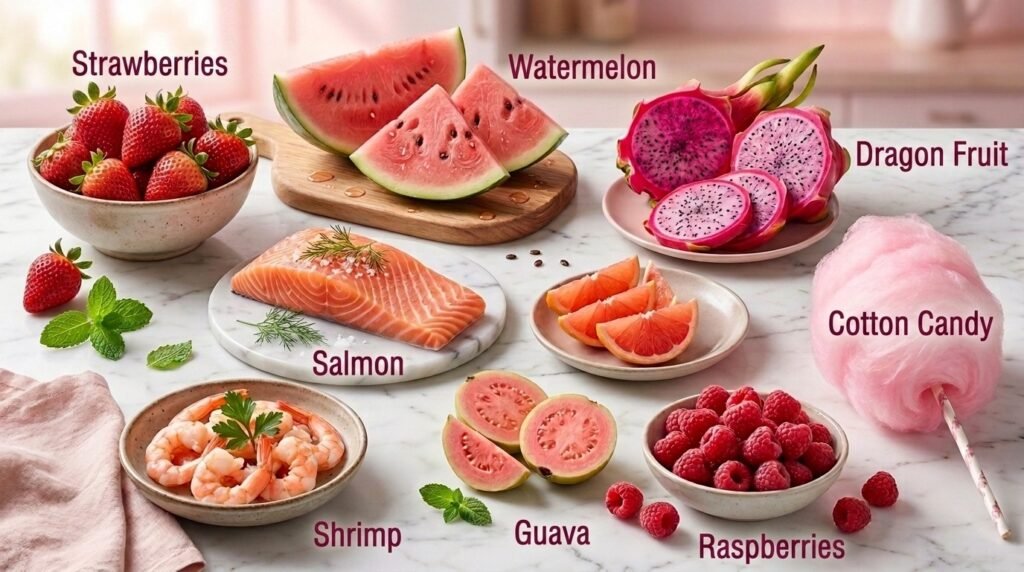
Strawberries
These popular fruits get their bright appearance from natural pigments called anthocyanins.
Watermelon
The inner flesh contains lycopene, a pigment responsible for its red-pink appearance.
Salmon
Wild salmon develops its color from carotenoids found in its diet.
Dragon Fruit
Some varieties have bright flesh because of natural compounds called betalains.
Grapefruit
Ruby grapefruit contains pigments that create its warm rosy color.
Shrimp
Cooked shrimp turns rosy because heat changes the structure of carotenoid pigments.
Guava
Certain varieties contain natural pigments that create a soft pink interior.
Raspberries
Their color comes from anthocyanins found inside the fruit.
Cotton Candy
This popular treat is often made in bright shades for celebrations.
Science and Technology Applications
Medical Imaging Dyes
Certain fluorescent dyes used in laboratories help scientists observe cells and biological processes. These compounds can glow in bright colors under specific types of light.
Cancer Research Technology
Researchers use fluorescent markers to track molecules inside living cells. Some markers produce rosy or red fluorescent signals that help scientists study diseases.
Lasers and Optical Technology
Certain laser systems use materials that produce visible wavelengths in the reddish-pink range. These technologies are used in research, communication, and measurement tools.
Industrial Safety Equipment
High-visibility materials sometimes include bright colors because they are easy for humans to notice. This improves visibility in workplaces and emergency situations.
Digital Displays
Modern screens create millions of colors by combining different light sources. The rosy shades we see on displays are produced through controlled combinations of red and blue light.
Why Industries and Branding Prefer Pink
Companies often use this color because of the emotions and ideas people commonly connect with it.
Common associations include:
- Kindness and compassion – Often used by organizations focused on care and support.
- Creativity and imagination – Popular among brands targeting artistic audiences.
- Beauty and elegance – Frequently used in cosmetics and fashion industries.
- Youthfulness and energy – Chosen for products designed for younger consumers.
- Softness and comfort – Used in wellness, lifestyle, and home products.
Industries that commonly use these shades include:

- Beauty and skincare
- Fashion
- Food and beverages
- Children’s products
- Lifestyle brands
- Health awareness campaigns
Interesting Facts About Pink
Image Caption: Fascinating facts and cultural highlights connected with pink shades
- The word “pink” originally referred to a type of flower before becoming the name of a color.
- Some flamingos can lose their bright feathers if their diet lacks carotenoid-rich foods.
- Rose quartz has been used as a decorative stone for thousands of years.
- In Japan, cherry blossoms are celebrated as symbols of beauty and temporary moments.
- Some minerals appear rosy because of tiny amounts of impurities inside their structure.
- Certain animals use bright colors to attract mates or warn predators.
- The color became strongly associated with fashion and design during the 20th century.
- Scientists study natural pigments to create new materials and technologies.
- Some deep-sea creatures display unusual colors because of special adaptations.
- Humans perceive colors differently depending on lighting conditions and surroundings.
Educational Importance of Learning About Colors
Exploring things that are pink helps children and learners develop observation skills and improve vocabulary. It connects different subjects, including biology, chemistry, geography, art, and environmental science.
Studying colors also encourages curiosity about how nature works and how humans use science to create products, technology, and designs.
FAQs About Pink Examples
Why are flamingos pink?
Flamingos get their color from carotenoid pigments found in their food, including algae and small aquatic organisms.
Why are some flowers pink?
Flowers produce different pigments, especially anthocyanins, which create various shades depending on their chemical structure.
Why is rose quartz pink?
Rose quartz gets its color from trace elements and microscopic mineral structures inside the crystal.
Why do some animals appear pink?
Animals may appear rosy because of pigments, diet, genetics, or light reflecting from their bodies.
Is pink a rare color in nature?
This color is less common than green or brown in nature, but it appears in many plants, animals, minerals, and landscapes.
Why do brands use pink in marketing?
Brands often choose it because people associate it with creativity, care, beauty, and positive emotions.
Final Thoughts
The world is filled with fascinating examples of things that are pink, from natural wonders and colorful wildlife to food, technology, and everyday objects. This shade shows how science, culture, and creativity connect in surprising ways.
Whether created by pigments, reflected light, or human design, these examples remind us that colors are more than simple visual experiences. They tell stories about nature, innovation, and the way people understand the world around them.