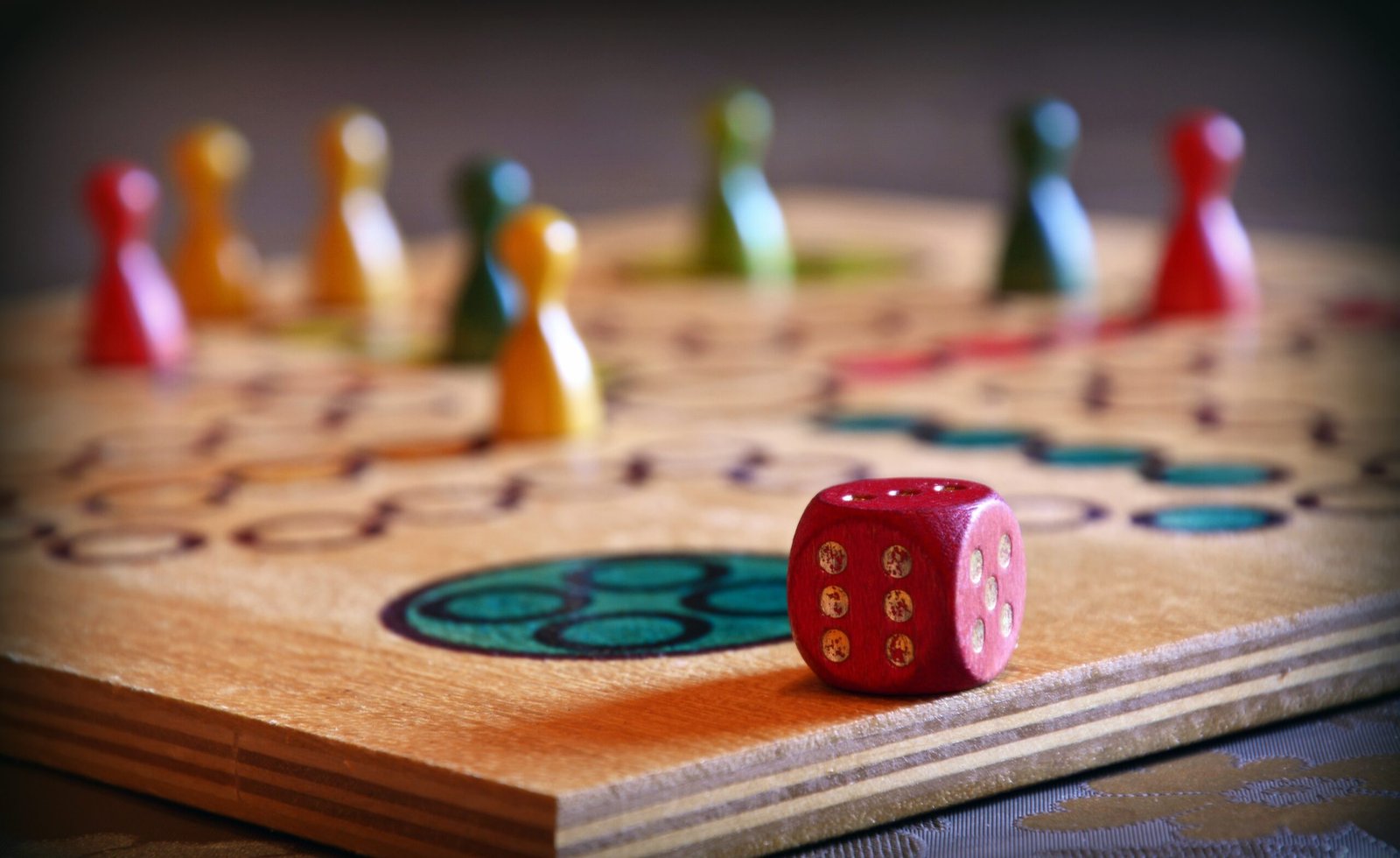
Sic Bo is a Chinese dice game played with three dice. A round takes a few seconds. The name is often translated as ‘precious dice.’ At first, the board looks crowded, but one roll settles it all.
What Sic Bo is
The game is also called Dai Siu or Tai Sai, names that point to ‘big small.’ Sources trace its roots to ancient China, with some research reaching back to the Han Dynasty. Not every lobby in the US has it. Some regulated casino apps do carry a live version. Evolution’s Super Sic Bo went live on New Jersey online casinos back in 2023. You’ll usually find it listed under live dealer or table games on apps that host it.
Table layout
Three standard six-sided dice go into a shaker, either electronic or manual. Players never touch them. Each roll is independent of the last, and every bet is settled by that one roll. A number that has missed ten rounds in a row is no more likely to show on the eleventh. The table has about 50 betting areas, grouped by bet type. Most of the clutter is just repetition: a box for every total and one for every pair of numbers.
Small and big
Small and big are the plain bets, with a house edge of about 2.78%. Small wins on totals from 4 to 10. Big takes 11 to 17. Each pays 1:1. Say the dice land 2, 3, and 4. That is a 9, so small wins and big loses.
Triples are the catch. Both small and big lose if three dice match. A roll of 5, 5, and 5 totals 15 and still loses big. The 3 and the 18 can only come from triples, so basically, neither bet ever covers them. The house edge comes from those losses. Six of the 216 possible rolls are triples, or 1 in 36, and that is exactly 2.78%.
Single numbers
Pick a number and the bet wins if it shows on at least one dice. On a typical table, one dice pays 1:1, two dice pay 2:1, and three dice pay 3:1. Backing the 4 and rolling 4, 4 and 2 pays 2:1. Rolling 4, 4 and 4 pays 3:1.
A combination bet picks two different numbers. Both must show on any two dice, and it pays 5:1. A double wins when two dice show the number picked, and some providers pay 10:1 for it. Paytables differ between operators, so read the one on screen.
Triples and totals
Any triple pays 30:1 at many tables. It shows up about once every 36 rolls, so fair odds would be 35:1. Pick a specific triple — say three fives, and you can expect the payout to be far bigger.
Totals pay by how rare they are. A 10 or an 11 comes up often because many dice combinations make them. A 4 or a 17 has only one combination, and some tables pay 60:1 for it. The house edge on these long shots can reach 10% to 20%.
Live dealer tables
Live Sic Bo is filmed in a studio and delivered like a show on a streaming service, with a host, a shaker, and a countdown for placing bets. Bets close before the shaker moves. Players bet on the outcome of a shake of three standard dice, just as at a physical table.
Evolution’s Super Sic Bo, which launched alongside Crazy Coin Flip, adds random multipliers to some betting spaces, up to 1,000x. The multipliers change what winning bets pay, so the usual paytable math does not apply. The studio behind the New Jersey launch is in Atlantic City.
Mobile play
Live tables run on phones, with the betting grid shrunk to fit. The internet connection matters more than screen size. Players used to streaming sports online know what a weak signal does to a feed. It freezes. In a game with timed betting windows, a frozen feed can cost a round. Wi-Fi is the safer choice.