
When it comes to understanding Arabic words in chats, habibti meaning can seem simple at first, but its exact feeling depends on the speaker, relationship, and situation. The Arabic word habibti generally means “my beloved,” “my dear,” or “my love” when addressed to a woman. People use it in romantic conversations, among family members, and sometimes between friends.
Habibti Meaning in Chat
The habibti meaning in chat is usually “my dear,” “my love,” or “my beloved” when someone addresses a female. The word comes from Arabic and carries a sense of affection or closeness.
In everyday messages, its meaning can change with context. A romantic partner may use it as an intimate term, while a parent, relative, or close friend may use it simply to show warmth.
For example:
- “Good morning, habibti.” → “Good morning, my dear.”
- “Are you okay, habibti?” → “Are you okay, my love?”
- “Thank you, habibti!” → “Thank you, dear!”
The English translation does not always capture the exact emotional tone. Arabic terms of affection often have a wider range of use than their closest English equivalents.
What Does Habibti Mean in Arabic?
In Arabic, habibti is written as حبيبتي. It is the feminine form of a common Arabic term of affection derived from the root associated with love and affection.
The word can be understood in parts:
- حبيب relates to a beloved or loved person.
- ـتي means “my” in this form.
- حبيبتي therefore means roughly “my beloved” or “my dear” when speaking to a woman.
The masculine form is حبيبي, commonly transliterated as habibi. That distinction is important because Arabic uses grammatical gender.
The word appears in many Arabic-speaking communities, although pronunciation, accent, and conversational habits can differ across countries. You may encounter it in messages, songs, movies, family conversations, and social media.
Habibti Meaning From a Woman to a Woman
When one woman says habibti to another woman, the phrase often expresses friendliness, affection, or emotional closeness rather than romance.
This usage can appear between:
- Female friends
- Sisters
- Mothers and daughters
- Female relatives
- Older and younger women
- Close acquaintances
For instance, a woman might write:
“You look beautiful today, habibti!”
Here, the speaker may simply be giving a warm compliment. The phrase does not automatically suggest a romantic relationship.
Another example is:
“Take care, habibti. See you tomorrow!”
In this situation, the term adds warmth to an ordinary farewell.
This broader use can surprise English speakers because words such as “my love” may sound more romantic in English. In Arabic, affectionate expressions can function naturally in family and friendship settings.
Habibti Meaning When a Man Says It
When a man calls a woman habibti, the meaning depends strongly on their relationship and the surrounding conversation.
In a romantic relationship, it can mean:
- My love
- My darling
- My beloved
- My dear
For example:
“I miss you, habibti.”
This message would usually sound affectionate and may have a romantic tone.
However, the word alone does not prove that the speaker is romantically interested. A man may also use affectionate language with female relatives or in friendly social situations, depending on his background and personal speaking style.
Look at the complete message rather than translating one word in isolation. Emojis, previous messages, relationship history, and the level of familiarity can all change how the expression feels.
Is Habibti Romantic?
Habibti can be romantic, but it is not exclusively romantic. Its emotional meaning depends on who says it, who receives it, and the context in which it appears.
A romantic message might look like:
“Good night, habibti. I love you.”
Here, the surrounding words make the romantic meaning clear.
A family message could be:
“Eat well, habibti, and call me when you get home.”
In that case, the expression can simply communicate care.
A friendly message could also use the term:
“You helped me so much, habibti. Thank you!”
Therefore, you should avoid assuming romance based only on the word. The relationship and conversation provide the strongest clues.
Habibti vs. Habibi
The main difference between habibti and habibi is the gender of the person being addressed.
| Arabic Term | Common Transliteration | Used For | General Meaning |
| حبيبتي | habibti | A woman | My dear / my love |
| حبيبي | habibi | A man | My dear / my love |
| حبيب | habib | Usually a male noun | Beloved/dear |
| حبيبة | habiba | Usually a female noun | Beloved/dear |
If someone addresses a woman, habibti is the feminine form. If someone addresses a man, habibi is commonly used.
This difference comes from Arabic grammatical gender. It does not mean that one form is more romantic than the other.
For English speakers, this distinction may feel unusual because English does not normally change “my dear” based on the gender of the person being addressed.
How to Pronounce Habibti
The pronunciation of habibti may vary slightly between Arabic dialects, but the basic form contains three main syllables.
habibti
ha-BEEB-tee
Add to flashcards
Give feedback
The middle part contains the long ee sound found in many transliterations of Arabic words with the letter ي. The final -ti signals the feminine possessive form in this expression.
You may also see alternative spellings online, such as:
- Habibti
- Habibaty
- Habibtiy
- Habibtee
These spellings attempt to represent Arabic sounds using English letters. Habibti is one of the most recognizable forms in online writing.
How People Use Habibti in Text Messages
People can use habibti in many different kinds of conversations. The exact meaning often comes from the sentence around it.
As a Greeting
Someone may begin a friendly message with the term:
“Hi, habibti! How are you?”
The expression makes the greeting warmer and more personal.
As a Term of Comfort
It can also appear when someone wants to comfort another person:
“Don’t worry, habibti. Everything will be okay.”
Here, the word adds emotional support.
As a Romantic Expression
A partner might write:
“I can’t wait to see you, habibti.”
The surrounding romantic context gives the word a more intimate meaning.
As a Friendly Expression
Friends can also use it casually:
“You made me laugh today, habibti!”
The word can simply express closeness and appreciation.
In Family Conversations
A mother, grandmother, sister, or another female relative may use affectionate Arabic terms with family members.
For example:
“Come home early, habibti.”
In this setting, the expression can communicate care rather than romance.
Why Context Matters So Much
Understanding habibti meaning requires more than finding a single English translation. Arabic expressions often carry emotional shades that depend on social relationships and conversational context.
Consider the phrase:
“Good night, habibti.”
It could mean:
- Good night, my love.
- Good night, dear.
- Good night, darling.
The correct interpretation depends on who sent it.
If a romantic partner sends it, “my love” may fit naturally. If a parent sends it to a daughter, “dear” may be more appropriate.
You can examine several clues:
- Who sent the message?
- Who received it?
- What is their relationship?
- What did they say before and after it?
- Did they use other romantic expressions?
- Is affectionate language normal in their culture or family?
These clues help you understand the intended tone without relying on a literal dictionary translation.
How to Reply When Someone Says Habibti
When someone says “habibti,” your reply should match the relationship and tone of the conversation. You can respond warmly with “Thank you,” “That’s sweet,” or “You’re so kind.” In a romantic chat, a more affectionate response can express similar feelings naturally. Your reply should match the relationship and tone of the conversation.
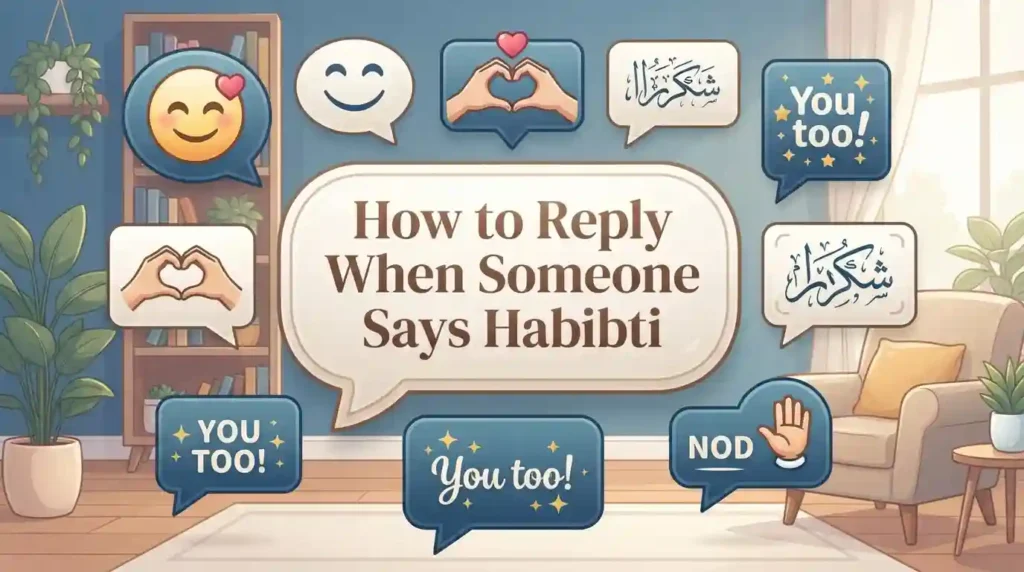
If the message is friendly, you can respond naturally with:
- “Thank you!”
- “Aww, thanks!”
- “You’re so sweet.”
- “Thanks, dear!”
If the conversation is romantic, a warmer response may fit:
- “That’s sweet of you.”
- “I miss you too.”
- “Good night, love.”
If you are unsure about the person’s intention, you do not need to assume anything. Simply continue the conversation naturally and look at the broader context.
When learning Arabic, it is also useful to remember that terms of affection can feel more natural in Arabic than their direct English translations.
When Should You Use Habibti?
If you are learning Arabic and want to use habibti, consider the relationship first. The expression works best when you understand the social setting and know that affectionate language is appropriate.
It may fit when:
- Speaking to a woman you know well
- Addressing a female family member affectionately
- Talking with a close female friend
- Speaking to a female romantic partner
- Using a warm and caring tone
Be more careful when speaking with strangers or in formal professional settings. A formal greeting is usually safer when you do not know the person well.
Language is not only about grammar. Social expectations matter too. An expression that sounds warm between close friends may feel overly familiar when used with someone you have just met.
Cultural Meaning of Affectionate Arabic Words
Arabic-speaking cultures include many different countries, communities, dialects, and social traditions. Because of this diversity, no single rule explains how every Arabic speaker uses affectionate expressions.
You may hear terms such as habibi and habibti in everyday conversation, entertainment, music, social media, and family settings. Their frequency and emotional intensity can differ from one speaker to another.
Some speakers use affectionate terms very freely. Others reserve them for close relationships.
That is why context remains essential. A dictionary can explain the basic meaning of a word, but it cannot always tell you exactly how a particular speaker intends it in a private message.
Habibti Meaning on Social Media
On social media, habibti meaning often becomes even more flexible. Users may write the term in comments, captions, direct messages, or replies.
For example:
“You look amazing, habibti!”
This could be a friendly compliment.
Another example:
“Congratulations, habibti! So proud of you.”
This may come from a friend or relative.
Social media also encourages people to borrow words from languages they do not speak fluently. Someone might use habibti because they learned it from Arabic-speaking friends, music, television, or online culture.
Therefore, seeing the word online does not automatically tell you the writer’s native language or relationship with the recipient.
Frequently Asked Questions
What does habibti mean in a text?
Habibti meaning in a text is generally “my dear,” “my love,” or “my beloved” when addressing a woman. The exact tone depends on the relationship and conversation.
Is habibti a romantic word?
It can be romantic, especially between partners, but it is not limited to romance. Family members and friends can also use it as an affectionate expression.
Is habibti for a girl or a boy?
Habibti is the feminine form and is generally used when addressing a woman or girl. Habibi is commonly used when addressing a man or boy.
What does ya habibti mean?
“Ya habibti” is a direct form of address that can mean “my dear,” “my love,” or “my beloved.” The added ya helps introduce the person being addressed.
Can friends say habibti?
Yes. Female friends and other close friends may use habibti to express warmth or affection. Its use does not automatically indicate romantic feelings.
Is habibti the same as habibi?
They share the same basic idea of affection, but they differ in grammatical gender. Habibti is commonly used for a female addressee, while habibi is commonly used for a male addressee.
Final Thoughts
Understanding habibti meaning becomes much easier when you separate the basic definition from the emotional context. The Arabic word حبيبتي is a feminine form of an affectionate expression that can mean “my dear,” “my love,” or “my beloved.” It is commonly directed toward a woman and can appear in romantic, family, friendly, and caring conversations.
The word does not automatically mean “girlfriend” or prove romantic interest. The relationship between the speakers and the surrounding message matter more than the word alone. Arabic grammar also explains why habibti differs from habibi, which commonly addresses a man.
If you see this expression in a chat, read the entire conversation before deciding what the speaker intended. Once you understand its grammatical form and cultural range, the expression becomes much easier to interpret naturally.