Learning the 50 water animals name can be useful for students, teachers, parents, and anyone interested in nature. It helps children recognize different animals and understand how aquatic ecosystems work. It also introduces readers to the difference between freshwater animals and marine animals.
This guide explores 50 fascinating water animals, including familiar species such as dolphins and sharks and unusual creatures such as axolotls and sea cucumbers. Each animal has a unique role in nature. By exploring these 50 water animals name, readers can build their general knowledge while developing a greater appreciation for aquatic life and the need to protect water habitats.
What Are Water Animals?
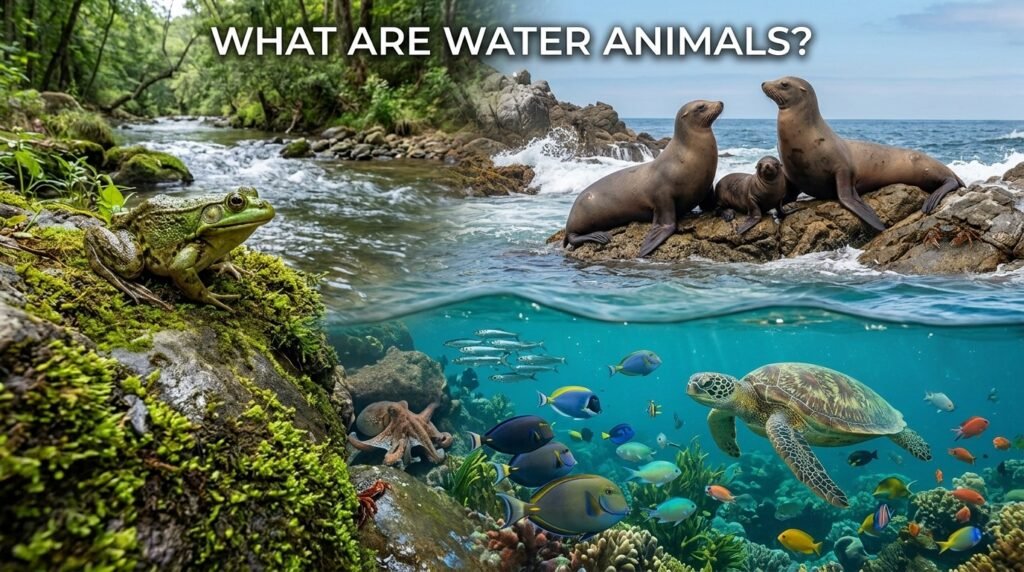
Water animals are animals that spend all or most of their lives in water. Scientists often describe them as aquatic animals. They may live in freshwater environments such as rivers and lakes or in saltwater habitats such as seas and oceans.
Some aquatic animals spend their entire lives underwater, while others regularly move between water and land. Frogs, for example, can live both in water and on land. Seals and sea lions also leave the water to rest or reproduce.
Freshwater vs. Saltwater Animals
Freshwater animals live in environments with very little salt. Rivers, lakes, ponds, streams, and wetlands are common freshwater habitats. Examples include freshwater fish, frogs, freshwater turtles, and axolotls.
Saltwater animals live in seas and oceans. These environments contain much more salt and support millions of marine organisms. Sharks, whales, dolphins, octopuses, sea turtles, and jellyfish are examples of marine animals.
Why Aquatic Life Matters
Aquatic ecosystems support food chains, provide habitats, and help maintain environmental balance. Small organisms feed larger animals, while predators help control populations. Many water animals also contribute to nutrient cycling and the health of aquatic habitats.
Understanding the 50 water animals name gives us a simple way to learn about this incredible variety of life and the environments these animals depend on.
Water Animal Names
Below are 50 water animals, ranging from common sea animals to unique freshwater creatures. The list includes fish, mammals, reptiles, amphibians, and other ocean creatures.
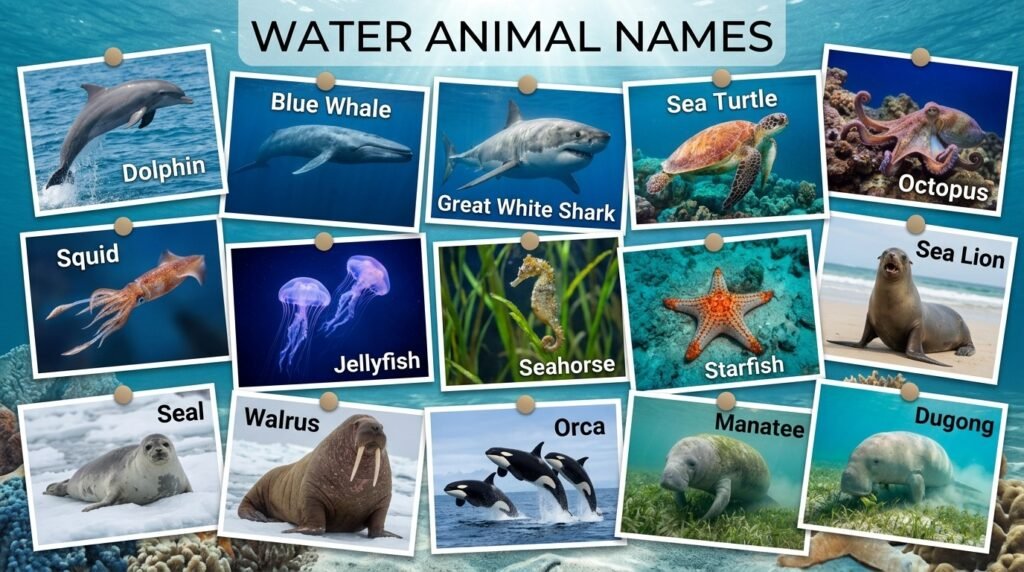
1. Dolphin
Dolphins are intelligent marine mammals known for their playful behavior and strong social bonds. They use sounds and echolocation to communicate and find objects in the water. Bottlenose dolphins are among the best-known species.
2. Blue Whale
The blue whale is the largest animal known to have ever lived. Despite its enormous size, it mainly eats tiny shrimp-like animals called krill. Blue whales live in oceans around the world.
3. Great White Shark
The great white shark is a powerful marine predator. It has several rows of sharp teeth and a highly developed sense of smell. It plays an important role in maintaining healthy ocean food chains.
4. Sea Turtle
Sea turtles are reptiles that spend most of their lives in the ocean. They have streamlined bodies and strong flippers for swimming. Female sea turtles return to beaches to lay their eggs.
5. Octopus
An octopus is a highly intelligent ocean creature with eight arms. It can change its color and body texture to hide from predators or approach prey. Octopuses have no bones, allowing them to squeeze through very small spaces.
6. Squid
Squids have long bodies, tentacles, and large eyes. Many species move quickly through the water by pushing water through their bodies. Some deep-sea squid have remarkable adaptations for life in dark environments.
7. Jellyfish
Jellyfish have soft, transparent bodies and tentacles. Some species can deliver painful stings, while others are harmless to humans. They drift through oceans and feed on small organisms.
8. Seahorse
Seahorses are unusual fish with upright bodies and curled tails. They use their tails to hold onto sea plants. In seahorses, males carry developing young in a special pouch.
9. Starfish
Starfish, also called sea stars, are marine animals with arms extending from a central body. Many species can regenerate lost arms. They live on the ocean floor and feed on various marine organisms.
10. Sea Lion
Sea lions are marine mammals related to seals. They have external ear flaps and strong front flippers. They are excellent swimmers and can also move on land.
11. Seal
Seals are marine mammals with streamlined bodies designed for swimming. They spend much of their time in water but come onto land or ice to rest and raise their young.
12. Walrus
Walruses are large marine mammals recognized by their long tusks and whiskers. They live mainly in Arctic regions and use their tusks for several purposes, including helping them climb onto ice.
13. Orca
The orca, or killer whale, is actually the largest member of the dolphin family. Orcas are highly social and intelligent predators. They live in oceans worldwide and often travel in family groups.
14. Manatee
Manatees are large, gentle aquatic mammals often called sea cows. They mainly eat aquatic plants. Manatees usually live in warm coastal waters, rivers, and wetlands.
15. Dugong
Dugongs are marine mammals related to manatees. They feed mainly on seagrass and spend much of their time in shallow coastal waters. Their populations depend heavily on healthy seagrass habitats.
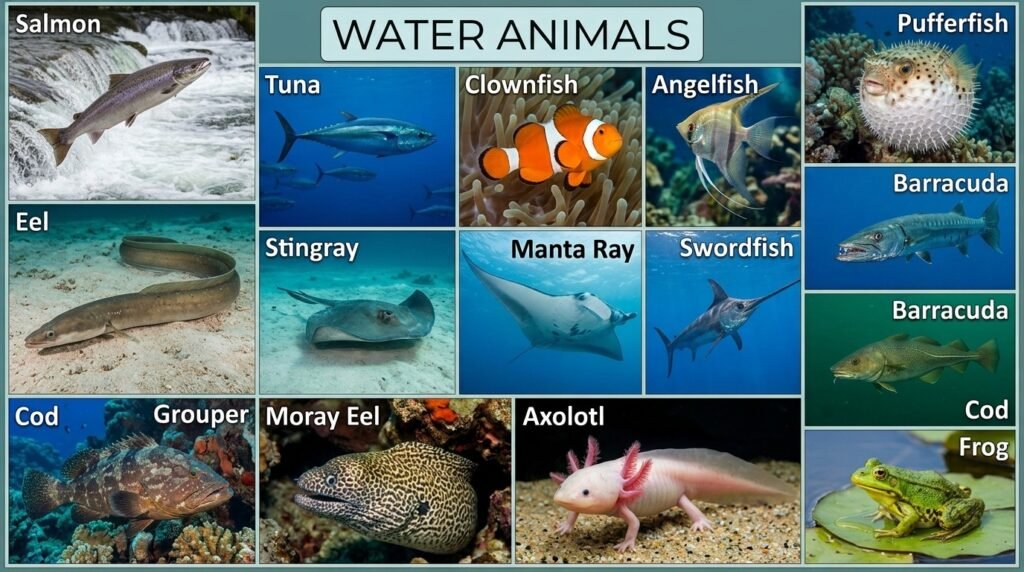
16. Salmon
Salmon are famous for their migrations. Many salmon are born in freshwater, travel to the ocean, and later return to freshwater to reproduce. This life cycle connects river and ocean ecosystems.
17. Tuna
Tuna are fast-swimming fish found in warm and temperate oceans. Some species can travel long distances across open water. Tuna are important predators and also have major ecological and commercial value.
18. Clownfish
Clownfish are small, brightly colored marine fish. They often live among the tentacles of sea anemones, forming a relationship that benefits both animals. Their bright colors make them popular among aquarium enthusiasts.
19. Angelfish
Angelfish have laterally compressed bodies and attractive patterns. Several types live in freshwater, while others belong to marine environments. They are popular aquarium fish.
20. Pufferfish
Pufferfish are famous for inflating their bodies when threatened. Some species contain powerful toxins that protect them from predators. They have strong teeth adapted for crushing hard foods.
21. Eel
Eels have long, snake-like bodies and live in both freshwater and marine environments. Some species migrate between rivers and oceans during different stages of their lives.
22. Stingray
Stingrays have flat bodies and broad fins that allow them to glide through water. Many species live near the ocean floor. Some have a defensive spine on their tail.
23. Manta Ray
Manta rays are among the largest rays. They use their broad fins to move gracefully through the ocean and often feed on plankton by filtering it from the water.
24. Swordfish
Swordfish are large, fast marine fish with a long, pointed upper jaw. They are powerful swimmers and can travel through open ocean waters while hunting fish and squid.
25. Barracuda
Barracudas are long-bodied predatory fish with sharp teeth. They are quick hunters that often wait before making sudden attacks on smaller fish.
26. Cod
Cod are marine fish found mainly in colder ocean waters. They have been important to marine food webs and fisheries for centuries.
27. Grouper
Groupers are large, thick-bodied fish commonly found around reefs and rocky habitats. They are ambush predators that swallow prey rather than chasing it over long distances.
28. Moray Eel
Moray eels have long bodies and powerful jaws. They often hide inside cracks and holes in reefs, waiting for prey to pass nearby.
29. Axolotl
The axolotl is a unique freshwater amphibian native to lakes and waterways around Mexico. Unlike many amphibians, it can retain juvenile features throughout its adult life. It is also famous for its remarkable ability to regenerate body parts.
30. Frog
Frogs are amphibians that commonly live near freshwater. Many species begin life as tadpoles in water and later develop into adults that can live on land and in water.
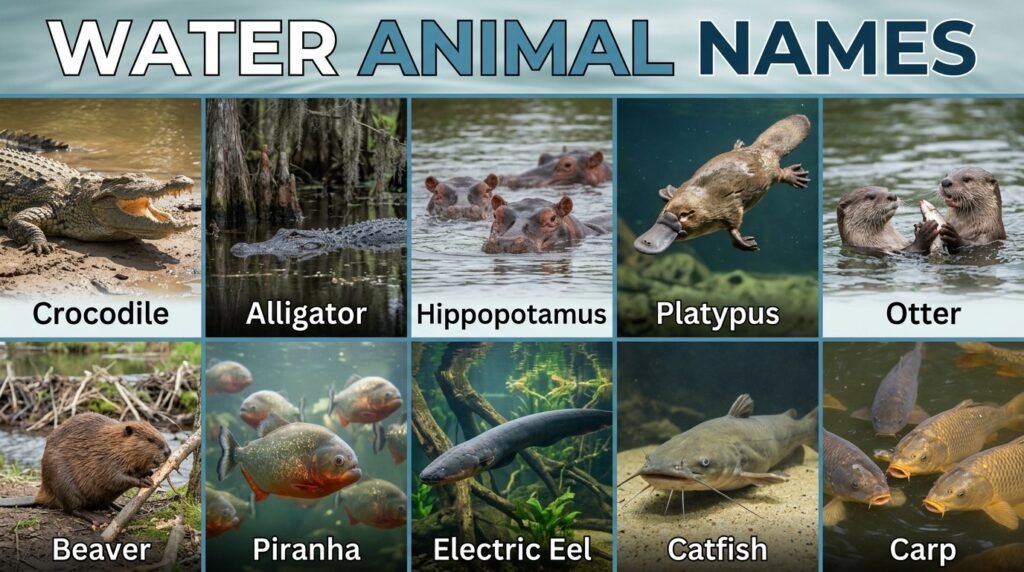
31. Crocodile
Crocodiles are large reptiles that live in freshwater and coastal environments. They are powerful predators with strong jaws and excellent swimming abilities.
32. Alligator
Alligators are large reptiles associated mainly with freshwater wetlands, rivers, and lakes. They spend time both in water and on land and help shape wetland ecosystems.
33. Hippopotamus
Hippopotamuses spend much of their day in rivers and other freshwater environments. Although they look slow on land, they can move surprisingly quickly and are powerful animals.
34. Platypus
The platypus is a fascinating freshwater mammal native to Australia. It has a duck-like bill, webbed feet, and a body adapted to swimming. It is one of the few mammals that lays eggs.
35. Otter
Otters are playful mammals that live in rivers, lakes, wetlands, and coastal waters. They are skilled swimmers and feed on fish, crustaceans, and other aquatic animals.
36. Beaver
Beavers are freshwater mammals known for building dams from branches and mud. Their activities can create wetlands that provide habitats for many other species.
37. Piranha
Piranhas are freshwater fish native to South America. They have sharp teeth and strong jaws. Although popular culture often portrays them as extremely dangerous, many species have varied diets.
38. Electric Eel
The electric eel is a freshwater fish capable of producing powerful electrical discharges. It uses electricity to locate prey, communicate, and defend itself.
39. Catfish
Catfish are freshwater and marine fish named for their whisker-like barbels around the mouth. These structures help them detect food and navigate their surroundings.
40. Carp
Carp are freshwater fish that have been introduced to many parts of the world. They are adaptable and can survive in a variety of freshwater habitats.
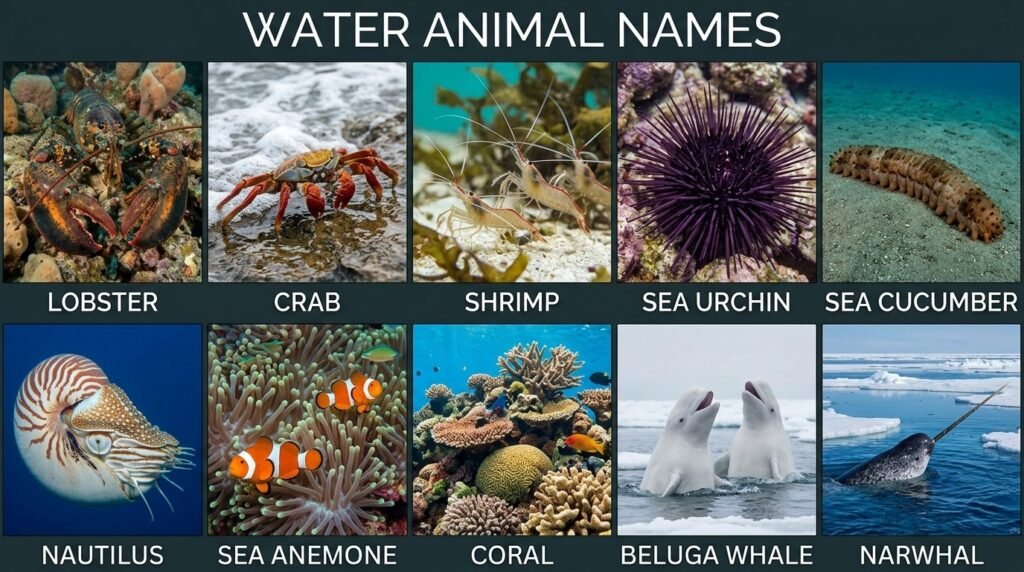
41. Lobster
Lobsters are marine crustaceans with hard shells, multiple legs, and large claws in many species. They live mainly on the ocean floor and feed on various types of food.
42. Crab
Crabs are crustaceans with hard shells and specialized claws. They live in oceans, rivers, estuaries, and coastal areas. Their sideways walking style makes them easy to recognize.
43. Shrimp
Shrimp are small aquatic crustaceans found in freshwater and saltwater. They serve as important food for many fish, birds, and larger marine animals.
44. Sea Urchin
Sea urchins are small, spiny marine animals that live mainly on the ocean floor. Many species graze on algae and help influence the health of reef and coastal ecosystems.
45. Sea Cucumber
Sea cucumbers have soft, elongated bodies and live on the seafloor. They help recycle nutrients by consuming organic material found in marine sediments.
46. Nautilus
The nautilus is a marine mollusk with a beautiful spiral shell. It belongs to an ancient group of animals that has survived for hundreds of millions of years.
47. Sea Anemone
Sea anemones are marine animals with tentacles surrounding a central opening. They often attach themselves to rocks or other solid surfaces. Some form mutually beneficial relationships with fish such as clownfish.
48. Coral
Corals are animals, not plants, even though they may look plant-like. Coral colonies create reef structures that provide shelter and food for many marine species.
49. Beluga Whale
Beluga whales are Arctic and sub-Arctic marine mammals known for their white color. They are social animals and use a wide variety of sounds to communicate.
50. Narwhal
Narwhals are Arctic marine mammals famous for the long tusk found on many males. Their tusk is actually an elongated tooth. Narwhals live in cold Arctic waters and depend on sea ice habitats.
Interesting Facts About Water Animals
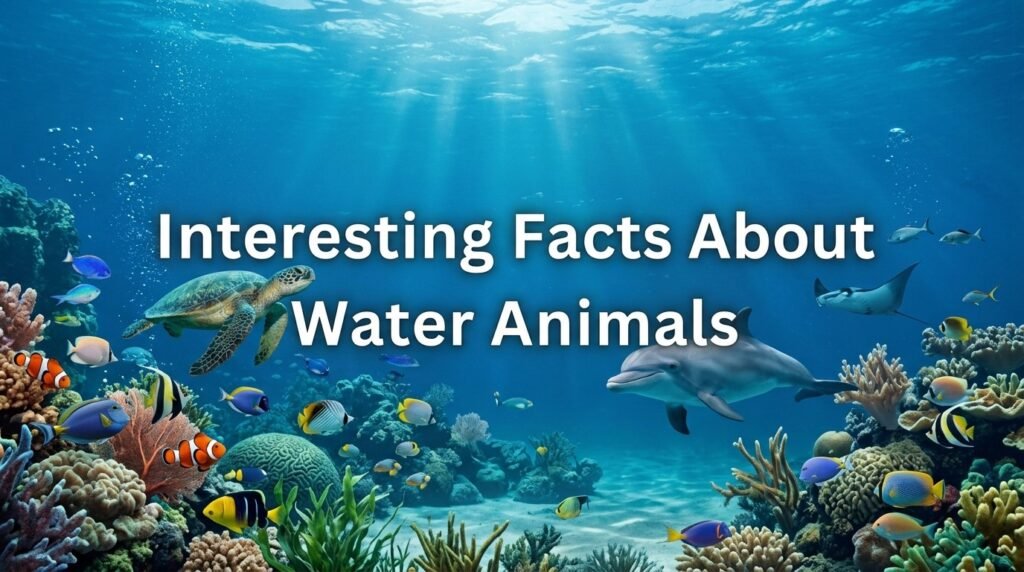
The 50 water animals name list includes animals with some truly remarkable abilities. Here are 15 interesting facts about aquatic life:
- Blue whales are enormous. They are the largest known animals on Earth.
- Dolphins breathe air. Although they live in water, dolphins are mammals and must come to the surface to breathe.
- Octopuses have three hearts. Two pump blood toward the gills, while one pumps it around the body.
- Seahorse fathers carry young. Male seahorses carry developing embryos in a specialized pouch.
- Some sharks need to keep moving. Certain shark species rely on swimming to help move water across their gills.
- Electric eels produce electricity. They can generate electrical discharges for hunting and defense.
- Corals are animals. They belong to the animal kingdom despite their plant-like appearance.
- Sea turtles can travel huge distances. Some species migrate between feeding and nesting areas.
- Orcas are dolphins. The orca is the largest member of the dolphin family.
- Narwhal tusks are teeth. The famous tusk is a long, modified tooth.
- Beavers change habitats. Their dams can create wetlands used by many other animals.
- Axolotls can regenerate. They are well known for their ability to regrow certain body structures.
- Manta rays eat tiny organisms. Despite their large size, many manta rays mainly feed on plankton.
- Jellyfish have no bones. Their bodies are soft and mostly made of water.
- Salmon connect ecosystems. Their migrations move nutrients between freshwater and marine environments.
These facts show why learning the 50 water animals name is more than simply memorizing a list. Each animal demonstrates a different way that life can adapt to aquatic environments.
Why Water Animals Are Important
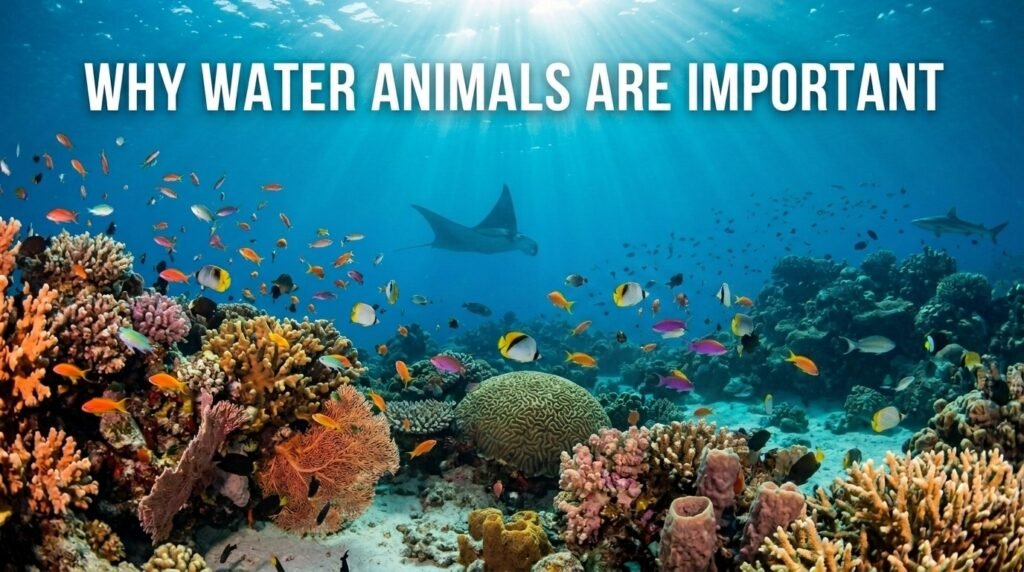
Water animals play essential roles in natural ecosystems. From microscopic organisms to giant whales, each species can contribute to the balance of its habitat.
Food Chains
Aquatic food chains begin with organisms such as algae and plankton. Small fish and other animals eat these organisms, while larger fish, birds, mammals, and predators feed on them. Removing one important species can affect many other animals.
Biodiversity
Aquatic environments contain incredible biodiversity. Fish, mammals, reptiles, amphibians, mollusks, crustaceans, and many other organisms live in water. This variety makes rivers, lakes, wetlands, seas, and oceans highly productive ecosystems.
Ocean Health
Marine animals can provide clues about the condition of ocean environments. Healthy populations often depend on clean water, sufficient food, suitable habitats, and stable environmental conditions.
Environmental Balance
Water animals help control populations, recycle nutrients, move energy through food webs, and maintain habitats. Beavers, for example, can create wetlands, while sea urchins and other grazers can influence algae growth.
Learning the 50 water animals name can therefore help students understand a much larger idea: protecting aquatic animals also means protecting the ecosystems that support people and other wildlife.
Frequently Asked Questions
1. What are water animals?
Water animals are animals that live in or depend heavily on aquatic environments. They include fish, marine mammals, reptiles, amphibians, crustaceans, mollusks, and many other organisms. Some live in freshwater, while others live in seas and oceans.
2. Which animal is known as the king of the ocean?
There is no official scientific title of “king of the ocean.” However, people sometimes use this phrase for powerful marine predators such as sharks or orcas. The choice depends on the context.
3. What is the largest water animal?
The blue whale is the largest known animal on Earth. It can reach an enormous size and lives in oceans around the world.
4. Which water animal is the smartest?
Dolphins, especially bottlenose dolphins, are often considered among the most intelligent aquatic animals. Orcas and octopuses also demonstrate impressive learning, communication, and problem-solving abilities.
5. Are dolphins fish or mammals?
Dolphins are mammals. They breathe air through lungs, give birth to live young, and feed their babies with milk. Their need to breathe air is one major difference between dolphins and fish.
6. What are freshwater animals?
Freshwater animals are animals that live in environments with low salt levels, including rivers, lakes, ponds, streams, and wetlands. Frogs, catfish, carp, beavers, otters, and axolotls are examples.
7. How many types of water animals exist?
Scientists have identified a huge number of aquatic species, but there is no single simple number for all water animals. New species continue to be discovered, and many groups contain thousands of species.
8. What is the difference between aquatic and marine animals?
Aquatic animals are animals that live in water generally. Marine animals are specifically associated with saltwater environments such as oceans and seas. Therefore, marine animals are aquatic animals, but not all aquatic animals are marine.
9. Why should children learn water animal names?
Learning water animal names helps children develop vocabulary, general knowledge, and an understanding of nature. It can also encourage curiosity about ecosystems and environmental protection.
Conclusion
Exploring the 50 water animals name list is a simple and enjoyable way to discover the incredible diversity of life in rivers, lakes, seas, and oceans. From the enormous blue whale to the tiny shrimp, every aquatic animal has unique features that help it survive and contribute to its ecosystem.
These animals also teach us important lessons about nature. Dolphins and whales show the complexity of marine mammals, while sharks and other predators demonstrate the importance of balanced food chains. Freshwater animals such as beavers, frogs, otters, and axolotls remind us that rivers and wetlands are just as valuable as oceans.