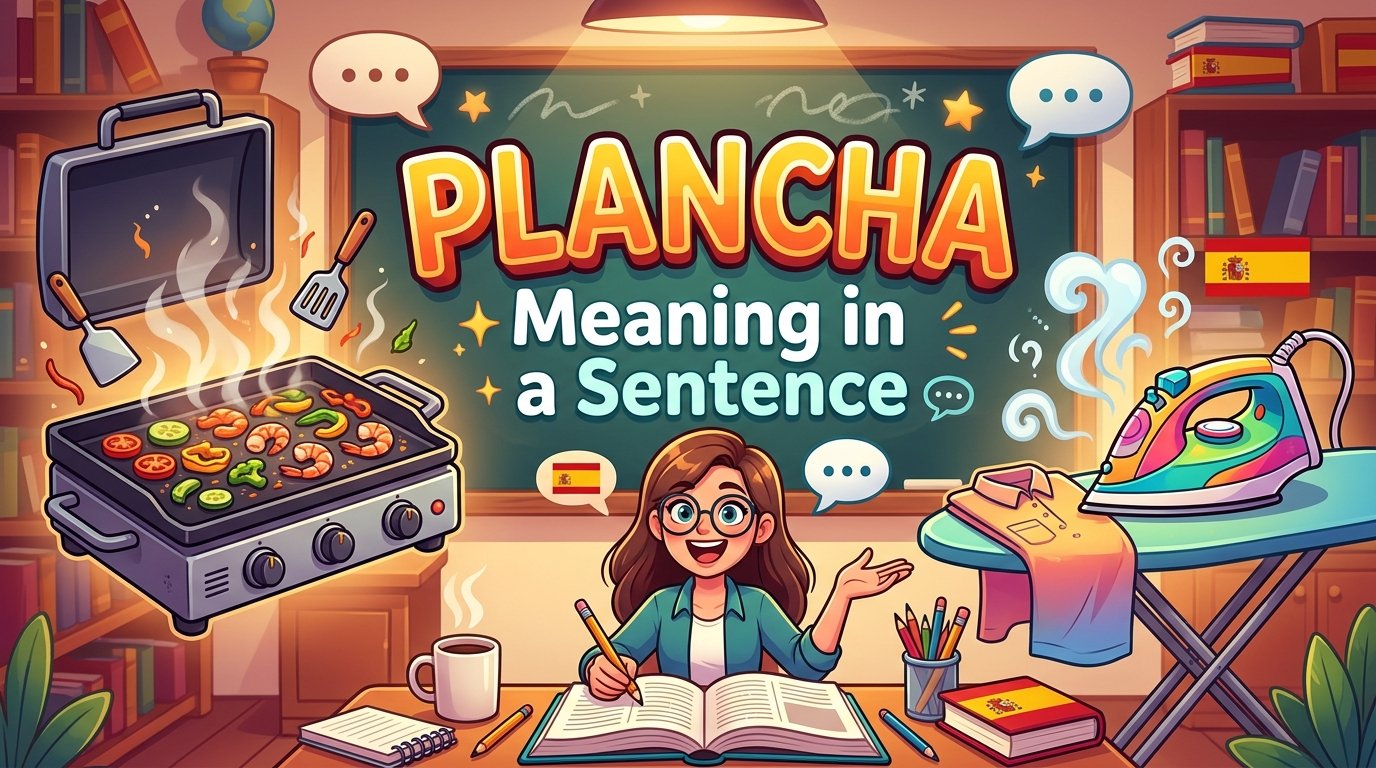
Understanding the plancha meaning helps you read messages, follow recipes, and understand everyday conversations. This guide explains the word in simple English. You will learn its common meanings, Spanish usage, cooking meaning, sentence examples, and differences from similar words. You will also discover how to identify the correct meaning from context.
What Does Plancha Mean?
The word plancha has several meanings. Its exact meaning depends on how someone uses it. Spanish speakers often use it for a clothes iron, while cooks use it for a flat cooking surface.
The word comes from Spanish. It can describe a tool, a cooking method, or a flat metal plate. You should look at the surrounding words to understand its meaning.
For example:
- “I need a plancha to iron my shirt.” Here, it means a clothes iron.
- “We cooked fish on the plancha.” Here, it means a flat cooking surface.
- “The chef prepared vegetables on a hot plancha.” Here, it refers to a cooking method or the equipment used for it.
These examples show why context matters. The same word can refer to different things in different settings.
Plancha Meaning in Spanish
In Spanish, plancha is a common noun. People use it at home, in restaurants, and in everyday conversation. It usually refers to an iron or a flat plate, depending on the situation.
The word is feminine in Spanish. Speakers commonly use the article la before it. For example, la plancha means “the iron” or “the flat plate.”
Here are some simple Spanish examples:
- Necesito una plancha. — I need an iron.
- La plancha está caliente. — The iron or hot plate is hot.
- Voy a planchar mi camisa. — I am going to iron my shirt.
- Cocinamos pescado a la plancha. — We cook fish on a hot griddle.
Notice that the word can appear in different phrases. The phrase a la plancha often describes food cooked on a hot, flat surface. In a laundry setting, however, plancha usually refers to an iron.
How Is Plancha Used in Everyday Spanish?
Spanish speakers use the word in practical, everyday situations. You might hear it when someone talks about ironing clothes, preparing dinner, or using kitchen equipment.
For instance, a person might ask, ¿Dónde está la plancha? This means, “Where is the iron?” If the conversation takes place in a kitchen, the speaker may mean a cooking plate instead.
Other examples include:
- Mi plancha no funciona. — My iron does not work.
- Quiero pollo a la plancha. — I want grilled chicken cooked on a hot plate.
- Limpia la plancha después de cocinar. — Clean the griddle after cooking.
The surrounding topic usually makes the intended meaning clear. Clothes, shirts, and laundry point toward an iron. Chicken, vegetables, and recipes point toward cooking equipment.
Plancha Meaning in a Sentence: Simple Examples
The easiest way to learn a word is to see it in complete sentences. The following examples show how the same word can fit different situations.
| Sentence | Meaning |
| “My mother bought a new plancha.” | A clothes iron or another flat appliance, depending on context |
| “The chef heated the plancha.” | A flat cooking surface |
| “I ironed my trousers with the plancha.” | A clothes iron |
| “She ordered vegetables a la plancha.” | Vegetables cooked on a hot, flat surface |
| “The plancha needs cleaning.” | A cooking plate or an iron, depending on the setting |
| “He prepared shrimp on the plancha.” | A flat cooking surface |
Plancha in a Sentence About Clothes
Imagine that someone is getting ready for work. Their shirt has several wrinkles, so they need an iron.
They might say, “I cannot leave yet because I need the plancha to press my shirt.”
In this sentence, the word refers to a clothes iron. The mention of a shirt and pressing clothes helps you identify the meaning.
You could also write:
- “Please put the plancha away after ironing.”
- “My old plancha leaves marks on my clothes.”
- “She used the plancha to remove wrinkles from her dress.”
Each sentence describes a laundry task. This context makes the intended meaning easy to understand.
Plancha in a Sentence About Food
Now imagine a restaurant kitchen. A chef wants to cook chicken without using a deep fryer or a pot.
The chef might say, “I will cook the chicken on the plancha.”
Here, the word refers to a flat, heated cooking surface. The chef places the food directly on the hot plate and cooks it with suitable heat and a small amount of oil, if needed.
Other examples include:
- “The chef cooked the salmon on the plancha.”
- “We ordered vegetables prepared a la plancha.”
- “The restaurant uses a large plancha for grilled meat.”
In these sentences, the cooking context tells you which meaning applies.
Plancha Meaning in Cooking
In cooking, a plancha is a flat metal cooking surface that transfers heat directly to food. It often appears in Spanish and Mediterranean cooking. Restaurants use it to prepare meat, seafood, vegetables, and other ingredients.
Unlike a traditional grill with raised bars, a plancha usually has a smooth surface. This lets food make broad contact with the hot metal. As a result, cooks can brown ingredients evenly and manage cooking juices more easily.
The term can refer to both the equipment and the cooking style. When a menu lists food a la plancha, it usually means the food has been cooked on a hot plate or griddle.
What Does A La Plancha Mean?
The Spanish phrase a la plancha means “cooked on a hot flat plate” or, more naturally, “griddled.” It describes how a dish is prepared rather than naming a particular ingredient.
For example:
- Pescado a la plancha means fish cooked on a hot griddle.
- Pollo a la plancha means chicken cooked on a hot griddle.
- Verduras a la plancha means vegetables cooked on a hot griddle.
- Gambas a la plancha means shrimp cooked on a hot griddle.
This cooking style can produce browned surfaces and a direct, simple flavor. Cooks often season food with salt, pepper, herbs, lemon, or a little oil.
What Foods Can You Cook on a Plancha?
A plancha works well for many ingredients. Its smooth surface supports delicate foods that may fall through the bars of a traditional grill.
Common options include:
- Fish: Salmon, sea bass, and other fillets.
- Seafood: Shrimp, scallops, and squid.
- Meat: Thin steaks, chicken pieces, and pork.
- Vegetables: Peppers, onions, zucchini, and mushrooms.
- Breakfast foods: Eggs, pancakes, and sliced potatoes, depending on the equipment.
The best results depend on heat control, food thickness, and preparation. Dry the food before cooking when you want a good sear. Avoid crowding the surface because too much food can lower its temperature.
Plancha Meaning in Different Countries and Contexts
The word can carry different meanings across Spanish-speaking regions and in international settings. Its basic meaning remains connected to an iron, a flat plate, or a related object. However, local habits and the subject of a conversation can affect how people understand it.
For example, a Spanish recipe may use the word to describe a cooking surface. A household conversation may use it for a clothes iron. A restaurant menu may use the phrase a la plancha to tell customers how the chef prepares a dish.
English speakers may also encounter the word in travel guides, cooking videos, or restaurant menus. In these cases, it often keeps its Spanish form because there is no need to replace it with a longer English description.
Plancha in Restaurants
Restaurant menus often use Spanish cooking terms to describe preparation methods. The phrase a la plancha tells customers that the chef cooks an ingredient on a hot, flat surface.
For example, “Sea bass a la plancha with lemon” means that the fish is cooked on a griddle and served with lemon. The phrase does not automatically mean the dish contains no oil, butter, or seasoning.
Plancha in Homes
In a home, the intended meaning often depends on the room and activity. Someone in a laundry room may use plancha to talk about an iron. Someone preparing dinner may use the same word for a griddle.
Consider this short conversation:
- Ana: “Where is the plancha?”
- Luis: “It is in the kitchen.”
This answer alone does not settle the meaning. If Ana wants to iron a shirt, she may need the iron stored nearby. If she wants to cook dinner, she may need the griddle. A little more context makes the sentence clearer.
Plancha Meaning Compared With Similar Words
Understanding similar words can help you avoid confusion. English has several terms that overlap with the uses of plancha, but they do not always mean the same thing.
| Word | Common meaning | Main difference |
| Plancha | Iron or flat cooking plate in Spanish | Meaning depends on context |
| Iron | A tool used to remove wrinkles | Usually refers to clothes in everyday English |
| Griddle | A flat cooking surface | Mainly used for cooking |
| Grill | Equipment that cooks food with direct heat | Often has raised bars, though designs vary |
| Hot plate | A heated surface for cooking | Can refer to different types of equipment |
| Press | A tool or machine that applies pressure | Has several uses beyond ironing |
Plancha vs. Griddle
A griddle is the closest English word when plancha refers to cooking. Both provide a flat surface that allows food to cook through direct contact with heat.
However, the words are not always interchangeable in every sentence. Plancha may refer to a specific Spanish cooking style, while griddle usually names the cooking equipment itself.
For example, “We cooked shrimp a la plancha” describes a cooking method. “We placed the shrimp on the griddle” focuses on the equipment.
Plancha vs. Iron
An iron removes wrinkles from fabric by applying heat and pressure. In Spanish, plancha commonly refers to this household tool.
In English, however, the word plancha usually appears in discussions of Spanish language, food, or culture. English speakers generally say “iron” when discussing laundry.
For example, “I need an iron for my work clothes” sounds natural in English. “I need a plancha for my work clothes” may sound unfamiliar unless the speakers share a Spanish-speaking background.
Common Mistakes When Understanding Plancha
People can misunderstand unfamiliar words when they translate them without considering context. The word plancha is a good example because it has more than one common use.
Here are mistakes to avoid:
- Assuming it always means a griddle: In Spanish, it often means a clothes iron.
- Assuming it always means an iron: In recipes, it often refers to a flat cooking surface.
- Translating a phrase word for word: The phrase a la plancha is better understood as a cooking method than as a literal translation.
- Ignoring nearby words: Words such as camisa (shirt) or pescado (fish) can reveal the intended meaning.
- Treating every menu item as oil-free: Cooking on a flat plate may involve oil or other fats.
The best way to avoid confusion is to read the entire sentence. Identify the subject, the action, and the setting. Then choose the meaning that fits naturally.
Tips for Choosing the Correct Meaning
Use a few simple clues when you encounter the word in writing or conversation.
- Look for clothing words. Shirts, trousers, wrinkles, and laundry usually point to a clothes iron.
- Look for food words. Fish, meat, vegetables, and cooking verbs often point to a griddle.
- Check the phrase. The expression a la plancha usually describes a cooking method.
- Consider the setting. A kitchen, restaurant, or laundry room can help you interpret the word.
- Read the full sentence. One word alone may not provide enough information.
These steps are useful for beginners who are learning Spanish. They also help travelers understand menus and everyday conversations without memorizing every possible translation.
How to Use Plancha Correctly in English
English speakers usually keep the Spanish word when discussing Spanish food or a specific cooking technique. They may also use it when explaining Spanish vocabulary to learners.
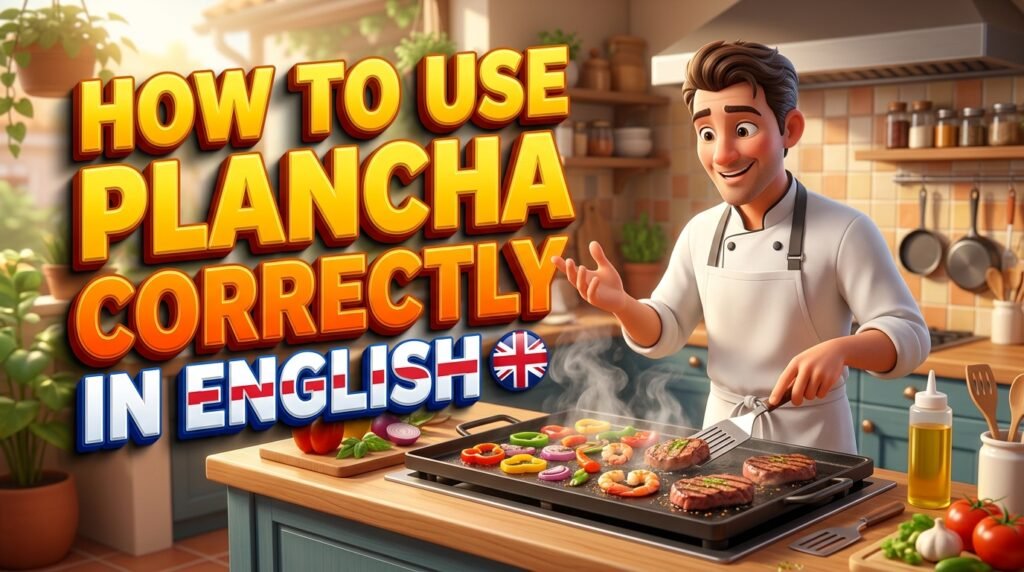
For ordinary English writing, choose a familiar English word when it communicates the meaning more clearly. For example, use “iron” in a sentence about laundry and “griddle” in a sentence about cooking.
Compare these examples:
- Less clear: “I bought a plancha for my clothes.”
- Clearer: “I bought an iron for my clothes.”
- Less clear: “The chef cooked eggs on the plancha.”
- Clearer for a general audience: “The chef cooked eggs on a flat griddle.”
The Spanish word is still useful when the original term matters. You may see it on restaurant menus, in Spanish lessons, or in descriptions of traditional cooking methods.
How to Learn the Word Faster
Try connecting the word with a picture or a real situation. Imagine an iron pressing a shirt when you learn its household meaning. Then imagine a chef cooking fish on a flat metal plate for its culinary meaning.
You can also practice with short sentences:
- “I need an iron for my shirt.”
- “The chef uses a plancha to cook fish.”
- “We ordered chicken a la plancha.”
- “The plancha is hot, so do not touch it.”
Read each sentence and identify the setting. This exercise helps you remember the difference without relying on complicated grammar rules.
Frequently Asked Questions
1. What is the plancha meaning in simple English?
The word plancha commonly means a clothes iron or a flat cooking plate in Spanish. The correct translation depends on the sentence. Clothing usually suggests an iron, while food and cooking suggest a griddle.
2. What does a la plancha mean on a menu?
A la plancha describes food cooked on a hot, flat metal surface. A menu might list fish, chicken, shrimp, or vegetables prepared this way. The dish may also include oil, herbs, sauces, or seasonings.
3. Is plancha an English word?
Plancha is a Spanish word, but English speakers also use it when discussing Spanish cooking or language. In everyday English, “iron” and “griddle” are often clearer choices, depending on the intended meaning.
4. What is an example of plancha in a sentence?
“ The chef cooked fresh salmon on the plancha.” In this sentence, plancha means a flat cooking surface. The reference to a chef and salmon makes the culinary meaning clear.
5. Does plancha mean grilled?
Not exactly. The word can refer to the cooking equipment, while a la plancha describes cooking food on a hot, flat surface. People sometimes translate it as “grilled,” but “griddled” can be more precise.
6. How can I tell which meaning of plancha is correct?
Read the words around it. References to ironing, shirts, and laundry usually indicate a clothes iron. References to fish, meat, recipes, or restaurant menus usually indicate a cooking surface or method.
Conclusion
The word plancha has more than one meaning, so context is the key to understanding it. In Spanish, it commonly refers to a clothes iron. In cooking, it can mean a flat metal plate used to prepare food. The phrase a la plancha describes food cooked on that hot surface.
Learning the plancha meaning becomes much easier when you read the full sentence. Look for clues such as clothing, kitchen equipment, ingredients, and cooking actions. These details help you choose the right translation without guessing.
If you see the word on a restaurant menu, it usually describes a cooking technique. If you hear it during a conversation about laundry, it probably means an iron. English speakers can use words such as “iron” and “griddle” when they want a clearer translation.
Practice with short examples and everyday situations. With a little attention to context, you can understand the word and use it correctly when reading Spanish, exploring new foods, or talking with Spanish speakers.