

The Year the Stable Looked a Bit Bare
Every December I unwrap the same box of nativity scene figurines, and one year I realised the stable looked rather bare. There was a Holy Family, one lonely shepherd who had lost his crook and now looked as though he had come to read the gas meter, and a donkey doing the work of three animals.
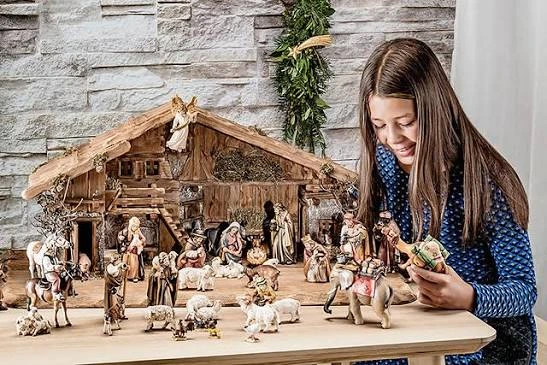
Choosing handcrafted nativity scene figurines for Christmas makes it possible to create a more detailed and personal display, combining the Holy Family with shepherds, angels, the Three Wise Men, and characters inspired by traditional Nativity scenes.
That was the moment I started thinking properly about who belongs around the manger. The crib tradition began with something very simple, a few figures and some straw, and grew over the centuries into the layered scenes we know today. Each figure you add is a small decision about the story you want to tell.
Starting With the Holy Family
Mary, Joseph and the Infant Jesus are the heart of every Nativity set, so they deserve the most thought. I like to choose them first and let them set the scale for everything else. A Holy Family that is too small gets swallowed by the rest of the cast, while one that is too large makes the stable look like a doll’s house.
Pay attention to posture and expression. Mary’s gentle gaze and Joseph’s protective stance say more than any amount of decoration. Many families keep the manger empty until Christmas Eve, then place the Christ Child with a little ceremony, which is a lovely way to mark the moment.
Materials matter too. Resin is durable and detailed, wood has a lovely warmth, and painted plaster has a classic crib look. Whatever you pick, handcrafted crib figures tend to show their quality in the faces and the folds of the clothing.
Shepherds, Angels and the Voices of the First Christmas
I have always had a soft spot for the shepherds. They were ordinary working people, the first to be told the news, and that makes them wonderfully relatable. A shepherd kneeling with a lamb on his shoulders adds instant humility to the scene.
Angels bring the heavenly side of things. A single angel with a Gloria banner, placed above or behind the stable, gives the display height and a sense of wonder. Spread too many of them around and the effect gets crowded, so restraint helps.
Here is the supporting cast I would build around the stable.
- One or two shepherds, ideally one kneeling and one standing
- A small flock, three or four sheep is plenty
- A single angel positioned high above the stable
- The ox and the donkey, keeping close to the manger
The Three Wise Men and the Long Road to Bethlehem
The Magi are my favourite part of the Nativity, mostly because they travel. Caspar, Melchior and Balthazar bring gold, frankincense and myrrh, gifts that carry real symbolism about kingship, divinity and sacrifice.
Many households keep the Three Kings across the room at the start of Advent and move them a little closer each day until they arrive at the stable on the Epiphany. It gives the season a lovely ritual, and children adore it. Mine certainly did, even if there was an occasional argument about whose turn it was to move the camel.
When choosing the Wise Men, look for rich robes and carefully made gifts, and keep them in proportion with the Holy Family. Camels and attendants are optional extras, but they add real drama to the procession.
Traditional Characters That Make the Scene Your Own
This is where a Nativity set stops being a copy of everyone else’s and becomes yours. In Neapolitan, Provençal and Alpine cribs you will find the innkeeper, the baker, the water carrier, the fisherman and the woman spinning wool. They are not in the Gospels, but they reflect how real communities imagined themselves arriving at the stable.
I love that idea. Families often add one new piece each year until the crib becomes a record of Christmases past, with a figure for every celebration. Choosing characters that reflect your own heritage or parish traditions makes the display even more personal, and handcrafted artisan figures hold up well to that kind of long relationship.
Arranging, Caring for and Growing Your Display
Once you have your cast, think about how the scene will feel. Use different levels to create depth, add moss, straw and natural wood for texture, and use soft lighting to draw the eye to the manger. The Holy Family should always be the visual focus, with everyone else leaning in towards them.
Care is the unglamorous part, but it counts. After years of unpacking, I have lost enough shepherds’ crooks to know that tissue paper and a sturdy box are worth the effort. Wrap each figure individually, store them somewhere dry, and handle the delicate ones by the base.
If you are building a collection over time, start with the Holy Family, then add shepherds and angels, then the Magi, and finally the character figures that make the scene feel like home.
Back at the Stable, One Figure at a Time
These days my shepherd has a new crook, and he has been joined by a baker, a water carrier and a very dignified king. The stable no longer looks bare, and nobody mistakes anyone for a gas meter reader.
What I love most is that a crib is as much a family tradition as a decoration. It grows slowly, it carries stories, and every figure arrives with a reason. Take your time, choose with care, and enjoy building your own collection of nativity scene figurines.