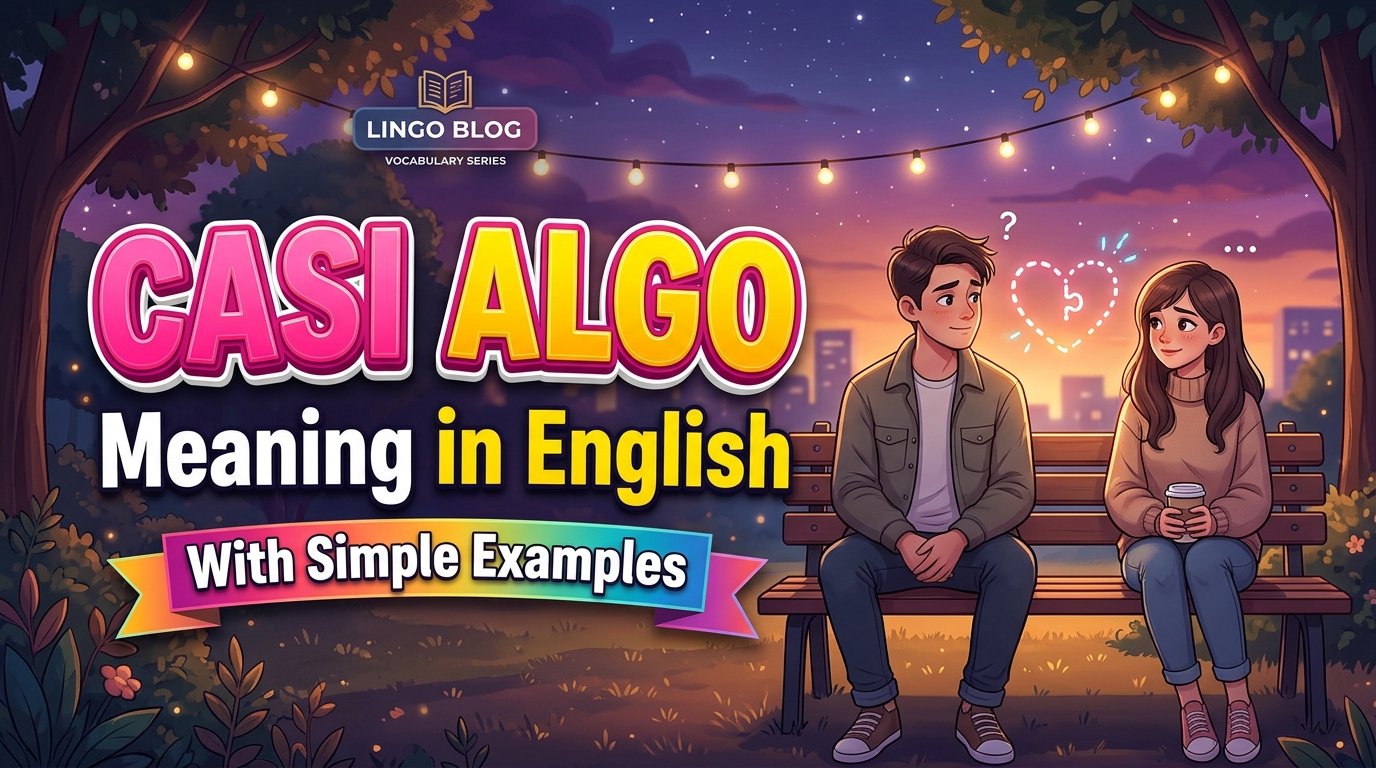
Understanding casi algo meaning can help you make sense of Spanish conversations, social media posts, and relationship discussions. The phrase has become popular among people who want to describe romantic connections without clear labels. In this guide, you will learn its English translation, how people use it, and what it means in different situations. You will also discover simple examples, related expressions, and common mistakes to avoid.
1. What Does Casi Algo Mean in English?
The Spanish phrase casi algo literally translates to “almost something” in English. In dating, it describes a romantic connection that never becomes an official relationship. Two people may have feelings for each other, but they never define their connection.
The phrase has two parts:
- Casi: This Spanish word means “almost” or “nearly.”
- Algo: This word means “something.”
Casi algo meaning depends on the situation, the feelings involved, and the expectations of both people.
A Simple Example
Consider this conversation:
Maria: “Were you and Daniel ever together?”
Sofia: “Not really. We talked every day and went out for months, but we never became a couple. He was my casi algo.”
In English, Sofia is saying that Daniel was someone she almost had a relationship with.
This example shows why a direct translation may not explain the whole idea. The phrase describes an emotional experience, not just a connection that came close to happening.
2. What Is a Casi Algo Relationship?
A casi algo relationship usually involves romantic interest without a clear commitment. The two people may behave like partners, but they have not agreed to call themselves a couple. Their connection exists somewhere between friendship and a defined romantic relationship.
This type of connection can develop naturally. Two people might meet through friends, at school, at work, or on a dating app. They begin talking, discover a mutual attraction, and spend more time together.
Over time, their bond may become emotionally important.
However, they might avoid discussing their relationship status. They may feel nervous about commitment, fear rejection, or simply enjoy the freedom of an undefined connection.
Common Signs of a Casi Algo
Here are some signs that a connection may fit this description:
- Frequent communication: You text, call, or message each other almost every day.
- Romantic moments: You flirt, share affection, or go on dates.
- Emotional closeness: You discuss personal problems, dreams, and fears.
- No official label: Neither person clearly identifies the relationship.
- Mixed signals: One person acts romantically but avoids commitment.
- Unclear expectations: You do not know whether you are exclusive or free to date others.
- An unfinished feeling: You sense that the connection could become more, but it never does.
Not every undefined relationship has all these signs. Some people deliberately choose casual dating and communicate honestly about it.
The main difference is whether both people understand and accept the arrangement.
Is It the Same as Dating?
Not necessarily.
Dating usually means two people are exploring romantic interest. They might still be deciding whether they want a committed relationship.
A casi algo can involve dating, but it often carries a stronger sense of uncertainty. The people involved may have an emotional connection without knowing where it is going.
For example, two people who agree to date casually may understand their situation perfectly. By contrast, two people who act like a couple but avoid discussing their feelings may experience a confusing, undefined connection.
The label alone cannot tell you whether a relationship is healthy. Honest communication matters more than the name people give it.
Why Do People Use the Phrase Casi Algo?
People use this phrase because ordinary relationship labels do not always describe their experiences. Someone may not be a boyfriend, girlfriend, or ex-partner, yet the connection may still hold emotional meaning.
The phrase gives people a simple way to describe that middle ground.
For example, calling someone an ex usually suggests that an established relationship ended. Calling someone a friend suggests a different type of bond. But what do you call someone you loved, dated, or cared about without ever becoming an official couple?
For many Spanish speakers, casi algo offers an answer.
To Describe an Unfinished Romance
Sometimes, two people have strong feelings but never take the next step.
They might hesitate because of distance, timing, family expectations, or personal circumstances. One person may move away before they can build a relationship. Another may decide not to pursue a connection because they are not ready.
The phrase describes the possibility that existed without suggesting that a formal relationship ever began.
To Express Mixed Feelings
An undefined romantic connection can bring happiness, hope, frustration, and sadness.
Someone might enjoy the attention they receive while feeling disappointed that the relationship has not progressed. They may remember the good moments and wonder what could have happened if both people had made different choices.
The phrase helps express these complicated feelings without requiring a long explanation.
To Talk About Dating Experiences Online
Social media gives people a place to discuss dating, attraction, heartbreak, and relationships. Short expressions often become popular because they communicate an entire experience in just a few words.
People may use casi algo in captions, memes, comments, or personal stories about someone they almost dated.
Its appeal comes from its simplicity. It describes a recognizable romantic experience without needing a formal relationship label.
However, not everyone uses the phrase in the same way. Its meaning can vary by person, region, and context.
Casi Algo Meaning in Different Situations
The phrase can describe several types of romantic connections. The details may differ, but the common idea is that something meaningful almost became a relationship without reaching that point.
When You Like Someone but Never Date
Imagine you meet someone at college. You exchange messages, flirt between classes, and occasionally spend time together.
You both seem interested, but neither of you asks for a date. Eventually, the semester ends, and you lose contact.
You might describe that person as your casi algo because a romance seemed possible but never developed.
In this situation, the connection may involve attraction and curiosity rather than a deep emotional bond.
When You Act Like a Couple Without a Label
Now imagine that you and someone else spend several months together.
You go to dinner, watch movies, share personal stories, and introduce each other to friends. You even celebrate special occasions together.
Despite all this, neither of you has agreed that you are in a relationship.
This situation may fit the phrase particularly well because the connection resembles a romantic partnership without a clear commitment.
If the uncertainty bothers you, an honest conversation can help you understand what each person wants.
When You Have Feelings for an Ex Almost-Partner
Some people use the phrase when talking about someone they nearly dated in the past.
They might remember a connection that ended before it became official. Even years later, they may wonder whether the relationship could have worked.
For example:
“I still think about my casi algo sometimes. We cared about each other, but our timing was never right.”
Here, the phrase describes a past romantic possibility rather than a current connection.
When Distance Prevents a Relationship
Distance can also affect romantic connections.
Two people may develop feelings through messages and video calls. They might want to meet or become a couple, but travel, money, or personal responsibilities make a relationship difficult.
If they never establish an official partnership, one person may describe the experience as a casi algo.
However, distance alone does not make a relationship undefined. Some long-distance couples have clear commitments. The phrase fits when the romantic connection never becomes an established relationship.
Simple Casi Algo Examples in English and Spanish
The easiest way to understand a new phrase is to see it in real-life sentences. The examples below show how Spanish speakers might use the expression in conversations about attraction, uncertainty, and past relationships.
Example 1: Talking About Someone You Almost Dated
Spanish: “Él fue mi casi algo.”
English: “He was the person I almost had a relationship with.”
This sentence describes a romantic connection that never became official.
Example 2: Explaining a Complicated Connection
Spanish: “Lo nuestro fue un casi algo.”
English: “What we had was an almost-relationship.”
The speaker is describing a connection that felt romantic but never became a defined partnership.
Example 3: Talking About Mixed Signals
Spanish: “Mi casi algo me escribe todos los días, pero nunca quiere hablar de una relación.”
English: “The person I almost dated texts me every day, but never wants to talk about a relationship.”
This example shows how the phrase can describe an ongoing connection without commitment.
Casi Algo vs. Situationship, Crush, and Ex
Several English expressions describe romantic connections that do not fit neatly into traditional relationship labels. However, each expression has a slightly different meaning.
Understanding these differences helps you choose the right phrase for a particular situation.
Casi Algo vs. Situationship
A situationship is an undefined romantic or sexual connection. The people involved may spend time together, share intimacy, and have feelings without agreeing on a formal relationship.
A casi algo often describes a similar experience, especially when the connection feels like a relationship that almost happened.
The difference is one of emphasis.
- Situationship: Focuses on the unclear status of an ongoing connection.
- Casi algo: Often emphasizes the feeling of almost becoming something more.
These expressions overlap, but they are not exact equivalents in every situation.
Casi Algo vs. Crush
A crush is someone you feel attracted to, often before you know whether the attraction is mutual.
For example, you might have a crush on a classmate who barely knows you.
A casi algo usually suggests more interaction or a stronger shared connection. You may have talked regularly, flirted, gone on dates, or developed mutual feelings.
A crush can become a casi algo if both people start exploring a romantic connection without establishing a relationship.
However, a crush does not automatically develop into one.
Casi Algo vs. Ex
An ex is someone you previously dated or had an established romantic relationship with.
A casi algo usually refers to someone you almost dated or someone with whom you had an undefined romantic connection.
Consider these examples:
- “My ex and I dated for two years before breaking up.”
- “My casi algo and I talked for six months, but we never became a couple.”
The first describes a past relationship. The second describes a connection that never became an official partnership.
Casi Algo vs. Friends With Benefits
Friends with benefits are people who maintain a friendship while also having a sexual relationship, usually without a traditional romantic commitment.
A casi algo may include physical intimacy, but that is not necessary. The phrase focuses on the possibility of a romantic relationship rather than a specific arrangement involving sex.
Two people can also be friends with benefits and communicate clearly about their expectations.
By contrast, an undefined romantic connection may involve uncertainty about commitment, feelings, or the future.
These terms describe different aspects of relationships, so context matters.
How to Use Casi Algo Naturally in Conversation
If you are learning Spanish, you can use this phrase when discussing dating experiences with Spanish-speaking friends. It works best when the conversation involves an undefined romance or someone you nearly dated.

You do not need to explain the entire relationship every time. The phrase gives listeners a general idea, while the surrounding conversation provides the details.
Here are a few practical examples.
Talking to a friend:
“I never officially dated him, but he was my casi algo.”
Describing a past connection:
“We had feelings for each other, but things never worked out. It was a casi algo.”
Explaining a confusing situation:
“I don’t know whether to call her my girlfriend. We act like a couple, but we haven’t talked about it.”
Discussing someone on social media:
“That song reminds me of my casi algo.”
These examples show that the expression can describe a current connection or a past one.
Can You Use It in English?
Yes. Spanish expressions often appear in English-language conversations, especially in multilingual communities and online discussions about dating.
Someone might write, “My casi algo just texted me,” even while speaking mostly English.
In that sentence, the writer uses the Spanish expression as a relationship label. The surrounding English words make the meaning clear.
However, not every English speaker will recognize the phrase. If your audience is unfamiliar with Spanish, you can explain it the first time you use it.
For example, you could write, “My casi algo, or the person I almost dated, reached out yesterday.”
This approach preserves the original expression while making your meaning easy to understand.
Conclusion
Understanding casi algo meaning gives you a useful way to describe a romantic connection that almost became a relationship but never fully developed. The Spanish phrase literally means “almost something,” yet its meaning in dating goes beyond a word-for-word translation. It can describe two people who flirt, share feelings, spend time together, or act like a couple without becoming official partners.
The expression overlaps with English terms such as “situationship” and “almost-relationship,” but the exact meaning depends on the context. It can describe a past romance, a confusing present connection, or someone you still wonder about.
Frequently Asked Questions (FAQs)
1. What is the casi algo meaning in English?
It means “almost something” literally. In dating, it usually describes someone you almost had a relationship with or a romantic connection that never became official.
2. Is casi algo the same as a situationship?
They are similar, but not always identical. A situationship often describes an ongoing, undefined romantic connection. Casi algo often emphasizes a relationship that almost happened or never fully developed.
3. Can a casi algo be someone you never dated?
Yes. You might use the phrase for someone you flirted with, talked to regularly, or had mutual feelings for without ever becoming a couple. The connection does not require official dating.
4. Is casi algo a Spanish slang expression?
It is an informal expression used in conversations about romance and relationships. People may also use it in social media posts, captions, and discussions about dating. Its exact use can vary by community.
5. How do you say casi algo in a sentence?
You could say, “He was my casi algo because we talked for months but never became a couple.” This sentence uses the Spanish phrase to describe an unfinished romantic connection.
6. Does having a casi algo mean you were in love?
No. The phrase does not automatically mean that either person was in love. It can describe attraction, emotional closeness, mutual interest, or a connection that seemed likely to become a relationship.