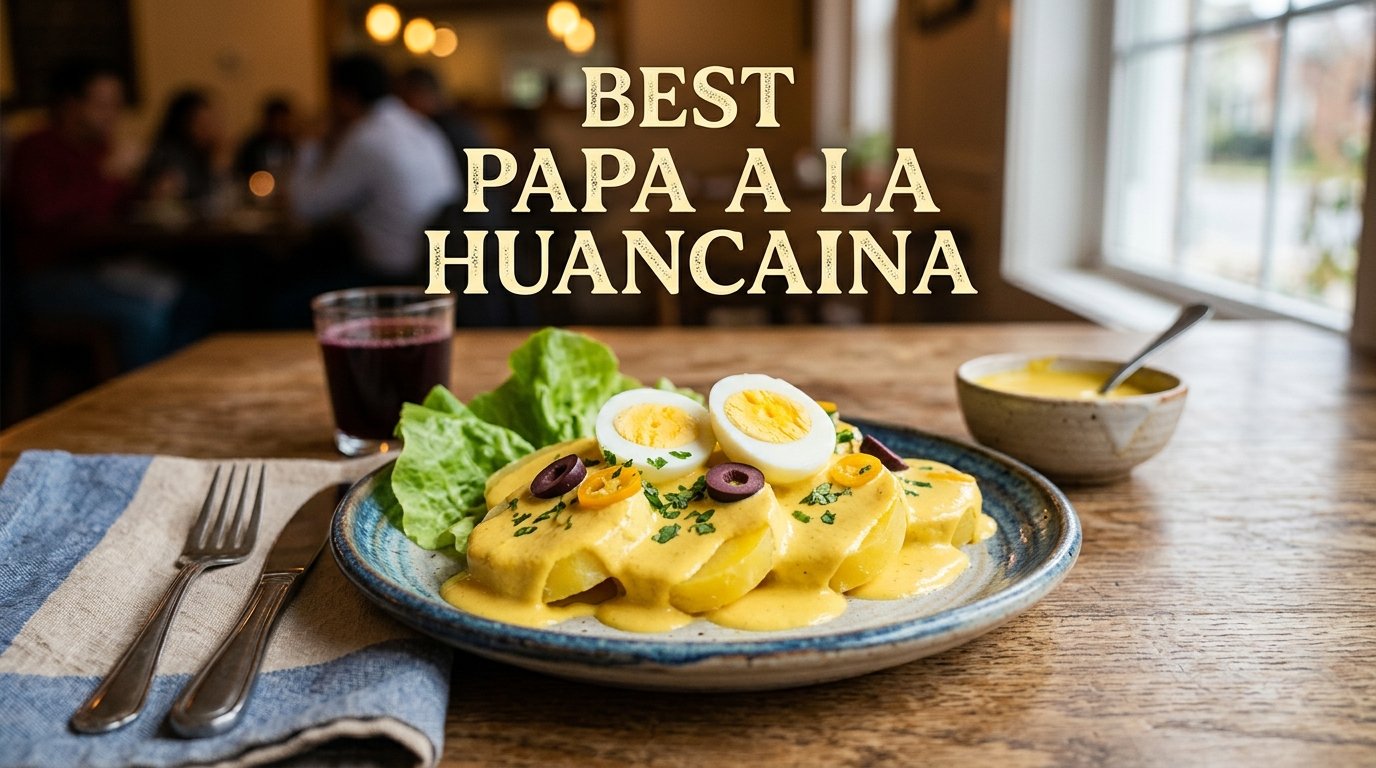
If you’re searching for the best papa a la huancaina near me, you already know this classic Peruvian dish is easy to find but hard to find done well. This guide shows you exactly what to look for, where to search, how prices compare, and how to make a restaurant-quality version yourself if your local options fall short.
Papa a la huancaina layers boiled potato slices with a creamy, spicy cheese sauce made from ají amarillo, queso fresco, and evaporated milk, typically served cold or at room temperature over a bed of lettuce. It’s one of Peru’s most iconic appetizers, found on nearly every traditional menu from casual lunch counters to upscale restaurants. In the sections ahead, you’ll learn how to judge quality at a local restaurant, what separates an authentic sauce from a rushed one, and how to recreate it in your own kitchen.
What Is Papa a la Huancaina?
Papa a la huancaina combines sliced boiled potato with a bright yellow, creamy sauce built from ají amarillo peppers, queso fresco, evaporated milk, and crackers or bread for thickness.
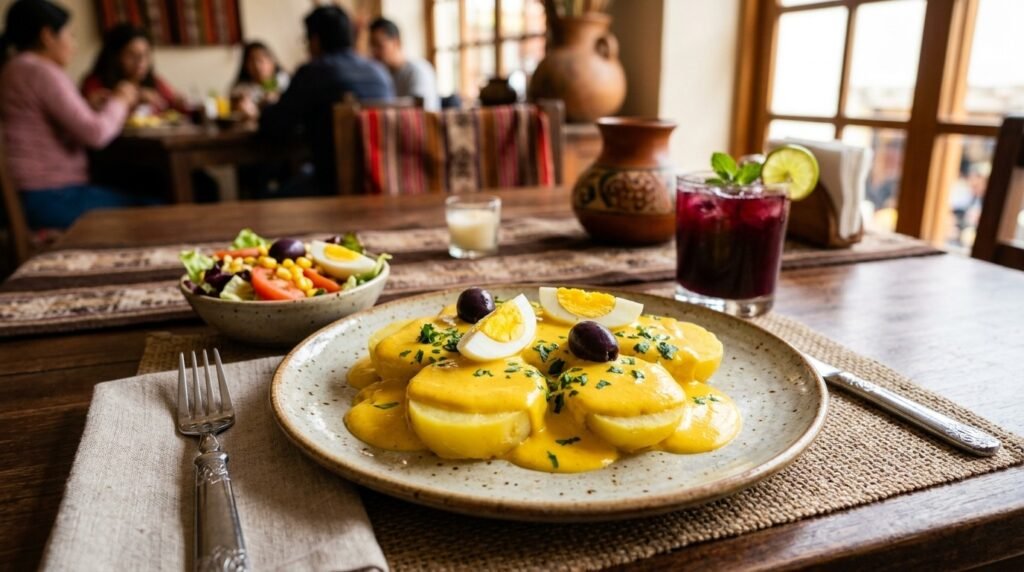
The dish takes its name from Huancayo, a city in Peru’s central highlands, where it’s believed to have originated as a way to feed railway workers a filling, portable meal. Over time, it spread across the country and became a staple starter in Peruvian restaurants everywhere. The sauce’s signature yellow color and moderate heat come from ají amarillo, a Peruvian chili pepper prized for its fruity flavor and manageable spice level rather than intense heat.
Common Names and Variations
- Papas a la huancaina (the plural form, often used interchangeably)
- Huancaína sauce (referring to just the sauce component, sometimes used on other dishes)
- Papa a la huancaina con huevo (specifying the addition of a hard-boiled egg)
- Ocopa (a related but distinct dish using huacatay instead of ají amarillo as the dominant flavor)
Knowing these naming variations helps when scanning a menu, since some restaurants list the dish with or without the traditional egg and olive garnish, and a few confuse it with ocopa, a similar-looking but differently flavored sauce.
Why People Search for the Best Papa a la Huancaina Near Me
People search for this dish because the sauce is deceptively simple to make poorly, and a truly great version stands out immediately.
The dish depends almost entirely on sauce quality, since the potato itself is plain and unseasoned. A sauce that’s too thin, too bland, or made with the wrong chili loses the dish’s signature character entirely. Because so few ingredients carry the entire flavor profile, quality varies enormously between restaurants, even within the same city. Many searchers also associate this dish with a specific memory of Peruvian cuisine, whether from travel or a family recipe, and they’re chasing that exact balance of creaminess, heat, and tang rather than settling for a bland imitation. Freshness matters too, since a sauce made fresh that day always tastes brighter than one that’s been refrigerated for days.
How to Evaluate a Local Restaurant for the Best Papa a la Huancaina Near Me
Judging this dish takes more than a quick taste test, since a handful of specific details reveal whether a kitchen understands the sauce and handles it with care.
Sauce Color and Texture
The sauce should look bright yellow to golden orange, never pale or grayish. It should coat the potato smoothly without being watery or overly thick and pasty. A properly blended sauce has a silky, pourable consistency.
Heat Level and Flavor Balance
Ají amarillo brings a distinct fruity flavor along with moderate heat. The sauce shouldn’t taste flat or one-dimensional, but it also shouldn’t be overwhelmed with harsh spiciness. A well-balanced version tastes tangy, slightly sweet, and creamy all at once.
Potato Quality
The potato itself should be tender but not falling apart, sliced evenly, and served at the right temperature, either chilled or at room temperature depending on the restaurant’s style. Overcooked, mushy potato slices signal a rushed preparation.
Freshness of the Sauce
Ask how often the kitchen prepares the sauce fresh, or look for reviews mentioning flavor consistency. A sauce that’s been sitting too long can separate slightly or lose its vibrant color, turning duller over time.
Presentation and Garnish
Traditional versions include a hard-boiled egg, a black olive, and a bed of lettuce underneath the potato. While not essential to flavor, these garnishes often signal a kitchen that’s following the traditional recipe closely rather than cutting corners.
Where to Look When Searching Locally
Papa a la huancaina rarely fails to appear on a Peruvian menu, but widening your search across restaurant types and keyword phrasings still helps you find the best local versions.
- Peruvian restaurants and cevicherías: These are the most reliable source, since this dish is a near-universal starter on traditional menus.
- Family-owned comfort food spots: Smaller, home-style restaurants often make the sauce from scratch daily, which tends to produce a fresher, more vibrant result than larger chains.
- Lunch-focused menus: Many Peruvian restaurants highlight starters like this one specifically during lunch service.
- Food delivery apps: Searching directly within a delivery platform sometimes surfaces smaller restaurants that don’t rank well in general web search.
- Community recommendations: Local Peruvian community groups or forums often share honest opinions about which restaurants nail the sauce’s balance of heat and creaminess.
Try multiple search phrasings, since listings vary: “papa a la huancaina,” “Peruvian potato appetizer near me,” and “huancaina sauce restaurant” each surface slightly different results depending on how a business describes its menu online. Combining a few of these searches gives you a fuller picture than relying on a single query for the best papa a la huancaina near me.
Reading Reviews the Right Way
Overall star ratings rarely capture the quality of one specific dish, so scanning review text for direct mentions of papa a la huancaina gives you a much clearer picture.
Look for comments about sauce flavor, spice level, and freshness rather than vague praise. A restaurant with an excellent overall rating might still serve a mediocre huancaina if most reviewers are actually praising its ceviche or lomo saltado instead. Pay close attention to recent reviews too, since kitchen staff changes and ingredient sourcing, especially the availability of good ají amarillo, can shift a restaurant’s sauce quality significantly within just a few months.
Price Expectations
Pricing for papa a la huancaina varies by restaurant type and region, but a few patterns hold across most markets.
- Casual or family-owned spots: These typically offer the most affordable version, often as a starter included in a lunch combo.
- Full-service Peruvian restaurants: Expect a moderate price increase, usually reflecting a larger portion size and more careful presentation with traditional garnishes.
- Upscale Peruvian dining: Some higher-end restaurants offer a refined, elevated version using specialty potato varieties or house-made ají paste, priced accordingly.
The most expensive option isn’t automatically the best. Some of the most satisfying versions of papa a la huancaina come from small, unpretentious family restaurants that have been perfecting the sauce recipe for years, which makes price a poor stand-alone indicator of the best papa a la huancaina near me.
Comparing Styles: Traditional, Modern, and Home-Style
Understanding the different approaches to papa a la huancaina helps you know exactly what you’re craving before you start searching.
Traditional Peruvian Style
- Bright yellow sauce made with fresh ají amarillo, queso fresco, and evaporated milk
- Potato served chilled or at room temperature over lettuce
- Garnished with a hard-boiled egg and a black olive
- Sauce blended smooth, with crackers or bread used sparingly for thickness
Modern Restaurant Interpretations
- Sometimes uses a milder ají paste for a less intense flavor, appealing to a broader audience
- May substitute a different cheese if queso fresco isn’t available locally
- Occasionally served warm instead of chilled, as a comfort-food twist
- Presentation-focused, often plated with additional garnishes like microgreens or a drizzle of oil
Home-Style Versions
- Highly variable based on family recipes passed down through generations
- Often more generous with sauce than restaurant portions
- Tends to use whatever chili paste or fresh peppers are available, adjusting heat to taste
- Best when eaten fresh, since the sauce’s texture and color hold up best the same day it’s made
Once you know which style resonates with your taste, your search becomes far more targeted, and you’ll waste less time on restaurants that don’t match what you’re actually craving.
Common Mistakes That Ruin a Good Papa a la Huancaina
Even well-reviewed restaurants occasionally get this dish wrong. Watching for these specific issues helps you avoid a disappointing plate.
- Using too little ají amarillo. Skimping on the star ingredient leaves the sauce pale and flavorless, missing the dish’s signature character entirely.
- Over-thickening the sauce. Adding too many crackers or too much bread creates a pasty texture that clings unpleasantly instead of coating the potato smoothly.
- Using low-quality or aged cheese. Cheese that isn’t fresh can make the sauce taste sour or overly salty instead of mild and creamy.
- Overcooking the potato. Potato slices that fall apart or turn mushy ruin the dish’s texture and make it harder to eat cleanly.
- Serving the sauce too cold or separated. A sauce straight from the refrigerator without proper blending can taste dull and look visually unappealing.
Making Papa a la Huancaina at Home
If your local search for the best papa a la huancaina near me doesn’t turn up a satisfying option, making it yourself gives you full control over spice level, texture, and freshness.
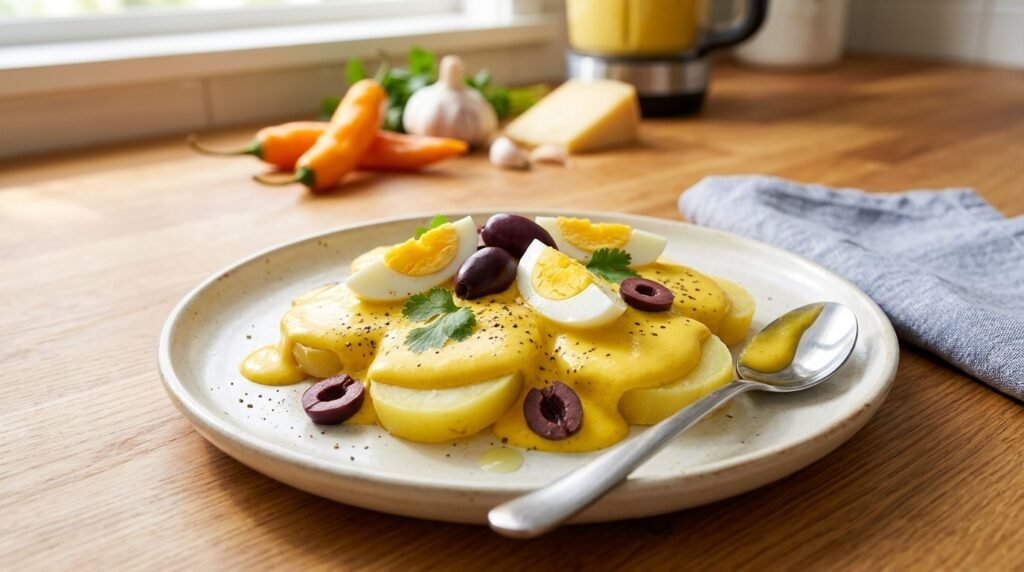
Basic Structure
- Potato: Yellow or white potatoes, boiled until just tender, then sliced.
- Sauce base: Fresh or jarred ají amarillo paste, blended with queso fresco and evaporated milk.
- Thickener: A small amount of crushed saltine crackers or plain crackers, added gradually.
- Aromatics: A touch of garlic and a splash of vegetable oil for smoothness.
- Garnish: Lettuce leaves, hard-boiled egg slices, and black olives.
Practical Tips for Better Results
- Blend the sauce ingredients thoroughly in a blender or food processor until completely smooth, with no visible cracker chunks.
- Adjust the amount of ají amarillo paste gradually, tasting as you go, since brands and freshness levels vary in heat intensity.
- Chill the sauce slightly before serving, since it thickens a bit as it cools and coats the potato better.
- Use waxy potato varieties that hold their shape well after boiling, rather than starchy varieties that fall apart easily.
- Taste and adjust salt at the end, since queso fresco varies in saltiness between brands.
Homemade versions also let you adjust for dietary needs. Use a milder chili paste for a less spicy version, swap in a dairy-free cheese alternative, or add extra garnishes without losing the core character of the dish.
Pairing Suggestions
Papa a la huancaina works well as a starter before a heartier Peruvian main course like lomo saltado or aji de gallina. For a light meal, pair it with a side of rice or a simple salad. A crisp, cold beer or a glass of chicha morada, the traditional Peruvian purple corn drink, complements the sauce’s creamy heat without overwhelming it.
Storing and Reheating Leftovers
Papa a la huancaina is best enjoyed fresh, since the sauce can separate slightly after refrigeration and lose some of its smooth texture. If you have leftovers, store the sauce and potato separately in airtight containers. Reheating isn’t traditional for this dish, since it’s meant to be served cold or at room temperature, but if the sauce separates, a quick blend can often restore some of its original consistency. Leftovers generally keep for a couple of days in the refrigerator, though the dish tastes noticeably better the same day it’s made.
Conclusion
Finding the best papa a la huancaina near me comes down to knowing exactly what separates a great plate from a disappointing one: a bright, smooth sauce with real ají amarillo flavor, tender potato, and traditional garnishes done with care. Peruvian restaurants, family-owned comfort food spots, and lunch-focused menus each offer different strengths, and reading dish-specific, recent reviews helps you avoid wasting money on a bland or rushed version.
If your local search doesn’t turn up a great option, making the dish at home isn’t difficult, and it puts you fully in control of spice level and freshness. With a properly blended sauce, quality ají amarillo, and well-cooked potato, a homemade version can easily rival what you’d find at a restaurant. Whether you order it or make it yourself, the best papa a la huancaina is the one with a vibrant, creamy sauce and every element prepared with real attention to detail.
Frequently Asked Questions
What does papa a la huancaina taste like?
It has a creamy, tangy sauce with moderate heat and a subtly fruity flavor from ají amarillo, paired with mild, unseasoned potato. The overall flavor is rich and slightly spicy, rather than overwhelmingly hot.
Is papa a la huancaina spicy?
It carries a moderate, manageable heat level from ají amarillo, which is known more for its fruity flavor than intense spiciness. Most versions are approachable even for people who don’t usually enjoy very spicy food.
Can I find papa a la huancaina at any Peruvian restaurant?
Most traditional Peruvian restaurants and cevicherías include it on their menu as a starter, though quality and freshness vary by location. Smaller, family-owned spots often make the sauce more consistently than larger chains, so it’s worth checking a few options before settling on the best papa a la huancaina near me.
How long does papa a la huancaina last in the fridge?
It generally keeps for a couple of days when stored properly, though the sauce’s texture and color hold up best the same day it’s made. For best results, store the potato and sauce separately.
Can I make papa a la huancaina without dairy?
Yes. You can substitute a plant-based cheese and milk alternative, though the flavor and texture will differ somewhat from the traditional version. Adjust seasoning slightly to compensate for the milder dairy-free option.
Why is my homemade huancaina sauce too thin?
This usually happens when the sauce doesn’t include enough crackers or bread as a thickener, or when too much evaporated milk goes in at once. Add crackers gradually while blending until the sauce reaches a smooth, coating consistency.