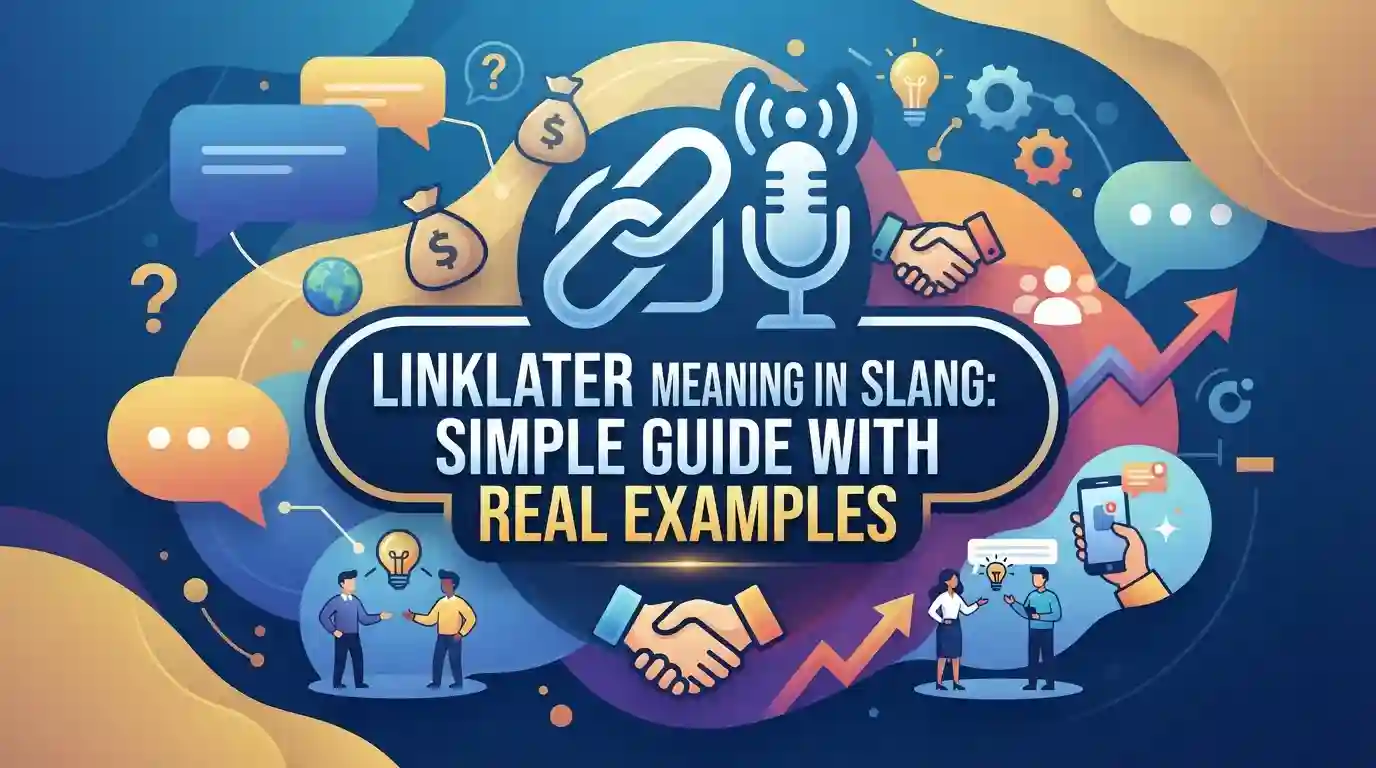
When it comes to internet slang, new words and phrases appear every day. Some terms become popular through social media, while others spread through texting, gaming, and online communities. One term that often confuses people is linklater meaning. Many people see it in chats, messages, or online conversations and wonder what it actually means.
What Does Linklater Mean in Slang?
The phrase linklater meaning refers to a casual way of saying, “Let’s meet later,” “We can connect later,” or “We will talk again later.” The word combines “link,” which means to meet or connect, and “later,” which refers to a future time.
People often use it when they are busy and cannot meet immediately. Instead of setting a specific time, they suggest connecting sometime later. The expression is common in texting, social media chats, and informal conversations among friends.
Examples include:
- “I’m working right now. Link later?”
- “Can’t talk at the moment. We’ll link later.”
- “Busy today, but let’s link later this evening.”
The phrase sounds relaxed and friendly. It keeps the conversation open without making a strict commitment.
The Origin of Linklater in Online Conversations
The exact origin of the phrase is difficult to trace. However, the word “link” has been used for years in urban slang and online communication to mean meeting someone in person.
As texting became more popular, people started shortening sentences to save time. Instead of writing “Let’s meet later,” they simply wrote “link later.” Over time, the phrase became common on messaging platforms.
Several factors helped its growth:
- Faster texting habits
- Social media communication
- Mobile messaging apps
- Informal online culture
- Youth slang trends
Today, many people use the phrase naturally without thinking about its origin.
How Link Later Is Used in Everyday Chats
People use the phrase in many situations. The meaning usually stays the same, but the context can change.
Meeting Friends
Friends often use the phrase when planning to meet after finishing work, school, or other responsibilities.
Example:
Person A: “Are you free now?”
Person B: “Not yet. Let’s link later.”
The response shows interest in meeting while postponing the timing.
Continuing a Conversation
Sometimes people use it when they cannot continue chatting.
Example:
- “I have class now. We can link later.”
- “My battery is low. Link later.”
In these cases, it means talking again in the future.
Making Casual Plans
The phrase can also suggest plans without choosing an exact schedule.
Example:
- “We should link later this week.”
- “Let’s link later and discuss the project.”
This usage keeps plans flexible.
Linklater Meaning in Text Messages
The linklater meaning in text messages is usually straightforward. It means someone wants to reconnect at another time.
Texting examples include:
| Message | Meaning |
| Link later? | Can we meet later? |
| We’ll link later | We will connect later |
| Let’s link later tonight | Let’s meet tonight |
| Can’t talk now, link later | Let’s continue later |
| Busy rn, link later | I’m busy right now |
The phrase works as a quick replacement for longer sentences.
Because texting encourages short communication, expressions like this become popular very quickly.
LinkLater Meaning on Social Media
Social media users frequently use the phrase in comments, direct messages, and posts.

Examples:
- “I’m offline now, link later.”
- “Anyone free to link later?”
- “We’ll link later after the event.”
On platforms like Instagram, TikTok, Snapchat, and X, people often use casual slang. The phrase fits naturally into that style of communication.
Social media users like it because it sounds friendly and relaxed. It also avoids the pressure of setting exact meeting times.
Examples of Link Later in Real Conversations
Below are realistic examples showing how people use the phrase.
Example 1
Friend A:
“Want to grab coffee now?”
Friend B:
“Can’t. Still working. Let’s link later.”
Example 2
Person A:
“Can you call me?”
Person B:
“In a meeting right now. Link later.”
Example 3
Friend A:
“Are we hanging out tonight?”
Friend B:
“Yeah, we’ll link later.”
Example 4
Person A:
“Need help with the assignment.”
Person B:
“I’m busy now. Let’s link later and go through it.”
Example 5
Friend A:
“Are you online?”
Friend B:
“Not for long. Link later.”
These examples show the flexibility of the phrase.
Common Slang Similar to Link Later
Many internet expressions have similar meanings.
Meet Up
This phrase directly means gathering in person.
Example:
- “Let’s meet up tomorrow.”
Catch Up
This often means talking and sharing updates.
Example:
- “We should catch up this weekend.”
Hit Me Up Later
This means contacting someone later.
Example:
- “Hit me up later when you’re free.”
Talk Later
A simple and widely used phrase.
Example:
- “I’m busy now. Talk later.”
Connect Later
This is a more professional version.
Example:
- “Let’s connect later this week.”
Each phrase shares a similar idea but carries a slightly different tone.
Common Mistakes People Make
Many people misunderstand the phrase because slang evolves quickly.
Assuming It Means a Specific Time
The phrase usually does not include an exact schedule.
Wrong assumption:
- “They promised to meet at 7 PM.”
Actual meaning:
- “They want to connect sometime later.”
Thinking It Only Means Meeting in Person
The phrase can refer to texting, calling, gaming, or online chatting.
Using It in Formal Situations
The phrase works best in casual communication.
Formal alternatives include:
- “Let’s reconnect later.”
- “We can discuss this later.”
- “I’ll contact you later.”
Overusing Slang at Work
Professional communication often requires clearer language.
Business emails usually benefit from more direct wording.
Is Link Later Positive or Negative?
The phrase is generally neutral or positive.
Positive uses:
- Making plans with friends
- Continuing a conversation
- Scheduling future communication
Neutral uses:
- Delaying a discussion
- Postponing a meeting
Negative uses are uncommon. However, if someone repeatedly says “link later” without following through, others may view it as avoidance.
The meaning depends more on behavior than the phrase itself.
How to Respond When Someone Says Link Later
Several responses work naturally.
Agree to the Plan
- “Sounds good.”
- “Sure, talk later.”
- “Okay, see you later.”
Ask for a Time
- “What time works for you?”
- “Later tonight?”
- “When should we connect?”
Suggest an Alternative
- “Tomorrow works better for me.”
- “Can we do it this weekend?”
Confirm Availability
- “I’ll be free after six.”
- “Message me when you’re ready.”
These responses help keep communication clear.
Is Link Later Popular Among Gen Z?
Gen Z users often adopt new slang quickly. The phrase appears frequently in digital communication because it matches modern texting habits.
Reasons for its popularity include:
- Short wording
- Easy typing
- Casual tone
- Social media influence
- Mobile-first communication
Younger users especially prefer phrases that feel natural and conversational.
However, people from many age groups now use the expression online.
Will Link Later Continue to Be Popular?
Internet slang changes rapidly, but some expressions remain useful because they solve a communication need.
The phrase survives because it:
- Is easy to understand
- Saves typing time
- Works in many situations
- Sounds friendly
- Adapts across platforms
Even if new slang emerges, the phrase will likely remain familiar because its meaning is simple and practical.
Frequently Asked Questions
What is the linklater meaning in texting?
The linklater meaning in texting is usually “let’s meet later,” “let’s talk later,” or “let’s connect later.” It suggests future communication without setting an exact time.
Does link later mean meeting in person?
Not always. It can mean meeting face-to-face, making a phone call, texting later, or chatting online depending on the conversation.
Is link later formal or informal?
The phrase is informal. People mainly use it with friends, family members, classmates, and online contacts rather than in professional communication.
Can link later mean calling someone?
Yes. Many people use the phrase when they plan to call, text, or continue a conversation at a later time.
Why do people say link later?
People use it because it is short, convenient, and friendly. It quickly communicates the idea of connecting in the future.
Is link later common on social media?
Yes. The phrase appears regularly on messaging apps, social platforms, gaming chats, and online communities where casual communication is common.
Conclusion
Understanding linklater meaning is simple once you know the context. The phrase combines the idea of connecting with someone and doing so at a later time. Whether people use it in text messages, social media conversations, gaming chats, or everyday communication, the core message remains the same: “We’ll connect later.”
Its popularity comes from its simplicity, flexibility, and casual tone. Instead of writing longer sentences, users can quickly communicate plans with just two words. The phrase may refer to meeting in person, talking on the phone, texting again, or continuing an online conversation. Context helps determine the exact meaning.
As digital communication continues to evolve, slang terms like this will remain part of everyday conversations. Knowing how and when to use them can make online interactions easier and more natural. Once you understand the expression, you can confidently recognize it and respond appropriately whenever it appears in a conversation.