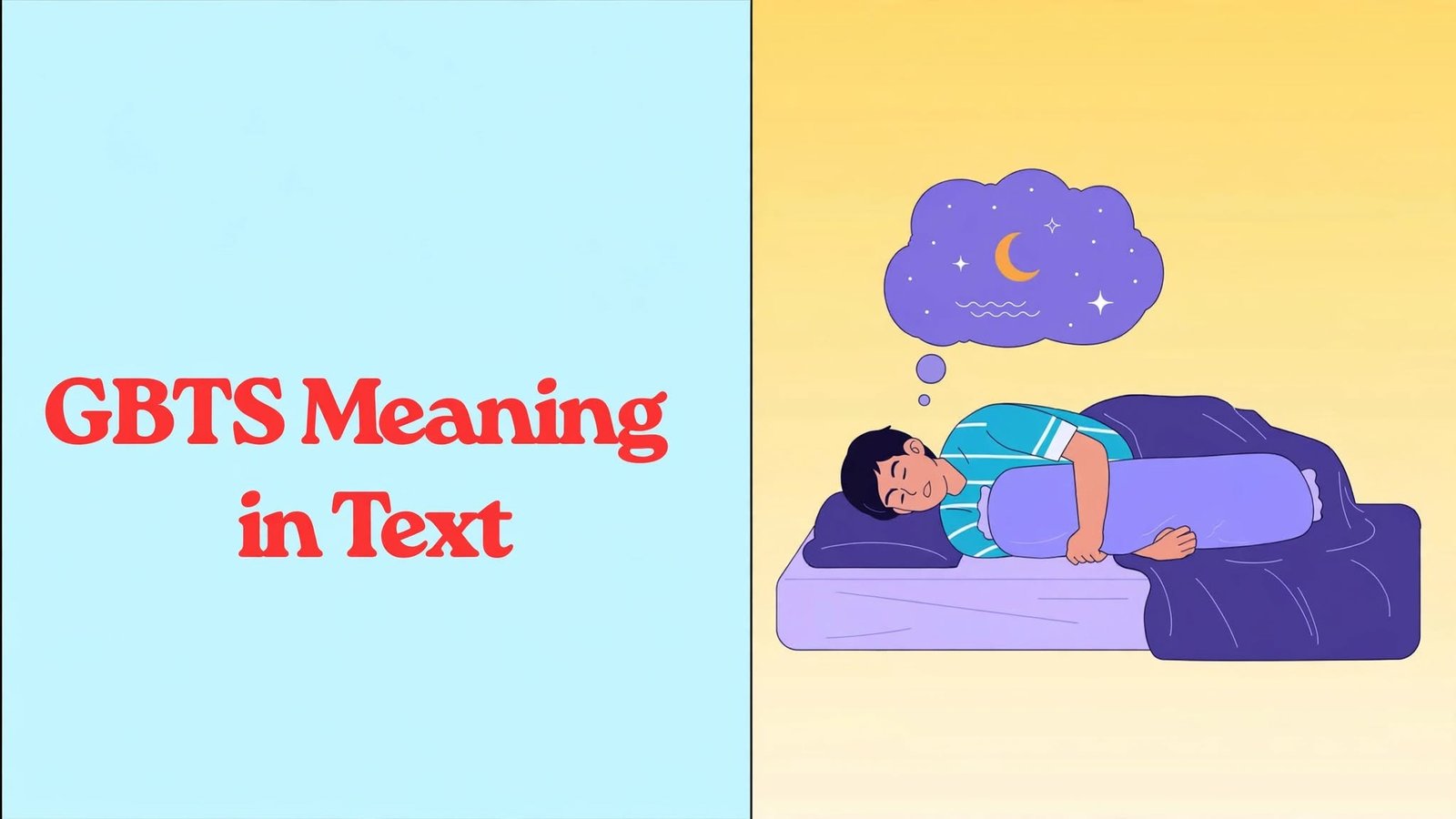
When it comes to texting, short forms can make conversations faster, but they can also confuse people who do not know the slang. GBTS meaning in text, usually refers to “Go Back to Sleep.” People often use GBTS in casual texts, chats, comments, and social media messages when they want someone to return to sleep.
What Does GBTS Mean in Text?
GBTS meaning in text is “Go Back to Sleep.” It tells someone to return to bed, stop being awake, or continue sleeping when there is no need to get up yet.
The abbreviation usually appears in informal digital conversations. Friends, couples, family members, and online users may use it when someone wakes up too early, complains about being tired, or sends a message during sleeping hours.
For example:
Person A: “I woke up at 5 AM and cannot sleep again.”
Person B: “GBTS 😂”
Here, the person is jokingly telling the other person to go back to sleep.
The meaning is simple, but the tone can change based on the relationship between the people. A close friend may use it as a joke, while someone else could use it as a short command.
GBTS Meaning in Text and Why People Use It
The main reason people use GBTS is convenience. Texting abbreviations reduce a longer phrase to a few letters, making casual conversations quicker and easier.
People also use short forms because they fit the relaxed style of texting. A message such as “GBTS” can feel more playful than writing the complete phrase.
Common reasons for using the abbreviation include:
- Telling someone to return to sleep
- Joking with a person who woke up too early
- Responding to a late-night or early-morning message
- Telling a tired person to rest
- Teasing someone who says they are exhausted
- Making a short social media reply
The meaning often becomes clear from the surrounding conversation. If someone says, “I only slept for three hours,” a reply such as “GBTS” probably means they should get more sleep.
However, context always matters with internet slang. Some abbreviations can have more than one meaning, and GBTS may occasionally be interpreted differently in specialized communities.
How GBTS Sounds in a Conversation
Tone plays an important role in understanding abbreviations. GBTS can sound caring, humorous, teasing, or blunt depending on the wording around it.
A friendly message might say:
“You look exhausted. GBTS and get some rest.”
A humorous message might say:
“You are awake at 4 AM? GBTS 😂”
A more direct message might simply say:
“GBTS.”
The final version can sound much stronger because it contains no explanation or softening language.
Emojis can also change how the message feels. A laughing emoji may show that the sender is joking, while a heart can make the message feel caring.
Therefore, do not judge the tone from the abbreviation alone. Consider the complete conversation, the relationship between the people, and the circumstances.
Is GBTS Rude or Friendly?
GBTS is not automatically rude. Its tone depends heavily on context, relationship, and delivery. Among close friends, it can be a harmless joke, while a short reply from someone unfamiliar may feel abrupt.
Consider these two examples:
“GBTS 😂 You have work tomorrow!”
This sounds playful because the sender adds a laughing emoji and explains the reason.
Now consider:
“GBTS.”
This can sound more direct. If the recipient keeps messaging someone who wants to sleep, the sender may use it to end the conversation.
The phrase can therefore have several tones:
Friendly: The sender encourages someone to rest.
Playful: The sender jokes about the person’s unusual sleeping schedule.
Caring: The sender wants someone to get enough sleep.
Teasing: The sender makes fun of someone for being awake too early or late.
Blunt: The sender wants the conversation to stop.
The relationship between the people is often the most important clue.
Examples of GBTS in Text Messages
Realistic examples make texting abbreviations much easier to understand. The following conversations show how the abbreviation can work in different situations.
Example 1: Waking Up Too Early
A: “I woke up at 4:45, and now I am wide awake.”
B: “GBTS 😂”
The second person is jokingly telling the first person to go back to sleep.
Example 2: Feeling Tired
A: “I only slept for two hours.”
B: “GBTS. You need more rest.”
Here, the phrase sounds caring rather than sarcastic.
Example 3: Late-Night Messaging
A: “Are you still online?”
B: “Yes.”
A: “GBTS! It is almost 3 AM.”
The sender wants the other person to stop staying awake and get some rest.
Example 4: A Funny Reply
A: “I just made coffee at 5 AM.”
B: “GBTS 😭”
The reply is humorous because the person seems to be awake at an unusual time.
Example 5: Couple Conversation
A: “I cannot sleep.”
B: “Put your phone away and GBTS ❤️”
The message encourages the person to stop using their phone and return to sleep.
Example 6: Friend Group Chat
A: “Who is awake?”
B: “Me.”
C: “GBTS, everyone else is sleeping 😂”
The abbreviation works as a playful response in a group conversation.
How to Reply When Someone Says GBTS
Your response should depend on what the sender means. If they are joking, you can answer with another joke. If they are concerned about your sleep, a simple acknowledgment works well.
You could reply:
“I’m trying 😂”
Or:
“I wish I could!”
If you actually plan to sleep, you can say:
“Okay, okay. Going back to bed.”
If you are already awake and cannot sleep, you might explain:
“I tried, but I’m wide awake.”
A playful response could be:
“Make me 😂”
The best response depends on your relationship with the sender and the tone of the conversation.
When Should You Use GBTS?
GBTS works best in casual conversations where the other person understands texting slang. It can fit naturally in messages between friends, family members, partners, and online acquaintances.
Good situations include:
- Casual chats
- Friendly jokes
- Late-night conversations
- Early-morning messages
- Social media comments
- Informal group chats
You should generally avoid unexplained slang in formal communication. A workplace email, customer message, academic assignment, or professional document needs clear language.
Instead of writing GBTS to a client, for example, you could say:
“You should get some rest.”
That version is easier for everyone to understand and sounds more professional.
Why Texting Abbreviations Like GBTS Are Popular
Texting language continues to evolve as people communicate through phones, messaging apps, social platforms, and online communities. Abbreviations save space and make informal messages faster.
Short forms also create a sense of familiarity. Friends who regularly use the same slang can communicate with very few words.
GBTS is easy to understand once the letters are connected to the phrase. The first letters represent the main words:
G = Go
B = Back
T = To
S = Sleep
This initial-letter pattern is common in online communication. Many texting abbreviations work in the same basic way.
The popularity of short forms also comes from the conversational nature of messaging. People often write texts in a way that resembles quick speech rather than formal writing.
Frequently Asked Questions
What is GBTS meaning in text?
GBTS commonly stands for “Go Back to Sleep.” People use it when they want someone to return to sleep, often in a casual, funny, or caring conversation.
Is GBTS a slang word?
Yes, GBTS is best understood as informal texting shorthand. It is more suitable for casual digital communication than formal writing.
Is GBTS rude?
Not necessarily. The tone depends on the conversation. Between friends, it may be a joke. In another situation, a short “GBTS” could sound blunt or dismissive.
Can I use GBTS with friends?
Yes. It fits casual conversations well, especially when talking about sleep, tiredness, waking up early, or staying awake late.
What does GBTS mean from a friend?
When a friend sends GBTS during a conversation about sleeping, it normally means “Go Back to Sleep.” Their tone may be playful, caring, or teasing depending on the context.
Should I use GBTS in professional messages?
It is better to avoid unexplained texting abbreviations in professional communication. Writing “go back to sleep” or “get some rest” is clearer and more appropriate.
Final Thoughts
Understanding texting slang makes online conversations easier because short forms often carry meaning that is not obvious at first glance. GBTS Meaning in Text generally refers to “Go Back to Sleep,” especially when someone talks about waking up early, staying awake late, or feeling tired. The abbreviation can sound funny, caring, teasing, or direct depending on the relationship and surrounding conversation.
The easiest way to understand GBTS is to look at the context. If the conversation involves bedtime or tiredness, the meaning is usually straightforward. Emojis and additional words can also help reveal the sender’s tone.