
Many people look for things to eat that are soft because they are easier to chew, gentler on the stomach, and often more comfortable to enjoy than harder foods. Whether you’re recovering from dental work, helping an older family member eat comfortably, introducing foods to a toddler, or simply craving something soothing, foods with a tender texture can be a great choice.
Soft foods come in many forms, from fresh fruits and cooked vegetables to protein-rich meals and comforting homemade dishes. They can be nutritious, satisfying, and versatile enough for breakfast, lunch, dinner, or snacks. Many are naturally easy to digest and require little effort to chew, making them ideal for people with different dietary needs.
What Are Some Things to Eat That Are Soft Foods?
Soft foods are foods that have a tender texture and require minimal chewing. They can be naturally soft, such as bananas and yogurt, or become softer through cooking, blending, mashing, or pureeing.
People often choose these foods because they are:
- Easier to chew
- Comfortable for sensitive teeth or gums
- Gentler on digestion
- Suitable during illness or recovery
- Convenient for babies and older adults
Common situations where soft foods are helpful include:
- After dental procedures
- During orthodontic treatment
- Recovery from surgery or illness
- Digestive discomfort
- Feeding infants and toddlers
- Supporting seniors with chewing difficulties
The good news is that soft healthy foods can still provide plenty of vitamins, minerals, protein, and fiber when chosen carefully.
Things to Eat That Are Soft (Complete List)
Soft Fruits Examples
Many fruits naturally have a smooth and tender texture, making them excellent foods that are easy to eat.
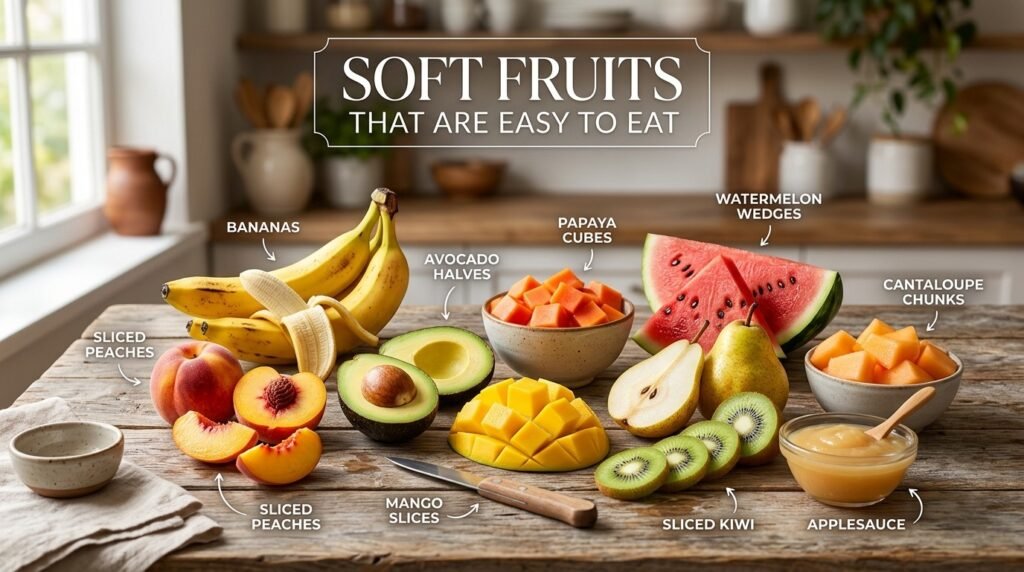
1. Bananas
Bananas are one of the most popular choices because they are naturally creamy and rich in potassium.
2. Ripe Peaches
When fully ripe, peaches become juicy and easy to bite into.
3. Avocados
Although technically a fruit, avocados have a buttery texture and provide healthy fats.
4. Mangoes
Ripe mangoes are soft, sweet, and packed with vitamin C.
5. Papaya
Papaya is gentle on digestion and has a smooth consistency.
6. Watermelon
The high water content makes watermelon tender and refreshing.
7. Ripe Pears
Soft pears offer fiber and natural sweetness.
8. Kiwi
A ripe kiwi becomes very tender and easy to chew.
9. Cantaloupe
This melon has a delicate texture when fully ripe.
10. Applesauce
Applesauce provides the flavor of apples in a much softer form.
Soft Vegetable Examples
Cooking vegetables can create nutritious foods with a soft texture that are easy to consume.
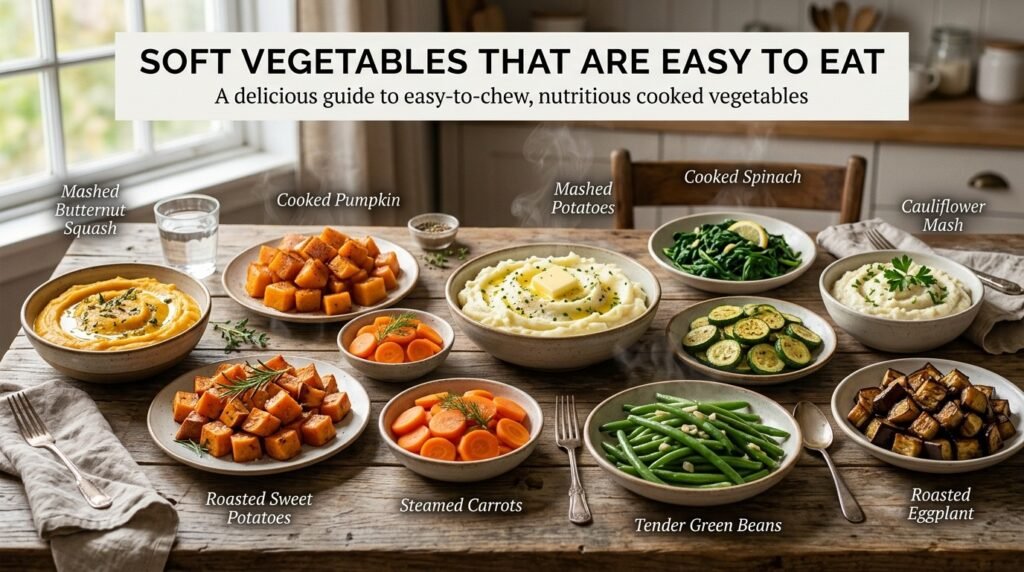
1. Mashed Potatoes
A classic option that is filling and simple to prepare.
2. Sweet Potatoes
Cooked sweet potatoes become creamy and naturally sweet.
3. Steamed Carrots
Carrots soften significantly when steamed or boiled.
4. Pumpkin
Cooked pumpkin develops a smooth consistency.
5. Butternut Squash
This vegetable becomes tender and easy to mash.
6. Zucchini
Cooked zucchini is mild and very easy to chew.
7. Eggplant
Roasted or baked eggplant becomes soft and silky.
8. Spinach
Cooked spinach loses much of its firmness.
9. Green Beans
When cooked thoroughly, green beans become tender.
10. Cauliflower Mash
A nutritious alternative to mashed potatoes.
Soft Dairy Foods Examples
Dairy products are often among the easiest foods to enjoy because of their naturally smooth texture.
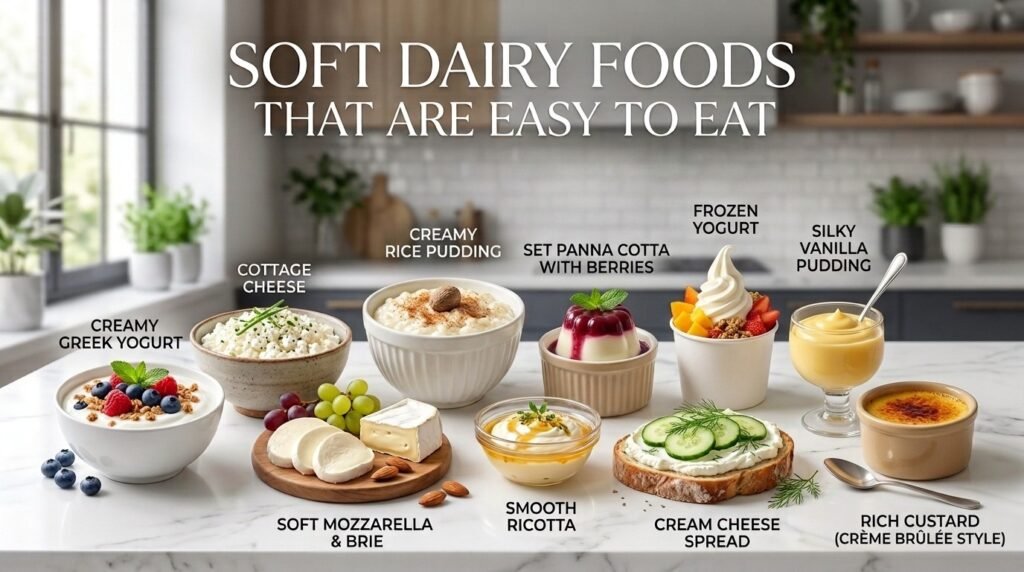
1. Yogurt
Greek yogurt and regular yogurt provide protein and probiotics.
2. Cottage Cheese
Soft curds make cottage cheese easy to consume.
3. Ricotta Cheese
This creamy cheese works well in both sweet and savory dishes.
4. Cream Cheese
Often spread on soft bread or mixed into recipes.
5. Pudding
A smooth dessert that requires no chewing.
6. Custard
Rich and creamy with a delicate consistency.
7. Soft Cheese
Examples include mozzarella and brie.
8. Kefir
A drinkable cultured dairy product.
9. Frozen Yogurt
Provides a softer alternative to harder frozen treats.
10. Milk-Based Smoothies
These combine dairy with fruits and other nutritious ingredients.
Soft Protein Foods Examples
Protein remains important even when following a softer diet.
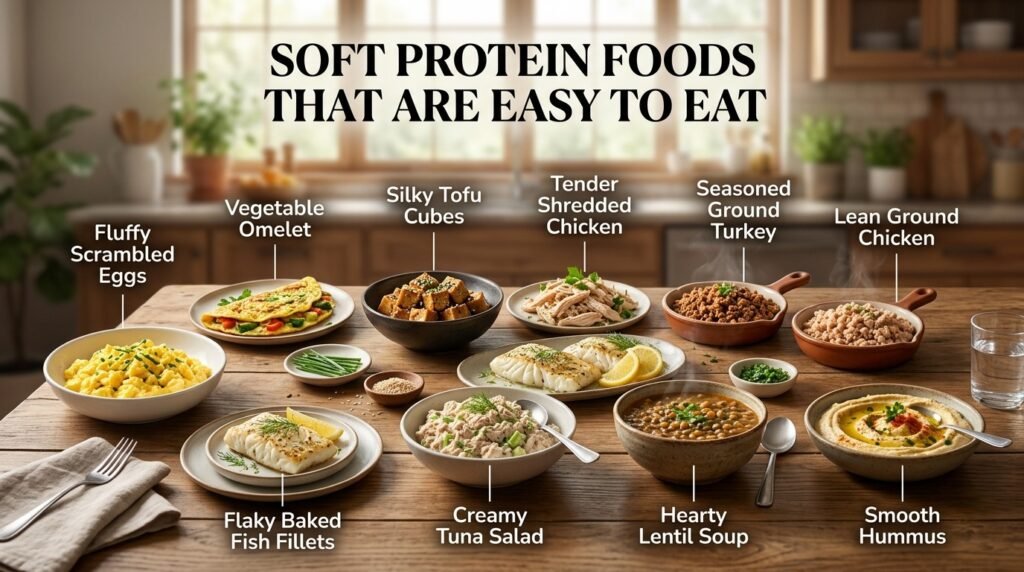
1. Scrambled Eggs
Light, fluffy, and packed with nutrients.
2. Omelets
Especially when filled with cooked vegetables or cheese.
3. Tofu
Silken tofu is particularly smooth and versatile.
4. Shredded Chicken
Slow-cooked chicken becomes very tender.
5. Ground Turkey
Easy to chew when cooked properly.
6. Ground Chicken
A good source of lean protein.
7. Baked Fish
Fish naturally flakes apart with minimal effort.
8. Tuna Salad
Prepared with mayonnaise or yogurt for a creamy texture.
9. Lentil Soup
Provides plant-based protein in an easy-to-eat form.
10. Hummus
Made from blended chickpeas and healthy ingredients.
Soft Breakfast Foods Examples
Starting the day with easy-to-chew foods can be both comforting and nutritious.
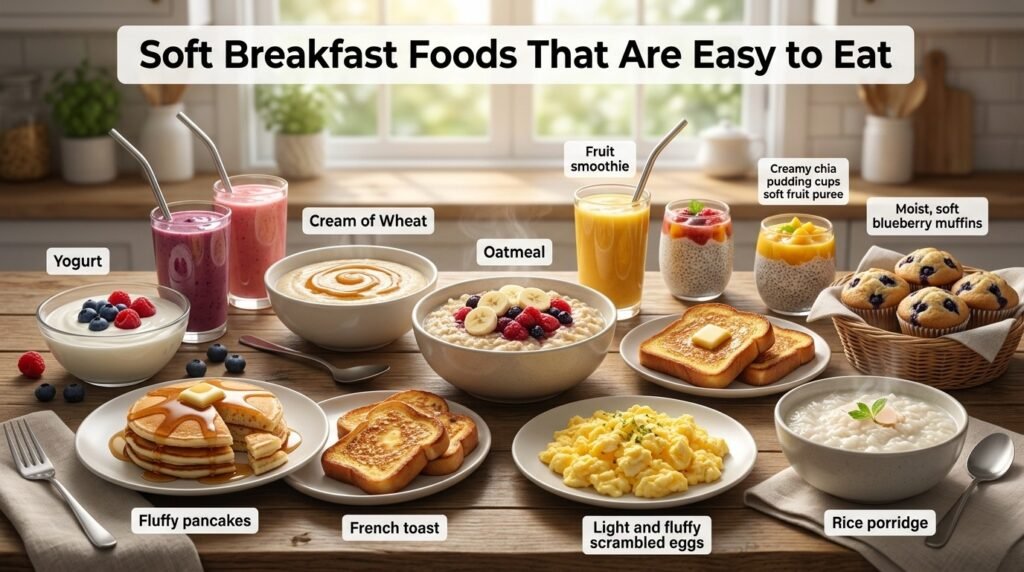
1. Oatmeal
Warm, filling, and customizable.
2. Cream of Wheat
A smooth hot cereal option.
3. Pancakes
Soft and easy to cut into bite-sized pieces.
4. French Toast
Tender texture when prepared properly.
5. Scrambled Eggs
A breakfast favorite rich in protein.
6. Yogurt Bowls
Combine yogurt with soft fruits.
7. Smoothies
An excellent way to include fruits and protein.
8. Chia Pudding
Soft and packed with fiber.
9. Soft Muffins
Moist muffins can be easy to chew.
10. Rice Porridge
A comforting breakfast enjoyed around the world.
Soft Comfort Foods Examples
Comfort foods often provide warmth and familiarity during recovery or stressful times.
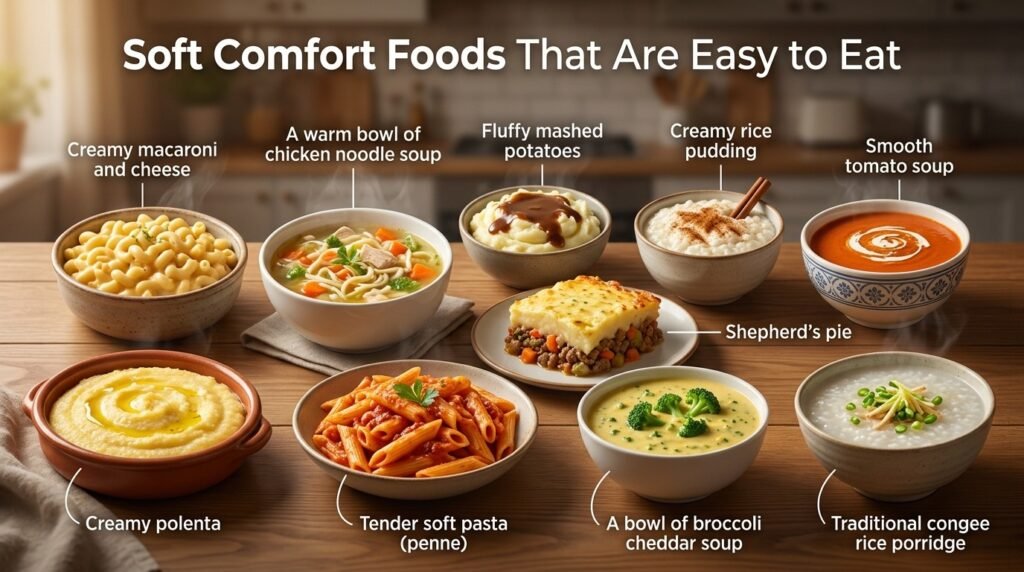
1. Macaroni and Cheese
Creamy and satisfying.
2. Chicken Noodle Soup
A classic comfort meal.
3. Mashed Potatoes and Gravy
Soft and flavorful.
4. Rice Pudding
A sweet dish with a smooth consistency.
5. Tomato Soup
Warm and soothing.
6. Shepherd’s Pie
Features a soft potato topping.
7. Creamy Polenta
Smooth and filling.
8. Soft Pasta
Cooked until tender and served with sauce.
9. Broccoli Cheddar Soup
A rich and comforting choice.
10. Congee
A rice porridge popular in many cultures.
Healthy Soft Foods to Add to Your Diet
Some of the best soft healthy foods include:
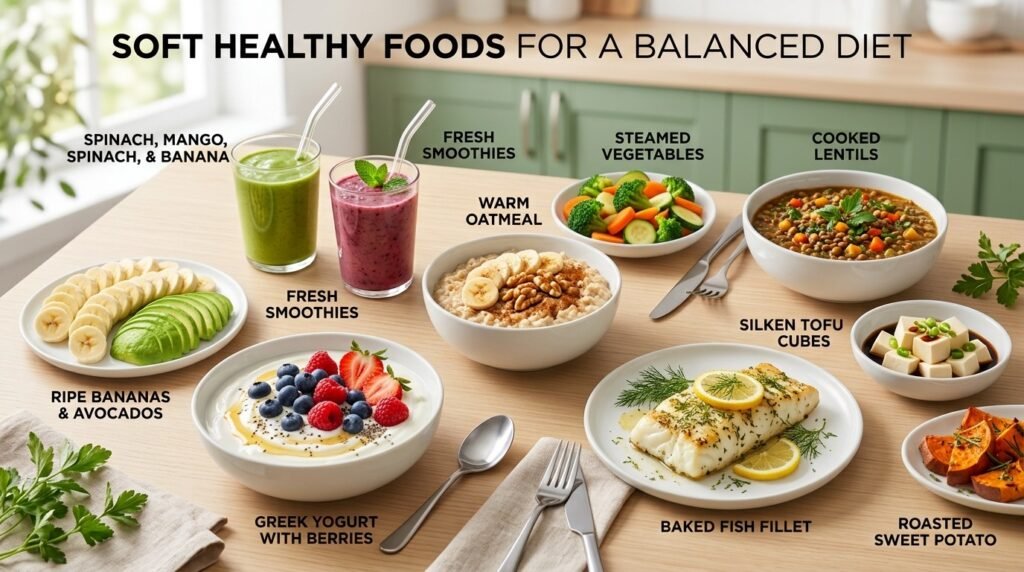
- Greek yogurt
- Bananas
- Avocados
- Oatmeal
- Lentils
- Silken tofu
- Sweet potatoes
- Cooked vegetables
- Smoothies made with fruits and vegetables
- Baked fish
These foods provide important nutrients such as:
- Protein for muscle maintenance
- Fiber for digestive health
- Healthy fats for heart health
- Vitamins and minerals for overall wellness
For balanced meals, try combining different food groups. For example:
Breakfast: Oatmeal with mashed banana.
Lunch: Lentil soup with soft cooked vegetables.
Dinner: Baked fish with mashed sweet potatoes.
Snack: Greek yogurt with ripe peaches.
This approach helps ensure you receive a variety of nutrients while still enjoying foods that are easy to eat.
Soft Foods for Different Needs
Soft Foods After Dental Procedures
After tooth extraction, dental implants, or oral surgery, it is important to choose foods that do not require significant chewing.
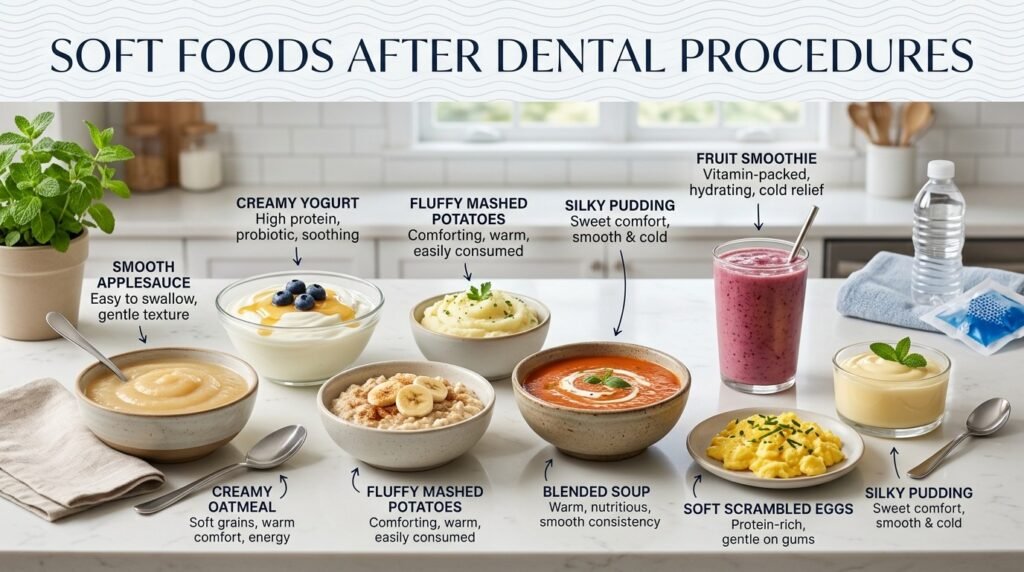
Good options include:
- Applesauce
- Yogurt
- Mashed potatoes
- Smooth soups
- Scrambled eggs
- Pudding
- Smoothies
- Oatmeal
Avoid crunchy, spicy, or hard foods until healing occurs.
Soft Foods for Older Adults
Many seniors experience changes in chewing ability due to dental issues or age-related conditions.
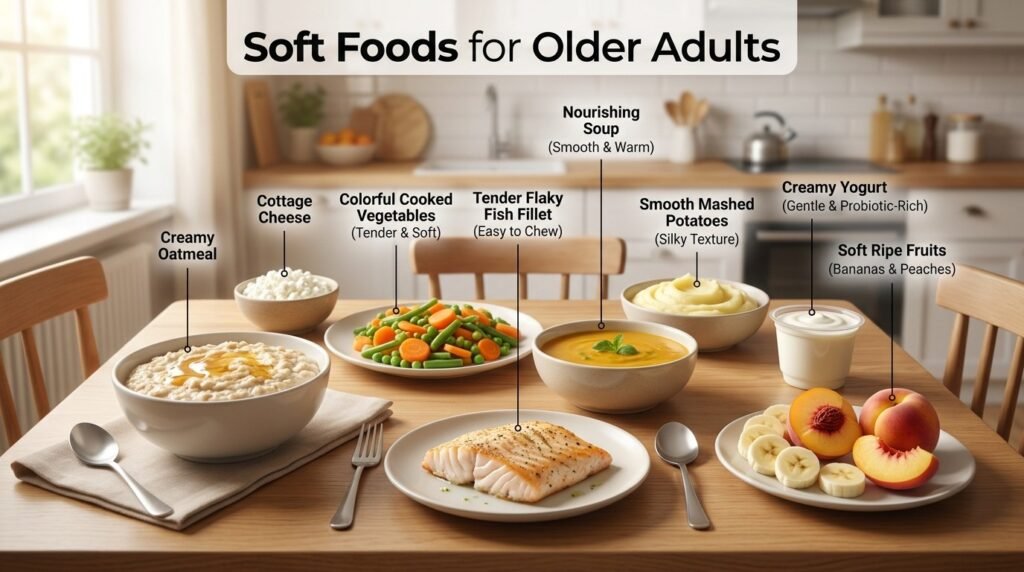
Helpful choices include:
- Oatmeal
- Cottage cheese
- Cooked vegetables
- Tender fish
- Soups
- Mashed potatoes
- Yogurt
- Soft fruits
Focus on nutrient-dense foods to support overall health.
Soft Foods for Babies and Toddlers
Young children often need foods that are safe and easy to manage.
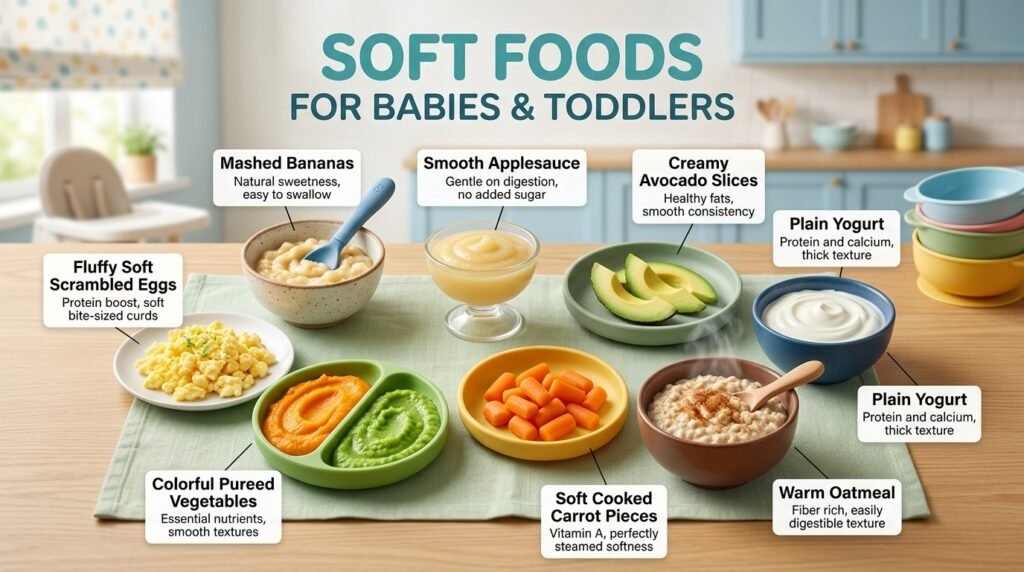
Popular examples include:
- Mashed bananas
- Applesauce
- Avocado
- Yogurt
- Oatmeal
- Soft cooked carrots
- Pureed vegetables
- Soft scrambled eggs
Always consider age-appropriate feeding guidelines.
Soft Foods When Recovering From Illness
Recovery often requires gentle, nourishing meals.
Recommended options include:
- Chicken soup
- Rice porridge
- Smoothies
- Mashed sweet potatoes
- Yogurt
- Broth-based soups
- Oatmeal
- Soft fruits
These choices can provide hydration and energy while being easier on the digestive system.
How to Make Foods Softer and Easier to Eat
Many regular foods can become more manageable with simple preparation methods.
Cook Longer
Steaming, boiling, roasting, and slow-cooking can significantly soften vegetables and meats.
Blend Foods
Blenders can transform fruits, vegetables, and proteins into smoothies, soups, and purees.
Mash Ingredients
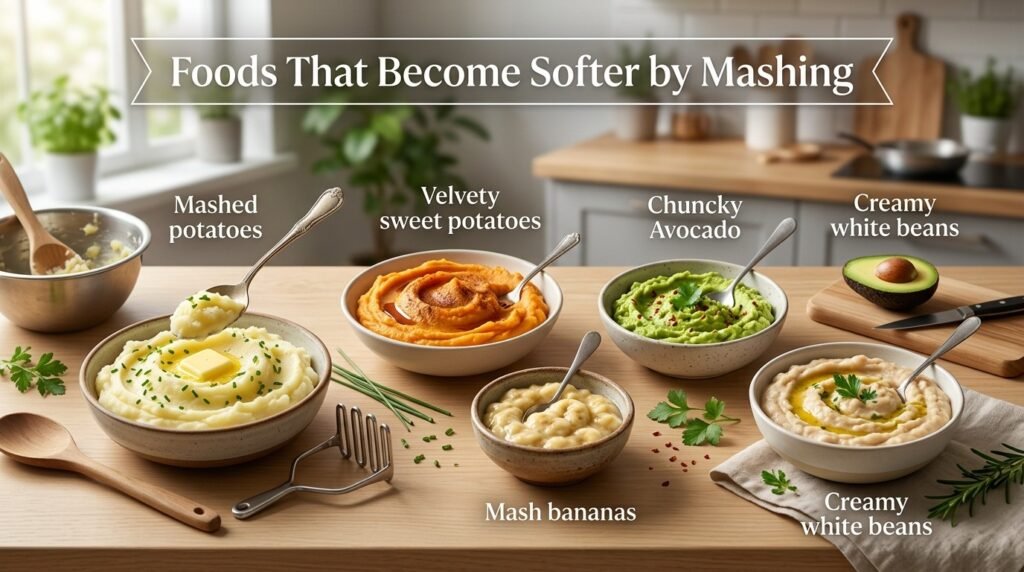
Mashing works well for:
- Potatoes
- Sweet potatoes
- Bananas
- Avocados
- Beans
Add Sauces and Broths
Moisture helps improve texture and makes food easier to chew.
Examples include:
- Gravy
- Broth
- Yogurt-based sauces
- Tomato sauce
- Cheese sauce
Choose Naturally Tender Ingredients
Selecting foods that already have a soft texture often requires less preparation and can save time.
Cut Food Into Smaller Pieces
Smaller portions reduce chewing effort and can improve comfort.
Foods That Are Soft but Less Healthy
While many foods with soft texture are nutritious, some should be enjoyed in moderation.
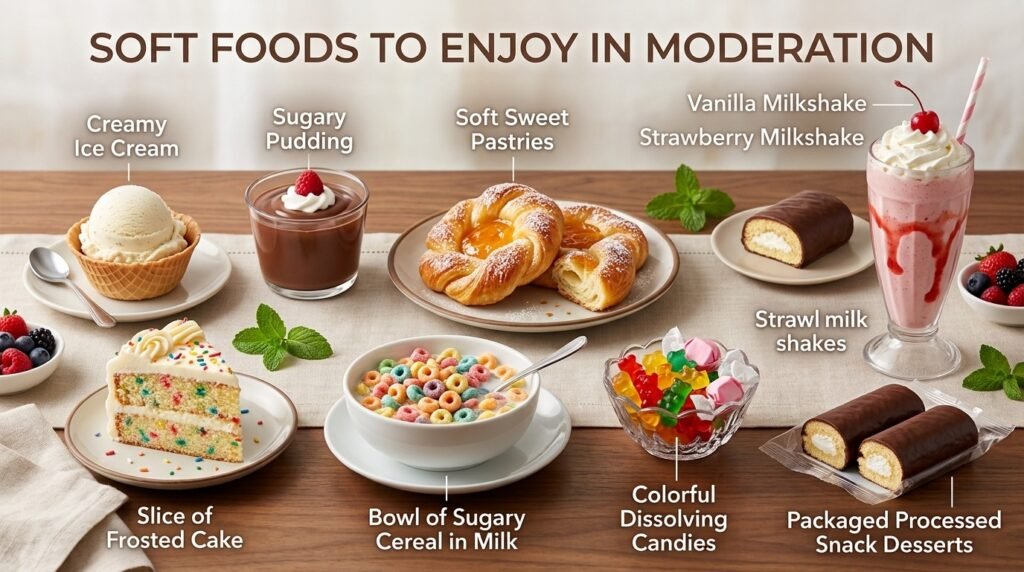
Examples include:
- Ice cream
- Sugary pudding
- Sweet pastries
- Frosted cakes
- Sugary breakfast cereals soaked in milk
- Milkshakes with added sugar
- Candy that dissolves easily
- Processed snack desserts
These foods can be enjoyable occasionally, but relying on them regularly may increase sugar, saturated fat, and calorie intake.
A good rule is to make nutrient-rich options the foundation of your diet while treating sweets as occasional indulgences.
Frequently Asked Questions (FAQ)
1. What are the best things to eat that are soft?
Some of the best options include bananas, yogurt, oatmeal, scrambled eggs, mashed potatoes, avocados, soups, and baked fish because they are nutritious and easy to consume.
2. What soft foods are easy to chew?
Easy-to-chew foods include cooked vegetables, cottage cheese, scrambled eggs, ripe fruits, oatmeal, pasta, and tender fish.
3. What are some healthy soft foods?
Healthy choices include Greek yogurt, sweet potatoes, avocados, lentil soup, bananas, oatmeal, tofu, and cooked vegetables.
4. What soft foods can I eat after dental surgery?
Applesauce, yogurt, mashed potatoes, pudding, smoothies, oatmeal, and scrambled eggs are commonly recommended after dental procedures.
5. What are soft foods for elderly people?
Older adults often benefit from oatmeal, soups, cottage cheese, yogurt, cooked vegetables, tender fish, and mashed potatoes.
6. Are soft foods good for digestion?
Many foods that are easy to eat can be gentle on digestion, especially cooked vegetables, oatmeal, bananas, and soups. Individual needs may vary.
7. How can I make regular food softer?
You can soften foods by cooking them longer, blending, mashing, adding sauces, slow-cooking meats, and choosing naturally tender ingredients.
Conclusion
Choosing the right things to eat that are soft can make meals more comfortable, enjoyable, and nutritious. Whether you’re recovering from dental treatment, caring for an older adult, feeding a young child, or simply looking for gentle foods, there are plenty of delicious options available.
From ripe fruits and cooked vegetables to protein-rich meals and comforting soups, soft foods to eat can fit into nearly any lifestyle. By focusing on nutrient-dense ingredients and using simple preparation methods, you can create balanced meals that are satisfying and easy to enjoy. The best things to eat that are soft are those that match your individual needs while still providing the nutrition your body requires.