
When people think about things that are white, they often picture snow, clouds, or a blank sheet of paper. This timeless color is commonly associated with purity, cleanliness, simplicity, peace, and freshness in many cultures around the world. It appears throughout nature, science, technology, food, and everyday life, making it one of the most recognizable colors humans encounter.
From icy mountain peaks and rare animals to household products and medical innovations, this guide explores 100 fascinating things that are white. You’ll discover examples from nature, birds, animals, food, science, branding, and daily life while learning the reasons behind their appearance.
Why White Is So Unique
Unlike many colors that result from specific pigments, this shade often appears because a surface reflects most visible wavelengths of light. Snow, clouds, milk, and many flowers appear bright because light scatters in multiple directions instead of being absorbed.
In nature, pale coloration can serve important purposes. Arctic animals use it for camouflage, while flowers may use it to attract nighttime pollinators. In everyday products, the color is frequently chosen because it symbolizes cleanliness and simplicity.
Did You Know? Fresh snow can reflect up to 90% of incoming sunlight, helping keep snowy landscapes bright even on cloudy days.
Things that are white in Nature
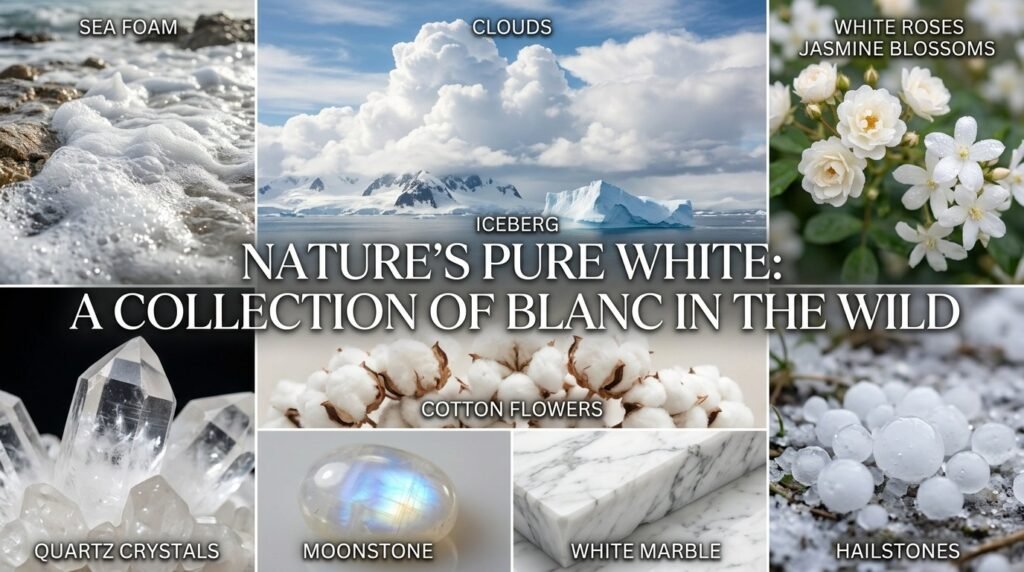
- Snow – Forms when water vapor freezes into ice crystals that scatter light.
- Clouds – Tiny water droplets reflect sunlight in all directions.
- Cotton Flowers – Produce fluffy fibers used in textiles worldwide.
- White Roses – Popular ornamental flowers symbolizing peace and respect.
- Jasmine Blossoms – Known for their fragrance and delicate petals.
- Lily Flowers – Often associated with purity and celebrations.
- Quartz Crystal – One of Earth’s most abundant minerals.
- Moonstone – Displays a soft glowing effect called adularescence.
- White Marble – A metamorphic rock used in famous sculptures and buildings.
- Sea Foam – Created when ocean water mixes with air and organic matter.
- Icebergs – Massive floating ice structures found near polar regions.
- Hailstones – Frozen precipitation formed inside storm clouds.
Birds that are white
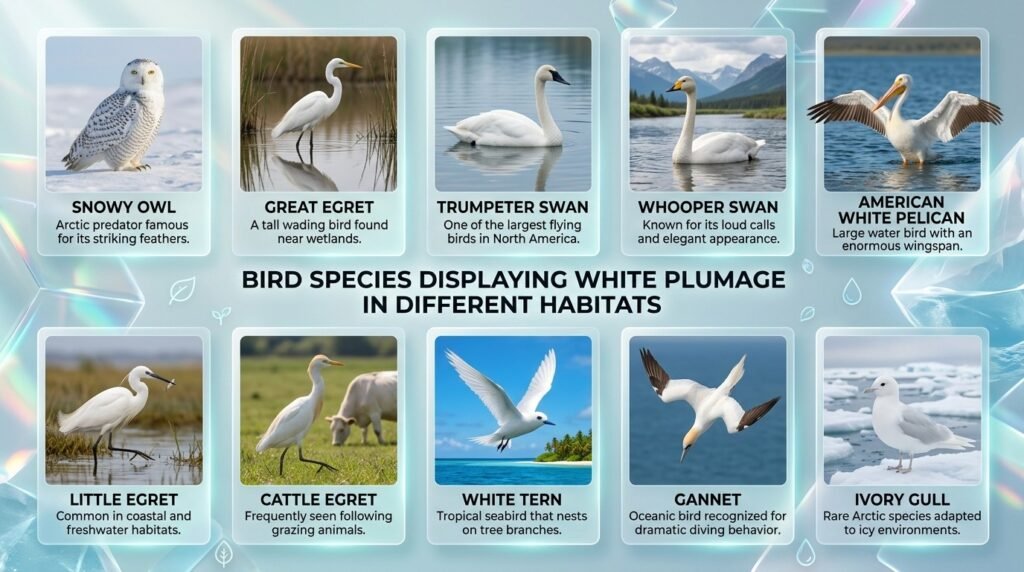
- Snowy Owl – Arctic predator famous for its striking feathers.
- Great Egret – A tall wading bird found near wetlands.
- Trumpeter Swan – One of the largest flying birds in North America.
- Whooper Swan – Known for its loud calls and elegant appearance.
- American White Pelican – Large water bird with an enormous wingspan.
- Little Egret – Common in coastal and freshwater habitats.
- Cattle Egret – Frequently seen following grazing animals.
- White Tern – Tropical seabird that nests on tree branches.
- Gannet – Oceanic bird recognized for dramatic diving behavior.
- Ivory Gull – Rare Arctic species adapted to icy environments.
Animals that are white
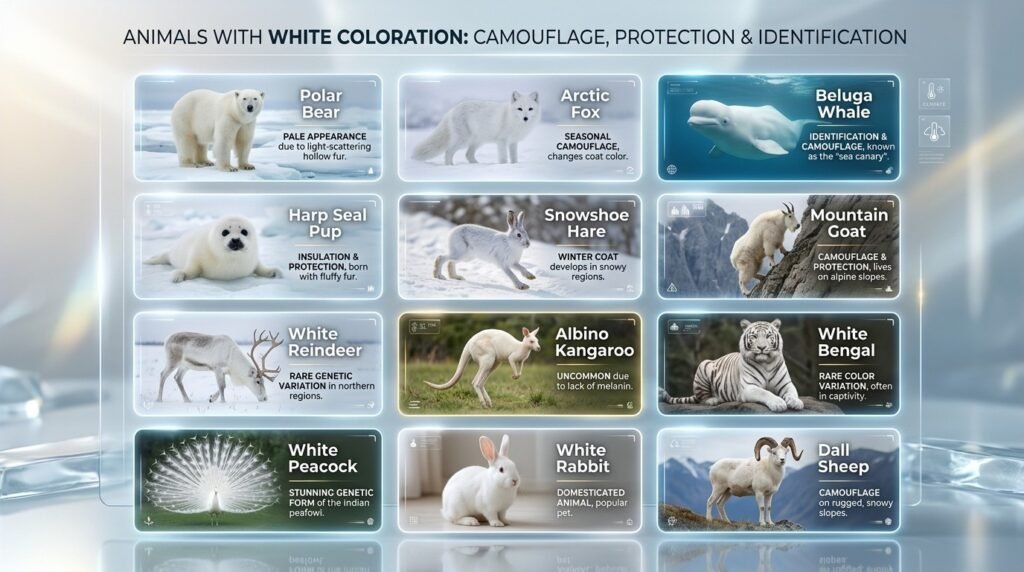
- Polar Bear – Appears pale due to light-scattering hollow fur.
- Arctic Fox – Changes coat color seasonally for camouflage.
- Beluga Whale – Marine mammal known as the “sea canary.”
- Harp Seal Pup – Born with fluffy fur for insulation.
- Snowshoe Hare – Develops a winter coat in snowy regions.
- Mountain Goat – Lives on steep alpine cliffs.
- White Reindeer – Rare genetic variation seen in northern regions.
- Albino Kangaroo – Uncommon due to lack of melanin.
- White Bengal Tiger – Rare color variation rather than a separate species.
- White Peacock – A stunning genetic form of the Indian peafowl.
- White Rabbit – Popular domesticated animal.
- Dall Sheep – Native to mountainous areas of Alaska and Canada.
Everyday Objects that are white
Many products use this color because it suggests cleanliness, simplicity, and freshness.
- Paper sheets
- Printer paper
- Notebooks
- Envelopes
- Ceramic plates
- Coffee mugs
- Bathtubs
- Bathroom sinks
- Towels
- Bed sheets
- Pillows
- Toothpaste
- Soap bars
- Refrigerators
- Washing machines
- Air conditioners
- Light switches
- Ceiling paint
- Candles
- Chalk
White Food Examples
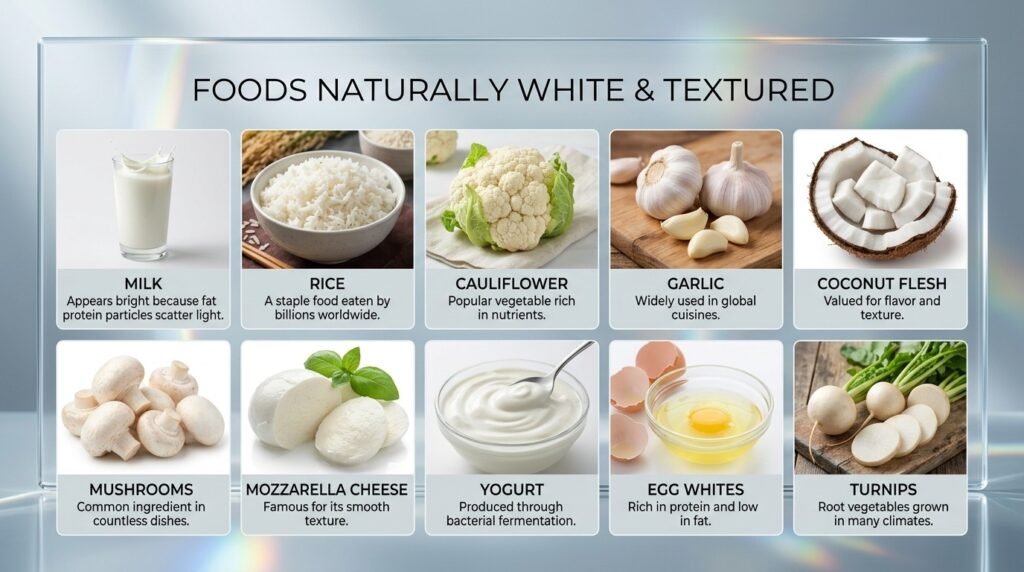
- Milk – Appears bright because fat and protein particles scatter light.
- Rice – A staple food eaten by billions worldwide.
- Cauliflower – Popular vegetable rich in nutrients.
- Garlic – Widely used in global cuisines.
- Coconut Flesh – Valued for flavor and texture.
- Mushrooms – Common ingredient in countless dishes.
- Mozzarella Cheese – Famous for its smooth texture.
- Yogurt – Produced through bacterial fermentation.
- Egg Whites – Rich in protein and low in fat.
- Turnips – Root vegetables grown in many climates.
Fun Fact: Milk looks bright because microscopic fat droplets scatter light across the visible spectrum.
Science and Technology
Image Caption: Scientific and technological applications of white materials and surfaces
Medical Coats
Doctors traditionally wear pale coats because they symbolize hygiene, professionalism, and trust.
Surgical Masks
Many medical masks use light-colored outer layers that make contamination easier to notice.
LED Lighting Panels
Modern LED systems often produce bright neutral illumination for homes and offices.
Spacecraft Thermal Coatings
Special coatings help reflect solar radiation and reduce heat buildup.
Laboratory Ceramics
Heat-resistant ceramic materials are commonly used in scientific equipment and testing environments.
More Things That Are White Around Us
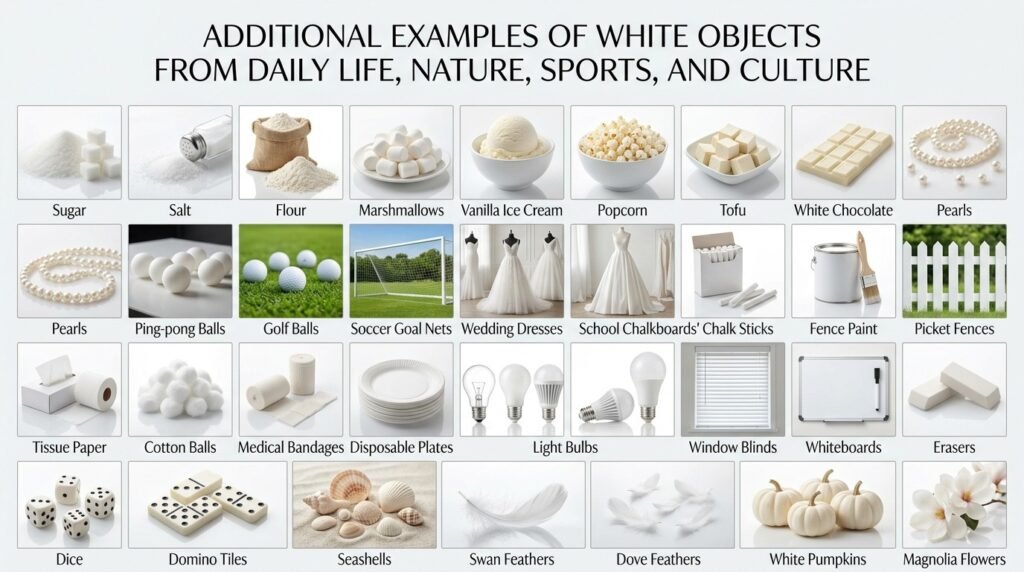
- Sugar
- Salt
- Flour
- Marshmallows
- Vanilla ice cream
- Popcorn
- Tofu
- White chocolate
- Pearls
- Ping-pong balls
- Golf balls
- Soccer goal nets
- Wedding dresses
- School chalkboards’ chalk sticks
- Fence paint
- Picket fences
- Tissue paper
- Cotton balls
- Medical bandages
- Disposable plates
- Light bulbs
- Window blinds
- Whiteboards
- Erasers
- Dice
- Domino tiles
- Seashells
- Swan feathers
- Dove feathers
- White pumpkins
- Magnolia flowers
Why Industries and Branding Prefer White
Many businesses choose this color because consumers often associate it with:
- Cleanliness
- Simplicity
- Freshness
- Purity
- Professionalism
- Safety
- Modern design
- Minimalism
Industries that frequently use it include:
- Healthcare and medical services
- Technology companies
- Home appliance manufacturers
- Skincare and beauty brands
- Hospitality businesses
- Luxury packaging companies
The clean appearance helps products feel reliable, premium, and easy to trust.
Interesting Facts about white
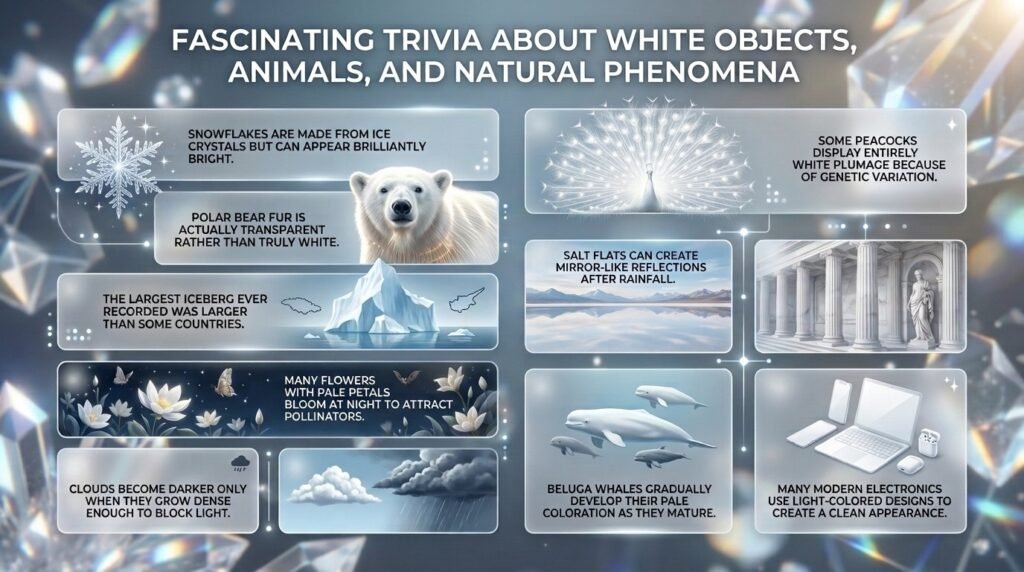
- Snowflakes are made from ice crystals but can appear brilliantly bright.
- Polar bear fur is actually transparent rather than truly white.
- The largest iceberg ever recorded was larger than some countries.
- Many flowers with pale petals bloom at night to attract pollinators.
- Clouds become darker only when they grow dense enough to block light.
- Some peacocks display entirely white plumage because of genetic variation.
- Salt flats can create mirror-like reflections after rainfall.
- Marble has been used in architecture for thousands of years.
- Beluga whales gradually develop their pale coloration as they mature.
- Many modern electronics use light-colored designs to create a clean appearance.
FAQs
Why does snow appear white?
Snow contains countless ice crystals that scatter sunlight in many directions, making it appear bright.
Why are clouds usually white?
Tiny water droplets reflect and scatter sunlight evenly across visible wavelengths.
Why is polar bear fur white?
The fur is actually transparent and reflects light, creating a pale appearance.
Why does milk look white?
Milk contains proteins and fat particles that scatter light.
Why are many medical products white?
The color is strongly associated with cleanliness, sterility, and safety.
Why do some animals have white fur or feathers?
It can provide camouflage, temperature advantages, or result from genetic traits.
Final Thoughts
From snow-covered mountains and elegant birds to everyday household products and scientific innovations, things that are white are everywhere. This remarkable color connects nature, technology, food, culture, and learning in surprising ways. Whether found in the Arctic wilderness, a kitchen pantry, or a modern laboratory, it continues to symbolize simplicity, cleanliness, and wonder. The next time you look around, you’ll likely spot dozens of examples that prove just how important this color is in the world around us.