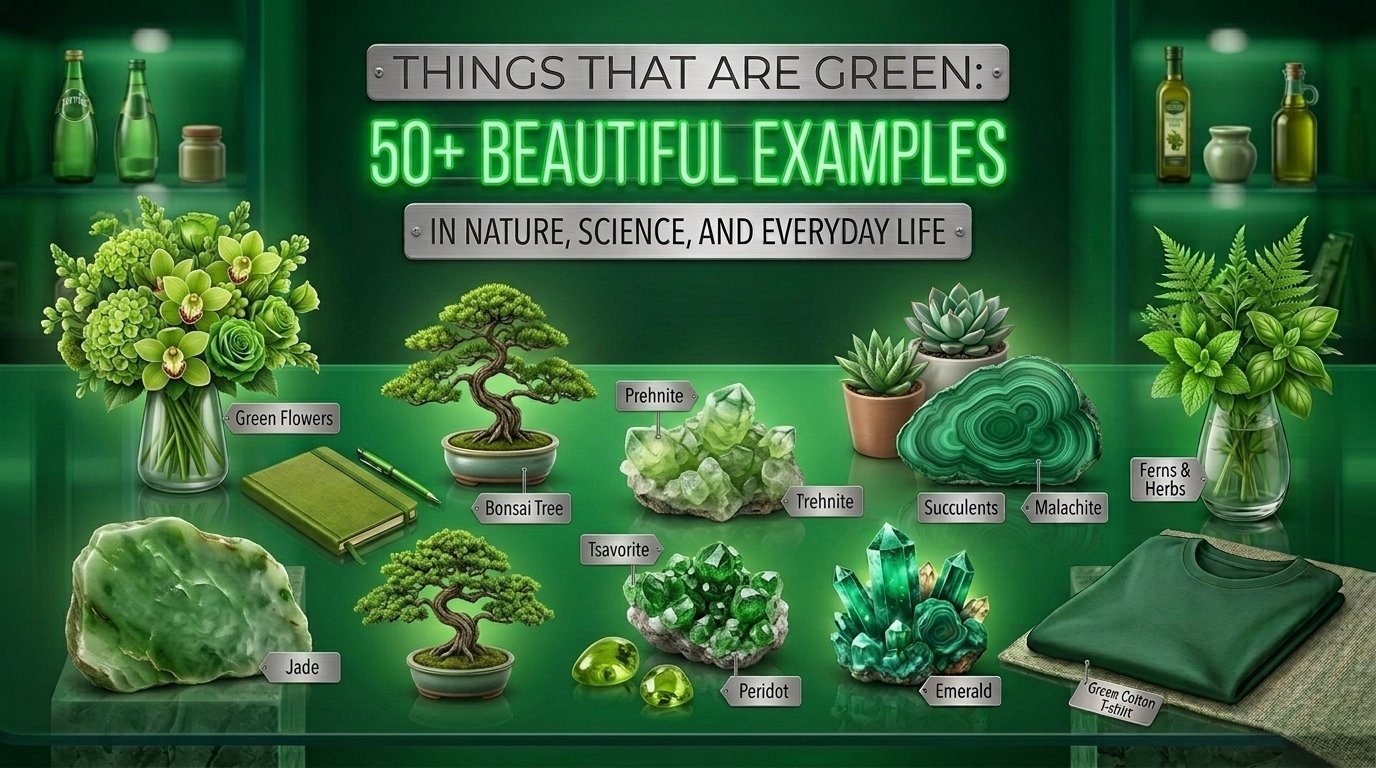
Green is one of the most recognizable and meaningful colors on Earth. From forests and plants to emerald gemstones, colorful birds, vegetables, and modern technology, things that are green appear everywhere around us. This vibrant shade often represents nature, growth, renewal, harmony, freshness, and balance.
Across different cultures, this color has been associated with life, prosperity, peace, and environmental awareness. In psychology, it is often considered a calming color that connects people with natural surroundings and creates feelings of relaxation and stability.
In this guide, we will explore more than 90 things that are green, including examples from nature, science, animals, birds, food, technology, everyday objects, and human creativity. Each example reveals how this fascinating shade appears through biology, chemistry, physics, and design.
Why Things That Are Green Are So Special and Unique
Green is one of the most common colors found in nature, mainly because of chlorophyll, the pigment responsible for the leafy appearance of plants. Chlorophyll absorbs red and blue wavelengths of sunlight for photosynthesis while reflecting verdant light to our eyes, making leaves and vegetation appear lush and vibrant.
Unlike some colors that are rare in nature, this shade is widespread because plants cover a large part of Earth’s land surface. The ability of plants to convert sunlight into energy has made it a symbol of life and survival.
Did you know?
The human eye is especially sensitive to verdant wavelengths because our vision evolved in environments filled with vegetation. This helps us distinguish different shades of plants and landscapes.
This color can also appear through other scientific processes. Some minerals contain elements like chromium, copper, or iron that create emerald-toned hues, while animals may use pigments or microscopic structures to produce leafy appearances.
Examples in Nature: Things That Are Green in the Natural World
Nature provides some of the most beautiful examples of green. From giant forests to tiny mosses, this color dominates many ecosystems around the planet.
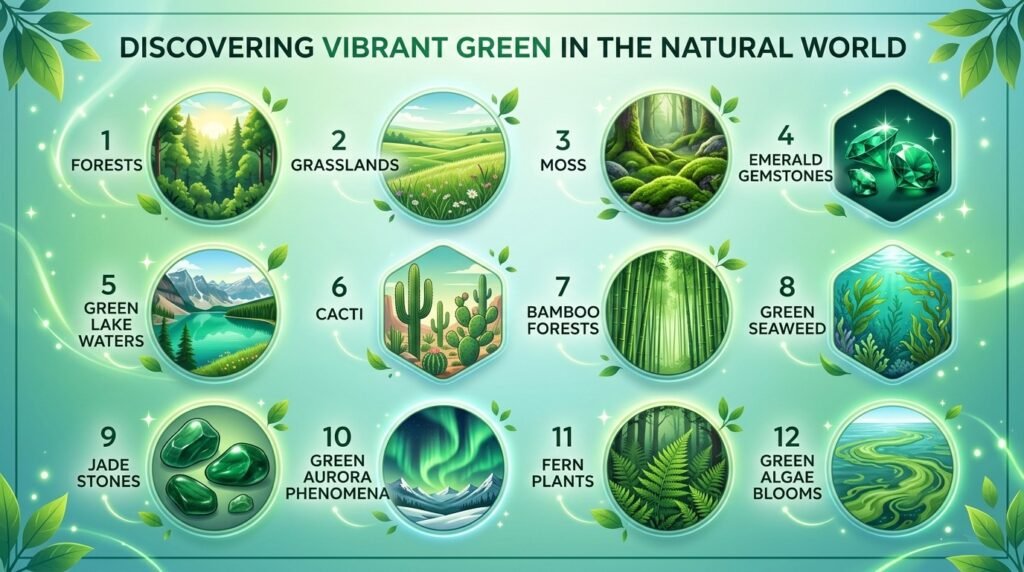
1. Forests
Forests are among the largest verdant areas on Earth. Millions of trees create lush landscapes because their leaves contain chlorophyll, allowing them to capture sunlight through photosynthesis.
2. Grasslands
Grasslands contain enormous fields of fresh vegetation that support many animals. Their natural coloration comes from chlorophyll inside grass blades, which helps plants produce energy.
3. Moss
Moss is a small chlorophyll-rich plant that grows on rocks, trees, and damp surfaces. Its natural appearance comes from chlorophyll and helps it survive in shaded environments.
4. Emerald Gemstones
Emeralds are famous gemstones created from the mineral beryl. Their rich emerald-toned appearance comes mainly from trace amounts of chromium or vanadium inside their crystal structure.
5. Green Lake Waters
Some lakes appear green because of algae, minerals, or suspended particles that affect how light reflects from the water. Certain famous lakes develop bright natural shades due to biological activity.
6. Cacti
Many cactus species have green stems because their modified structures contain chlorophyll. These plant surfaces help them perform photosynthesis even when leaves are absent.
7. Bamboo Forests
Bamboo plants create beautiful botanical landscapes around the world. Their stems and leaves allow them to efficiently capture sunlight and grow rapidly.
8. Green Seaweed
Seaweed found in oceans and freshwater environments often displays a leafy appearance because of chlorophyll pigments. These organisms play an important role in aquatic ecosystems.
9. Jade Stones
Jade is a valuable gemstone used in jewelry and artwork. Its coloration comes from minerals such as jadeite and nephrite, with some varieties showing deep jade-colored shades.
10. Green Aurora Phenomena
Some auroras appear green when charged particles from the Sun interact with oxygen atoms high in Earth’s atmosphere. This creates glowing waves of light near polar regions.
11. Fern Plants
Ferns are ancient plants known for their bright foliage leaves called fronds. Their natural coloration helps them produce energy through photosynthesis.
12. Green Algae Blooms
Algae blooms can create vibrant patterns on water surfaces. While some algae are beneficial, excessive growth can sometimes affect aquatic ecosystems.
Green Animals and Birds Found Around the World
Many animals display green coloration as a survival strategy. This coloring can help creatures hide among leaves, forests, and vegetation.
1. Green Tree Python
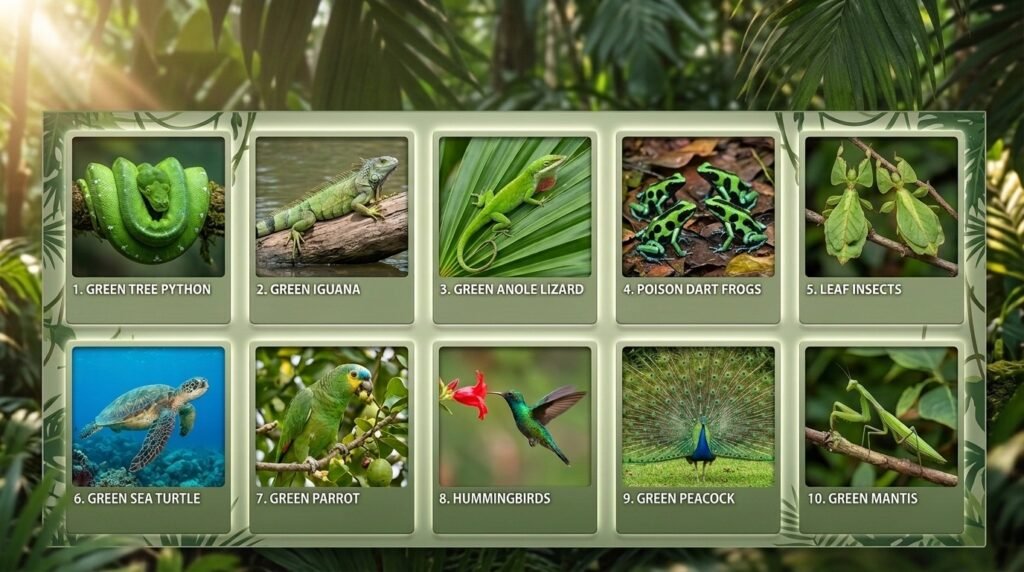
The green tree python is a bright emerald-colored snake found in tropical forests of New Guinea and nearby regions. Its coloration helps it blend into leafy branches while waiting for prey.
2. Green Iguana
Green iguanas are large reptiles native to Central and South America. Their natural-toned scales provide camouflage among trees and vegetation.
3. Green Anole Lizard
The green anole can change shades depending on conditions such as temperature, mood, and environment. Its bright leafy-colored body helps it hide among plants.
4. Poison Dart Frogs
Some poison dart frogs have green patterns mixed with other colors. Their vibrant appearance can warn predators that they may contain toxins.
5. Leaf Insects
Leaf insects have evolved body shapes and colors that resemble leaves. Their plant-like appearance provides excellent camouflage against predators.
6. Green Sea Turtle
Green sea turtles are marine reptiles known for their greenish body coloration. Their name comes from the green fat found beneath their shells, not only their outer appearance.
7. Green Parrot
Many parrots, including several species with emerald-toned feathers, have vibrant plumage containing pigments and structural effects that create their colors. Their feathers help them disappear among tropical plants.
8. Hummingbirds
Some hummingbird species display brilliant emerald feathers. Their coloration often comes from microscopic feather structures that reflect light rather than simple pigments.
9. Green Peacock
Certain peafowl species show shimmering emerald feathers. The appearance comes from complex feather structures that scatter and reflect light.
10. Green Mantis
The praying mantis is often leafy-colored because its body resembles leaves and other plant parts. This camouflage helps it hunt insects and avoid predators.
Everyday Objects: Things That Are Green in Daily Life
Green is a popular color in everyday products because people often connect it with freshness, cleanliness, nature, and relaxation. Many manufacturers use these designs to create a feeling of environmental responsibility and harmony.

Here are some common things that are green that people see and use every day:
1. Clothing
Shirts, dresses, jackets, and shoes are popular fashion choices. Different shades, from olive to emerald, create styles ranging from natural and casual to elegant.
2. Backpacks
School bags and travel backpacks often come in green because this color feels practical, outdoorsy, and connected with adventure.
3. Water Bottles
Reusable water bottles frequently use nature-inspired colors to promote eco-friendly lifestyles and remind people about sustainability.
4. Notebooks
Notebooks and journals are common in schools and offices. This shade is often associated with creativity, learning, and organization.
5. Pens and Pencils
Writing tools with verdant designs are popular because this color is easy to recognize and visually appealing.
6. Furniture
Sofas, chairs, and cushions can create a calming atmosphere in homes. Shades like sage green and forest tones are especially popular in interior design.
7. Curtains
Curtains are often used to bring a natural feeling indoors and create a connection with outdoor environments.
8. Plants and Indoor Decorations
Artificial plants and botanical decorations are common because they add a refreshing natural appearance without requiring maintenance.
9. Kitchenware
Plates, cups, bowls, and utensils often use leafy shades because this color is strongly connected with food, vegetables, and freshness.
10. Packaging
Many brands choose eco-friendly packaging designs to communicate natural ingredients, organic products, and environmentally friendly values.
11. Cars
Some vehicles use emerald-toned paint to stand out or represent eco-friendly technology, especially hybrid and electric vehicles.
12. Phone Cases
Cases for smartphones of this color are popular because they provide a stylish look while representing nature and simplicity.
13. Shoes
Sports and outdoor footwear frequently use botanical shades because they match themes of movement, nature, and exploration.
14. Toys
Children’s toys often include nature-inspired colors because they are bright, friendly, and connected with animals and nature.
15. School Supplies
Folders, rulers, markers, and other school items often use this shade because it is considered balanced and calming.
16. Office Accessories
Desk organizers, mouse pads, and stationery items commonly use natural tones to create a relaxing workspace.
17. Towels
Towels are popular in bathrooms and spas because they create a clean and refreshing appearance.
18. Candles
Candles are used in decoration and aromatherapy because this color represents peace and renewal.
19. Lamps
Lamps and lighting designs add a soft natural feeling to rooms.
20. Watches
Watch faces and straps have become fashionable accessories, especially in outdoor and luxury designs.
Food Examples: Naturally Green Fruits and Vegetables
Green foods are among the healthiest and most recognizable examples of this color. Many foods of this color contain nutrients such as chlorophyll, vitamins, minerals, and antioxidants.

1. Spinach
Spinach is a leafy vegetable rich in nutrients like iron, vitamin K, and folate. Its vibrant color comes from chlorophyll.
2. Broccoli
Broccoli contains verdant florets and stems because of chlorophyll pigments. It is widely known as a nutrient-rich vegetable.
3. Apples
Green apples, such as Granny Smith varieties, have bright emerald-colored skin due to natural plant pigments.
4. Avocado
Avocados have green flesh and dark skin. They are valued for healthy fats and creamy texture.
5. Kiwi Fruit
Kiwi has bright emerald flesh containing chlorophyll and tiny black seeds that create its unique appearance.
6. Grapes
Green grapes develop their natural coloration through plant pigments and are commonly eaten fresh or used for juices and wines.
7. Cucumber
Cucumbers have leafy-colored skin because of chlorophyll. They are popular worldwide for salads and refreshing dishes.
8. Peas
Peas are small seeds from pea plants that naturally develop their coloration through plant pigments.
9. Beans
Green beans are harvested before maturity, keeping their fresh appearance and crisp texture.
10. Limes
Limes have green skin and juicy interiors. Their color comes from natural pigments in the fruit peel.
Fun Fact:
The verdant appearance in many vegetables comes from chlorophyll, the same pigment plants use to capture sunlight and produce energy.
Science and Technology
Green is not only found in nature. Scientists and engineers use this color in many technologies, products, and scientific applications.
1. Lasers
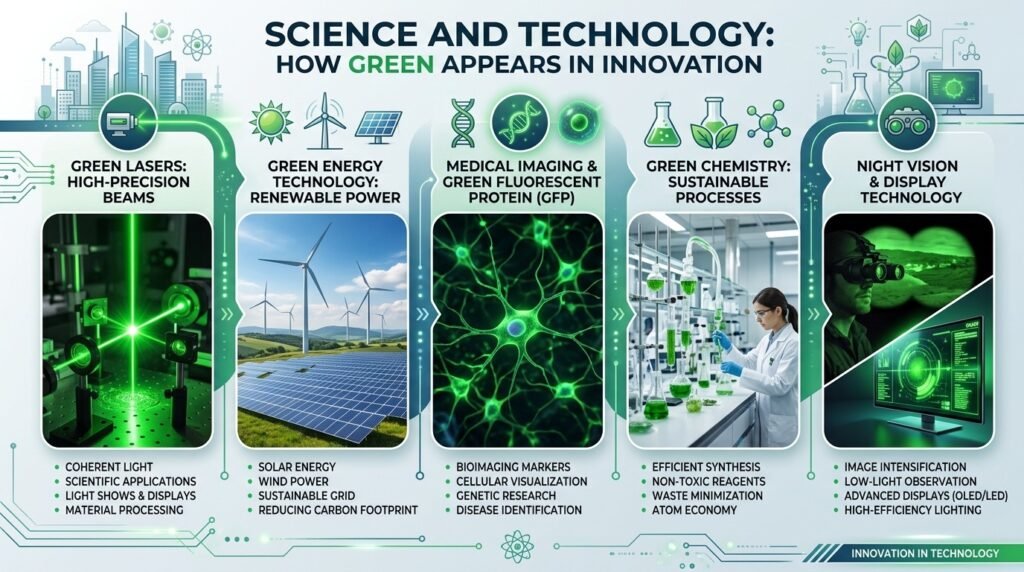
Green lasers are used in scientific instruments, astronomy equipment, projectors, and measurement devices. They are visible because human eyes are highly sensitive to this wavelength range.
2. Energy Technology
The term for eco-friendly technology refers to environmentally friendly innovations such as solar power, wind energy, and sustainable transportation.
This color is used to represent cleaner alternatives that reduce environmental impact.
3. Medical Imaging and Green Fluorescent Protein
Scientists use fluorescent protein (GFP) in biological research. This naturally occurring protein from jellyfish helps researchers study cells and biological processes.
4. Chemistry
Sustainable chemistry focuses on designing chemical processes that reduce waste, pollution, and harmful substances.
This approach represents sustainability and safer scientific practices.
5. Night Vision and Display Technology
Some electronic displays and imaging systems use this wavelength because human vision detects this part of the light spectrum efficiently.
Why Industries and Brands Prefer Green
Green is one of the most powerful colors in branding because it creates strong emotional associations.
Businesses often use green to represent:
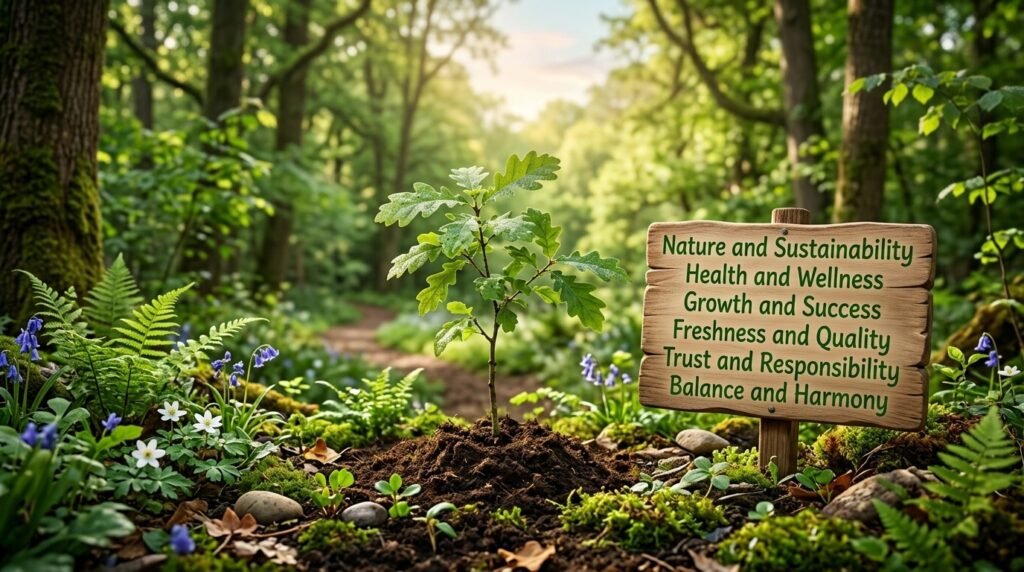
Industries that commonly use green branding include:
Environmental Companies
Eco-friendly brands use this color to highlight sustainability and protection of nature.
Food and Beverage Companies
Nature-inspired packaging often suggests freshness, natural ingredients, and healthy choices.
Healthcare Brands
Medical and wellness companies use this shade because it creates feelings of safety and calmness.
Technology Companies
Some technology brands use this color to represent innovation, energy efficiency, and modern solutions.
Financial Companies
This color is sometimes used in finance because it is associated with growth, prosperity, and money.
Interesting Facts
Image Caption: Amazing Green Color Facts From Nature, History, and Science
Here are some fascinating facts about things that are green and the science behind this unique color:
- This shade is most associated with plants because chlorophyll reflects light from the green spectrum.
- The human eye can detect more shades of this color than many other colors.
- Emeralds are among the most valuable emerald-toned gemstones in the world.
- Some animals display this coloration because their bodies reflect and scatter light through microscopic structures.
- Chlorophyll plays a major role in producing oxygen on Earth.
- Ancient Egyptians used green minerals such as malachite for decoration and cosmetics.
- The coloration of many leaves changes during autumn because chlorophyll breaks down.
- Some parrots appear verdant because yellow pigments combine with blue structural coloration.
- This shade is often used internationally as a symbol of environmental awareness.
- The term “green revolution” refers to major agricultural developments that increased food production.
Frequently Asked Questions
1. Why are most plants green?
Most plants are green because they contain chlorophyll, a pigment that absorbs sunlight for photosynthesis while reflecting light from the green spectrum.
2. Why do some animals have green colors?
Animals often display verdant coloration for camouflage, attracting mates, warning predators, or blending into their environments.
3. Why are emeralds green?
Emeralds get their emerald-colored appearance from trace elements such as chromium or vanadium inside their crystal structure.
4. Why do vegetables look green?
Many vegetables appear green because they contain chlorophyll, which helps plants produce energy from sunlight.
5. Is green a rare color in nature?
This shade is actually one of the most common colors in nature because plants cover much of Earth’s surface.
6. Why do brands use green?
Companies use this color because people often associate it with health, nature, freshness, and environmental responsibility.
Final Thoughts
Green is much more than a simple color. It represents the connection between life, science, nature, and human creativity. From forests and emeralds to birds, vegetables, technology, and everyday objects, this shade appears in countless forms around the world.
Exploring things that are green helps us understand how biology, chemistry, physics, and culture work together to create the colorful world we experience every day.
Whether found in a leaf, a gemstone, a bird’s feathers, or modern technology, this color continues to symbolize growth, balance, and the beauty of our planet.